The Dentate Gyrus Discriminates Learned Sensory Information

Post by Deborah Joye

What's the science?

To help us navigate an unpredictable world, our brain continuously learns about the environment and integrates important information into a cognitive map. But how does our brain learn about important stimuli and incorporate them into a cognitive map of the environment? One role of the hippocampus is learning about non-spatial stimuli such as sounds and smells, but we don’t know exactly how learning new associations changes that information in the hippocampus. In general, evidence suggests that the cortex sends generalized sensory representations to the hippocampus. The hippocampus takes that general representation and enhances distinctions between important and unimportant sensory memories. This process helps us use previously learned information to safely and productively engage with our environment (like, “that smells like a rotten egg, so it might make you sick”). This week in Neuron, Woods, and colleagues demonstrate that specialized cells in the hippocampus create an internal representation of particular odors that predicts behavioral ability to differentiate smells.

How did they do it?

To test how cells in the hippocampus represent olfactory stimuli, the authors used two-photon microscopy to monitor cellular activation (measured by increases in calcium) in awake mice. Mice were exposed to various odors as the authors studied cellular activity in dentate gyrus granule cells of the hippocampus. The authors also studied cellular activity in lateral entorhinal cortex cells, one of the primary input regions into the hippocampus. To investigate whether the lateral entorhinal cortex is the main input of olfactory information into the dentate gyrus, the authors blocked cellular communication between these two regions using a form of tetanus toxin and imaged cellular activity in each region during odor exposure and behavioral tasks.

To test the extent to which dentate gyrus granule cells and lateral entorhinal cortex cells change their responses with learning, the authors trained mice on both fear and reward-based learning tasks and recorded activity in cells from each region before and after conditioning. In the fear-learning task, mice were first allowed to explore three contexts with distinct ambient odors. Mice were then trained to associate one odor with a mild foot shock (creating a fear association) and then were later tested with that same odor to determine how fearfully the mouse responded when exposed to that smell by measuring freezing behavior. In the reward-learning task, mice were trained to associate an odor with a sucrose reward and the authors measured this learned association by quantifying appetitive behavior (in this case, licking before the reward).

What did they find?

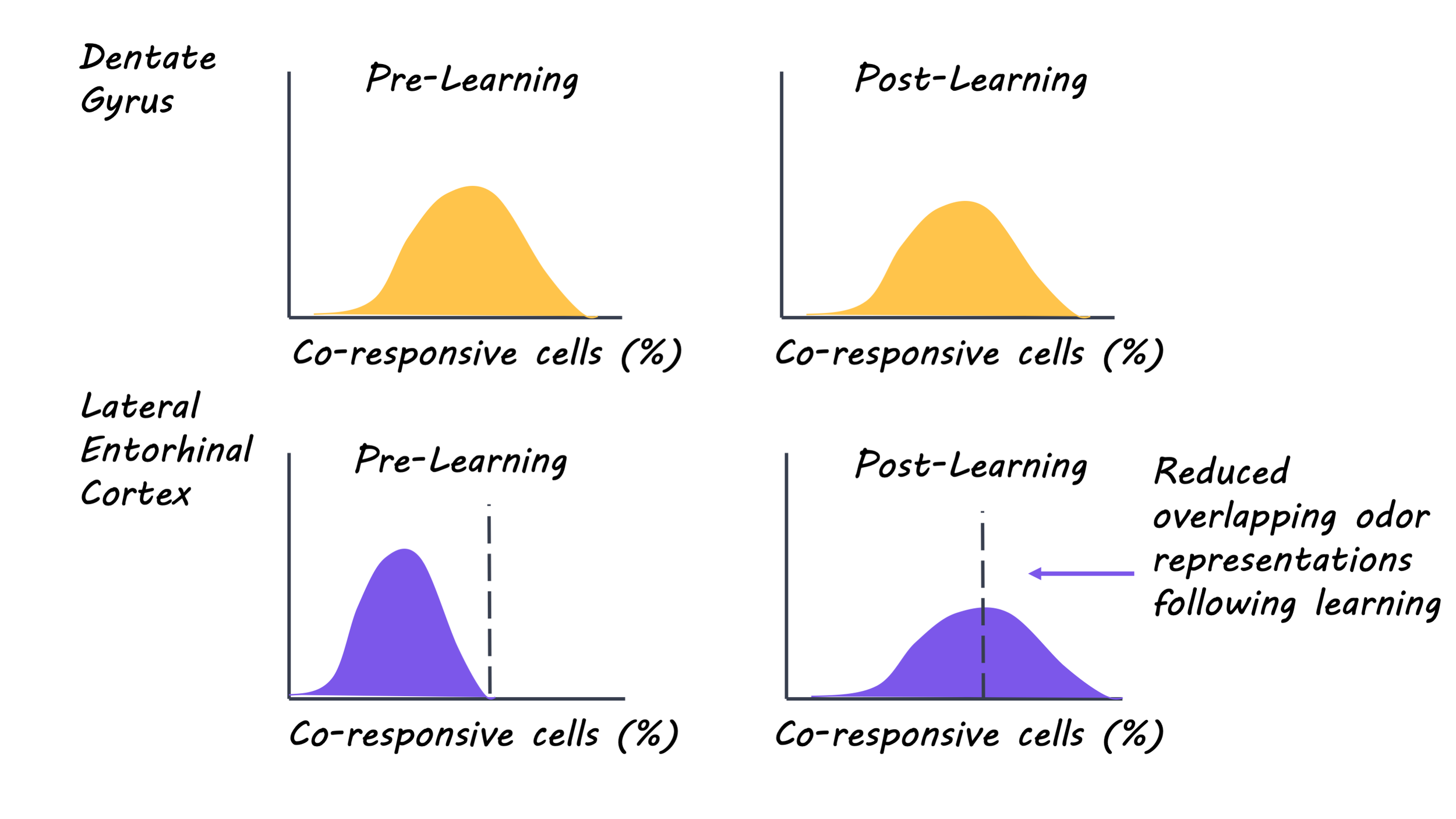
The authors found that dentate gyrus granule cells can represent odors based on how the population of cells fire, and that they require input from the lateral entorhinal cortex to do so. Mice with blocked communication between the lateral entorhinal cortex and the dentate gyrus did not show cellular activity in the dentate gyrus granule cells that predicted odor discrimination. The authors also found that the ability for dentate gyrus granule cells to accurately classify odors correlated with the mouse’s ability to behaviorally discriminate between odors. Mice that had the lowest smell decoder accuracy predicted by dentate gyrus cell firing were the worst at behaviorally discriminating between similar odors. Similarly, mice that had the highest smell decoder accuracy amongst dentate gyrus cells were the best at discriminating between similar smells. Finally, the authors found that in response to both fear and reward training, dentate gyrus granule cells change their responses to stimuli to set apart mental representations of the conditioned odor relative to unconditioned odors. Specifically, dentate gyrus cells began to respond more to the conditioned odor versus the unconditioned ones.
odor_image_May5.png

What's the impact?

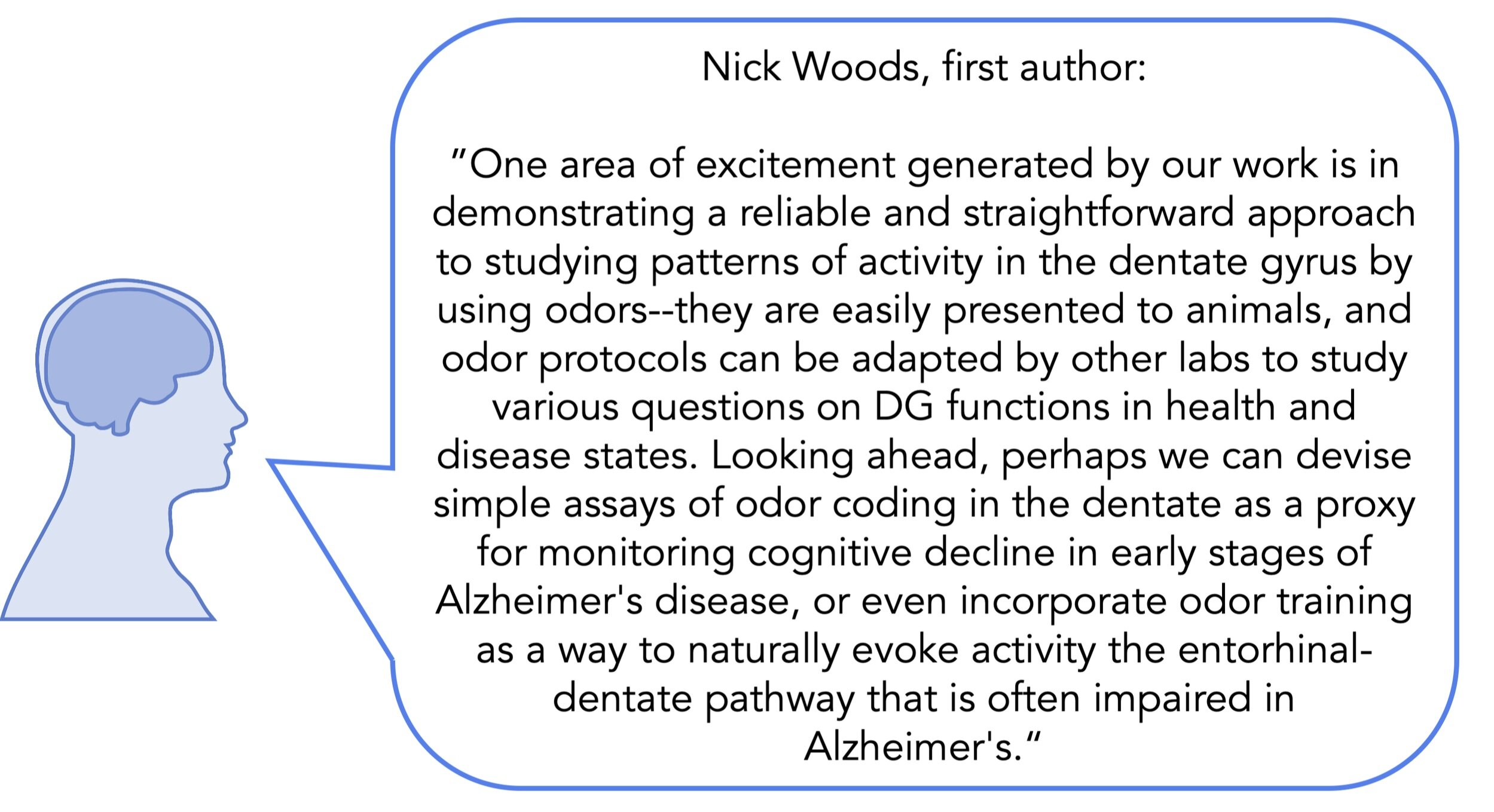
This study uses olfaction as a novel way to study memory formation in the hippocampus. The authors expand on previous work investigating upstream regions in the odor recognition circuit but are the first to demonstrate how dentate gyrus cells change an external odor stimulus into an internal representation that can be stored, acted upon, and modified by learning. These data potentially identify a location in the cortex-hippocampal circuit where information is modified into a behaviorally relevant format. This work has implications for the study of memory formation in the hippocampus in health and disease because the loss of smell is an early risk factor for neurodegenerative diseases such as Alzheimer’s disease, and the earliest aggregation of brain-damaging plaques happens specifically in the lateral entorhinal cortex, which this study highlights as an important region in odor discrimination.
smell_quote_May5.jpg

Woods et al., The Dentate Gyrus Classifies Cortical Representations of Learned Stimuli, Neuron (2020). Access the original scientific publication here.
Cortical Network Connectivity Tracks Working Memory Load

Post by Shireen Parimoo

What's the science?

Working memory is the ability to maintain and manipulate information in your mind – like trying to keep directions in mind while navigating. Working memory is critical for a wide range of cognitive functions such as learning, problem-solving, and decision-making, however, it is restricted in its capacity, meaning that only a limited amount of information can be processed in working memory at a given time. Thus, performance suffers when working memory load – or the amount of information to be processed – is higher than the working memory capacity. Interestingly, research shows that the connectivity between different brain regions is consistent across different working memory loads. However, it is possible that conventional analysis techniques do not capture subtle changes in connectivity patterns during working memory tasks. This week in NeuroImage, Eryilmaz, and colleagues used functional magnetic resonance imaging and machine learning techniques to identify load-dependent differences in functional connectivity during a working memory task.

How did they do it?

Participants were 177 healthy adults who completed the Sternberg item recognition task while undergoing fMRI scanning. In the encoding portion of the task, participants were shown a list of 1, 3, 5, or 7 consonants to remember. After a brief delay period, they were sequentially presented with 14 probe letters and had to indicate if they had seen those letters before (targets) or not (foils). Working memory load typically increases with an increasing number of targets (1T-7T) at encoding, resulting in longer response times (RT) at retrieval.

The authors first investigated how the functional connectivity of various brain regions during retrieval changed with increasing working memory load. These brain regions were assigned to one of seven brain networks, such as the dorsal and ventral attention networks (DAN/VAN), default mode network (DMN), and the frontoparietal control network (FPCN). A linear support vector machine (SVM) classifier (machine learning) was used to determine if the different working memory load conditions could be distinguished based on the patterns of functional connectivity within and between different brain networks. The authors further identified the strongest patterns of functional connectivity that could discriminate the lowest (1T) from the highest (7T) working memory load conditions using Neighborhood Component Analysis (a clustering machine learning technique). Finally, they used a leave-one-out cross-validation approach to determine whether connectivity within individual brain networks and across the entire cerebral cortex (global connectivity) predicted behavioral performance.

What did they find?

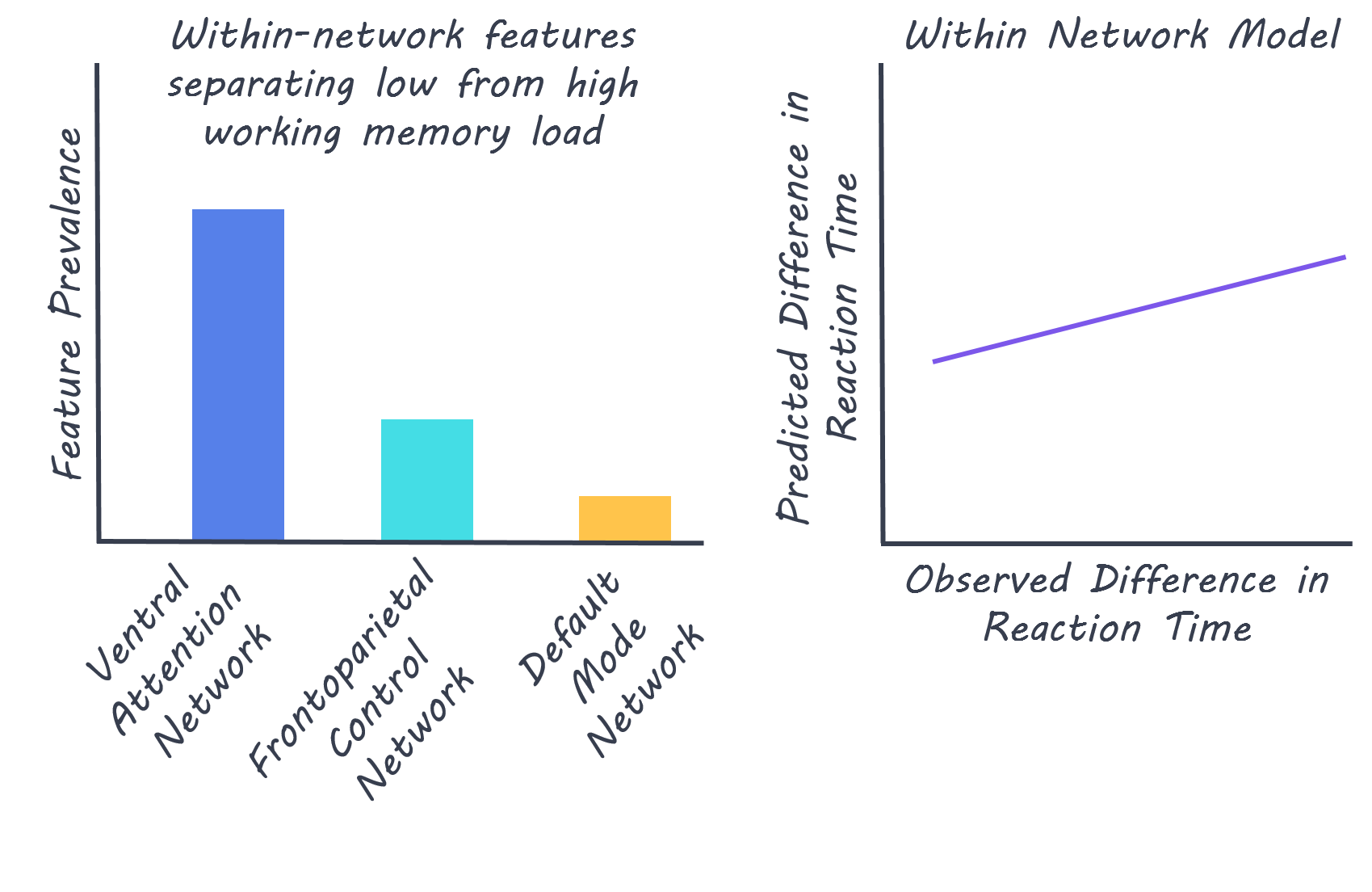
As expected, participants’ response times increased linearly with increasing working memory load. The load conditions could be reliably decoded from functional connectivity patterns across the brain using the SVM classifier. Classifier accuracy was greater when distinguishing between conditions with larger load differences (e.g., 3T vs. 7T) than between conditions with a smaller difference in working memory load (e.g., 5T vs. 7T). Functional connectivity of brain regions both within and between different brain networks tracked working memory load. For example, within-network connectivity in the VAN and the FPCN most strongly distinguished between the lowest (1T) and highest (7T) load conditions. Similarly, connectivity between regions in the FPCN and the DMN, along with VAN-DMN, DAN-VAN, and VAN-FPCN networks could also be used to distinguish between these load conditions. Finally, differences in connectivity within each individual network was not correlated with behavioral performance. However, a measure of network strength derived from total within-network connectivity as well as from global connectivity during the 1T and 7T conditions successfully predicted the differences in participants’ RT during the task.

shireen_image.png

What's the impact?

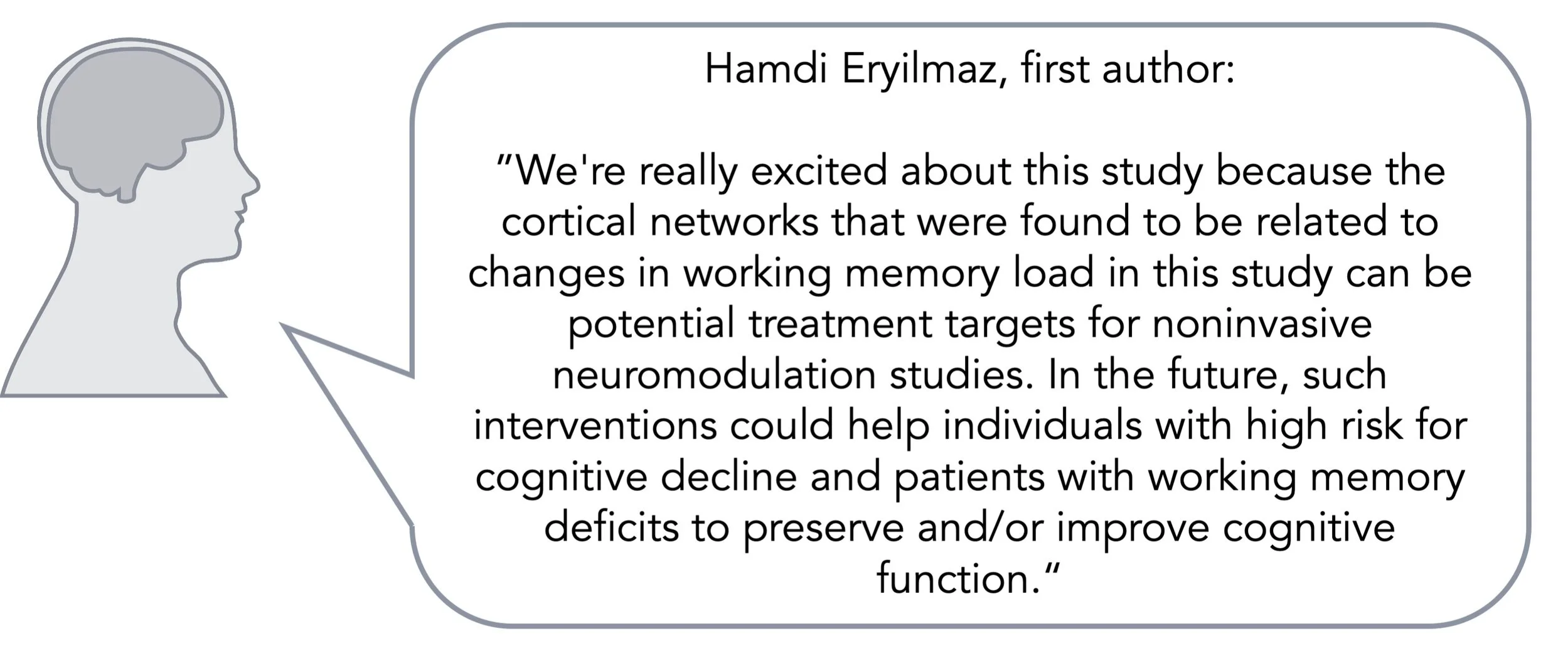
The authors of this study used machine learning techniques to demonstrate how the reconfiguration of connectivity patterns between a distributed network of brain regions varies with working memory load. Moreover, these connectivity differences were also predictive of behavioral performance in healthy adults. This is exciting because this approach can be further extended to improve our understanding of subtle differences in brain network dynamics in neuropsychiatric conditions, such as those characterized by working memory deficits.

working_memory_quote_May5.jpg

Eryilmaz et al. Working memory load-dependent changes in cortical network connectivity estimated by machine learning. NeuroImage (2020). Access the original scientific publication here.
Type I Interferon-Mediated Signaling Produces Nociceptive Pain

Post by Amanda McFarlan 

What's the science?

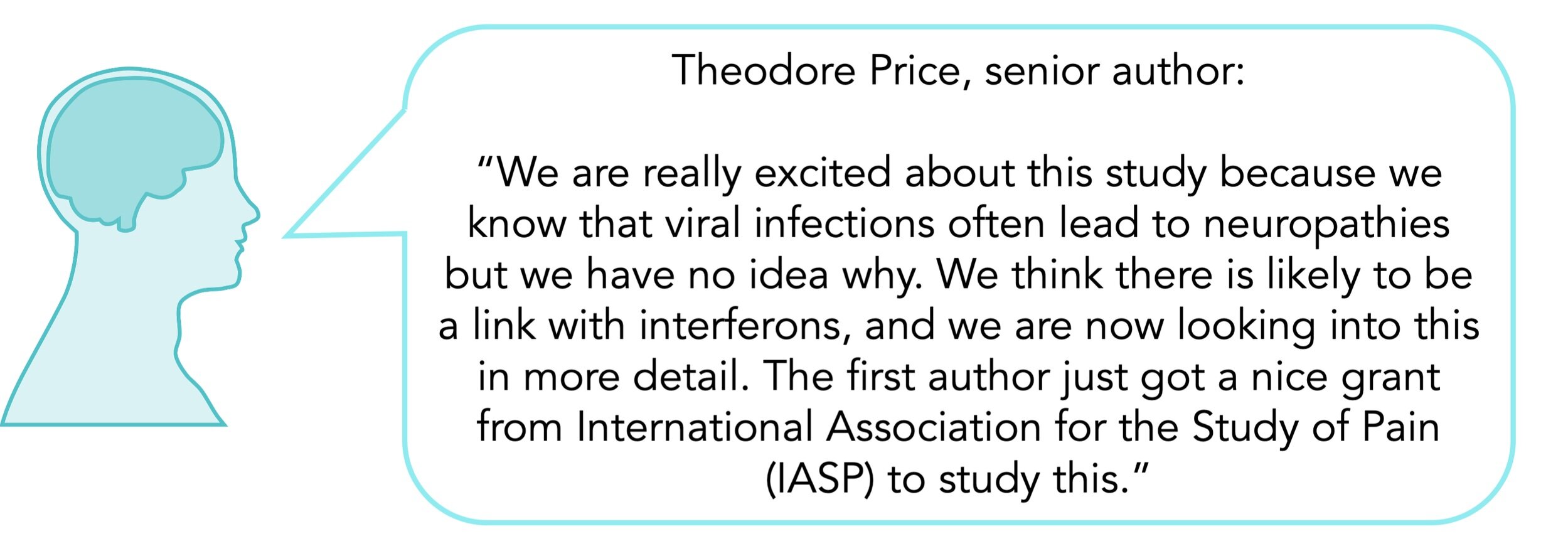
Viral infections can cause both acute and chronic neuropathic pain. However, the mechanisms by which these neuropathies occur are still poorly understood. Type I interferons (IFNs) are cytokines that are rapidly released by a variety of cells in response to viral infection and therefore, these IFNs may be an ideal candidate for mediating viral-induced neuropathic pain by directly binding nociceptors in the body’s peripheral nervous system. This week in the Journal of Neuroscience, Barragán-Iglesias and colleagues investigated the role of type I IFNs in mediating nociceptive pain responses. 

How did they do it?

The authors used the von Frey filament test (to test mechanical sensitivity) and the Hargreaves test (to test thermal pain sensitivity) to evaluate the nociceptive responses in mice following intraplantar (in the foot) injections of IFN-α, IFN-β or saline. Because they found that IFN administration caused a pain response in mice, the authors used RNAscope in situ hybridization (detects RNA in intact cells) to determine whether IFN receptors could be found in the dorsal root ganglion (a cluster of neurons in the spinal cord that relays sensory information to the brain). To investigate the effect of IFN on downstream signaling in the cell, the authors applied IFN-α and IFN-β to cultured dorsal root ganglion neurons and performed western blots to identify which downstream signaling molecules were present. Since the MNK-eIF4E pathway (involved in nociception) was found to be activated by IFN, the authors performed intraplantar injections of IFN-α and IFN-β in transgenic mice with disrupted MNK-eIF4E pathways to investigate the role of this pathway in IFN-mediated pain responses. Next, the authors used patch-clamp electrophysiology in cultured dorsal root ganglion neurons treated with IFN-α to examine the effects of IFN on neuronal excitability. Finally, the authors investigated the role of endogenous IFN in the pain response. To do this, they simulated a viral infection by injecting poly I:C (an immunostimulant) in transgenic mice with disrupted MNK-eIF4E pathways and wild-type mice and then measured mechanical and thermal pain sensitivity. 

What did they find?

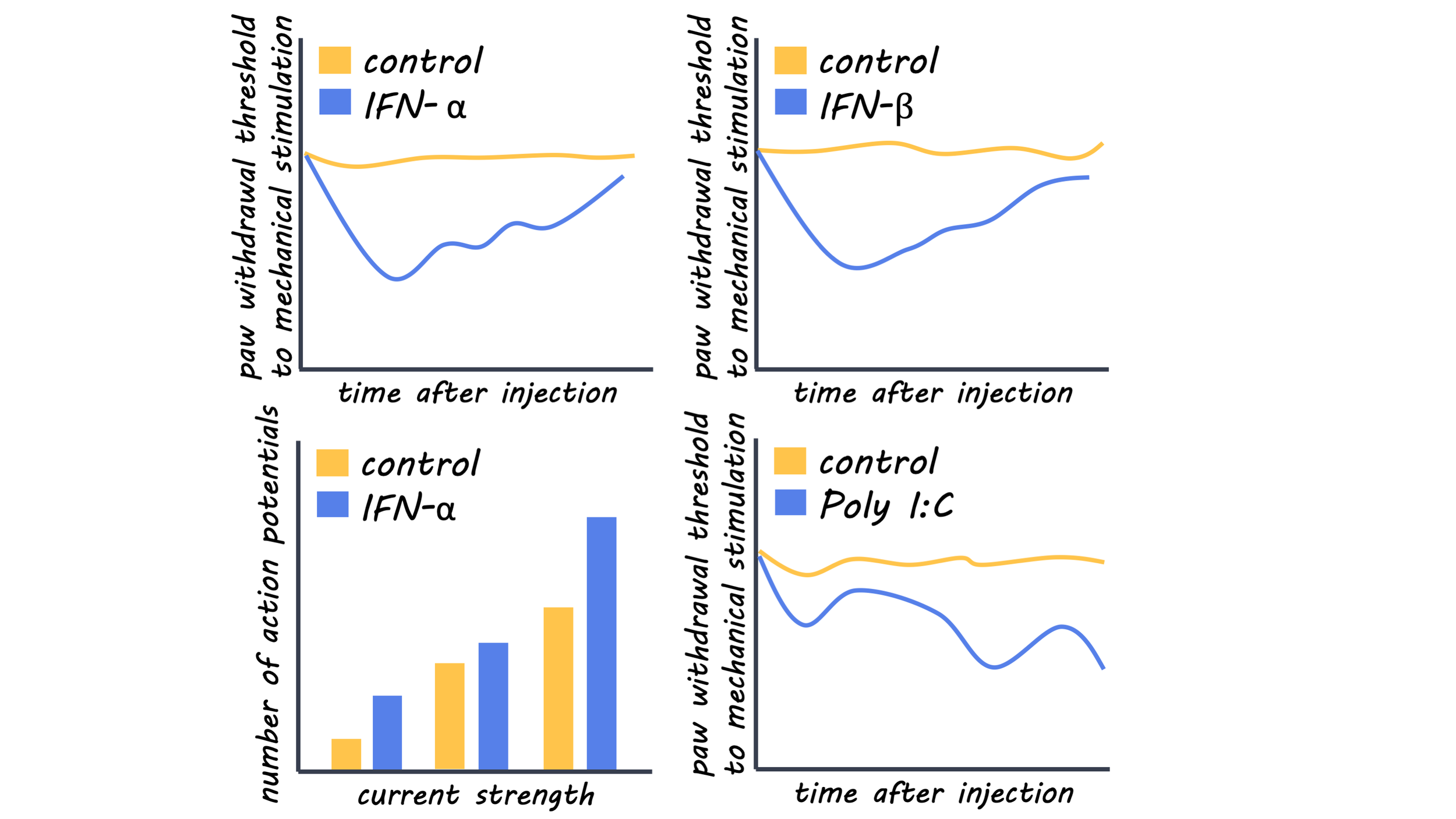
The authors found that administration of IFN-α and IFN-β, but not saline, in mice caused increased hypersensitivity to mechanical stimulation with no change in sensitivity to thermal stimulation. They confirmed that the majority of dorsal root ganglion cells expressed the subunits for IFN receptors, suggesting that IFN-mediated nociceptive responses are communicated to the brain via these receptors. Then, the authors determined that the application of IFN-α and IFN-β quickly activated downstream signaling molecules in the MNK-eIF4E pathway. They found that compared to controls, transgenic mice with disruptions in the MNK-eIF4E pathway had reduced hypersensitivity to mechanical stimulation following IFN administration, suggesting this pathway is critical for IFN-mediated nociceptive pain responses. Next, the authors determined that dorsal root ganglion neurons treated with IFN had increased neuronal excitability compared to controls. Notably, treatment with IFN reduced the latency of action potential initiation, suggesting that IFN-mediated responses in dorsal root ganglion neurons cause rapid neuronal hyperexcitability that coincides with activation of the MNK-eIF4E pathway.

pain_image_may5.png

Finally, the authors showed that administration of poly I:C increased mechanical and thermal hypersensitivity in wild-type mice, but not in transgenic mice with disrupted MNK-eIF4E pathways. They found that direct application of poly I:C to dorsal root ganglion neurons did not cause an increase in the signaling molecules in the MNK-eIF4E pathway, which suggests that the in vivo nociceptive response to poly I:C is likely mediated by the endogenous release of IFN that acts on dorsal root ganglion neurons. 

What’s the impact?

This is the first study to provide evidence for a mechanism by which a viral infection, which causes the release of IFN, can rapidly induce nociceptive responses. The authors showed that type 1 IFNs act via the MNK-eIF4E signaling pathway to produce increased mechanical hypersensitivity. Together, these findings highlight the relevance of the IFN to MNK-eIF4E pathway as a potential target for the development of treatments to alleviate viral-induced acute and chronic neuropathic pain. 

Pain_quote_may5.jpg

Barragán-Iglesias et al. Type I Interferons Act Directly on Nociceptors to Produce Pain Sensitization: Implications for Viral Infection-Induced Pain. The Journal of Neuroscience (2020). Access the original scientific publication here.