
Vascular and Immune Cell Disease Mechanisms in Neurological Disease
Post by Lila Metko
The takeaway
There is a link between cerebrovascular dysfunction (i.e., dysfunction in the blood vessels of the brain) and neurological diseases, yet how genetic variants in cerebrovascular cells influence the risk of disease is unknown. The authors developed a novel technology called MultiVINE-seq to understand how gene variants influence disease, and found distinct mechanisms associated with both cerebrovascular and neurological disease.
What's the science?
Over 90% of disease-associated genetic variants reside in non-coding regions of our genetic material. It is estimated that these disease-associated variants are active in a cell-specific manner. There is a clear relationship between cerebrovascular pathology and neurological diseases like Alzheimer’s disease; however, the genetic associations underlying these pathologies remain unclear. Currently, most of our knowledge on these genetic variants that influence disease risk is from investigating non-vascular cell types, due to the difficulty in recovering genetic material from vascular cell nuclei. This week in Neuron, Reid and colleagues developed a method for obtaining high-quality genomic data in vascular cells and integrated it with GWAS data to better understand how these genetic variants influence neurodegenerative disease mechanisms.
How did they do it?
The authors processed prefrontal cortex samples from 30 post-mortem human brains. The samples were from individuals with conditions ranging from no cognitive impairment to dementia. The MultiVINE-seq processing required collagenase III, an enzyme that specifically digests collagen fibers, and loose-fit homogenization, a type of homogenization that reduces mechanical stress. From their output of genetic material, they determined which variants were in active regulatory elements by finding out which ones were in accessible chromatin regions, and overlapping snATAC-sequence data (which measures chromatin accessibility) with GWAS data. They correlated this information with pre-mRNA transcripts to determine which gene’s expression levels were most likely regulated by the variant-containing regulatory element. Finally, they grouped the genes for which variants likely affected each category of disease to see if there were any commonalities between genes in the same disease group.
What did they find?
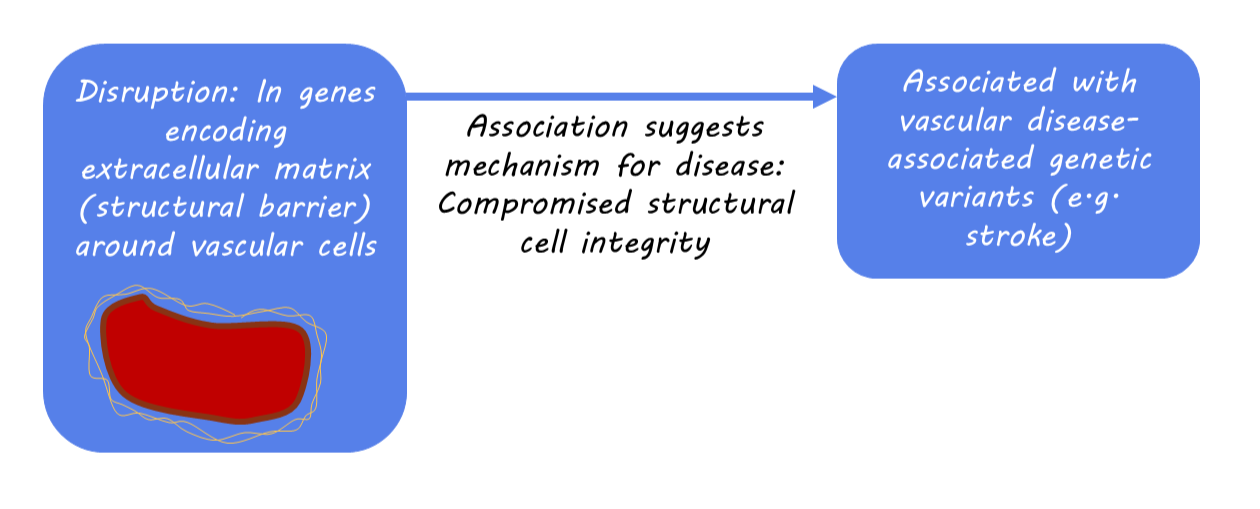
Variants associated with vascular diseases, such as stroke and aneurysm, were strongly associated with disruptions in extracellular matrix genes, which are responsible for the structural integrity of blood vessels in the brain. Thus, the vascular variants may contribute to a deterioration of the structural integrity of blood vessels, leading to leakage in the brain. Variants associated with Alzheimer’s disease were associated with proteins involved in the activation of immune cells and immune system signaling molecules. One Alzheimer’s Disease variant was specifically associated with regulating a protein, PDK2B, that is involved in the activation of T cells. T cells are a type of immune cell that destroys cells that contain pathogenic or foreign material. Further experiments showed that PDK2B and T cells were found near β-amyloid plaques. This suggests that this disease variant may weaken the brain’s immune response and ability to clear protein fragments, such as the material that builds up, forming amyloid plaques in the brain’s of people with Alzheimer’s disease.
What's the impact?
This study is the first to provide insight intot how disease-related non-coding variants in vascular and immune cells may contribute to neurodegenerative disease pathology. This is important because many neurological diseases are associated with deficits in neural vasculature or immune dysfunction. Having this information can equip scientists to better develop biomarkers or treatments for these disorders.