
Using New Technology to Classify Migraines
Post by Anastasia Sares
The takeaway
This study shows two exciting new technologies (functional near-infrared spectroscopy and machine learning) being put to use for the eventual better diagnosis of migraines.
What's the science?
Migraines are debilitating health episodes that include symptoms like nausea, painful headaches, fatigue, and light or sound sensitivity. It is relatively common, affecting over 1 in 10 people, with women three times more likely to suffer migraines than men. For some people, migraines also come along with an aura—a neurological abnormality like distorted vision.
Having migraines with auras is a risk factor for other conditions like stroke and heart attack, so it is important to identify them early. However, migraine diagnosis is not based on an objective test, but by a questionnaire filled out by the patient. This has two problems: first, people are not great at remembering all of their symptoms while sitting in the doctor’s office filling out a form, and second, doctors have limited time to tease out these symptoms during an appointment.
This week in Biophotonics, Gulay and colleagues used a relatively new neuro-imaging technology, functional Near-Infrared Spectroscopy (fNIRS), combined with machine learning to classify migraine patients with and without aura, as well as no-migraine control participants.
How did they do it?
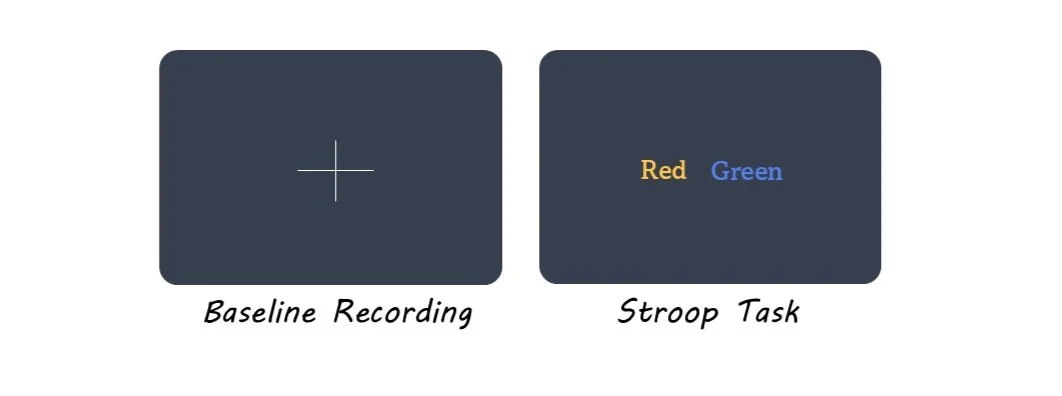
The authors performed fNIRS scanning on 32 participants, eight of whom had migraines with aura, twelve of whom had migraines without aura, and twelve of whom had no migraines at all. The participants sat for a 20-second rest period followed by a 3-minute Stroop task while an fNIRS machine recorded data. The Stroop task is an executive function task where participants are required to use inhibition when presented with a word (e.g., "red") printed in a different color (e.g., blue) and asked to name the color of the ink while ignoring the written word. fNIRS data is collected with a headband-like device containing tiny bulbs that shine light towards the scalp, where it scatters, some light penetrating deeper and some shallower. The headband is also equipped with sensors, which pick up the scattered light and analyze it. The light was limited to two very specific wavelengths that can be absorbed by molecules in the blood that carry oxygen (hemoglobin). In this way, fNIRS can track oxygen-rich and oxygen-poor blood as it flows in the brain just below the skull.
Once the data were gathered, the authors performed many mathematical operations on the signal to determine its characteristics: variance, entropy, and power over time, among many others. They then fed these values into a machine learning algorithm, training it to classify between the three groups of participants.
What did they find?
The model’s classification accuracy was evaluated by the leave-one-out method, in which the model is trained on all participants but one, and then asked to classify the final participant as a test. This is repeated many times with a random participant left out each time to obtain an accuracy score. The author’s model had an overall balanced accuracy of 84% to detect migraines with aura, 98% accuracy to detect migraines without aura, and 95% accuracy to detect people without migraines at all. Classification was best when using data from the left prefrontal cortex.
What's the impact?
This work shows the potential of a 5-minute neuroimaging protocol to detect migraines with aura, allowing for clinical follow-up. fNIRS is also more practical because, unlike MRI and EEG, it is less disrupted by a person’s movements; it is also less expensive than MRI and can be less time-consuming than EEG to set up.