Cells Transferred from Parent to Fetus are Important for Brain Development

Post by Lani Cupo

The takeaway

During development in the womb, some maternal cells are transferred to the fetus, seeding fetal organs, including the brain. These cells, known as maternal microchimeric cells (MMc), are shown to persist until adulthood, playing a key role in establishing homeostasis and preventing excessive synaptic pruning.

What's the science?

MMc have previously been discovered in mammalian pregnancy, however, it is unclear whether they contributed functionally to brain development or merely represented a leak of cells through the placenta. This week in Nature Communications, Schepanski and colleagues investigate the function of MMc in a mouse model of pregnancy, establishing the importance of these cells for microglia homeostasis, brain wiring, and early behavioral development. 

How did they do it?

The authors examined mouse offspring at three timepoints: at gestational day (GD) 18.5 (the end of pregnancy, roughly equivalent to the end of the second trimester of human pregnancy), postnatal day (PND) 8, and PND 60 (early adulthood). The authors’ comprehensive approach can be broken down into three stages: 1) identify and characterize MMc in development, 2) explore the purpose of MMc by reducing the number in a mouse model, and 3) restore MMc in this model to confirm the effect.

1) First, the authors searched for the presence of MMc at each timepoint and used a cell-identification technique known as flow cytometry to examine the location and identity of MMc in the brain. To further explore cellular diversity among MMc, the authors used single-cell RNA-sequencing to cluster the cells into nine different groups, and then identify the cell types based on what genes each group differentially expresses.

2) After the initial characterization, the authors created a genetic mouse line with reduced MMc to test the impact on offspring. They examined a) the number of immune cells in both groups (MMcLow, a group with fewer MMc, and MmcPos, the control group), reporting results at GD 18.5 and PND 8. They also examined b) gene expression with RNA-sequencing, c) the concentration of glutamatergic synapses, indicating short- and long-range projection neurons, d) electrical activity in the prelimbic area of the prefrontal cortex (PL) and hippocampus, and e) behavioral differences between offspring groups.

3) Finally, the authors create another model where they re-introduce MMc to developing fetuses from the strain that have fewer MMc in an attempt to reverse the effects, which would provide strong evidence that the differences they see are truly due to the lack of MMc.

What did they find?

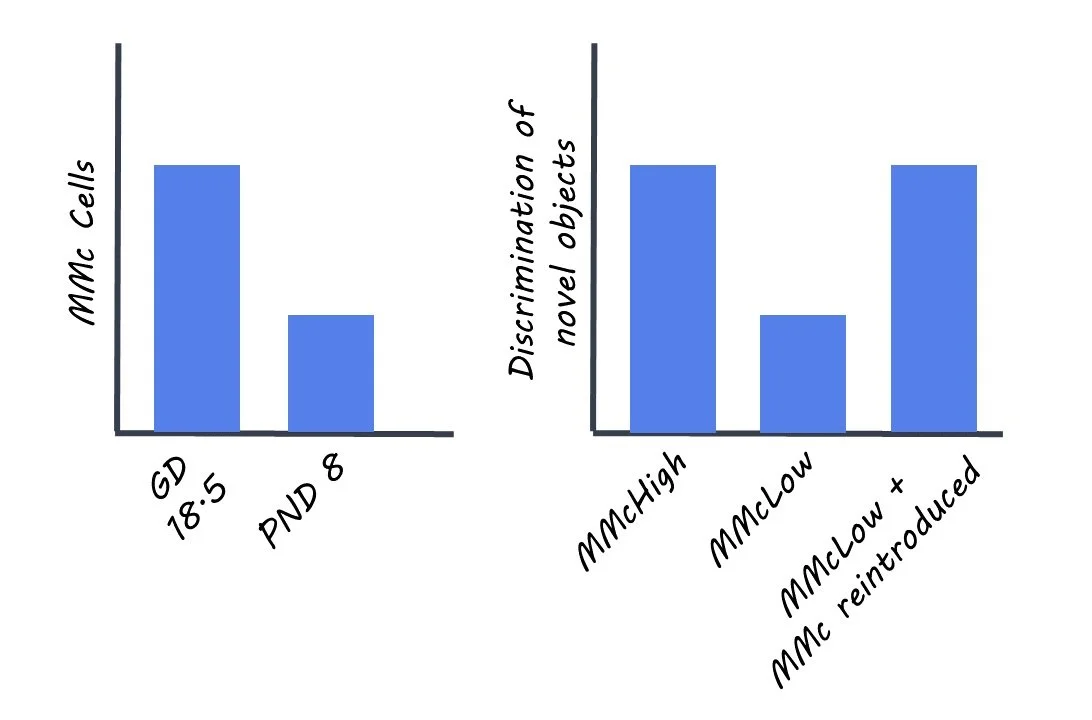
1) First, the authors found MMc declined with age but were still present in early adulthood (PND 60). The majority of MMc were comprised of immune cells, including T and B cells and microglia. These cells were present largely in the prefrontal cortex and hippocampus, as well as other brain regions such as the cerebellum and limbic areas. Of the nine clusters, 5 comprised microglia, and the remaining groups were T, B, endothelial, and neuron-like cells.

2) Comparing the MMcLow and MmcPos groups, the authors found at GD 18.5, more microglia but fewer T and B cells in the MMcLow group than in the MmcPos group, although these differences resolved at PND 8. Additionally, the authors found differentially expressed genes suggesting a hyperactive immune system in the MMcLow group. Examining the glutamatergic projection neurons, the authors found fewer synapses in the MMcLow group, indicating fewer short and long-range projections. In terms of electrical activity in the PL and hippocampus, the authors report reduced activity in the MMcLow group, as well as weakened coupling between the prefrontal cortex and hippocampus, implicating this circuit. Finally, in terms of behavior, the authors found changes in ultrasonic calls pups make when separated from their dams, potentially indicating emotional distress in the MMcLow group compared to MmcPos. They also report a difference in recognition memory, with MMcLow pups exploring novel objects less than controls, an important behavior for early development.

3) In the rescue group, where MMc were introduced with adoptive transfer to an MMcLow group, none of the findings differed between MMcLow and the control group.
What's the impact?

This extensive study establishes the role of MMc in the developing brain, showing that they are important in promoting microglia homeostasis, brain wiring, and behavioral performance. This study could provide a framework for future research to develop early biomarkers of neurodevelopmental disorders.
Access the original scientific publication here.

Posteromedial Cortex Shapes how Stimuli are Represented During Working Memory

Post by Lina Teichmann

The takeaway

The posteromedial cortex (PMC) plays a key role during visuospatial working memory tasks. The results of the current study suggest that the PMC is specifically involved in shaping stimulus representations when people are maintaining the spatial layout of different objects.

What's the science?

The PMC has been shown to be involved in visuospatial working memory tasks. In particular, prior work has shown that the PMC is centrally involved in the representation and integration of a variety of information during working memory. This week in the Journal of Neuroscience, Goddard and colleagues examined what particular function the PMC serves in working memory.

How did they do it?

Using Magnetoencephalography (MEG), a non-invasive neuroimaging method with a high temporal resolution, the authors recorded brain activity while participants performed a visuospatial working memory task. In particular, participants viewed four sequentially presented objects that appear in different locations on the screen. After a maintenance period, participants were then shown an object at one location and had to indicate whether this object-location combination had appeared in the sequence.

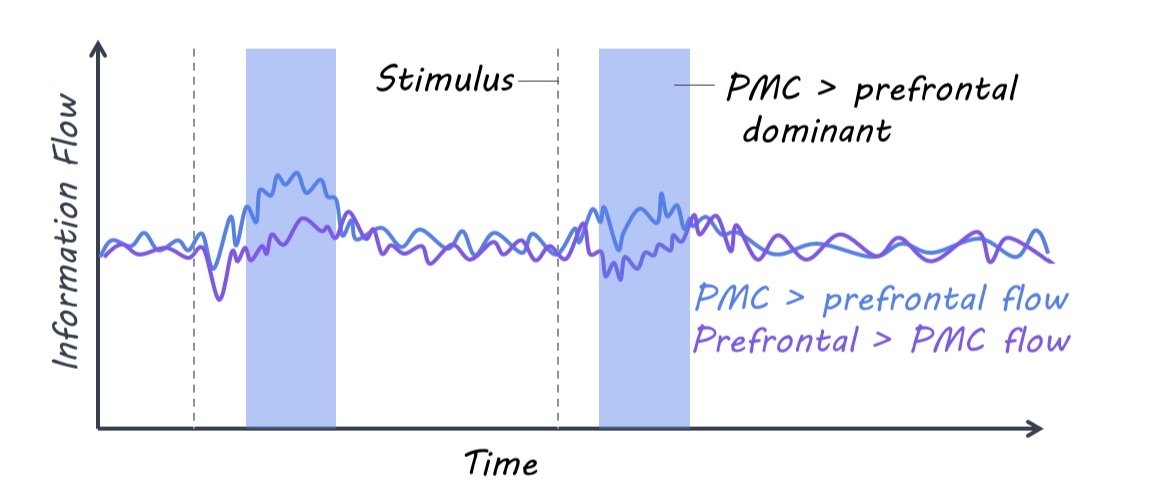
Using source-localization, brain activation patterns were extracted within different regions of interest. In particular, the authors focused on the occipital cortex, centrotemporal cortex, PMC, and prefrontal cortex. A classifier (a specific type of computer algorithm) was then trained to distinguish the pattern of brain activation evoked by viewing the different stimuli. This analysis gives us an indication of whether information about the stimulus location and identity is represented in a given region of interest. Then, Granger causality was used to examine the direction of information flow between these regions to test what type of information is relayed by PMC during working memory.

What did they find?

The findings demonstrate that object representations found in PMC have an effect on representations in the other regions of interest in the brain. In particular, the information in PMC had a strong influence on the object representation in prefrontal areas, highlighting that PMC is responsible to relay information that is needed for successful recall. 

What's the impact?

Overall, the findings here provide an important step towards understanding the concrete role of the PMC by highlighting that it relays remembered information to other brain regions during visuospatial working memory. As PMC dysfunction has been connected to Alzheimer’s disease, it is crucial to understand its functional role in the healthy brain.  

Access the original scientific publication here.

The Neural Correlates of Cognitive Fatigue

Post by Megan McCullough

The takeaway

Tasks that require cognitive control lead to cognitive fatigue over time. This cognitive fatigue is associated with high glutamate concentrations in the lateral prefrontal cortex that make activating this brain region more costly, providing a metabolic explanation for cognitive fatigue. 

What's the science?

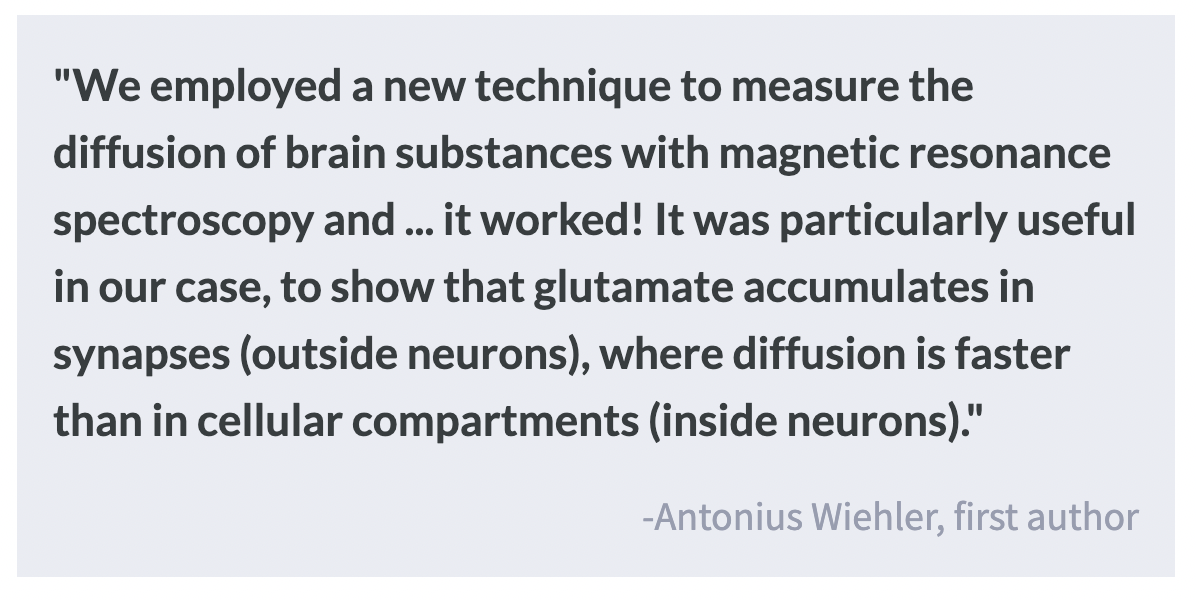
When tasks require cognitive control - mental effort beyond learned routines - there is the possibility of cognitive fatigue setting in. This cognitive fatigue then leads to difficulty in exerting continued cognitive control. Previous research has implicated increased activity in the lateral prefrontal cortex (lPFC) in tasks that require increased cognitive control, but the biological explanation for why this induces fatigue is uncertain. One proposed explanation is that fatigue comes from changes in brain metabolism as a result of exerting cognitive control. This week in Current Biology, Wiehler and colleagues used magnetic resonance spectroscopy (MRS) to track brain metabolites throughout a workday while testing for cognitive fatigue levels.

How did they do it?

Participants were randomly divided into two groups: the test group was assigned hard tasks, which require high levels of cognitive control, while the control group was assigned an easy version of cognitive tasks. The cognitive tasks lasted for 6.25 hours and involved object discrimination and the use of working memory. The participants were then evaluated for signs of mental fatigue through self-reporting measures and economic choices. The choice of a small-reward/low-cost (LC) option was a marker of cognitive fatigue as opposed to the choice of a big-reward/high-cost (HC) option. Pupil dilation during the economic decisions was also measured in the participants as a marker of cognitive fatigue. Three times a day, the authors used MRS to measure metabolites throughout the cognitive task to test the link between cognitive fatigue and brain metabolism.

What did they find?

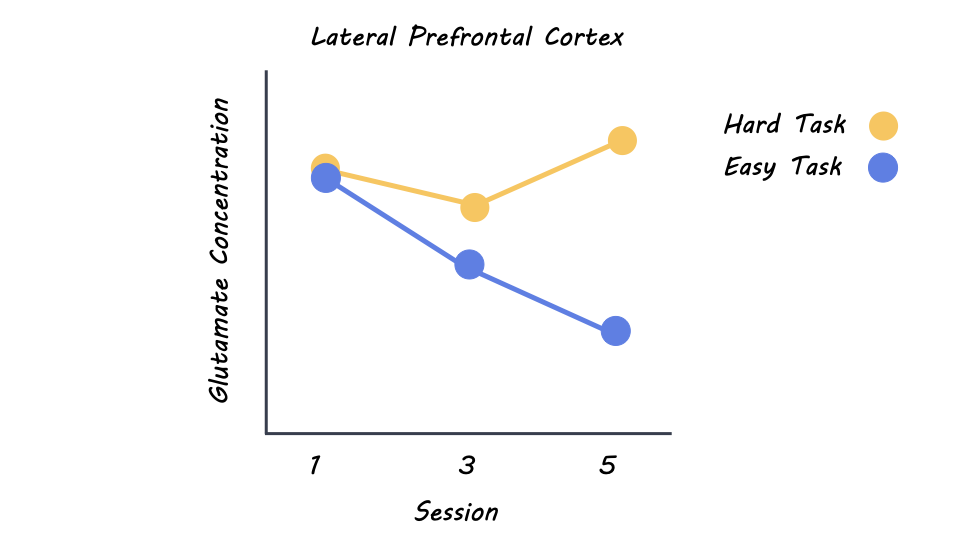
The authors found performance differences between the two groups, with higher accuracy and lower response times in the control group. There was no difference in fatigue self-reports between the two groups which suggests that subjective reports cannot capture the presence of cognitive fatigue. The authors found that compared to participants in the easy task, the participants assigned hard tasks that required increased cognitive control preferred LC options, had reduced pupil dilation during the economic choices, had high concentrations of glutamate in the lPFC, and had a higher increase in glutamate/glutamine diffusion within this brain region compared to participants in the easy cognitive task. These results are consistent with assuming there is a cost to cognitive control and support the hypothesis of a metabolic explanation for cognitive fatigue. The accumulation of glutamate in the lPFC leads to a regulatory mechanism where IPFC activation becomes metabolically costly which makes cognitive control harder to maintain.

What's the impact?

This study found a metabolic explanation behind the onset of cognitive fatigue. Exerting cognitive control for extended periods of time leads to the accumulation of glutamate which makes cognitive control more costly as time goes on. This adds to a growing body of research into the effects of cognitive work on the brain.