How We Perceive Time

Post by Leanna Kalinowski

What did we learn?

The hippocampus has long been considered important for regulating memory of elapsed time. Research in 2021 further advanced our knowledge of the mechanisms underlying this process. For example, Reddy and colleagues identified a role of hippocampal time cells in the human brain, demonstrating the capacity of these cells to store sensory information in a sequential fashion in the presence or absence of a stimulus. Another group of researchers, Dias and colleagues, uncovered how connections between the hippocampus and other brain regions regulate time perception. Specifically, they found that neurons in the medial entorhinal cortex play an important role in reproducing memorized time intervals and passing that information along to the hippocampus.

What's next?

This research paves the way in better understanding how (1) the brain measures and perceives time and (2) how this time perception is incorporated into our memory. Future research in 2022 and beyond is anticipated to further expand our understanding of the brain circuits involved in time perception.

Alternative Therapies for Psychiatric Illness

Post by Leanna Kalinowski

What did we learn?

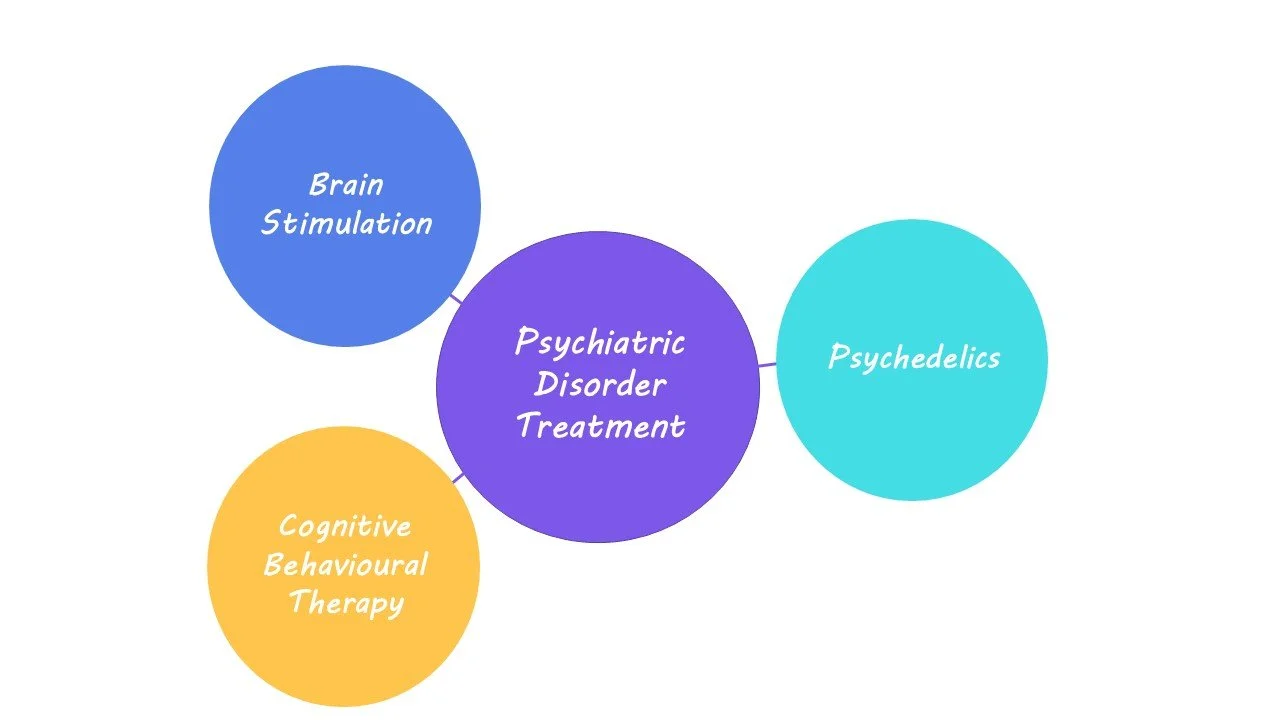
Research in 2021 took a step away from traditional therapies for psychiatric illness and towards transformative new techniques. First, we saw an increased benefit of incorporating technology into therapy. For example, the clinical benefits of personalized neuromodulation were uncovered when Grover and colleagues tested the effectiveness of non-invasive electrical brain stimulation on obsessive-compulsive behaviors. New technology, such as virtual reality, also showed promise this year when used as a delivery system for cognitive-behavioral therapy. Second, we saw an increased recognition of psychedelics as potential treatments for psychiatric disorders. For example, Shao and colleagues found that a single dose of psilocybin reduces depressive symptoms and triggers synaptic changes in the brain. Other psychedelics, such as mescaline, LSD, and MDMA, also show promise in treating disorders such as anxiety and PTSD.

What's next?

This research paves the way in better understanding how alternative techniques can be leveraged to (1) improve previously existing therapies or (2) develop new therapies for psychiatric disorders. Future research in 2022 will hopefully deepen our understanding of these techniques, and further establish their efficacy through clinical trials.

Multilingual Language Experience Affects Cognitive Function and Brain Connectivity

Post by Lina Teichmann

The takeaway

Multilingual children were shown to have enhanced executive function in comparison to monolingual children. In addition, functional connectivity in specific brain areas could be used to predict multilingual effects. This highlights that multilingualism has an effect on the brain and behaviour early on in development.

What's the science?

Being able to use several languages has been suggested to enhance executive function, as multilinguals must activate and suppress their known languages depending on the situation. This constant need to switch and juggle between languages may enhance attention and working memory. Recent studies, however, have failed to replicate these effects, and this failure may be partially due to high variability between multilinguals, age of foreign-language acquisition, level of proficiency, and the degree to which the language is used in daily life. This week in PNAS, Kwon and colleagues examined whether multilingualism in children affects executive function and brain connectivity.

How did they do it?

Using data from a large dataset of more than 1000 children (Adolescent Brain Cognitive Development, ABCD), the authors compared behavioural performances of monolingual and multilingual children with regard to working memory and attention tasks. In addition, whole-brain functional connectivity (correlated fluctuations in brain activity across different brain regions) was assessed by training a computer algorithm to distinguish the groups of children based on the connectome data only. The connectome was then further examined by comparing whether there are specific brain areas that are particularly engaged when the children perform a task and during a rest scan. To combine behaviour and neural data, the authors also used modeling approaches to predict behaviour from brain connectivity data alone.

What did they find?

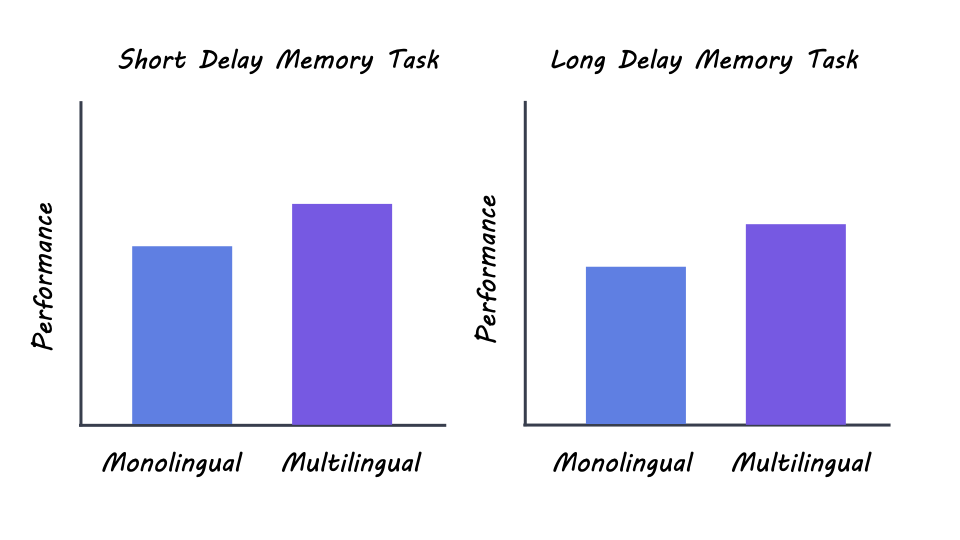
The behavioural data showed that multilingual children performed better at working memory tasks. Using the functional connectivity data alone, the authors further found that a computer algorithm could differentiate between monolingual and multilingual children. There were stronger connections between prefrontal and occipital brain areas in multilingual children than monolingual children during rest, highlighting that multilingualism has an effect on brain areas usually associated with complex cognitive functions and visual processing. To quantify the relationship between brain and behaviour for memory function for the two groups of children, the authors used connectome-based predictive modeling. The results showed that the connectome of multilingual children engaging in a working-memory task can predict behavioural performance on working-memory tasks. In contrast, this was not possible for monolinguals.

What's the impact?

The advantages of multilingual language experience have been hotly debated over the last few decades. Kwon et al. demonstrated that there is indeed an effect of multilingualism on the developing brain and behaviour. This work provides important insight into how language can impact our brain development.

Access the original scientific publication here.