Genetic Overlap Between Education, SES, and Psychopathology

Post by Anna Cranston

What's the science?

Socioeconomic status (SES) and education are known to be associated with psychiatric disorders and behaviors. However, it’s not yet clear exactly how these associations are related to our genetic risk as individuals. One way to understand this is through the use of genome-wide association studies (GWAS), which are essentially large-scale observational studies that scan the genomes from a large human population to identify potential genetic differences that might be associated with a particular trait or disease. This week in Nature Human Behaviour, Wendt and colleagues used GWAS data to determine potential genetic links across numerous psychiatric and brain traits, from depression and schizophrenia to brain volumetric changes, and how these could be potentially influenced by social factors such as our education, income or social status.

How did they do it?

The authors selected four educational factors (educational attainment, highest math class, self-rated math ability, and cognitive performance), two SES factors (household income and Townsend deprivation index), and GWAS data for many psychopathology and psychosocial factors (available from previous studies). These educational and SES factors were used to identify potential genetic variance that might lead to an increased or decreased susceptibility to particular psychological traits, such as depression, bipolar disorder, or schizophrenia. The authors used the presence of single nucleotide polymorphisms (SNPs) to identify the incidence of pleiotropy (i.e. when one gene affects multiple traits) in the sample group, and this method was used to determine genetic correlations between their selected psychological phenotypes. Since there is undoubtedly a lot of overlap in the genetic factors underlying SES/education, psychopathology, and psychosocial factors, the authors chose to use a specific statistical model, known as multi-trait conditioning and joint analysis. This model applies Mendelian randomization to disentangle this genetic overlap between traits, revealing associations that control for the genetic variance attributed to SES and educational factors. They also used an algorithm known as the linkage disequilibrium score regression (LDSC) which they used to estimate the SNP heritability of a trait. The authors then used transcriptomic profile analysis against each of the social factors to determine if there were tissue or cell-specific genetic variances between these factors, in order to ultimately pinpoint the exact genetic variation that determines these particular psychological traits in individuals. 

What did they find?

The authors found that specific genetic variance in SNPs was associated with both psychological traits including alcohol dependence, schizophrenia, and neuroticism as well as social factors such as education, income, and deprivation. For instance, a lower income was found to be highly genetically correlated with a higher deprivation index and a higher incidence of disorders such as ADHD, depression, and alcohol dependence. The group also found that genetic liability to a lower deprivation index (a measure of material deprivation) was associated with a significant increase in cortical grey matter. Education and SES phenotypes were found to be genetically correlated with neuroticism. When these relationships were controlled for, the heritability of neuroticism (specifically, the number of heritable components) increased.

anna_img_jan5.png

Transcriptomic profile analysis revealed that different psychological phenotypes resulted in differences in cortical and cerebellar tissue phenotypes. Their findings showed that better cognitive performance and higher education are genetically correlated with increased cortical and hippocampal, cerebellar, and frontal cortex enrichment. The authors also identified key genetic correlations with specific psychological traits. They found that conditioning for genetic effects associated with education and SES factors uncovered mechanisms related to excitatory neuronal cell types for bipolar disorder and schizophrenia. Further, inhibitory GABAergic cell types were correlated with an increased incidence of risky behaviors in individuals. These findings suggest that while individuals may be genetically predisposed to certain psychological disorders, their risk may be significantly moderated by social factors such as education and socioeconomic factors such as income and deprivation.

What's the impact?

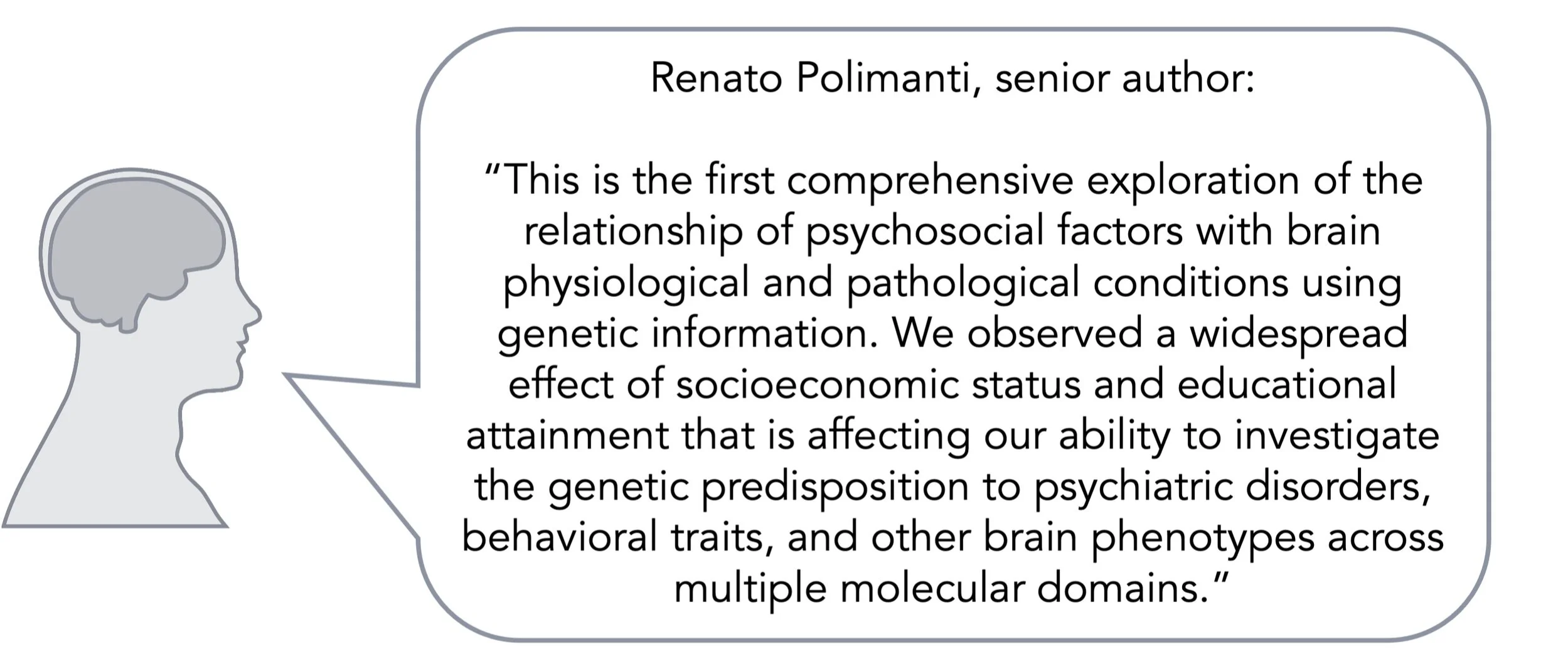
This study identified specific genetic variation underpinning both psychopathological and psychosocial traits. The authors’ findings have identified the underlying genetic variation that is shared between these psychological disorders, as well as novel tissue and cell-specific variation within each of these psychological groups. These findings highlight the importance of specific brain regions and their shared transcriptional regulation in human mental health and disease, which may provide future insight into the biological basis of these complex psychological disorders.
anna_quote_jan5.jpg

Wendt et al. Multivariate genome-wide analysis of education, socioeconomic status and brain phenome (2020). Access to the original scientific publication here.
What Do Day-Night Cycles Have to Do With Stroke Treatment?

Post by Anastasia Sares

What's the science?

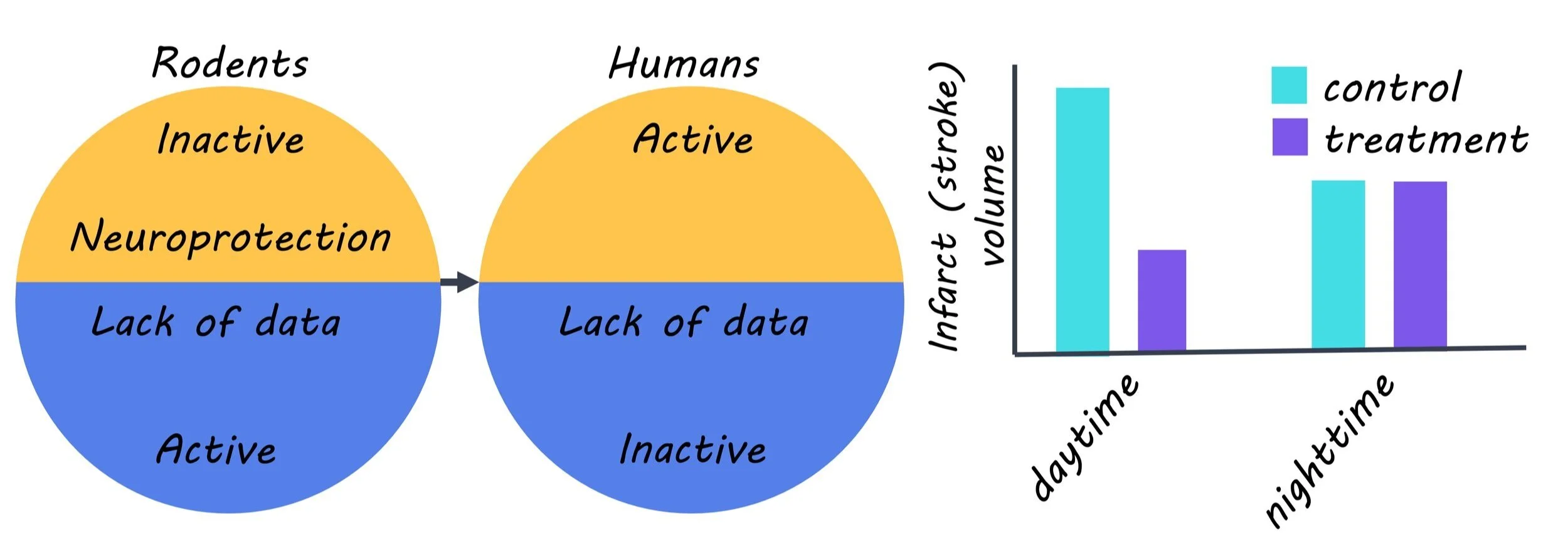
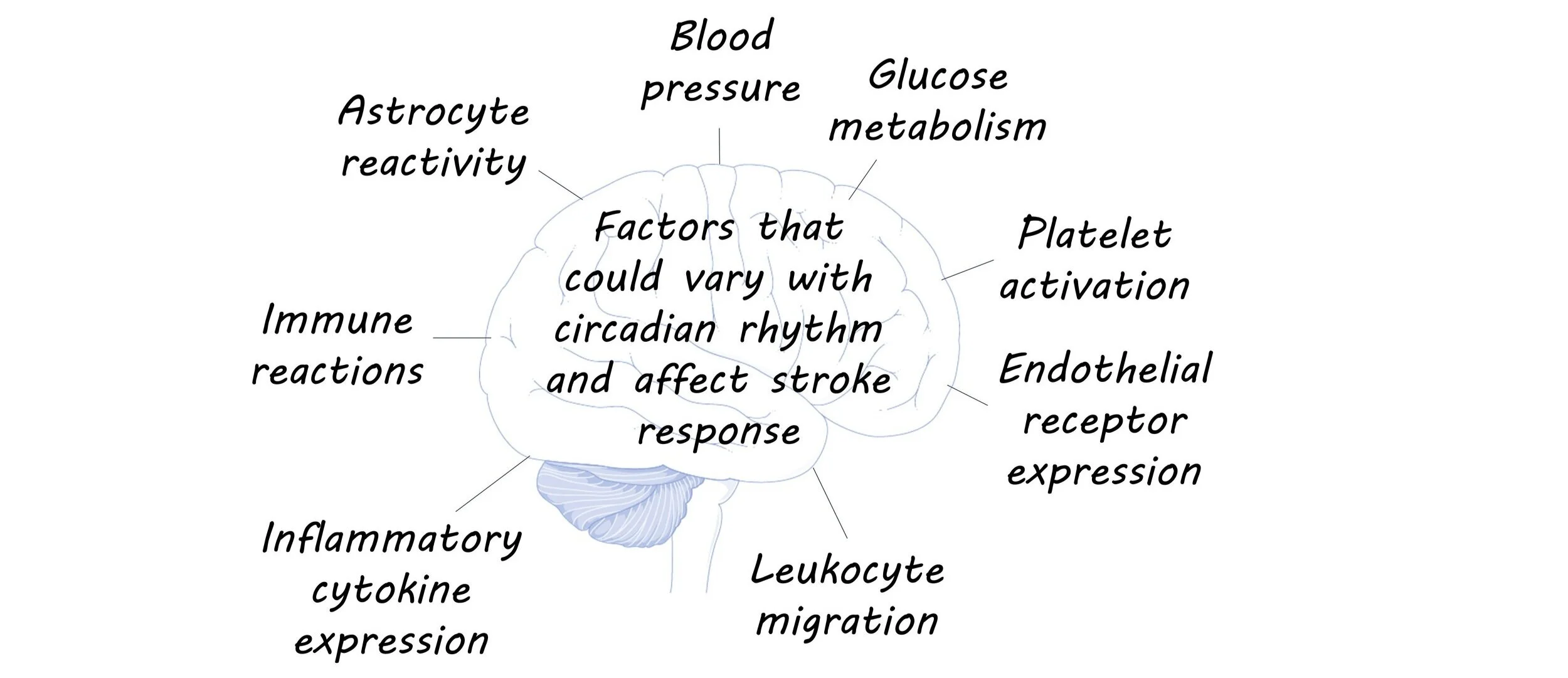
Rats and mice are nocturnal: they are active during the night-time and sleep during the day. Human researchers, on the other hand, are diurnal; active in the day and sleeping at night. This simple fact means that a lot of pre-clinical trials (testing medication or treatment on an animal before it is tested in humans) happen during an animal’s sleep cycle, while most human stroke cases occur while the individual is awake. Sometimes a treatment’s effectiveness can vary depending on what point in the sleep cycle, or circadian rhythm, it is administered. This has recently proven to be the case with stroke, which happens when blood flow is blocked from one region of the brain (for example, by a blood clot). This week in Journal of Cerebral Blood Flow & Metabolism, Boltze and colleagues published a commentary about why circadian cycles matter for stroke treatment, signaling that we may have to adapt our methods for clinical and pre-clinical trials to accommodate these day-night cycles.

What do we already know?

In June of 2020, another team of researchers (Esposito and colleagues) examined a number of new stroke treatments that had passed the pre-clinical phase but failed at the clinical phase. In other words, these treatments seemed to work in rats or mice, but they didn’t benefit humans in the same way. The team showed that when the rodents were tested during their “active” phase (night-time) instead of their “inactive phase” (daytime), many of the treatments were not effective, just as they had seen in humans during the day.

Esposito and colleagues found that the penumbra, the brain tissue at the edge of the zone affected by a stroke, was smaller if the animals were awake at the time of injury. The neurons in the middle of the stroke zone will almost certainly die off, but the penumbra is alive for a little longer. It too, however, can die off in the hours following a stroke if treatment is not delivered quickly. The team suspected that the pre-clinical treatments didn’t work during the animal’s active time of day because the penumbra was smaller and there simply wasn’t much brain tissue left to treat.

Anastasia_1.jpg

What’s new?

Boltze proposed some ways of addressing circadian rhythm in future experiments. Some ways forward include testing diurnal animals like dogs or testing nocturnal animals during their active cycle (reversing the light/dark cycle in animal facilities so that human and rodent cycles align). Stroke treatments may also need to differ depending on the time of day the stroke occurs. The authors suggest that, for pre-clinical trials of new treatments, “the effect of intervention time should be systematically investigated,” documenting how well the treatment works during different times of the day. Then, during the clinical phase, a patient who presents with a stroke at night-time could be assigned to a different clinical trial than someone who comes in during the day, making sure that circadian rhythm is accounted for.

Anastasia_2.jpg

What's the bottom line?

Though humans share many features with our mammal cousins, it is important to remember that no animal model is perfect. This work provides an example of how small differences between human and rodent physiology can result in different responses to treatment. This recent research brings awareness to circadian rhythms as an important factor in pre-clinical trial development.

Boltze et al. Circadian effects on stroke outcome – Did we not wake up in time for neuroprotection? Journal of Cerebral Blood Flow & Metabolism (2020). Access the recent commentary here, and theoriginal Nature article by Esposito et al. here.

How the Hippocampus Builds Predictive Spatial Maps

Post by Giulia Baracchini

What’s the science?

Place cells, a type of neuron in the brain’s hippocampus, are involved in recreating spatial maps of the external world and thus play a key role in spatial learning and memory. Spatial learning requires the reactivation of place cells after spatial encoding has occurred, a phenomenon called place cell replay. However, place cells’ spatial representations are not static. Rodent studies have shown how place cells’ spatial representations are formed as animals learn and adapt to their changing environments. How place cell replay processes dynamically evolve during spatial learning remains unexplored. This week, in PNAS, Igata and colleagues tested how place cell replays change as rats learn a spatial task. 

How did they do it?

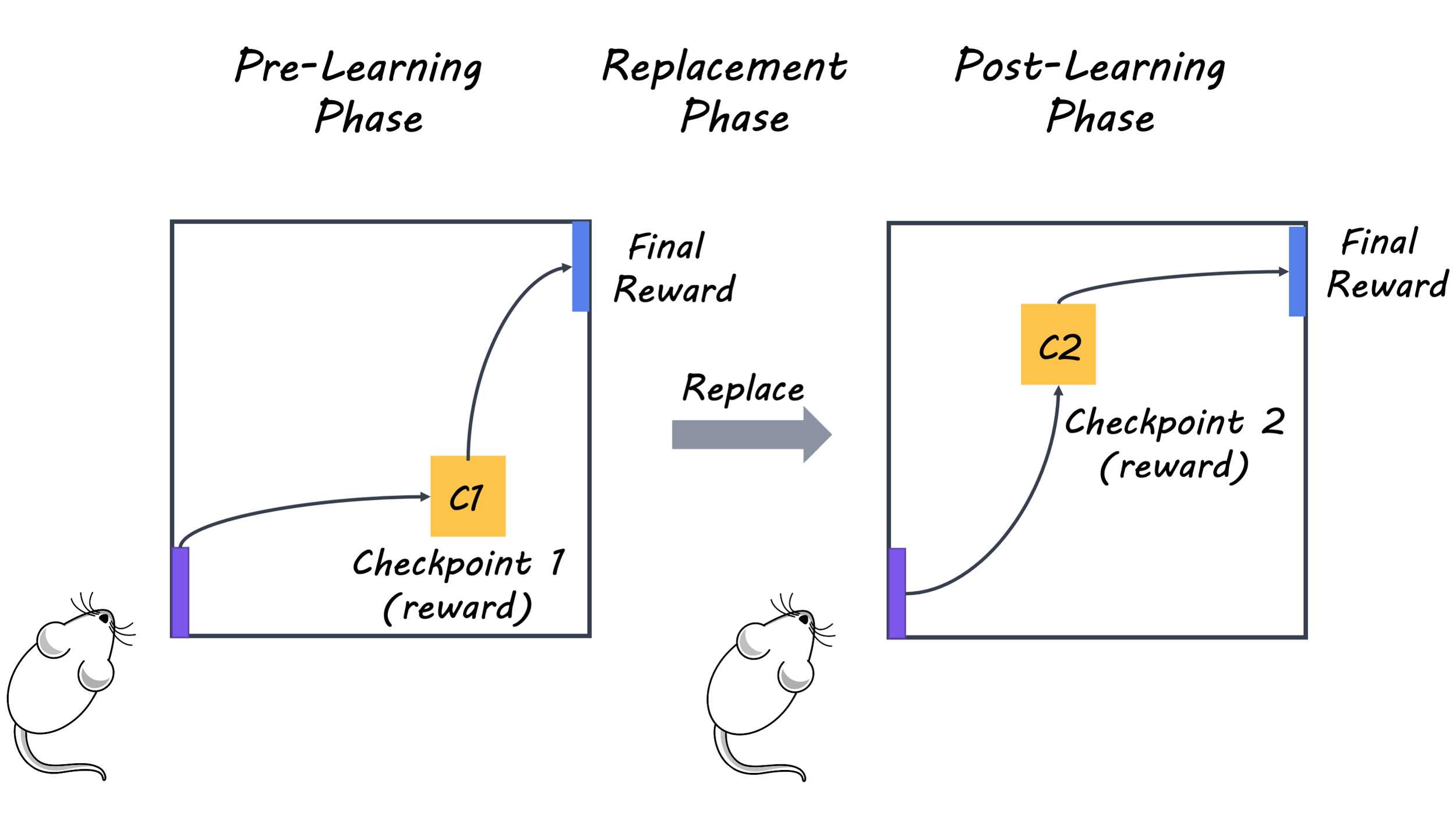
Rats were trained to run from a starting area to a checkpoint where they were given an intermediate reward, and then to a goal area where they received a final reward (pre-learning phase). After a few trials, the authors changed the location of the intermediate checkpoint and reward, requiring the rats to update their navigation strategies in order to obtain the reward (replacement phase). The animals eventually learned to run along the new path where they would receive a reward (post-learning phase). 

Learning_img_Dec28.png

While the rats were performing the task, the authors recorded the spiking activity and theta-sequences (a measure of the spatial organization of the place cells) of multiple place cells located in the dorsal hippocampal CA1 region. They quantified the presence, frequency, directionality and sequence strength of sharp-wave ripple (SWR)-associated synchronous spikes, which are bursts of activity during which hippocampal place cells are activated. These reactivations of hippocampal place cells are referred to as place cell replays. They then used a statistical model (Bayesian decoding) to estimate how the rats’ spatial behaviour was represented by place cell replays. Lastly, to provide evidence for a causal link between learning-related replays, and animal behaviour during spatial learning, the authors transiently suppressed SWR-associated synchronous spikes after the replacement phase. They did so by selectively stimulating the ventral hippocampal commissure and delivering closed-loop feedback electrical stimulation.

What did they find?

The authors found that throughout the different learning stages, rats built a spatial representation of the environment by primarily recruiting (i) stable (i.e., similar across stages) sets of hippocampal place cells along with (ii) sets of place cells showing context-dependent properties (i.e., encoding specific locations). By feeding information about these cells’ preferred locations into their Bayesian model, the authors could successfully reconstruct an animal’s position in space. These findings demonstrate the role of the hippocampus in creating abstract, generalized memory maps.

As the rats were updating their navigational strategies, the authors found a significant increase in hippocampal theta-sequences and sequential SWR-associated synchronous spikes, compared to other learning phases. Interestingly, sequential place cell replays occurred for prioritized experiences only, in other words only salient and reward-related locations were replayed by separate synchronous events. Such preferential replay events were found to be greater for newly rewarded locations. While the rats learned about the new intermediate checkpoint area, most of these replay events represented the new path in the later phase of learning, even before the animals started taking the new path. The authors also found that the content and the directionality of the place cell replays changed as a function of learning over time. Together, these findings highlight the role of the hippocampus in building predictive maps of the environment that dynamically evolve as learning takes place. Finally, the authors reported that suppressing SWR-associated synchronized events impaired learning, suggesting that place cell replays are causally involved in the stabilization of newly learned behaviours.

What’s the impact?

This study highlights the key role of hippocampal place cell replays in building predictive, dynamic maps of the external environment. Importantly, the hippocampus replays salient or prioritized experiences to effectively encode them into memory. Further, such maps change as a function of learning and predict future behaviour.

Igata et al. Prioritized experience replays on a hippocampal predictive map for learning. Proceedings of the National Academy of Sciences (2020). Access the original scientific publication here.