Hypothalamic Oxytocin Neurons Represent Fear Engrams in Rats

Post by Lincoln Tracy

What's the science?

Emotional memory representations or engrams (i.e. memory traces, stored in the brain) such as fear, are critical for survival. These engrams allow both animals and humans to sense, evaluate, and respond to dangerous situations in an appropriate manner. Two brain regions involved in the development of fear-related memories—the hypothalamus and the central nucleus of the amygdala (CeA)—are connected by oxytocin neurons. The endogenous hormone oxytocin may play an important role in modulating fear, due to its ability to modulate the salience of social cues and events. However, the exact role of hypothalamic oxytocin neurons in fear conditioning or learning is unknown. This week in Neuron, Hasan and colleagues developed a novel genetic tagging method—virus-delivered genetic activity-induced tagging of cell ensembles, or vGATE—to tag fear-activated oxytocin neurons in rat brains during fear conditioning.

How did they do it?

First, the authors developed the novel genetic method vGATE in a small subset of hypothalamic oxytocin neurons. This method uses a c-fos promoter and three different viruses to identify and permanently tag a small subset of neurons with fluorescent proteins. After confirming that their model worked, they investigated what proportion of the hypothalamic oxytocin neurons contributed to the anxiolytic effect and how these neurons were recruited during fear using a fear conditioning paradigm. They then analyzed brain slices to determine whether the hypothalamic oxytocin neurons projected to the CeA. The authors also used optogenetics—a technique in which neural activity can be controlled by shining light on the vGATE neurons—to investigate whether fear-related behaviors could be controlled. They used histology and electrophysiology to investigate potential anatomical and molecular changes in the brain following fear experience. Finally, they introduced a novel context to the fear conditioning paradigm to investigate the role of hypothalamic oxytocin neurons in fear extinction.

What did they find?

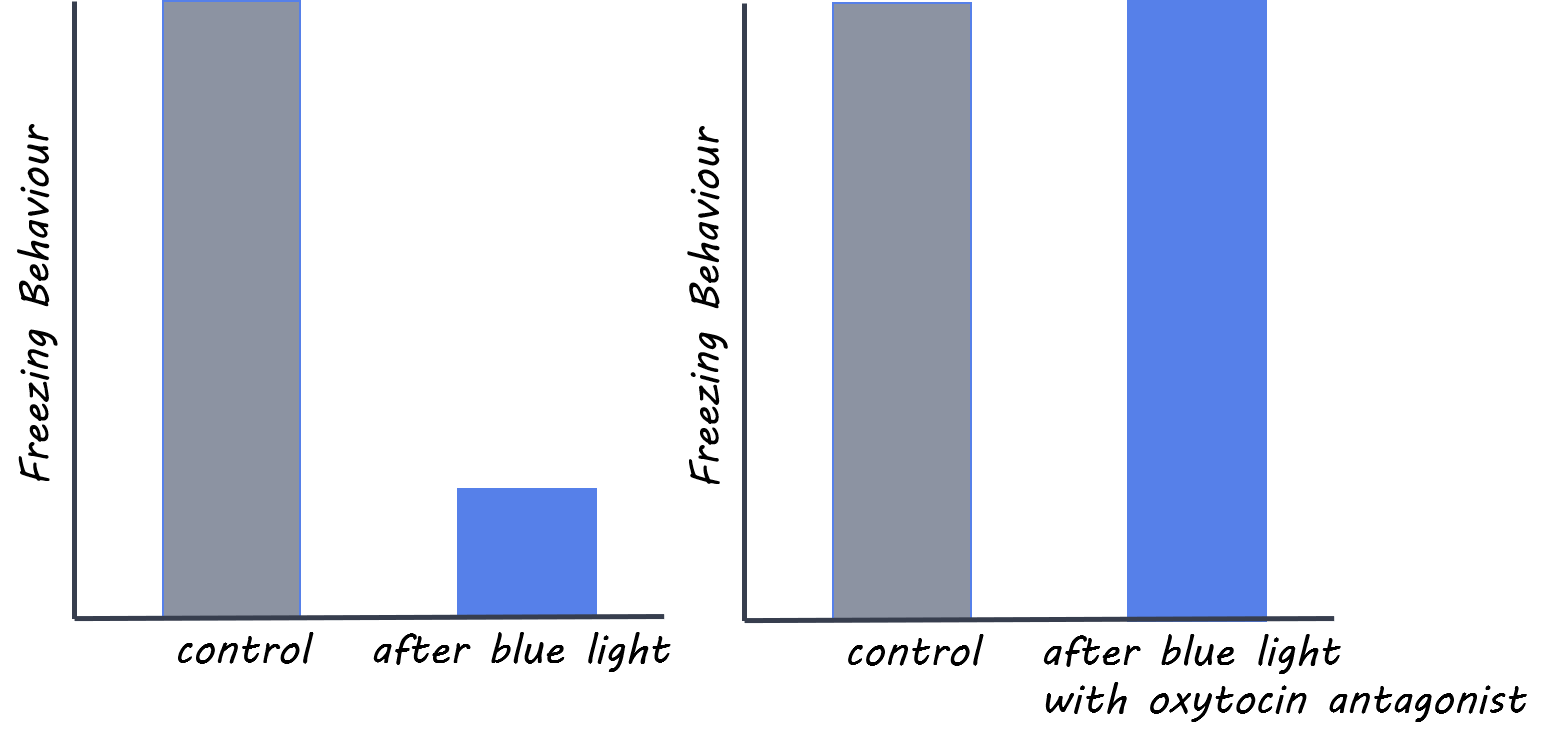
First, the authors found that only a small proportion of the hypothalamic oxytocin neurons—approximately 13 percent—were active during the expression of fear. Second, they found that the majority of vGATE hypothalamic oxytocin neurons projected to the lateral part of the CeA. Third, when the vGATE oxytocin neurons were optogenetically simulated with a blue light there was a substantial reduction in the amount of time the rats were frozen with fear. Fourth, they found that the vGATE oxytocin neurons showed increased glutamatergic—but not oxytocinergic—transmission within the medial CeA during fear exposure. Finally, they found that inhibiting the vGATE oxytocin neurons exclusively impaired fear extinction, suggesting that fear extinction involves blocking oxytocin and glutamate mediated neural modulation in the CeA. These findings suggest that the vGATE oxytocin neurons represent a neuromodulatory memory trace that is a vital contributor to controlling fear-related memories and behaviors.    
lincoln.png

What's the impact?

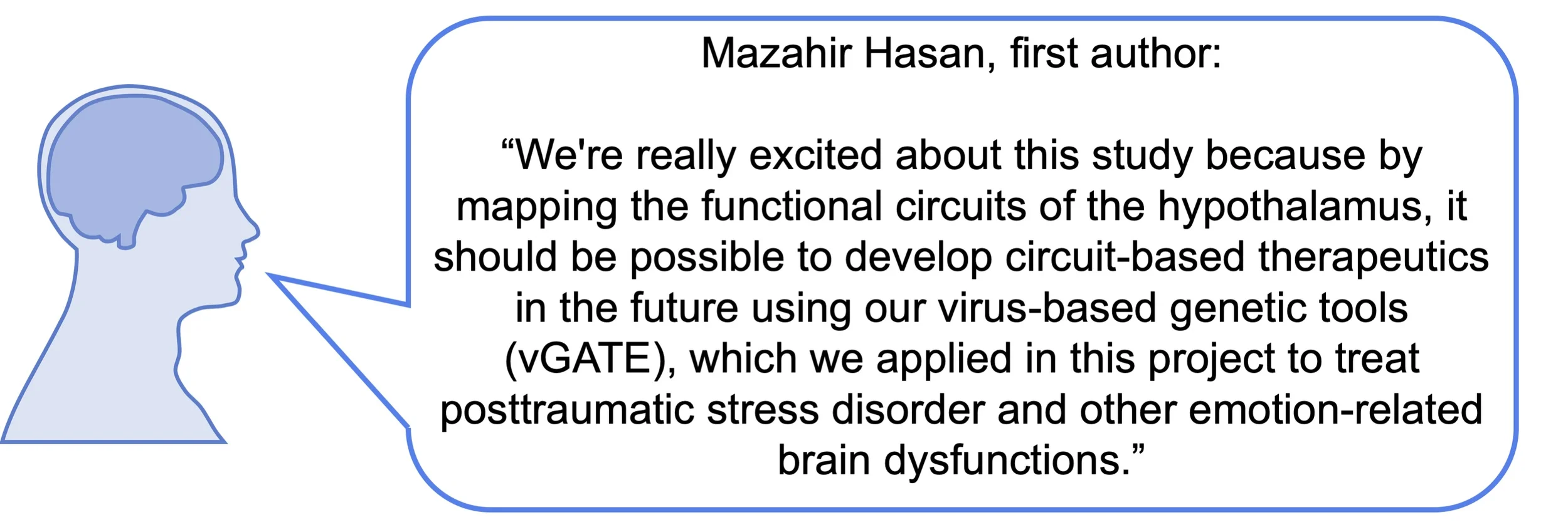
This study is the first to demonstrate that vGATE-assisted hypothalamic oxytocin neurons are adequate to drive fear-related behaviors and are required for extinction of these behaviors. Importantly, experiencing fear leads to large amounts of neural plasticity, bringing about a shift in the lateral CeA from oxytocin signaling to glutamate signaling. These findings have important implications for future investigations of the pathophysiological mechanisms that underlie emotion-based mental disorders (such as PTSD) and their potential treatments, including exogenously administered oxytocin and virus-delivered genetically based therapies.
Hasan_quote_may21.jpg

Hasan et al. A Fear Memory Engram and Its Plasticity in the Hypothalamic Oxytocin System. Neuron (2019). Access the original scientific publication here.

Glutamate Receptor Dysregulation and Suicidal Thoughts in PTSD

Post by Deborah Joye

What's the science?

Post-traumatic stress disorder is a condition in which individuals experience persistent anxiety, flashbacks, and intense fear after a traumatic event. People who experience PTSD are at higher risk for developing suicidal thoughts, but the reasons why are not understood. One potential target implicated in mood and stress disorders is metabotropic glutamate receptor type 5 (mGluR5), which moderates activity of other receptors critical for synaptic plasticity and emotional learning. Previous work has identified higher mGluR5 availability and an association between increased mGluR5 gene expression and suicide in individuals with PTSD. This week in PNAS, Davis, Esterlis and colleagues use positron emission tomography (PET) to demonstrate that suicidal PTSD individuals have more mGluR5 availability in frontolimbic regions than individuals with PTSD with no suicidal thoughts, those with major depression and healthy controls, suggesting that mGluR5 dysregulation may serve as a biomarker of suicidality in PTSD specifically.

How did they do it?

The authors recruited 29 individuals with PTSD, 29 individuals with major depression, and 29 healthy controls. Participants completed physical, psychiatric, and neurological examinations during their initial visit to establish their diagnosis and rule out any other major illnesses. Participants also filled out a report on the day of their scan in order to assess suicidal thoughts. Participants were injected with [18F]FPEB, a radioligand with high selectivity and specificity for mGluR5 (e.g., a radioactive substance that selectively binds to mGluR5). Individuals participated in a PET scan and data were analyzed in five key frontolimbic brain regions – the dorsolateral and ventromedial prefrontal cortices, the orbitofrontal cortex, the amygdala, and the hippocampus. The authors analyzed associations between mGluR5 availability and PTSD, depression, suicidal thoughts, and scores from mood and anxiety tests.

What did they find?

Overall, the authors found that mGluR5 availability was higher in individuals with PTSD with suicidal ideation relative to those without suicidal thoughts, those with major depression, and healthy controls. Availability of mGluR5 was not different between those with major depression and healthy controls. Higher mGluR5 availability was associated with suicidal ideation among individuals with PTSD, but not those with major depression. Scores on mood tests were positively correlated with mGluR5 availability in the PTSD group (higher scores mean more mood disturbance). Interestingly, mood test scores were inversely correlated with mGluR5 availability in the major depression group (more mood disturbance was associated with lower mGluR5). Specifically, more mood disturbance was associated with more mGluR5 availability in individuals with PTSD that also reported suicidal thoughts.

deb (1).png

What's the impact?

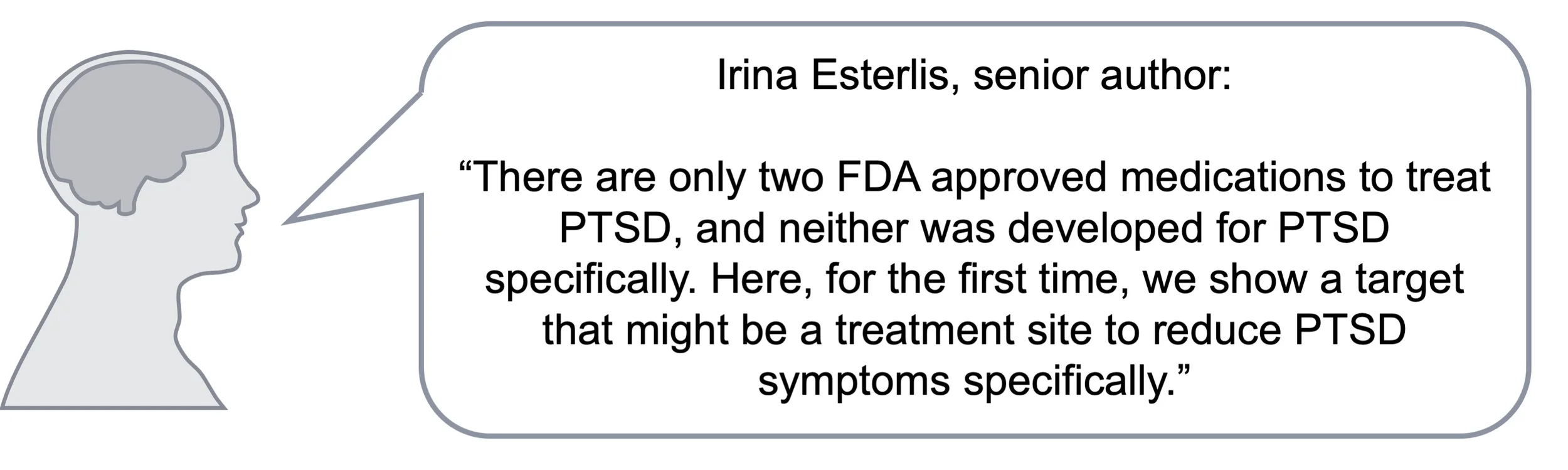
These findings confirm that mGluR5 is upregulated in the frontolimbic regions of individuals with PTSD relative to healthy controls. Notably, this study is the first to demonstrate that higher mGluR5 availability is associated with suicidal ideation specifically in individuals with PTSD but not depression. This study identifies mGluR5 as a possible biomarker and treatment target for intervention and management of suicide risk in individuals with PTSD.

Esterlis_quote_May21.jpg

Davis et al., In vivo evidence for dysregulation of mGluR5 as a biomarker of suicidal ideation, PNAS (2019). Access the original scientific publication here.
Control of Ventral Visual System Neuronal Activity Using Deep Artificial Neural Networks

Post by Elisa Guma

What's the science?

The ventral visual stream is made up of six interconnected cortical brain areas responsible for transforming the light that strikes our retinas into visual representations, allowing us to recognize objects and their relationships in the world.  In order to better understand this complex visual processing system, neuroscientists have built computational models. Recent advances have allowed for better and more precise models using deep artificial neural networks (ANN) — which allow for each brain area within the ventral visual stream to be coded as a layer in the network. This week in Science, Bashivan and colleagues investigated the use and limitations of ANNs as models of neural processing in the nonhuman primate visual system V4 layer.

How did they do it?

In order to record neural activity in the visual cortex of awake macaques, the authors implanted micro-electrode arrays with 96 electrodes into the V4 layer of the left and right visual cortex of 3 monkeys. The area recorded by each of the 96 electrodes is referred to as a “neural site” and was only included in analyses if it maintained a stable response over the 3 days of experiments. On day 1, the authors determined the receptive field of each neural site using 640 naturalistic images and 370 “complex-curvature” images (computer generated) known to drive activity of V4 neurons. They were then able to use the neural response to 90% of these images to create a mapping from a “deep layer” (one of the processing layers between input and output in the neural network model) of the ANN to the neural responses; the remaining 10% of images were used to test accuracy of the model-to-brain mapping.

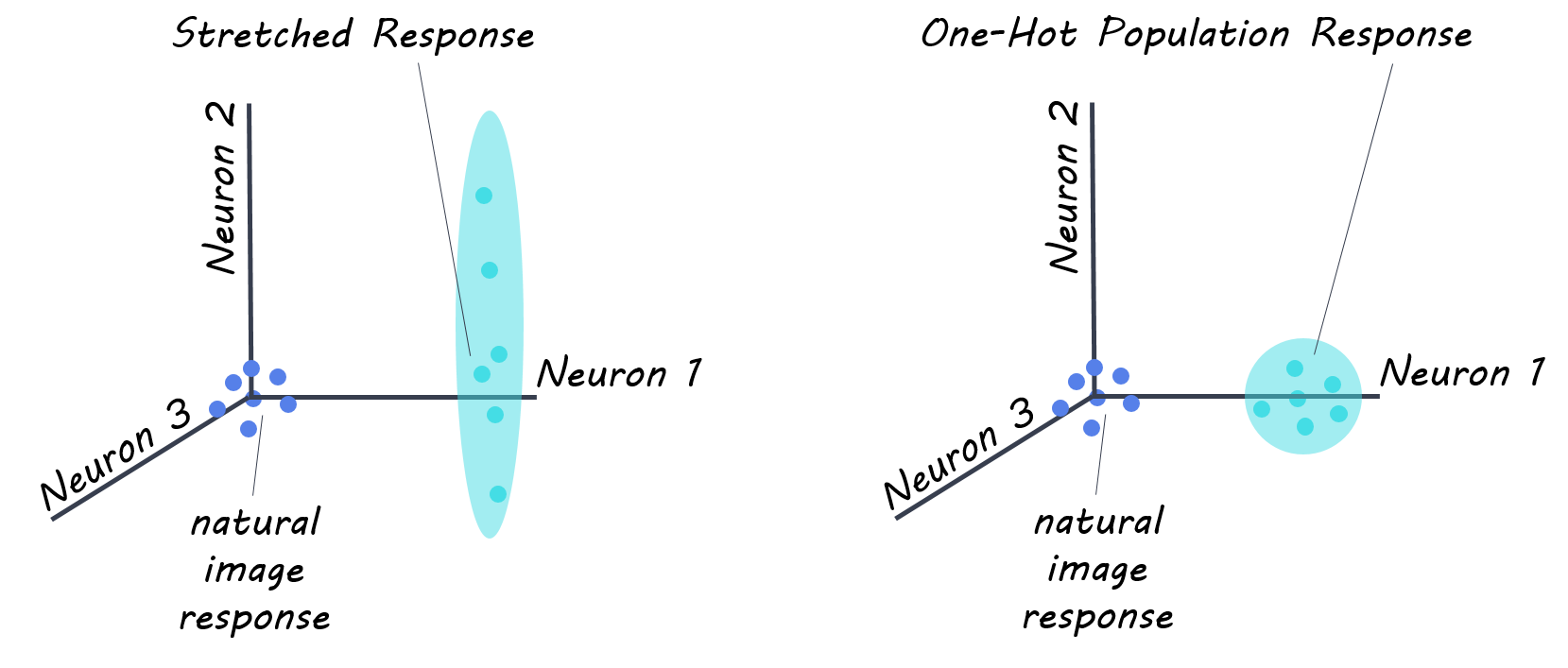
The next day, the authors performed a “stretch” control experiment, in which they instructed their model to drive the firing rate of one neural site as high as possible using a synthesized image (pattern of light) generated by the ANN. This control allowed for optimization of the response to each V4 site individually, without regard for the rest of the neural population. To investigate the system as a whole, on the third day, authors conducted a neural population state control referred to as “one-hot-population” control, to see if they ANN could generate images that would drive the response of one neural site, while simultaneously keeping the responses of all other sites low. These two controls allowed the authors to test the limitations of their model.

What did they find?

The authors recorded from 107 reliable sites for the ANN-mapping day, (52, 33, and 22 from each of the three monkeys respectively), 76 for the stretch control experiments (38, 19, 19 in each monkey), and 57 for the one-hot-population control experiment (38, 19 in each of two monkeys). First, they found their neural prediction model correctly predicted 89% of the V4 neural responses to the presented images. In their first control experiment, the “stretch” control, authors found that the algorithm generated images were able to produce firing rates 39% higher than the maximal firing rate occurring in neural sites when presented naturalistic images. This suggests that their ANN model was able to discover pixel arrangements that were better drivers of V4 visual cortex neurons. Finally, in the “one-hot-population” control experiment, the authors found that images did not achieve perfect population control (i.e. drive activity of one site only, while maintaining others at baseline), however, they did find that they were able to induce enhanced activity in the target site (by ~57% in 76% of sites) without too much of an increase in the off-target sites. This suggests that their ANN model is able to achieve better population control over the V4 neuronal population than previously possible.

Science.png

What's the impact?

These experiments show that ANN models can be used to generate images that drive firing rates at many V4 neural sites, and that these sites (even if they have overlapping receptive fields) can be partly independently controlled. The results suggest that the model has strong neuron-by-neuron functional similarity to the brain’s ventral visual stream (V4), suggesting that ANN models, although not perfect, may give new ability to find optimal stimuli to study neural systems in finer detail, unconstrained by limits of human language and intuition. This will in turn aid in our understanding of how the ventral visual system works.

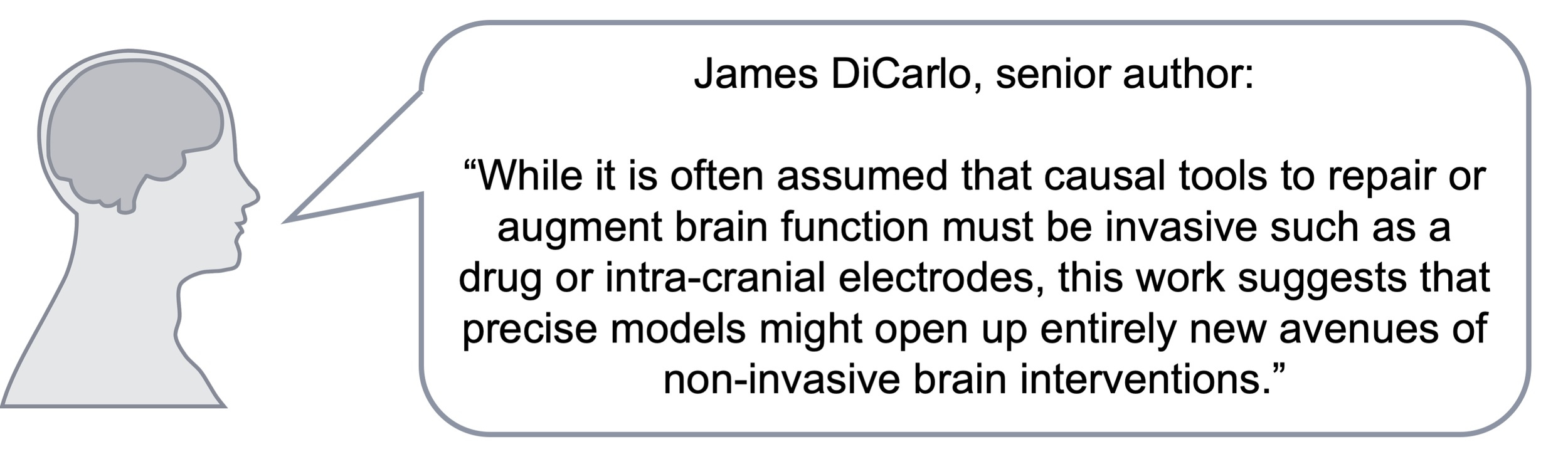
DiCarlo_quote.jpg

Bashivan et al. Neural population control via deep image synthesis. Science (2019). Access the original scientific publication here.