Membrane Voltage Regulates Correlated Ion Channel Expression in Neurons

Post by Amanda McFarlan

What's the science?

The electrophysiological function of any given neuron is determined by the number and type of ion channels that are found in the neuron’s membrane. Neurons are able to maintain specific firing patterns by coordinating the expression of ion channels, although the underlying mechanisms of this process are still not well understood. Previous findings suggest that membrane voltage might play an important role in mediating firing patterns of neurons by providing homeostatic signals. This week in the Current Biology, Santin and Schulz investigated the role of membrane voltage in maintaining patterns of ion channel expression in the neuron.

How did they do it?

The authors began by assessing correlated mRNA expression patterns for 13 different ion channels. To do this, they dissected pyloric dilator neurons from the stomatogastric ganglion (a small motor circuit in decapod crustaceans that contains ~30 neurons each with distinct, identifiable characteristics) of adult male Jonah crabs. The mRNA expression of 13 different ion channels was quantified using single-cell PCR, followed by pairwise comparison in expression patterns between each of the 13 channels and every other channel. The first experiment had two conditions: control and silent. In the control condition, pyloric dilator neurons remained intact in their normal environment within the stomatogastric ganglion. In the silent condition, incubation in tetrodotoxin (sodium channel blocker) and the transection of the stomatogastric nerve (provides neuromodulatory inputs to the stomatostatic ganglion) resulted in pyloric dilator neurons that were deprived of all neural activity, synaptic input and neuromodulation.

In a second experiment, the authors investigated whether membrane voltage was important for maintaining correlated mRNA expression patterns of different ion channels. They measured mRNA expression levels in isolated pyloric dilator neurons for 8 hours under one of three conditions: control, silent or rescued. The control and silent conditions were the same as in the first experiment. In the rescued condition, pyloric dilator neurons were deprived from all synaptic input and neuromodulation as in the silent condition, however, the membrane potential was artificially restored to its original activity pattern by using a two-electrode voltage clamp. The authors used pairwise comparisons to assess mRNA expression pattern correlations across conditions.

What did they find?

The authors used pairwise comparisons to determine the relationship between mRNA expression levels in 13 ion channels. They showed that in the control group, 33 ion channel combinations (out of a possible 78 pairs of channels) had correlated patterns of mRNA expression. In the silent condition, they found a reduced correlation between mRNA expression levels among the 13 ion different ion channels, suggesting that neural activity, synaptic input and neuromodulation may play a critical role in regulating correlated expression of ion channel mRNA.
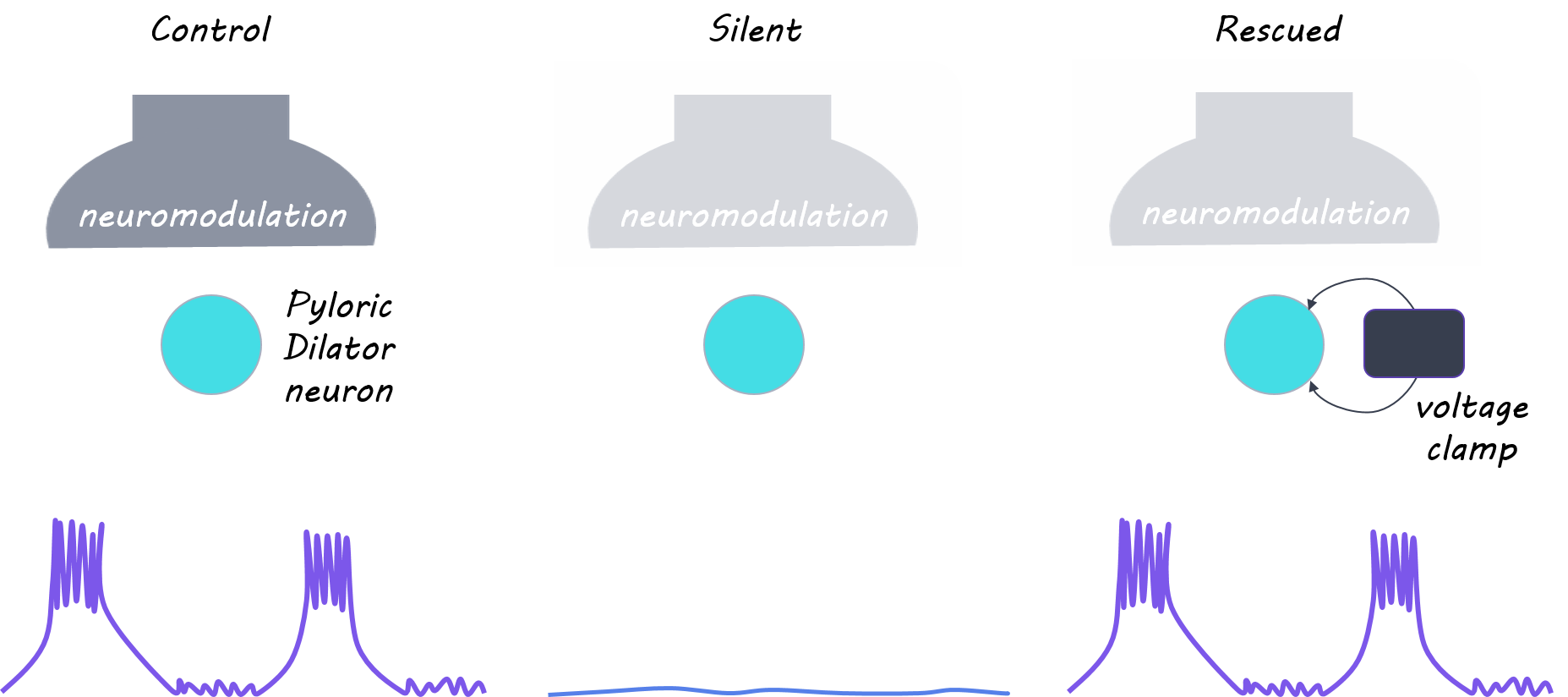
currentbiology.png

Next, the authors determined that 21 of the 33 pairs of ion channels with correlated mRNA expression patterns were shown to be significantly correlated in the control and rescued conditions, but not the silent condition, suggesting that the relationships between these ion channels are dependent on membrane voltage. The authors showed that in 4 out of 33 ion channel relationships, mRNA expression  correlations were present only in the control group. This finding suggests that these relationships were dependent on neuromodulatory feedback, rather than neural activity, since neuromodulatory inputs were not present in the silent or rescued conditions. Eight out of 33 ion channel interactions were unchanged across experimental groups, suggesting that they are not dependent on membrane voltage or neuromodulatory inputs. Finally, they found 5 new channel relationships that only appeared in the silent condition, suggesting that normal activity can not only influence relationships to form, but also suppress other interactions. Altogether, these findings suggest that membrane voltage may be an important factor in determining the correlation of ion channel expression.

What's the impact?

This is the first study to show that membrane voltage plays an important role in regulating mRNA expression patterns of ion channels, using a pyloric dilator neuron model. The authors also demonstrated that some ion channels have mRNA expression patterns that were not dependent on membrane voltage, which suggests that other mechanisms may be involved. Altogether, the direct link between ion channel activity and membrane voltage provides an important starting point for addressing other unanswered questions about ion channel activity patterns.  
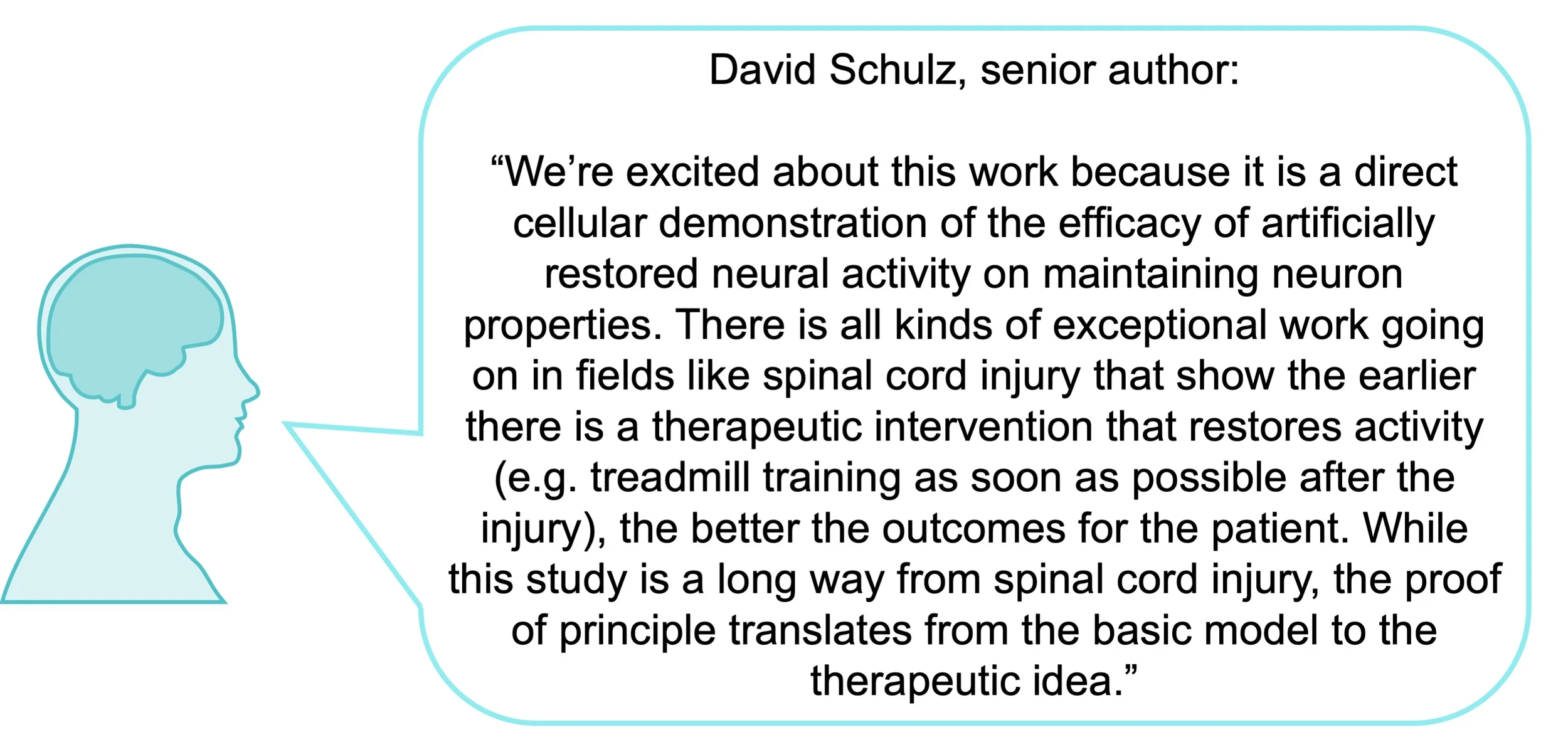
Schulz_quote.jpg

Santin and Schulz. Membrane Voltage is a Direct Feedback Signal that Influences Correlated Ion Channel Expression in Neurons. Current Biology (2019). Access the original scientific publication here.
The Effect of Genetic Risk and Maternal Behavior on Children’s Amygdala Connectivity

Post by Shireen Parimoo

What's the science?

Depression and anxiety are internalizing disorders, which means that their symptoms are primarily experienced internally (e.g. sadness, loneliness) rather than being directed externally (e.g. impulsive behavior, bullying). Adverse childhood experiences like negative parental behavior are associated with a higher incidence of internalizing symptoms and depression later in life. Depression has also been linked to disrupted functioning of the amygdala and the hypothalamic-pituitary-adrenal (HPA) axis, a set of brain regions that control the body’s reaction to stress. Together, negative childhood experiences and having certain genes associated with the HPA axis are related to having depression, but the mechanism of this interaction is unclear. This week in NeuroImage, Pozzi and colleagues used functional magnetic resonance imaging (fMRI) to delineate the relationship between HPA genetic risk, parental behavior, amygdala activation, and children’s depressive symptoms.

How did they do it?

Eighty children aged 8 - 9 years old participated in a longitudinal study with two time points. At the first time point, the authors recorded interactions between the children and their mother and 18 months later, the children performed an emotional processing task while undergoing fMRI scanning. The mother-child interactions were each 15 minutes long and consisted of an event-planning interaction and a problem-solving interaction. The mothers’ behavior was categorized into negative (e.g. anger) and positive (e.g. listening) behavior during each interaction. Saliva samples were also collected at the first time point to assess genetic risk, yielding a composite HPA genetic risk score based on the number of HPA-related genes that they possessed.

At the second time point, children completed questionnaires assessing internalizing symptoms, depression, and anxiety, while their mothers completed questionnaires assessing maternal depression and their children’s internalizing symptoms. The children also completed an emotional face-matching task in which they had to match the gender of an angry or fearful target face with one of two other faces. In the control condition, participants matched shapes instead of faces. The authors first examined task-related activity in the amygdala when participants performed the face compared to the shape matching task. They then performed a generalized psychophysiological interaction (gPPI) analysis to determine how the connectivity between the amygdala and other regions of the brain were related to the interaction between genetic risk, child functioning, and maternal behavior.

What did they find?

There were no direct associations between amygdala activation during the emotional face-matching task, and the interaction between genetic risk, and maternal behavior. Genetic risk moderated the relationship between negative maternal behaviors and brain connectivity. Specifically, higher genetic risk was linked to greater amygdala connectivity with the right superior frontal gyrus when mothers exhibited more negative behaviors during the problem-solving task. Conversely, if mothers exhibited more negative behaviors but the child’s genetic risk was low, the connectivity between the amygdala and the right superior frontal gyrus was also lower. During the event planning task, negative maternal behavior was associated with greater connectivity between the amygdala and the postcentral gyrus in the presence of high genetic risk, but reduced amygdala connectivity with fronto-parietal regions when genetic risk was low. This suggests that how mothers interact with their children affects the children’s amygdala’s connectivity in different ways depending on the level of genetic risk for HPA axis dysregulation.

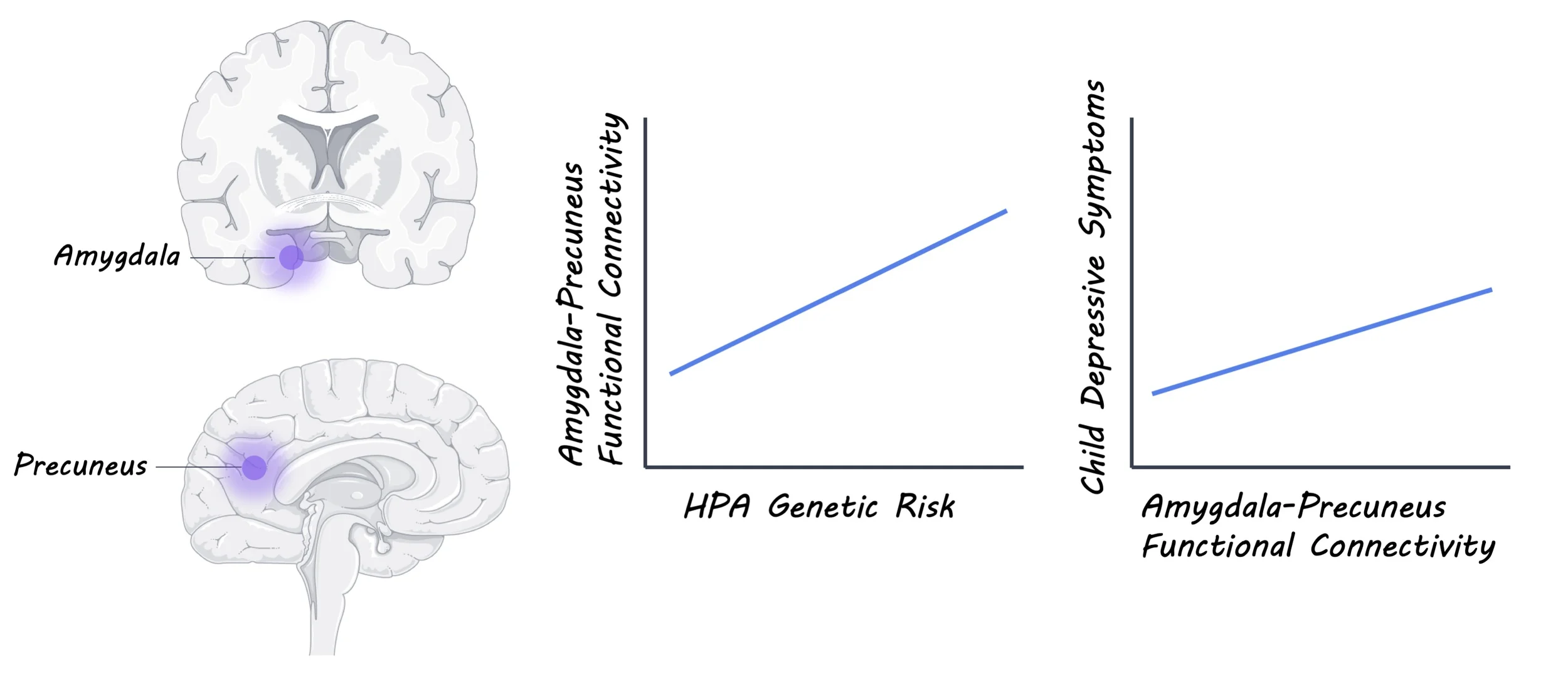
Pozzi_image.jpg

Finally, genetic risk was not directly associated with children’s internalizing or depressive symptoms. However, there was an indirect relationship between genetic risk and child functioning that was mediated by the amygdala’s connectivity to the precuneus. Higher genetic risk was linked to more internalizing symptoms in children via higher amygdala-precuneus connectivity.

What's the impact?

This study is the first to show that genetic risk influences the effect that negative maternal behavior has on brain activity (connectivity) related to children’s emotion processing. The results further illustrate that altered brain functioning underlies the interaction between genetic risk factors and depressive symptoms. These findings provide deeper insight into how genetic and environmental variables might contribute to the development of internalizing disorders such as depression and anxiety.

Pozzi_quote.jpg

Pozzi et al. Interaction between hypothalamic-pituitary-adrenal axis genetic variation and maternal behavior in the prediction of amygdala connectivity in children. NeuroImage (2019). Access the original scientific publication here.

Creation and Recollection of Artificial Memories

Post by Deborah Joye

What's the science?

As animals move through the world, they learn to associate certain environmental cues with events which help them survive. These memory associations have been localized to specific brain regions and underlying circuits. Specifically, the way that mice create odor associations is well-characterized and occurs similarly across individuals. If our detailed understanding of odor memory in mice is correct, it leads to an interesting question: can a false memory be created through direct stimulation of the brain? And can this memory be recalled by something in the real world, as if it actually happened? This week in Nature Neuroscience, Vetere and colleagues use association training along with direct cell-type- and region-specific brain stimulation to demonstrate that both good and bad artificial memory associations can be created in mice and recalled by a real-world cue.

How did they do it?

The authors first trained mice to form a real odor association by pairing a specific odor (acetophenone) with a mild foot shock. Since memory associations depend on presentation of the odor and the foot shock right after one another, the authors included conditions where the odor or the foot shock were presented independently or were presented 24 hours apart from one another (too far apart for memory associations to form). In the memory test, mice were put into a box with two chambers – one with the trained odor and the other with a new odor. The idea is that if a memory of the odor-foot shock pairing has been formed, the mouse will avoid the compartment containing the foot-shock-paired odor.

The authors then repeated this experimental structure multiple times. First, to test whether the odor association could be formed by direct brain stimulation, the authors genetically altered acetophenone-specific olfactory cells to be activated by a laser (called optogenetic stimulation). Mice were then exposed to the same two-chamber box containing either acetophenone or another smell. Second, to test that both the odor and the foot-shock could be created using only direct brain stimulation, the authors used optogenetics to activate both olfactory cells and cells in the brain associated with positive or negative experience (laterodorsal tegmental or lateral habenula inputs to the ventral tegmental area, respectively). Finally, since cells in the basolateral amygdala are important for memory associations, the authors tested whether this region is likewise necessary for artificial memory associations by chemogenetically silencing it. They virally expressed an inhibitory DREADD (designer receptor exclusively activated by designer drug) to turn off basolateral amygdala cells in the presence of a specific chemical. The authors then repeated the memory association experiment, using the inhibitory DREADD to block basolateral amygdala activity a subset of mice.

What did they find?

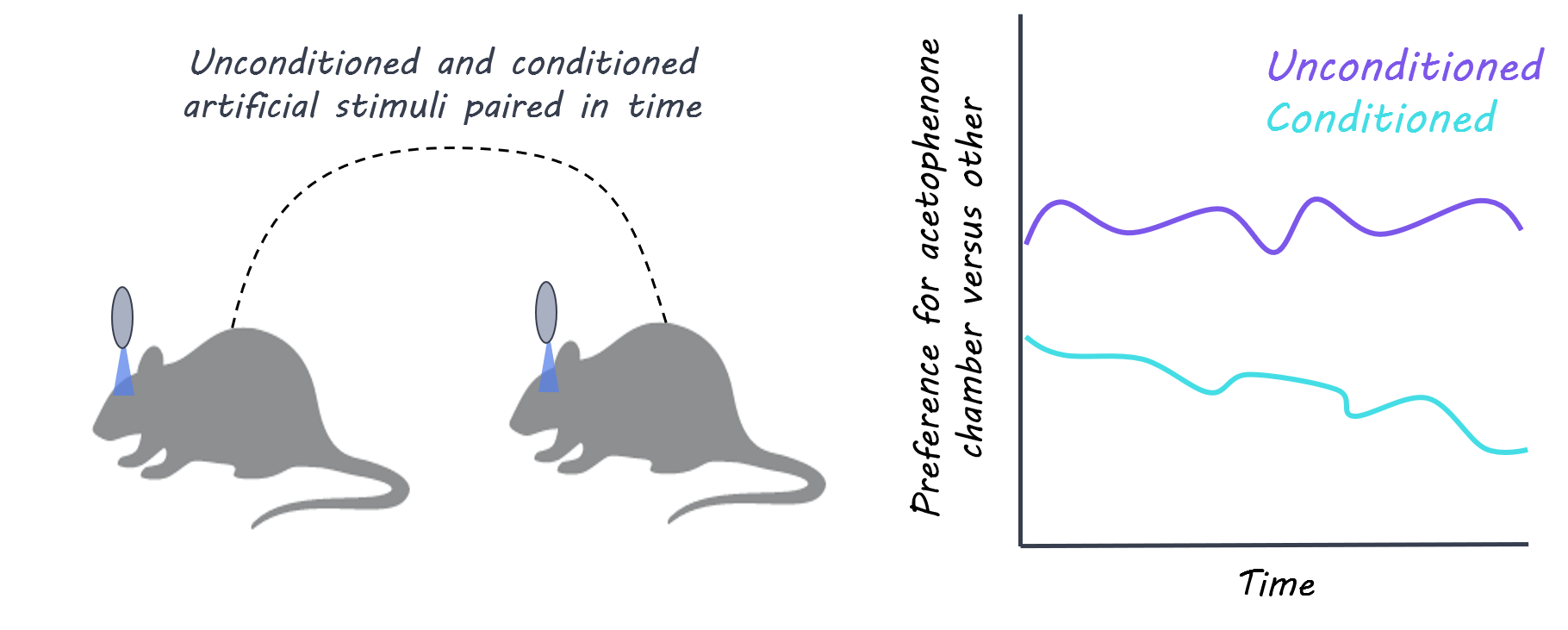
The authors found that mice formed memory associations between an odor and a foot-shock, as expected. Direct optogenetic stimulation of acetophenone-sensitive olfactory cells paired with foot shock also produced a memory association. This memory association could be recalled by mice, as evidenced by an avoidance of the compartment containing the actual acetophenone odor. Optogenetic stimulation of olfactory cells paired with stimulation of negative experience cells produced a behavioral aversion to the acetophenone odor, like mice that had been exposed to a real foot shock. In contrast, optogenetic stimulation of olfactory cells paired with stimulation of positive experience cells produced a behavioral attraction to the acetophenone odor. In all instances, artificial memory associations were only created if stimulation of the brain regions occurred close together in time, as with real memory associations. The authors also found that real and artificial memory associations engaged similar neural circuits, as shown by markers of cellular activation. Finally, when researchers chemogenetically blocked basolateral amygdala activity with DREADDs, expressions of both real and artificial memory associations were lost.

deb.png

What's the impact?

This study successfully creates a fully artificial memory in mice through direct brain stimulation. The characteristics of this artificial memory were like a natural memory: time dependent, similar brain circuits, behavioral responses were specific to the trained cue, and memory expression depended on the basolateral amygdala. This is the first study to show that artificially created memories can be recalled by a real-world cue. This study presents a valuable window into how memory associations are created and integrated with real-world experience.

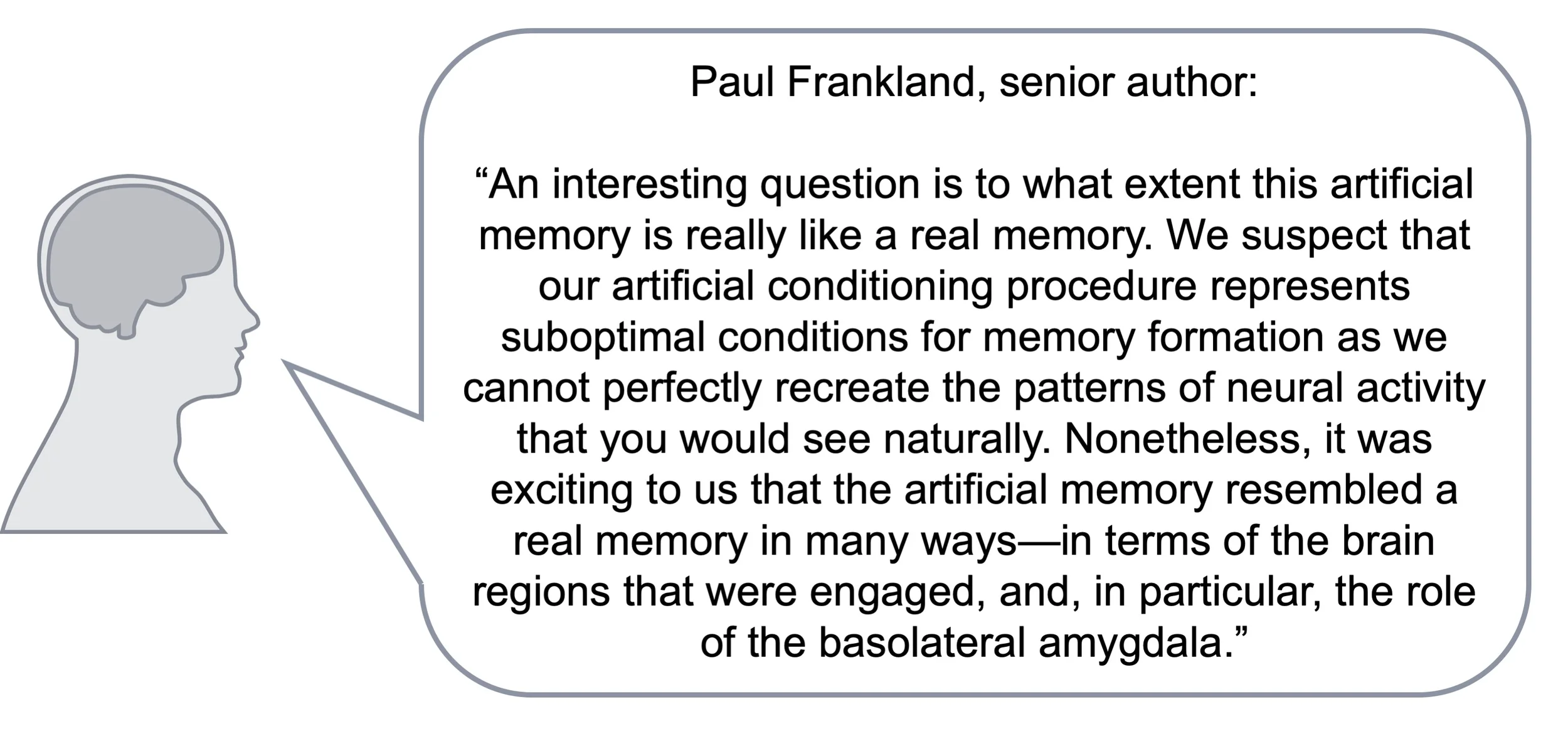
Frankland_quote_May7th.jpg

Vetere et al., Memory formation in the absence of experience, Nature Neuroscience (2019).Access the original scientific publication here.