Brain Repair Mechanisms After Stroke Differ in White and Gray Matter

Post by Anastasia Sares

The takeaway

In this study, the authors identified a gene called Lamc1, which is involved in blood vessel regeneration after a stroke, but only in the cortex (the outer layer of the gray matter) and not in the white matter, which is located deeper in the brain. This represents a potential target for medical interventions.

What's the science?

A stroke happens when a part of the brain is deprived of blood supply, either by a blockage of a blood vessel (like a heart attack, but in the brain) or by a ruptured blood vessel. When the blood supply is disrupted, neurons cannot obtain sufficient oxygen, glucose, and other essential nutrients, and they begin to die off. Stroke is one of the leading causes of death and disability worldwide, but the brain does have the ability to recover some functionality after a stroke. Understanding how this brain recovery happens and what we can do to enhance it is, therefore, a high medical priority. Strokes can happen in different brain regions depending on which blood vessels are affected.

Astrocytes (named for their sometimes star-like shape) are brain cells that are crucial for stroke recovery, modifying neural connections and interacting with systems for immune function and blood flow, especially at the border between healthy and damaged brain tissue. This week in Neuron, Gleichman and colleagues examined the activity of astrocytes in different stroke locations in mice to see if there were differences in how the brain repairs itself, identifying a key process that promotes blood vessel regeneration.

How did they do it?

The authors induced strokes in the cortex of mice, which is the brain’s outer layer of gray matter (brain tissue with more neuronal cell bodies), and others were induced in white matter (containing fat-insulated axons of neurons traveling from one region of the brain to the other).

Using a multitude of techniques (viral marking, gene sequencing, and more), the authors characterized the astrocytes and their byproducts in the dissected brains. One technique, gene set enrichment analysis (GSEA), measures the relative quantities of different genes and how they are expressed in a piece of tissue. The authors compared gene expression following strokes in the cortex and in the white matter.

Finally, the authors measured recovery in mice affected by these different strokes. To do this, they set up a test where the mice had to manipulate small objects that had peanut butter inside the grooves. To get the peanut butter, the mice needed to pick up the objects and handle them very precisely, using regions of the brain that were affected by the stroke. Their ability to perform these precise movements was a way to track the effects of injury and recovery.

What did they find?

At both different types of stroke locations, astrocytes were activated at the border between damaged and healthy tissue, initiating a cascade of processes to help the brain heal. One difference that the authors noticed was that for strokes that affected the cortex, a gene called Lamc1, which is involved in blood vessel growth, was highly expressed. However, this gene was not highly expressed for strokes in the white matter.

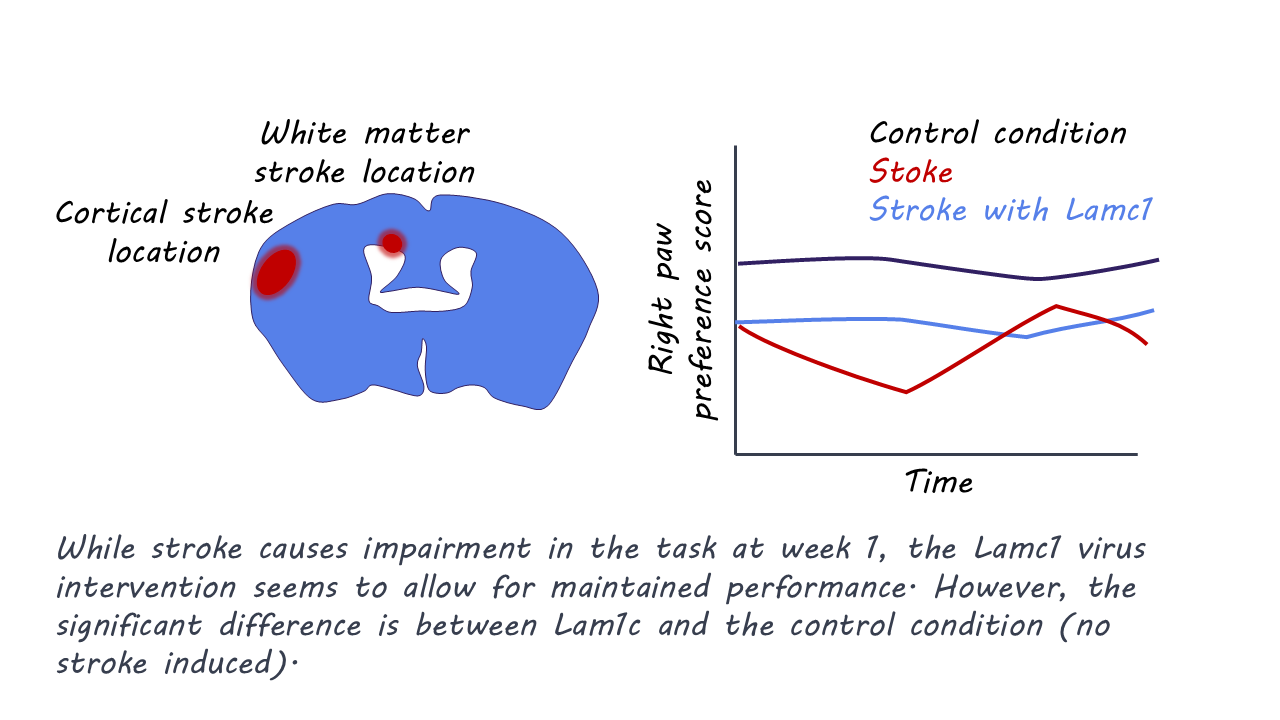
Recovery from white matter strokes is more difficult than for cortical strokes, so the authors decided to intervene artificially and see if activating or deactivating Lamc1 would change recovery. Knocking out Lamc1 in the cortex resulted in less blood vessel regrowth, while activating Lamc1 in white matter resulted in less long-term damage, like scarring and nerve damage. The mice also seemed to maintain more consistent performance in the object manipulation task when Lamc1 was activated after a stroke, though the difference between Lamc1 and a control condition did not quite reach significance.
What's the impact?

The authors showed that artificially triggering Lamc1 activation may promote blood vessel regeneration in white matter, where it would normally be minimal. These findings can inform future clinical research into stroke treatment and recovery.
A Device for Tracking Fluid Exchange in the Brain

Post by Lila Metko

The takeaway

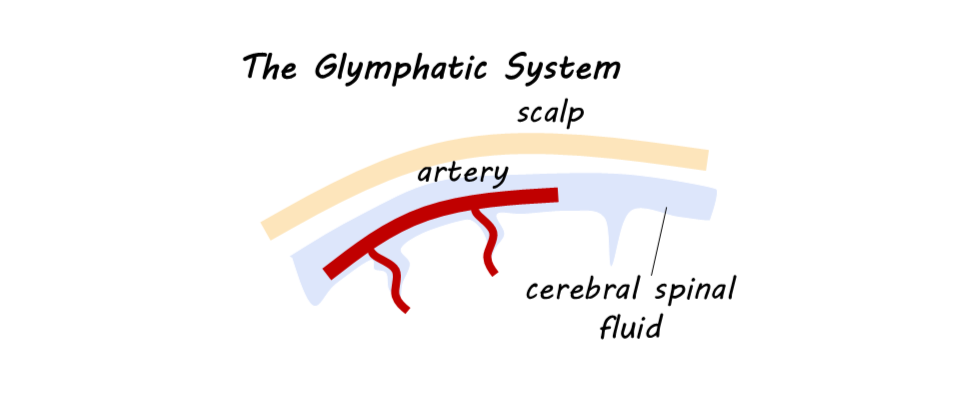
The glymphatic system is a fluid transfer and waste clearance system within the central nervous system (CNS) that supports the clearance of amyloid beta and tau proteins that accumulate in neurodegenerative disease. The authors developed a multielectrode patch, the first non-invasive method in humans to probe the activity levels of the glymphatic system during sleep.

What's the science?

Glymphatic function is a crucial fluid exchange process in the brain, facilitating the conversion of interstitial fluid into cerebrospinal fluid (CSF), which nourishes cells, regulates the volume transmission of neuromodulators, and is involved in the clearance of unwanted substances, such as amyloid beta and misfolded tau proteins. Glymphatic impairment in animal models has been shown to promote the development of amyloid beta and tau pathology. Additionally, glymphatic impairment is associated with aging, sleep deprivation, traumatic brain injury, and risk factors for neurodegenerative disease, including Alzheimer’s disease (AD). Glymphatic function has been shown to be more rapid during sleep. Currently, there is no non-invasive, temporally optimal device to monitor glymphatic function in humans. Recently, in Nature Biomedical Engineering, Dagum and colleagues describe a non-invasive device for monitoring glymphatic function in humans. 

How did they do it?

The authors conducted two complementary human studies in which participants wore the electrode patch device on the posterior area of the scalp and upper neck during one night of natural sleep and one night of sleep deprivation. The patch utilized electrical impedance spectroscopy (EIS) to measure the resistance to an electrical current applied to the tissue, thereby understanding the volume of fluid in the target region. A lower resistance score is indicative of higher glymphatic activity. The patch also monitored sleep stage using EEG, heart rate, and respiration using plethysmography, and an accelerometer for motion detection. In one of the studies, CE (contrast enhanced) MRI was used to monitor glymphatic function. Relationships between the variables were assessed using linear mixed-effects models that controlled for CE MRI contrast in brain areas other than the interstitial space, such as the blood vessels. 

What did they find?

The authors found an association between resistance in the tissue of interest (indicative of glymphatic function) and contrast enhancement. They found that lower resistance predicted greater contrast enhancement, indicating that resistance, the output of the EIS device, is a good proxy for glymphatic function. When they combined resistance with variation in heart rate and EEG powerband, two other outputs of the device, they found that it explained 74.8% of the variance in the model for the awake nights, indicating that combining the device’s outputs allows it to be an even better predictor of glymphatic function. Additionally, resistance decreased during sleep, which is consistent with previous findings that glymphatic function increases during sleep. Less time in REM sleep and more time in light sleep was associated with less CE MRI contrast, indicating that in lighter sleep stages, there is less glymphatic activity.  

What's the impact?

This device is the first to track glymphatic function in humans in a non-invasive and relatively time-resolved manner. This is critical to the field of neuroscience because of the glymphatic system’s association with clearing proteins involved in neurodegenerative disease, and its potential role in the control of volume transmission of neuromodulators. As a result, human glymphatic function will be able to be studied in more naturalistic environments. This device may also enable drug discovery by helping scientists understand the effect of certain drugs on glymphatic function. 

The Maintenance of Adult-Born Neuron Signaling Promotes Successful Aging

Post by Amanda Engstrom

The takeaway

Memory processing via adult-born neurons is essential for successful cognitive aging. A major distinction between people who are resilient and those vulnerable to cognitive decline lies, in part, in the maintenance of a network of long-lived adult-born neurons. 

What's the science?

Aging is frequently associated with cognitive decline; however, this decline varies among individuals - some individuals remain resilient while others are more vulnerable to the decline of memory functions. Memory formation relies on adult neurogenesis, the process of creating new neurons in the adult brain, but the role of long-lived adult-born neurons (ABNs) in cognitive resilience remains unclear. This week in Molecular Psychiatry, Blin and colleagues categorize aging animals as either resilient or vulnerable to cognitive decline, and examine their ABNs overall health and functionality. 

How did they do it?

To determine whether ABNs generated early in adult life contribute to preserved cognition, the authors labeled ABNs at 3 months of age in rats and assessed them at 8, 12, or 18 months of age. The rats were classified as either resilient or vulnerable to cognitive aging based on their performance in a behavioral memory task. Once characterized as resilient or vulnerable, the authors assessed the ABNs from both groups. The authors first assessed the survival and levels of senescent cells (a sign of cell arrest and inability to function) in the ABN population. Additionally, they used multiple retroviral vectors to label the ABN population and assess their dendritic morphology (GFP), glutamatergic post-synaptic density (PSD95-GFP), and mitochondrial network (MitoDsRed). Finally, they used optogenetic stimulation to artificially stimulate the ABNs. Rats were injected with ChannelRhodopsin-GFP at three months and underwent learning and memory testing at 12 and 20 months of age. The ABN population was activated by light during the learning phase to test if activating them at the later timepoints would increase the rat’s performance. 

What did they find?

The number of ABNs tagged at 3 months was the same in rats that were both resilient and vulnerable to cognitive aging. This was true for all three adult age groups (8, 12, and 18 months). The authors did detect senescent ABNs at all 3 ages, with an increased number of senescent cells at 18 months. However, resilient and vulnerable animals showed a similar number of senescent cells. Additionally, there was no difference in the dendritic morphology of ABNs in resilient and vulnerable rats. These data argue that the overall health of ABNs based on cell survival, entry into senescence, and gross morphology is not altered in rats vulnerable to cognitive aging. 

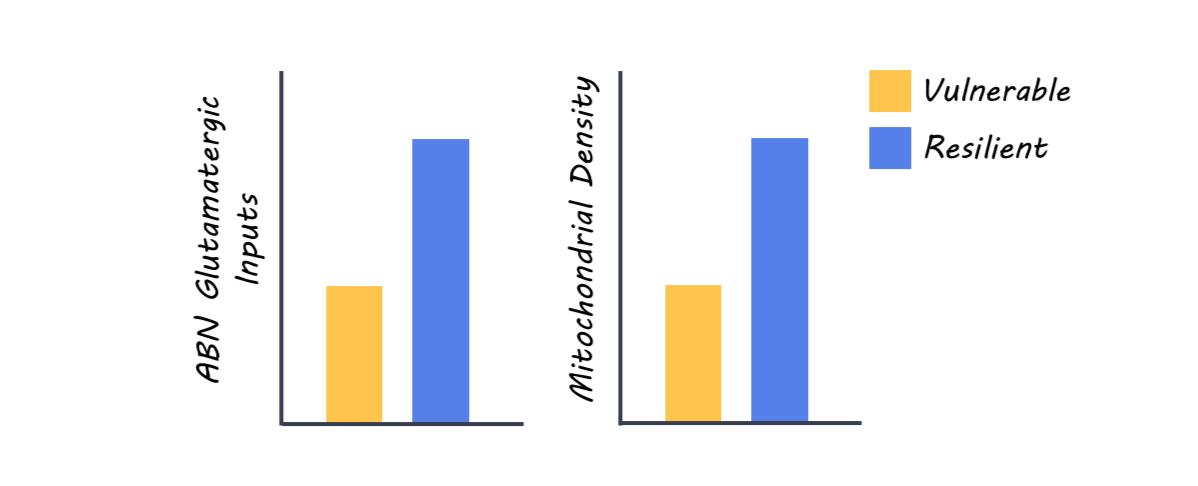
However, the authors did determine that rats vulnerable to cognitive aging progressively lost their glutamatergic inputs, indicated by a significant reduction in the labeling of postsynaptic density scaffolding protein, PSD95. The decrease of postsynaptic densities was observed at all ages in the inner molecular layer (IML) of the dendrite, but not in the middle or outer molecular layers. This suggests that the maintenance of proximal synaptic inputs (those closer to the soma or cell body) is especially important because these inputs are preserved only in resilient animals. Interestingly, the ABNs in vulnerable animals had a significant reduction of mitochondrial density, specifically in the IML at 8 months, but extended to the middle and outer layers in 18-month-old vulnerable animals. This suggests a progressive spread of mitochondrial dysfunction with aging in vulnerable animals. Optogenetic stimulation of ABNs improved the memory in all animals, and the memory of vulnerable rats improved to the level of non-stimulated resilient rats. This suggests that even when natural synaptic input is compromised in vulnerable rats, artificial stimulation can improve cognitive performance, indicating that ABNs can still function if properly engaged.

What's the impact?

This study found that long-lived ABNs play a role in cognitive aging. ABNs remain functionally viable in vulnerable animals and can transmit information when activated. Therefore, brain resilience relies, at least in part, on the preservation of the ABN integration into their neuronal network. This work highlights the potential therapeutic benefit of restoring the functionality of the ABN signaling network to improve cognitive functions in old age. 

Access the original scientific publication here.