Targeted Gene Therapy for Symptom Relief in Parkinson’s Disease

Post by Laura Maile

The takeaway

In Parkinson’s disease (PD), dopaminergic neurons of the striatum are lost over time, leading to symptoms like tremor and slow movement. Gene therapy can target the specific neurons lost in PD and enhance their activity, leading to an improvement of symptoms in both mouse and monkey models of PD. 

What's the science?

PD is a debilitating neurodegenerative disorder that results in the loss of dopaminergic neurons in the basal ganglia that are involved in motor control. Existing systemic treatments, such as Levodopa, that work to boost dopamine have limited success in the later stages of PD due to their lack of specificity and negative side effects like Levodopa-induced dyskinesia. Scientists have been working to develop cell-specific treatments that target only the circuits affected in PD. One method utilized in rodents uses the injection of viral recombinases to genetically modify specific cell types, but this method is not clinically translatable to humans. This week in Cell, Chen and colleagues used a translatable chemogenetic method to genetically modify the specific cells affected by PD and then activate them with a systemic drug to alleviate symptoms associated with PD. 

How did they do it?

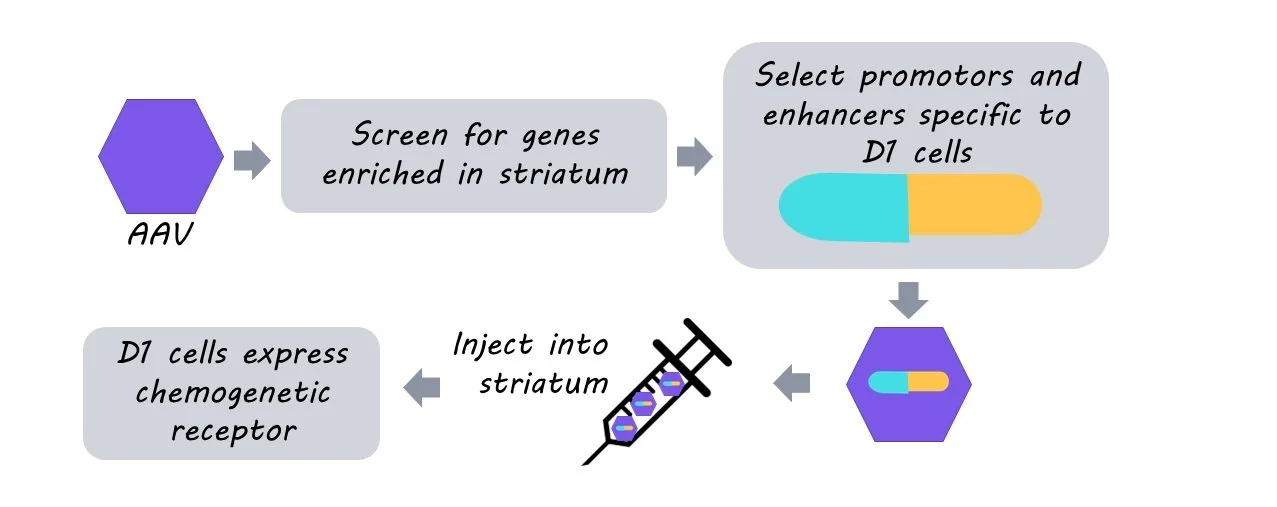
The authors used a retrograde adeno-associated virus (AAV) injected into the substantia nigra pars reticulata (SNr) to target the axon terminals of D1 dopaminergic neurons affected in PD. This AAV contained D1 cell-specific DNA promoters (i.e., region of DNA where transcription starts) and enhancers (i.e., region of DNA that promotes transcription) to drive expression of a chemogenetic receptor that could be targeted with a designer drug to activate the intended cells. Using different mutated versions of the AAV, they first identified a specific AAV type that improved retrograde efficiency and infectability of D1 neurons to achieve maximum expression in this cell population. They then identified genes that are enriched in the striatum, and located enhancer and promoter regions of DNA that are associated with these striatum-specific genes. The homologous sequences in human DNA were then cloned to make the AAVs, and tested in mice to determine which promoter region was best at driving expression in D1 neurons in the striatum.

Next, they tested the effectiveness of retrograde expression in primates by injecting their chosen retrograde AAV into the SNr and visualizing its expression colocalized with labeled D1 dopamine neurons in the striatum. To modify the activity of D1 striatal neurons, they engineered their AAV to include a chemogenetic receptor that can effectively activate a cell upon application of a designer drug. They tested the utility of this chemogenetic method using slice electrophysiology recordings and by administering the designer drug in live animals previously injected with their AAV. Next, they used a mouse model of PD that reduces the population of dopaminergic striatal neurons and results in bradykinesia, or slow movement, both cardinal features of human PD. They bilaterally injected their engineered retrograde AAV in PD animals to target the axon terminals of these dopaminergic neurons and administered the designer drug to activate the chemogenetic receptor. Finally, they tested motor behaviors in PD animals before and after treatment with a single dose of designer drug to determine whether their chemogenetic viral strategy could be effective at treating the core symptoms of PD. To determine the long-term efficacy of this treatment, they consistently treated monkeys with the designer drug for eight months and compared their motor behaviors with those that received long-term treatment with Levodopa.  
What did they find?

After designing a series of retrograde AAVs containing different human promoter/enhancer regions specific to genes associated with the striatum, they selected AAV8R12-G88P7-EYFP.  After injecting this virus into the SNr of mice, they determined that the vast majority of labeled neurons were D1+ and located in the striatum. This meant that their selected virus effectively transfected the targeted cell population with minimal expression outside of the intended cells. After repeating the injections in macaque monkeys, they found similar success, indicating the feasibility of their viral approach. Both mice and macaques injected with the AAV genetically designed to include a chemogenetic receptor used to activate cells showed increased excitability of the targeted D1 striatal neurons. This indicated the effectiveness of their viral strategy to activate the targeted neuron population. 

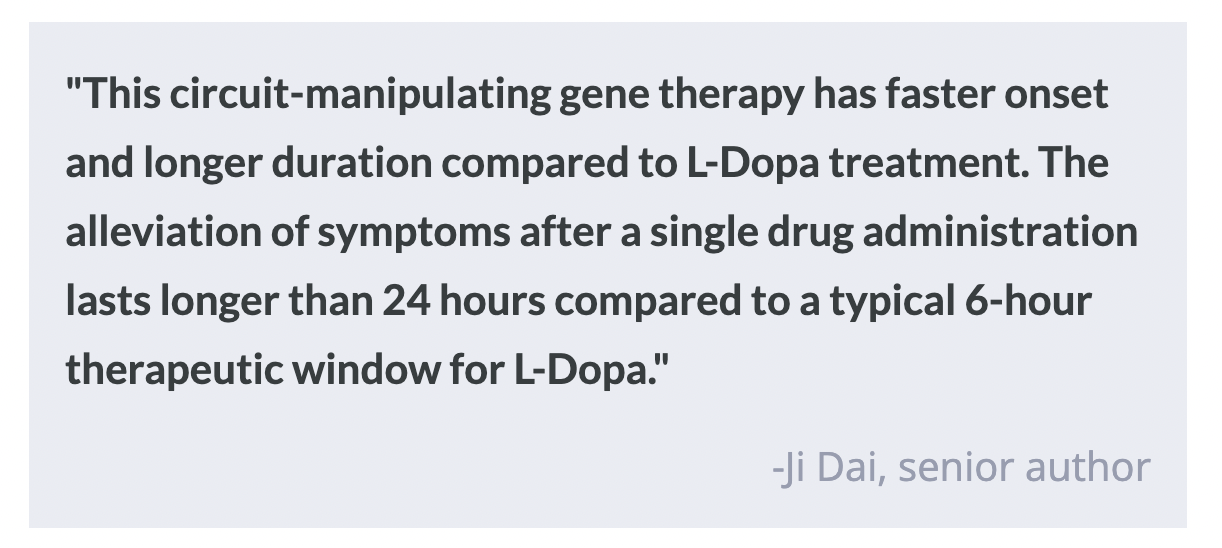
In a mouse model of PD, using their viral strategy to activate D1 striatal neurons resulted in a partial rescue of Parkinson-like motor deficits. The same strategy used in macaques with a model of PD resulted in a reduction or total reversal of all PD symptoms including tremor, bradykinesia, and rigidity, without affecting motor behaviors in naïve monkeys. This relief of PD symptoms lasted for eight months with consistent use of the same dose of designer drug required to activate the chemogenetic receptor. When compared to ongoing treatment with Levodopa, a current treatment for human PD, the authors’ designer viral strategy resulted in a longer window of symptom relief after drug administration and did not result in dyskinesia, a common negative side effect of long-term Levodopa treatment. This demonstrates the long-term safety and efficacy of using this strategy to treat the core symptoms of PD in primates. 

What's the impact?

This study found that chemogenetic manipulation of striatal dopaminergic neurons with designer drugs can enhance their activity and alleviate PD symptoms, and has improved long-term efficacy over current PD treatments. This means there may be safe, effective ways to increase the activity of the neurons that are compromised in PD, resulting in long-term improvements to symptoms like tremor and slow movement. This is promising for the future of gene therapy treatments in humans that target specific brain circuitry affected in PD and other neurodegenerative diseases and may lead to a treatment alternative for those in later stages of PD.  
The Effect of Mid-Life Diet on Cognitive Complaints in Women

Post by Soumilee Chaudhuri

The takeaway

There is limited evidence on how diet, a factor influencing health conditions like hypertension and diabetes, impacts cognition in women in later life. Researchers found that adherence to a DASH (Dietary Approaches to Stop Hypertension) diet in mid-life led to a lower prevalence of cognitive complaints (SCC) in late life, specifically in women.

What's the science?

Alzheimer’s Disease (AD) is the most common form of dementia and affects approximately 6.5 million people in the United States, and almost two-thirds of AD cases are women. Subjective cognitive concerns or SCCs are self-reported impairments in daily cognitive performance and have been increasingly reported to be associated with incident neurocognitive disorders such as AD. However, there is limited research on how dietary patterns — a potential modifiable risk factor — could influence these cognitive complaints. The DASH diet has been highly researched within the context of maintaining a healthy hypertension and cardiovascular profile but its role in preserving optimal cognitive function in later life is not known. This week in Alzheimer’s & Dementia, Dr. Song and colleagues at New York University (NYU) Grossman School of Medicine used population genetics and epidemiology-based approaches to understand the impact of a DASH diet on SCCs in over 5,000 women from the New York University Women’s Health Study (NYUWHS).

How did they do it?

The researchers included 5116 women participants aged 35 to 65 from the NYUWHS study.  Participants were followed for up to 5 years and each completed a questionnaire giving information about their regular diet, intensity of physical activity, etc. as well as a formal SCC survey at different time points during the study. The assessment of DASH diet and quantification of DASH scores were based on predefined metrics - a high intake of fruits, vegetables, legumes and nuts, low-fat dairy, and grains were all indicative of greater adherence to the DASH diet and the highest quintiles were thus given the highest score ( = 5). The total DASH score was determined by adding the scores of the eight DASH components (different food groups such as fruits, vegetables, whole grains, dairy, sodium, processed meat, sweetened beverages), resulting in a potential range of 8 to 40, with higher DASH scores reflecting greater adherence to the diet. The authors conducted statistical analyses including a) stratification of participants by factors including age, total calories, BMI, education and race, with multiplicative interaction to assess the effects of these factors, and b) multiple longitudinal regression models with appropriate covariates such as education, health history, etc. and were used to assess the continuous relationship between SCC and DASH scores (cumulative and also separately for all eight components individually) for all the women in the study. 

What did they find?

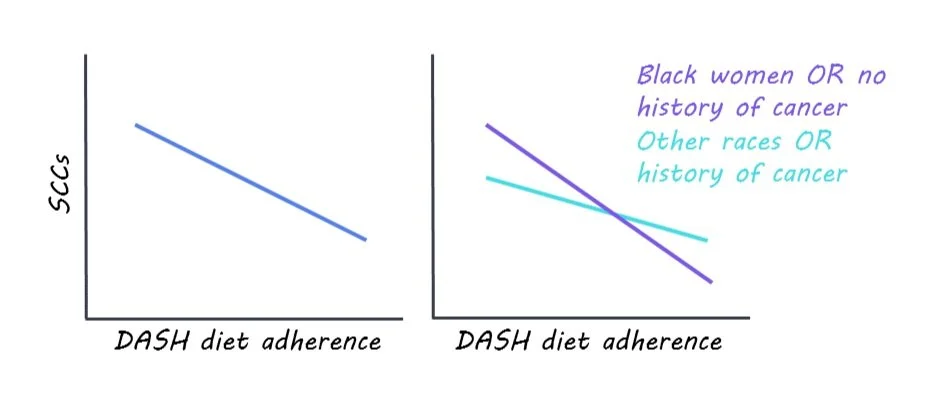
The researchers found that greater adherence to DASH diet in mid-life was associated with 20% lower odds of having higher subjective cognitive complaints (SCC greater than or equal to 2 in the SCC scale). Upon stratification, they also found that this association was stronger amongst Black women and amongst those without a history of cancer. These associations remained after adjusting for potential confounding variables and considering missing data points. Using linear regression analysis, the researchers confirmed that a higher DASH score was associated with a lower number of SCCs later in life. They even found that individual components of the DASH diet (consumption of fruit, vegetables, legumes, nuts, etc.) were associated with lower incidences and severity of later-life subjective cognitive decline, although after accounting for all other individual components, only fruit consumption remained significant.

What's the impact?

This study shows that greater adherence to a DASH diet in mid-life could be therapeutic in preserving cognition in later life in women. Overall, this study suggests the immense potential of diet quality, especially the diet related to hypertension and cardiovascular profile in maintaining healthy cognitive function

Access the original scientific publication here.

The Role of Circadian Rhythm in Mood Disorders

Post by Rebecca Hill

How does the circadian rhythm impact mood?

Circadian rhythms are physiological mechanisms that allow humans and many other animals to respond to light and have regular periods of both activity and restful sleep. Circadian rhythms are coordinated by an area in the hypothalamus called the suprachiasmatic nucleus (SCN), which receives direct light input from the retina (Reppert & Weaver, 2001). There is now a growing body of evidence that mood disorders, often diagnosed by abnormal sleep patterns, are associated with disrupted circadian rhythms. These studies have contributed to our understanding of mood disorders and how they can be treated, showing that therapeutic treatments that target circadian mechanisms can often help lessen the symptoms of mood disorders. 

Some of the most common mood disorders include seasonal affective disorder (SAD), major depressive disorder (MDD), and bipolar disorder (BD), with each affecting between 2.8-5% of adults. A core diagnostic symptom of all mood disorders is abnormal sleep/wake patterns. Symptoms for SAD usually start during the change from fall to winter when the daylight hours quickly become shorter (Melrose, 2015). Similarly, manic and depressive episodes of BD are often triggered by seasonal changes (Geoffroy et al., 2014). Patients with BD usually have their sleep/wake patterns disrupted by manic and depressive episodes, which are also in turn triggered by changes to sleep patterns (McCarthy et al., 2022; Malkoff-Schwartz et al., 2000). In MDD, patients cycle through depressive moods throughout the day, with the worst symptoms usually occurring in the early morning (Wirz-Justice, 2022).

The prevalence of depressive mood disorders is increasing, and this could be linked to disrupted sleep driven by the uptick in the amounts of artificial light we are exposed to from phones, computers, and televisions, especially at night (Hidaka, 2012). In addition to this, shift work is common, and forces workers to be awake when their bodies expect to be asleep. This disrupts natural circadian rhythms and may also contribute to the increasing prevalence of mood disorder diagnoses (Boivin et al., 2022).

Neurons signal to adapt to changes in daylight

Midbrain dopamine neurons have been found to be linked to symptoms of depression. Rats exposed to short light days had more dopamine neurons in the hypothalamus that, when damaged, started presenting depression-like behavior (Dulcis et al., 2013). The neurons in the SCN signal at different rates during the summer and winter months, so individuals with SAD may have a SCN that can’t adapt to different seasonal cues (VanderLeest et al., 2007). Manic-like behavior, like that seen in patients with BD, was found in mice with optogenetic stimulation of dopamine neurons, but only at certain times of the day (Sidor et al., 2015). Together, research findings like these indicate that neurons are signaling changes in daylight throughout the seasons, and abnormal signaling could result in the symptoms seen in mood disorders.

Melatonin dysfunction contributes to mood disorders

Melatonin is a hormone released by the pineal gland to indicate darkness and facilitate sleep, meaning more melatonin is released during shorter days. Patients with SAD sometimes have an overproduction of melatonin during the winter and also produce it later in the day than normal, leading to fatigue during the daytime (Lewy et al., 2006; Srinivasan et al., 2006). Melatonin is also produced less, and at inappropriate times of the day by patients with MDD (Pandi-Perumal et al., 2020). Further, individuals with BD are hypersensitive to light at night, which can lead to the suppression of melatonin, and a delay in sleep.

How can we treat these mood disorder symptoms?

Bright-light therapy is the most widely used treatment for SAD. This treatment is typically used in the early morning, since this is the most effective timing window, however, the optimal timing and “dose” of light can vary for each person (Partonen, 1994). Bright-light therapy might work, especially if used in the morning, because it decreases the amount of melatonin being produced at inappropriate times during the day (West et al., 2011), and gives our bodies a strong morning light cue.

Antidepressant medications such as selective serotonin reuptake inhibitors (SSRIs) have also shown promise in helping to reset signaling in the SCN to correct circadian rhythms and decrease depression symptoms (Sprouse et al., 2006). Patients with BD are often treated with lithium, which when used in subjects with shorter circadian periods will lengthen the circadian period, correcting it to the natural 24-hour cycle (Mishra et al., 2021).

What’s next?

For proper mood regulation, the physiological circadian systems must be able to adapt to changes in daylight across the seasons. Individuals with an unstable sleep/wake cycle are more likely to develop mood disorders. Based on recent research, the stabilization of circadian rhythms can often treat the symptoms of mood disorders. Treatments such as bright-light therapy, melatonin, and SSRIs, when personalized to the individual, can greatly improve the outlook for patients with depressive mood disorders. 

References +

Boivin, D. B., Boudreau, P., & Kosmadopoulos, A. (2022). Disturbance of the circadian system in shift work and its health impact. Journal of biological rhythms, 37(1), 3-28.

Dulcis, D., Jamshidi, P., Leutgeb, S., & Spitzer, N. C. (2013). Neurotransmitter switching in the adult brain regulates behavior. science, 340(6131), 449-453.

Geoffroy, P. A., Bellivier, F., Scott, J., & Etain, B. (2014). Seasonality and bipolar disorder: a systematic review, from admission rates to seasonality of symptoms. Journal of Affective Disorders, 168, 210-223.

Hidaka, B. H. (2012). Depression as a disease of modernity: explanations for increasing prevalence. Journal of affective disorders, 140(3), 205-214.

Lewy, A. J., Lefler, B. J., Emens, J. S., & Bauer, V. K. (2006). The circadian basis of winter depression. Proceedings of the National Academy of Sciences, 103(19), 7414-7419.

Malkoff-Schwartz, S., Frank, E., Anderson, B. P., Hlastala, S. A., Luther, J. F., Sherrill, J. T., ... & Kupfer, D. J. (2000). Social rhythm disruption and stressful life events in the onset of bipolar and unipolar episodes. Psychological medicine, 30(5), 1005-1016.

McCarthy, M. J., Gottlieb, J. F., Gonzalez, R., McClung, C. A., Alloy, L. B., Cain, S., ... & Murray, G. (2022). Neurobiological and behavioral mechanisms of circadian rhythm disruption in bipolar disorder: A critical multi‐disciplinary literature review and agenda for future research from the ISBD task force on chronobiology. Bipolar disorders, 24(3), 232-263.

Melrose, S. (2015). Seasonal affective disorder: an overview of assessment and treatment approaches. Depression research and treatment, 2015.

Mishra, H. K., Ying, N. M., Luis, A., Wei, H., Nguyen, M., Nakhla, T., ... & McCarthy, M. J. (2021). Circadian rhythms in bipolar disorder patient-derived neurons predict lithium response: preliminary studies. Molecular psychiatry, 26(7), 3383-3394.

Pandi-Perumal, S. R., Monti, J. M., Burman, D., Karthikeyan, R., BaHammam, A. S., Spence, D. W., ... & Narashimhan, M. (2020). Clarifying the role of sleep in depression: A narrative review. Psychiatry research, 291, 113239.

Partonen, T. (1994). Effects of morning light treatment on subjective sleepiness and mood in winter depression. Journal of affective disorders, 30(2), 99-108.

Reppert, S. M., & Weaver, D. R. (2001). Molecular analysis of mammalian circadian rhythms. Annual review of physiology, 63(1), 647-676.

Sidor, M. M., Spencer, S. M., Dzirasa, K., Parekh, P. K., Tye, K. M., Warden, M. R., ... & McClung, C. A. (2015). Daytime spikes in dopaminergic activity drive rapid mood-cycling in mice. Molecular psychiatry, 20(11), 1406-1419.

Sprouse, J., Braselton, J., & Reynolds, L. (2006). Fluoxetine modulates the circadian biological clock via phase advances of suprachiasmatic nucleus neuronal firing. Biological psychiatry, 60(8), 896-899.

Srinivasan, V., Smits, M., Spence, W., Lowe, A. D., Kayumov, L., Pandi-Perumal, S. R., ... & Cardinali, D. P. (2006). Melatonin in mood disorders. The World Journal of Biological Psychiatry, 7(3), 138-151.

VanderLeest, H. T., Houben, T., Michel, S., Deboer, T., Albus, H., Vansteensel, M. J., ... & Meijer, J. H. (2007). Seasonal encoding by the circadian pacemaker of the SCN. Current Biology, 17(5), 468-473.

West, K. E., Jablonski, M. R., Warfield, B., Cecil, K. S., James, M., Ayers, M. A., ... & Brainard, G. C. (2011). Blue light from light-emitting diodes elicits a dose-dependent suppression of melatonin in humans. Journal of applied physiology.

Wirz-Justice, A. (2022). Diurnal variation of depressive symptoms. Dialogues in clinical neuroscience.