
Myths and Facts: Left-Brain, Right-Brain Function, Learning Styles and Sensory Processing

Post by Lani Cupo

The brain is a complex organ embedded in a dynamic system, and there is still much about it that we do not know. Over the decades, some myths and misconceptions have permeated popular culture and even educational curricula. While some are mere rumors, others stem from outdated scientific theories that have since been debunked. Here we explore several prevalent myths about the brain, describe the evidence against them, and offer some brain facts in their stead.

Myth #1: One of the most enduring myths in neuroscience is that the left hemisphere of the brain is responsible for logical thought, the right hemisphere is responsible for creativity, and that individuals are governed mainly by one hemisphere or the other, determining if they are left-brained (more logical), or right-brained (more creative). Despite the popularity of this myth (you can find a lot of beautiful merchandise on Etsy), there is no neuroscientific evidence to support this hypothesis (Nielsen et al., 2013). So, where does this myth originate?

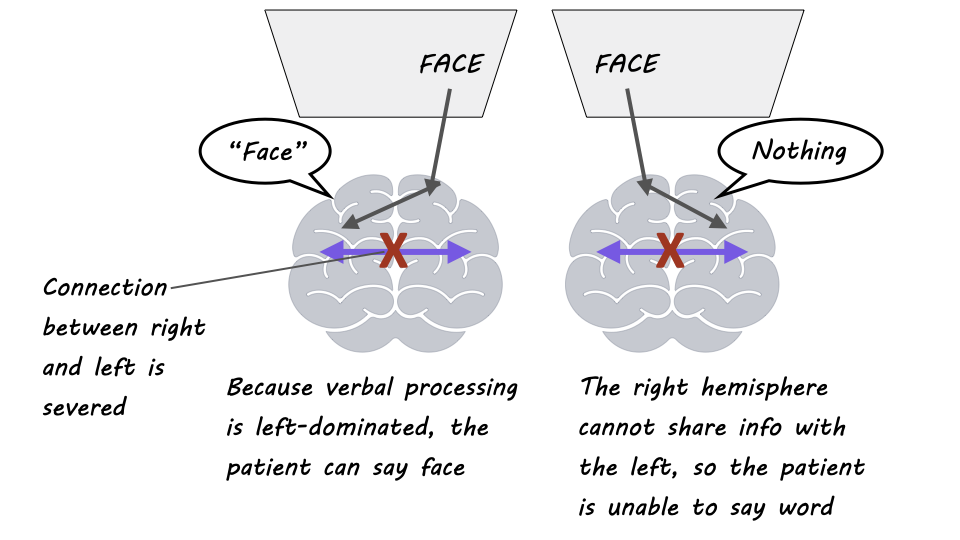
History and facts: This myth certainly is not new. In the 1980s it became popular among art educators (Wieder, 1984), and was born out of earlier research. In the 1960s, patients with severe epilepsy underwent a surgical procedure known as a corpus callosotomy, where the corpus callosum, or the white matter bundle connecting the two hemispheres, is severed. This procedure helps to reduce the severity of seizures and also reveals fascinating discoveries about the two hemispheres (Corballis, 2014).

You may know that each hemisphere of the brain is responsible for the opposite side of the body. In groundbreaking experiments researchers would display a word (e.g., “face”) to either the left or right eye. If the right eye saw the word, the split-brain participant could answer that they saw the word “face”. However, if the left eye sees the word “face”, and the participant is asked what they saw they would respond “nothing”. But if the participant is asked to draw what they saw, they can do so. This is because speech is heavily left-lateralized—that is, speech and language computation largely take place in the left hemisphere of the brain. Roger Sperry was awarded a Nobel Prize in Physiology or Medicine for this work in 1981(Wolman, 2012). People may find the left-brain-right-brain dichotomy so compelling because it is based on a nugget of truth—that some brain functions are regionally specific. It also appeals to the so-called Barnum Effect, where people accept vague, often flattering character assessments as true and specific, as is the case with horoscopes.
Prevalence: If you believed or were taught the left-brain/right-brain myth, you are not alone! One study in 2017 revealed that 64% of adults sampled from the general population agreed with this myth, making it one of the most prevalent misconceptions about the brain (Macdonald et al., 2017).

Myth #2: One of the most prevalent neuromyths is that individuals absorb information better if it is presented in a particular learning style, such as visual, auditory, written, or kinesthetic (touch). This theory of ‘learning styles’ seems to make intuitive sense and appeals to educators who want to make education accessible to their diverse student populations. Unfortunately, there is currently no scientific evidence to support it (Newton et al., 2020).

History and facts: The origins of this myth are even older than the last. In 334 BC, Aristotle referenced individual differences among children, pointing out their “specific talents and skills” (Reiff, 1992), however the theory of ‘learning styles’ gained traction throughout the 1900s. Studies suggest that teachers from across the world use the learning styles myth in the classroom, and that there has been no noticeable decrease in this belief over time (Newton et al., 2020). Many U.S. states that require teachers to pass a computerized test for licensing (29 of 34) even provide free study material that teach ‘learning styles’ (Furey, 2020). While it may seem harmless to present information to students through a variety of methods, some argue that the technique can have insidious consequences (Zwaagstra, 2022). First, it can be self-fulfilling: if students are told they are visual learners, they may not pay close attention to reading assignments they believe they are unsuited for. Second, it can drastically overburden teachers who already carry a heavy load, as they may feel obliged to present an entire lesson through three or more different techniques (Zwaagstra, 2022).

Prevalence: Were you taught the ‘learning style’ myth? This misconception is particularly widespread, with 93% of adults in the general population stating they believe it. Not only that, but 78% of individuals who have taken a college or university course related to the brain or neuroscience believe it as well (Macdonald et al., 2017)!

Myth #3: Like me, many of you probably learned about the tongue map in school. Sweet is up front, right? Actually, no! The tongue map is a myth of sensory perception, and one that is still frequently taught today.

History and facts: In 1901, a German scientist published a paper reporting on his research that parts of the tongue, namely the edges, are more sensitive to taste than the center of the tongue (Haenig, 1901). This is actually true! But he also published an illustration that seemed to suggest slight variation in where each flavor (salty, sweet, bitter, and sour—no umami at that time) were most noticeable (Munger, 2017). Then, in the 1940s, Edwin Boring published a book with a diagram of a tongue, the regions for each flavor delineated (Munger, 2017; Boring, 1942). One possible reason for this map’s popularity is its apparent simplicity, which appeals to educators teaching children about the senses (Spence, 2022). In reality, taste is more complex than Boring would have readers believe. Taste buds (clusters of 10-50 nerve endings) line the tongue, soft palate, and pharynx (throat), and all receptors are capable of responding to all tastes (Spence, 2022; Institute, 2016). Incidentally, the bumps you may notice on your tongue are not taste buds, they are taste papillae, structures that contain several taste buds, and the sensory cells in taste buds are renewed once a week. When a food or liquid comes in contact with the sensory cells, the cells are activated by the chemicals responsible for taste. While about half of the cells respond to all five basic tastes (Institute, 2016), they each have a ranking of preferred tastes. For example, a cell may respond most to sweet, then bitter, sour, umami, and salty. The signal travels through nerves to the medulla, thalamus, “primary taste cortex” (insula and frontal operculum), and higher association cortices (Rolls, 2019). In the brain, taste information from the mouth can be integrated to form a representation of what we are eating.

Prevalence: While reliable statistics on the prevalence of belief in the taste map and whether it is still included in elementary school curricula today were difficult to find, there are many sources that debunk the taste map. Hopefully, today’s educators are teaching taste through a more nuanced lens. 

Brian myths and misconceptions permeate our modern discourse. Sometimes when a brain “fact” seems too simple to be true, it very well may not be. The more we learn about the brain, the more nuanced our understanding becomes. As good scientists and learners, we should always be open to changing our minds when presented with reasonable evidence.

References +

Khademi S, Hallinan CM, Conway M, Bonomo Y. Using Social Media Data to Investigate Public Perceptions of Cannabis as a Medicine: Narrative Review. J Med Internet Res. 2023;25: e36667.

Rolls ET. Chapter 7 - Taste and smell processing in the brain. In: Doty RL, editor. Handbook of Clinical Neurology. Elsevier; 2019. pp. 97–118.

How does our sense of taste work? Institute for Quality and Efficiency in Health Care (IQWiG); 2016.

Spence C. The tongue map and the spatial modulation of taste perception. Curr Res Food Sci. 2022;5: 598–610.

Boring EG. Sensation and Perception in the History of Psychology. 1942 [cited 7 Sep 2023]. Available: http://dx.doi.org/

Smithsonian Magazine. The Taste Map of the Tongue You Learned in School Is All Wrong. [cited 7 Sep 2023]. Available: https://www.smithsonianmag.com/science-nature/neat-and-tidy-map-tastes-tongue-you-learned-school-all-wrong-180963407/

Hänig DP. Zur Psychophysik des Geschmackssinnes. Engelmann; 1901. “Learning styles” myth damaging our education system: op-ed. In: Fraser Institute [Internet]. 20 Jul 2022 [cited 6 Sep 2023]. Available: https://www.fraserinstitute.org/article/learning-styles-myth-damaging-our-education-system

Furey W. The Stubborn Myth of “Learning Styles.” In: Education Next [Internet]. 7 Apr 2020 [cited 6 Sep 2023]. Available: https://www.educationnext.org/stubborn-myth-learning-styles-state-teacher-license-prep-materials-debunked-theory/

Reiff JC. Learning Styles. What Research Says to the Teacher Series. 1992 [cited 6 Sep 2023]. Available: http://files.eric.ed.gov/fulltext/ED340506.pdf

Newton PM, Salvi A. How Common Is Belief in the Learning Styles Neuromyth, and Does It Matter? A Pragmatic Systematic Review. Frontiers in Education. 2020;5. doi:10.3389/feduc.2020.602451

Macdonald K, Germine L, Anderson A, Christodoulou J, McGrath LM. Dispelling the Myth: Training in Education or Neuroscience Decreases but Does Not Eliminate Beliefs in Neuromyths. Front Psychol. 2017;8: 1314.

Wolman D. The split brain: A tale of two halves. In: Nature Publishing Group UK [Internet]. 14 Mar 2012 [cited 6 Sep 2023]. doi:10.1038/483260a

Corballis MC. Left brain, right brain: facts and fantasies. PLoS Biol. 2014;12: e1001767.

Wieder CG. The Left-Brain/Right-Brain Model of Mind: Ancient Myth in Modern Garb. Visual Arts Research. 1984;10: 66–72.

Corballis MC. Are we in our right minds? In: Sala SD, editor. Mind myths: Exploring popular assumptions about the mind and brain , (pp. Hoboken, NJ, US: John Wiley & Sons Ltd, xvi; 1999. pp. 25–41.

Nielsen JA, Zielinski BA, Ferguson MA, Lainhart JE, Anderson JS. An evaluation of the left-brain vs. right-brain hypothesis with resting state functional connectivity magnetic resonance imaging. PLoS One. 2013;8: e71275.

The Editors of Encyclopedia Britannica. Are There Really Right-Brained and Left-Brained People? Encyclopedia Britannica. 2017. Available: https://www.britannica.com/story/are-there-really-right-brained-and-left-brained-people
Acetylcholine Activity Impacts Memory Formation by Modulating Brain Oscillations

Post by Soumilee Chaudhuri

The takeaway

Acetylcholine pathways extensively innervate the hippocampus - a brain region critical for memory formation. This research shows that acetylcholine plays an important role in modulating oscillatory activity in the hippocampus, which affects memory formation.

What's the science?

Acetylcholine is a neurotransmitter that impacts memory formation through its widespread pathways in the brain. Extensive research has also shown that theta oscillations, a type of slow brain wave in the hippocampus are important for memory formation, and are affected by acetylcholine levels in the brain. However, the exact neurophysiological mechanisms of cholinergic circuits in modulating theta oscillations and in aiding hippocampal memory formation are still unclear. This gap has affected the development of therapeutics for patients with memory-related diseases such as Alzheimer’s Disease (AD) that often involve disruption of cholinergic function. This week in Nature Communications, researchers use scopolamine, an acetylcholine antagonist (i.e., blocks acetylcholine), to study how this impacts theta waves in the hippocampus and memory formation.

How did they do it?

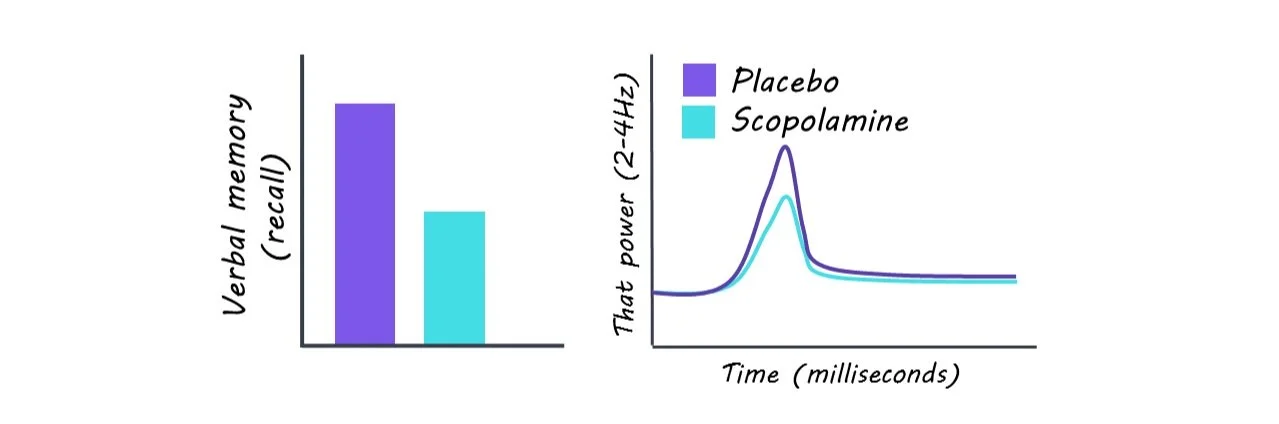
The researchers used intracranial brain recordings as well as pharmacological, behavioral, and molecular biology techniques to investigate the link between cholinergic pathways, hippocampal theta oscillations and memory formation. They administered a single dose of scopolamine (an acetylcholine antagonist) to 12 epilepsy patients in the experimental group and administered saline in the control group. Afterwards, both groups participated in a verbal episodic memory task to assess memory performance. Scopolamine disrupts both fast (4-10Hz) and slow (204Hz) hippocampal theta bands in rodent models, so the researchers hypothesized that it would impair these theta oscillations in humans as well and affect memory formation. The researchers analyzed the brain recordings from these patients, looking specifically at three physiological phenomena key for hippocampal memory formation: oscillatory power, phase reset, and synchrony.   

What did they find?

The authors found that administration of scopolamine in the experimental group of patients, significantly impaired their memory. This impairment for each patient was accompanied by a disruption of the slow theta oscillation of the hippocampus during memory encoding. Specifically, scopolamine administration suppressed the original length of the slow theta band and interrupted the resetting of the next theta oscillation cycle, preventing an important step in episodic memory formation in the hippocampus. Across all the subjects, it was noticed that this disruption of the theta oscillation correlated with the memory impairment caused by the scopolamine administration. Additionally, it was found that scopolamine also disrupted the synchrony of the theta oscillations. All these findings suggest that cholinergic pathways are critical for hippocampal memory formation through modulation of the temporal dynamics of slow theta wave oscillations.

What's the impact?

The findings of this study demonstrate that acetylcholine disruption significantly influences the dynamics and power of hippocampal theta oscillations crucial for memory formation. These findings have massive implications for potential therapeutic strategies to restore memory in diseases such as dementia and AD.

Access the original scientific publication here

How Does Cannabis Affect Brain Health?

Post by Baldomero B. Ramirez Cantu

What are cannabinoids?

Cannabinoids are a broad class of biological compounds found primarily in the cannabis plant. They are known for their interaction with the endogenous cannabinoid system in the human body and have various physiological and psychoactive effects. The two most well-known, used and understood classes of cannabinoids are tetrahydrocannabinol (THC) and cannabidiol (CBD) (Atakan et al., 2012).

Cannabinoids affect the human body and brain by interacting with endogenous cannabinoid receptors. These receptors are highly expressed in brain regions that control cognitive functions, including the neocortex, hippocampus, basal ganglia, and cerebellum (Marsicano and Kuner, 2008). Thus, endogenous cannabinoid signaling can contribute to crucial brain functions like memory, motivation, and motor coordination.

What are cannabinoids used for?

Cannabinoids are used for both clinical and recreational purposes. In clinical settings, cannabinoids are used to manage pain, alleviate chemotherapy-induced nausea, and treat epilepsy (Allan et al., 2018). Recreational use primarily involves the consumption or inhalation of cannabis. Notably, cannabinoids, particularly THC, can induce sensations of euphoria, heighten pleasure response, and stimulate increased appetite (Mahler et al., 2007).

Cannabis use has also shown promise as a therapeutic option in both HIV treatment and opioid use management. In HIV treatment, some studies suggest that cannabis may help alleviate symptoms associated with the virus, such as pain, nausea, and loss of appetite (Ellis et al., 2021). Additionally, it may have potential anti-inflammatory and neuroprotective properties that could benefit those with HIV-related neurological complications. In the context of opioid withdrawal, cannabis may assist individuals in managing withdrawal symptoms and reducing opioid cravings (Lucas et al., 2021).

How do cannabinoids affect brain health?

Cannabis use has notable effects on brain function in the short term and over prolonged periods. In the short term, immediate cognitive impairment is a common consequence, affecting memory, attention, and problem-solving abilities. These effects are typically temporary and subside as the drug is metabolized. Users may also experience altered sensory perception, impacting their perception of time, colors, and sounds. Some users encounter heightened anxiety or paranoia, particularly when consuming high doses or strains with high levels of THC (Wainberg et al., 2021).

In the long term, chronic and heavy cannabis use can have profound implications for brain health. Persistent use, particularly during adolescence when the brain is still developing, may lead to cognitive impairments, including memory deficits, and reduced attention span (Crean et al., 2011). Additionally, there is evidence of an increased risk of mental health issues, such as anxiety disorders and depression (Jefsen et al., 2023). These long-term effects underscore the importance of responsible cannabis use and consideration of individual susceptibility, as the impact on brain health can vary depending on factors like usage patterns, potency, and personal vulnerabilities.

Our understanding of the precise mechanisms by which cannabis affects brain health remains incomplete. We do know that cannabis use can influence sleep patterns, a fundamental contributor to mental and brain well-being. The impact of cannabis on sleep is multifaceted and can be influenced by factors such as the specific cannabinoids present, the method of consumption, the dosage, and individual variations in drug response (Kaul et al., 2021). In some cases, cannabinoids have been reported to have a positive influence on sleep. Many users claim that it helps them fall asleep more easily and can improve the overall quality of their sleep. However, it's important to note that the relationship between cannabis use and sleep is complex, and the effects can be highly variable. While some people experience improved sleep, others may encounter negative effects. For instance, cannabis use can disrupt the sleep cycle by reducing the amount of rapid eye movement (REM) sleep, which is associated with dreams and overall sleep quality (Vaillancourt et al., 2022). 

The takeaway 

The relationship between cannabis use and brain health is complex and multifaceted. Cannabis can have both short- and long-term effects on cognitive function and mental well-being, but these effects can vary significantly among individuals and depend on factors such as frequency of use, potency, and age of use initiation. It is essential for individuals to be well-informed about the potential risks associated with cannabis use, particularly heavy and prolonged use, which may be linked to cognitive impairments and mental health issues, especially when use begins before the brain is fully developed (typically the mid-to-late twenties). Responsible and moderate use, as well as considering individual vulnerability, remains key in minimizing potential harm. Further research is also needed to uncover the full potential of cannabis in clinical settings to mitigate or improve certain conditions or disease symptoms.

References +

Atakan Z. (2012). Cannabis, a complex plant: different compounds and different effects on individuals. Therapeutic advances in psychopharmacology, 2(6), 241–254.

Marsicano, G., and Kuner, R. (2008). Anatomical distribution of receptors, ligands and enzymes in the brain and in the spinal cord: circuitries and neurochemistry. Cannabinoids and The Brain, ed. A. Köfalvi, 161–201.

Allan, G. M., Finley, C. R., Ton, J., Perry, D., Ramji, J., Crawford, K., Lindblad, A. J., Korownyk, C., & Kolber, M. R. (2018). Systematic review of systematic reviews for medical cannabinoids: Pain, nausea and vomiting, spasticity, and harms. Canadian family physician Medecin de famille canadien, 64(2), e78–e94.

Mahler, S. V., Smith, K. S., & Berridge, K. C. (2007). Endocannabinoid hedonic hotspot for sensory pleasure: anandamide in nucleus accumbens shell enhances 'liking' of a sweet reward. Neuropsychopharmacology : official publication of the American College of Neuropsychopharmacology, 32(11), 2267–2278.

Ellis, R. J., Wilson, N., & Peterson, S. (2021). Cannabis and Inflammation in HIV: A Review of Human and Animal Studies. Viruses, 13(8), 1521

Lucas, P., Boyd, S., Milloy, M. J., & Walsh, Z. (2021). Cannabis Significantly Reduces the Use of Prescription Opioids and Improves Quality of Life in Authorized Patients: Results of a Large Prospective Study. Pain medicine (Malden, Mass.), 22(3), 727–739.

Wainberg, M., Jacobs, G. R., di Forti, M., & Tripathy, S. J. (2021). Cannabis, schizophrenia genetic risk, and psychotic experiences: a cross-sectional study of 109,308 participants from the UK Biobank. Translational psychiatry, 11(1), 211.

Crean, R. D., Crane, N. A., & Mason, B. J. (2011). An evidence based review of acute and long-term effects of cannabis use on executive cognitive functions. Journal of addiction medicine, 5(1), 1–8.

Jefsen, O. H., Erlangsen, A., Nordentoft, M., & Hjorthøj, C. (2023). Cannabis Use Disorder and Subsequent Risk of Psychotic and Nonpsychotic Unipolar Depression and Bipolar Disorder. JAMA psychiatry, 80(8), 803–810.

Kaul, M., Zee, P. C., & Sahni, A. S. (2021). Effects of Cannabinoids on Sleep and their Therapeutic Potential for Sleep Disorders. Neurotherapeutics : the journal of the American Society for Experimental NeuroTherapeutics, 18(1), 217–227.

Vaillancourt, R., Gallagher, S., Cameron, J. D., & Dhalla, R. (2022). Cannabis use in patients with insomnia and sleep disorders: Retrospective chart review. Canadian pharmacists journal : CPJ = Revue des pharmaciens du Canada : RPC, 155(3), 175–180.