
Acetylcholine Activity Impacts Memory Formation by Modulating Brain Oscillations

Post by Soumilee Chaudhuri

The takeaway

Acetylcholine pathways extensively innervate the hippocampus - a brain region critical for memory formation. This research shows that acetylcholine plays an important role in modulating oscillatory activity in the hippocampus, which affects memory formation.

What's the science?

Acetylcholine is a neurotransmitter that impacts memory formation through its widespread pathways in the brain. Extensive research has also shown that theta oscillations, a type of slow brain wave in the hippocampus are important for memory formation, and are affected by acetylcholine levels in the brain. However, the exact neurophysiological mechanisms of cholinergic circuits in modulating theta oscillations and in aiding hippocampal memory formation are still unclear. This gap has affected the development of therapeutics for patients with memory-related diseases such as Alzheimer’s Disease (AD) that often involve disruption of cholinergic function. This week in Nature Communications, researchers use scopolamine, an acetylcholine antagonist (i.e., blocks acetylcholine), to study how this impacts theta waves in the hippocampus and memory formation.

How did they do it?

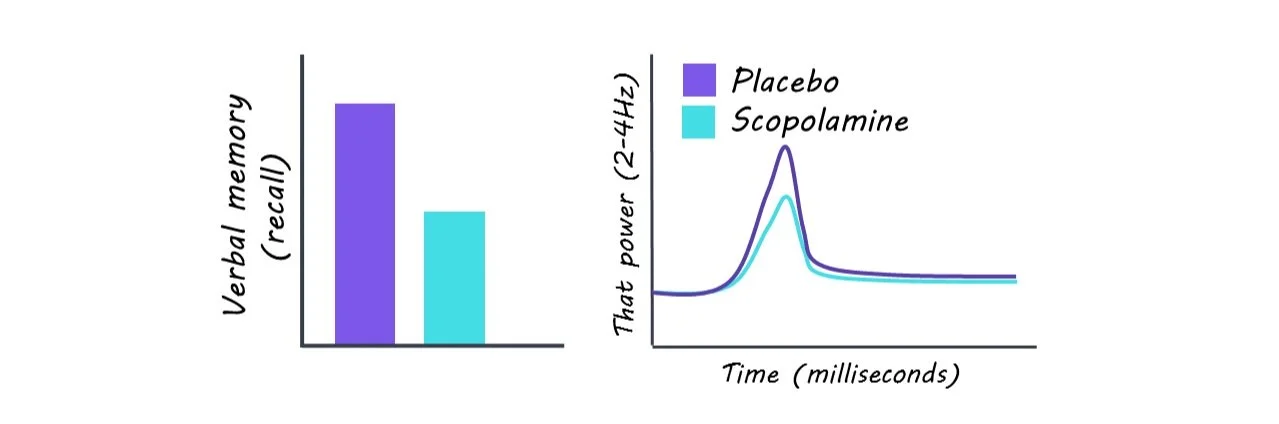
The researchers used intracranial brain recordings as well as pharmacological, behavioral, and molecular biology techniques to investigate the link between cholinergic pathways, hippocampal theta oscillations and memory formation. They administered a single dose of scopolamine (an acetylcholine antagonist) to 12 epilepsy patients in the experimental group and administered saline in the control group. Afterwards, both groups participated in a verbal episodic memory task to assess memory performance. Scopolamine disrupts both fast (4-10Hz) and slow (204Hz) hippocampal theta bands in rodent models, so the researchers hypothesized that it would impair these theta oscillations in humans as well and affect memory formation. The researchers analyzed the brain recordings from these patients, looking specifically at three physiological phenomena key for hippocampal memory formation: oscillatory power, phase reset, and synchrony.   

What did they find?

The authors found that administration of scopolamine in the experimental group of patients, significantly impaired their memory. This impairment for each patient was accompanied by a disruption of the slow theta oscillation of the hippocampus during memory encoding. Specifically, scopolamine administration suppressed the original length of the slow theta band and interrupted the resetting of the next theta oscillation cycle, preventing an important step in episodic memory formation in the hippocampus. Across all the subjects, it was noticed that this disruption of the theta oscillation correlated with the memory impairment caused by the scopolamine administration. Additionally, it was found that scopolamine also disrupted the synchrony of the theta oscillations. All these findings suggest that cholinergic pathways are critical for hippocampal memory formation through modulation of the temporal dynamics of slow theta wave oscillations.
What's the impact?

The findings of this study demonstrate that acetylcholine disruption significantly influences the dynamics and power of hippocampal theta oscillations crucial for memory formation. These findings have massive implications for potential therapeutic strategies to restore memory in diseases such as dementia and AD.
Access the original scientific publication here

How Does Cannabis Affect Brain Health?

Post by Baldomero B. Ramirez Cantu

What are cannabinoids?

Cannabinoids are a broad class of biological compounds found primarily in the cannabis plant. They are known for their interaction with the endogenous cannabinoid system in the human body and have various physiological and psychoactive effects. The two most well-known, used and understood classes of cannabinoids are tetrahydrocannabinol (THC) and cannabidiol (CBD) (Atakan et al., 2012).

Cannabinoids affect the human body and brain by interacting with endogenous cannabinoid receptors. These receptors are highly expressed in brain regions that control cognitive functions, including the neocortex, hippocampus, basal ganglia, and cerebellum (Marsicano and Kuner, 2008). Thus, endogenous cannabinoid signaling can contribute to crucial brain functions like memory, motivation, and motor coordination.

What are cannabinoids used for?

Cannabinoids are used for both clinical and recreational purposes. In clinical settings, cannabinoids are used to manage pain, alleviate chemotherapy-induced nausea, and treat epilepsy (Allan et al., 2018). Recreational use primarily involves the consumption or inhalation of cannabis. Notably, cannabinoids, particularly THC, can induce sensations of euphoria, heighten pleasure response, and stimulate increased appetite (Mahler et al., 2007).

Cannabis use has also shown promise as a therapeutic option in both HIV treatment and opioid use management. In HIV treatment, some studies suggest that cannabis may help alleviate symptoms associated with the virus, such as pain, nausea, and loss of appetite (Ellis et al., 2021). Additionally, it may have potential anti-inflammatory and neuroprotective properties that could benefit those with HIV-related neurological complications. In the context of opioid withdrawal, cannabis may assist individuals in managing withdrawal symptoms and reducing opioid cravings (Lucas et al., 2021).

How do cannabinoids affect brain health?

Cannabis use has notable effects on brain function in the short term and over prolonged periods. In the short term, immediate cognitive impairment is a common consequence, affecting memory, attention, and problem-solving abilities. These effects are typically temporary and subside as the drug is metabolized. Users may also experience altered sensory perception, impacting their perception of time, colors, and sounds. Some users encounter heightened anxiety or paranoia, particularly when consuming high doses or strains with high levels of THC (Wainberg et al., 2021).

In the long term, chronic and heavy cannabis use can have profound implications for brain health. Persistent use, particularly during adolescence when the brain is still developing, may lead to cognitive impairments, including memory deficits, and reduced attention span (Crean et al., 2011). Additionally, there is evidence of an increased risk of mental health issues, such as anxiety disorders and depression (Jefsen et al., 2023). These long-term effects underscore the importance of responsible cannabis use and consideration of individual susceptibility, as the impact on brain health can vary depending on factors like usage patterns, potency, and personal vulnerabilities.

Our understanding of the precise mechanisms by which cannabis affects brain health remains incomplete. We do know that cannabis use can influence sleep patterns, a fundamental contributor to mental and brain well-being. The impact of cannabis on sleep is multifaceted and can be influenced by factors such as the specific cannabinoids present, the method of consumption, the dosage, and individual variations in drug response (Kaul et al., 2021). In some cases, cannabinoids have been reported to have a positive influence on sleep. Many users claim that it helps them fall asleep more easily and can improve the overall quality of their sleep. However, it's important to note that the relationship between cannabis use and sleep is complex, and the effects can be highly variable. While some people experience improved sleep, others may encounter negative effects. For instance, cannabis use can disrupt the sleep cycle by reducing the amount of rapid eye movement (REM) sleep, which is associated with dreams and overall sleep quality (Vaillancourt et al., 2022). 

The takeaway 

The relationship between cannabis use and brain health is complex and multifaceted. Cannabis can have both short- and long-term effects on cognitive function and mental well-being, but these effects can vary significantly among individuals and depend on factors such as frequency of use, potency, and age of use initiation. It is essential for individuals to be well-informed about the potential risks associated with cannabis use, particularly heavy and prolonged use, which may be linked to cognitive impairments and mental health issues, especially when use begins before the brain is fully developed (typically the mid-to-late twenties). Responsible and moderate use, as well as considering individual vulnerability, remains key in minimizing potential harm. Further research is also needed to uncover the full potential of cannabis in clinical settings to mitigate or improve certain conditions or disease symptoms.

References +

Atakan Z. (2012). Cannabis, a complex plant: different compounds and different effects on individuals. Therapeutic advances in psychopharmacology, 2(6), 241–254.

Marsicano, G., and Kuner, R. (2008). Anatomical distribution of receptors, ligands and enzymes in the brain and in the spinal cord: circuitries and neurochemistry. Cannabinoids and The Brain, ed. A. Köfalvi, 161–201.

Allan, G. M., Finley, C. R., Ton, J., Perry, D., Ramji, J., Crawford, K., Lindblad, A. J., Korownyk, C., & Kolber, M. R. (2018). Systematic review of systematic reviews for medical cannabinoids: Pain, nausea and vomiting, spasticity, and harms. Canadian family physician Medecin de famille canadien, 64(2), e78–e94.

Mahler, S. V., Smith, K. S., & Berridge, K. C. (2007). Endocannabinoid hedonic hotspot for sensory pleasure: anandamide in nucleus accumbens shell enhances 'liking' of a sweet reward. Neuropsychopharmacology : official publication of the American College of Neuropsychopharmacology, 32(11), 2267–2278.

Ellis, R. J., Wilson, N., & Peterson, S. (2021). Cannabis and Inflammation in HIV: A Review of Human and Animal Studies. Viruses, 13(8), 1521

Lucas, P., Boyd, S., Milloy, M. J., & Walsh, Z. (2021). Cannabis Significantly Reduces the Use of Prescription Opioids and Improves Quality of Life in Authorized Patients: Results of a Large Prospective Study. Pain medicine (Malden, Mass.), 22(3), 727–739.

Wainberg, M., Jacobs, G. R., di Forti, M., & Tripathy, S. J. (2021). Cannabis, schizophrenia genetic risk, and psychotic experiences: a cross-sectional study of 109,308 participants from the UK Biobank. Translational psychiatry, 11(1), 211.

Crean, R. D., Crane, N. A., & Mason, B. J. (2011). An evidence based review of acute and long-term effects of cannabis use on executive cognitive functions. Journal of addiction medicine, 5(1), 1–8.

Jefsen, O. H., Erlangsen, A., Nordentoft, M., & Hjorthøj, C. (2023). Cannabis Use Disorder and Subsequent Risk of Psychotic and Nonpsychotic Unipolar Depression and Bipolar Disorder. JAMA psychiatry, 80(8), 803–810.

Kaul, M., Zee, P. C., & Sahni, A. S. (2021). Effects of Cannabinoids on Sleep and their Therapeutic Potential for Sleep Disorders. Neurotherapeutics : the journal of the American Society for Experimental NeuroTherapeutics, 18(1), 217–227.

Vaillancourt, R., Gallagher, S., Cameron, J. D., & Dhalla, R. (2022). Cannabis use in patients with insomnia and sleep disorders: Retrospective chart review. Canadian pharmacists journal : CPJ = Revue des pharmaciens du Canada : RPC, 155(3), 175–180.

Predicting How Adversity Changes the Brain

Post by Christopher Chen

The takeaway

Environmental stressors alter our brains. These alterations endure over time, and individual deviations from shared neural patterns associated with adversity hold the potential to predict future psychopathology, like anxiety. 

What's the science?

Brain imaging technologies like functional magnetic resonance imaging (fMRI) have enabled researchers to gather evidence that adversity, particularly during early childhood and adolescence, can lead to abnormal brain development. This may play a significant role in later psychological disorders in adulthood. For instance, brain imaging studies have demonstrated that factors like childhood trauma and poverty can impact the volume of crucial brain regions such as the hippocampus and amygdala - brain regions that are integral to emotion and cognitive function.

Specific types of adversity are thought to uniquely affect particular brain regions, however, it’s still unclear how we can predict outcomes from different types of adversity for unique individuals. Recently in Nature Neuroscience, Holz and colleagues leveraged machine learning and brain imaging data to uncover how distinct types of adversity influence the brain, how this varies across individuals, and how we can predict an individual's likelihood of developing anxiety.

How did they do it?

The researchers conducted a comparative analysis of brain images from 169 at-risk individuals and healthy controls who were part of the Mannheim Study of Children at Risk (MARS), a well-known longitudinal investigation tracking these individuals from birth into adulthood. A replication sample was derived from another imaging study known as the IMAGEN study and shared similar demographic characteristics with the MARS group. The researchers used machine learning to develop a normative model of brain development based on adversity in the MARS group. The same model was employed to generate normative brain images for the same at-risk individuals eight years later and for the replication sample from the IMAGEN study. 

The researchers then engaged in a detailed comparison of essential components within and between these three normative brain models. This included employing a measurement called the dice coefficient to assess the extent of overlap between the neural patterns associated with different types of adversity. Additionally, they harnessed individual-specific z-scores (i.e. how many standard deviations a value is from the mean) to gauge the deviation between an individual’s brain images and the normative brain model. By using linear mixed models, they could gauge how these neural deviations at the individual level predicted the manifestation of anxiety.  

What did they find?

In terms of the brain images from at-risk individuals, the researchers observed a consistent neural signature across subjects, implying that heightened adversity impacts similar brain regions. Remarkably, while brain regions like the hippocampus and amygdala, known to be affected by adversity, exhibited changes in volume, the researchers also noted persistent volume changes in non-limbic system regions like the occipital gyrus and thalamus. They further uncovered that this neural signature remained stable over time. 

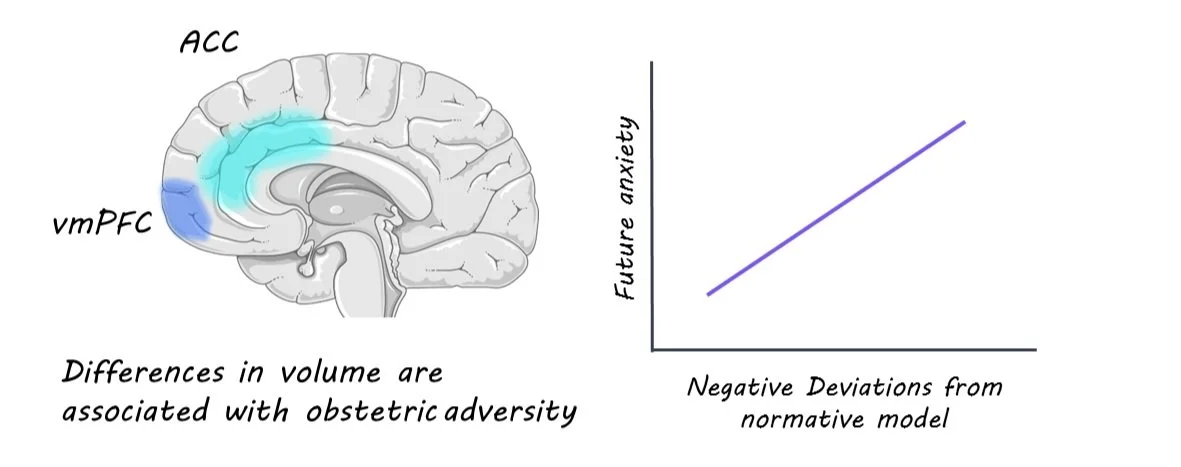
Using dice coefficients, the researchers showcased the links between specific types of adversity and corresponding changes in distinct brain regions. Adversities such as prenatal maternal smoking and obstetric challenges demonstrated lower dice coefficients, signifying their unique impact on specific brain areas. For instance, prenatal maternal smoking was closely tied to volume expansions in the hippocampus and volume contractions (i.e. reductions) in the postcentral and occipital gyrus. Meanwhile, obstetric adversity correlated with volume expansions in the ventromedial prefrontal cortex (vmPFC) and volume contractions in the anterior cingulate cortex (ACC). 

Perhaps the most intriguing revelation was the predictive capacity of the normative model. The researchers discovered that significant negative deviations (indicating volume reduction) in an individual's brain were associated with a higher predisposition to future anxiety.

What's the impact?

These findings underscore the positive correlation between adversity-induced brain changes and the likelihood of anxiety. Moreover, the research suggests that the effects of adversity on the brain could be more profound and enduring than previously believed. Although the study's scope was limited to adults and a relatively small cohort, its specificity holds promise for aiding researchers and healthcare professionals in developing more targeted and effective strategies to help individuals navigate the repercussions of adversity in their lives.