Functional Connections From the Thalamus Can Predict Concussive Symptoms After a Mild Traumatic Brain Injury

Post by Kulpreet Cheema

The takeaway 

Functional changes in the connectivity of a brain region called the thalamus in the acute phase after a mild traumatic brain injury (mTBI) can be used to indicate chronic symptoms.

What’s the science? 

After a person suffers from a mTBI, it’s often hard to predict long-term symptoms, with studies showing that clinicians often overestimate recovery rates. The thalamus is a brain region that is involved in the coordination of information between different brain regions. Disrupted thalamic activity is found to be associated with various post-concussive symptoms like headache, sleep disturbance, and fatigue. Additionally, a significant relationship has been found between thalamic activity and symptoms of depression, pain, and cognitive performance. However, these studies had small sample sizes and often investigated patients with pre-existing disorders. It is therefore unclear whether this relationship is due to mTBI alone. This week in Brain, Woodrow and colleagues aimed to study the pathophysiology of the thalamus and its relationship with the post-concussive symptoms that emerge after a mTBI.

How did they do it? 

The authors used magnetic resonance imaging (MRI) data from the CENTER-TBI study, which included 108 patients with mTBI with no history of previous concussion or neuropsychiatric disorder and 76 healthy control participants. All participants completed a structural MRI scan and a resting state functional MRI (rsfMRI) scan in the acute phase of their injury. Thirty-one patients also completed the same scans at 6- and 12 months post-injury. Behavioral assessments were conducted to measure cognitive, emotional, and somatic symptom recovery.

The thalamus' overall volume and functional connectivity (i.e., degree of correlated activity between the thalamus and other brain regions) and six blood-based injury biomarkers collected within 30 days were related to the outcome. In addition, functional connectivity was related to the density of receptors and transporters from nine neurotransmitter systems.

What did they find? 

In the acute phase after mTBI, the thalamus had an increased number of functional connections to other brain regions when compared to controls. Surprisingly, changes in routine imaging and blood-based biomarkers were not different between the patients and controls. Moreover, patients who developed persistent postconcussive symptoms had even more connections from the thalamus than those without symptoms, proposing this as a biomarker of chronic symptoms. Also, specific neurotransmitter profiles were related to the functional connectivity changes associated with post-concussive symptoms. Together, all these results suggest the chronic symptoms after a mTBI can be identified and better understood by examining the functional connectivity of the thalamus, in conjunction with different neurotransmitter profiles.

What’s the impact? 

The study found that functional connectivity of the thalamus can serve as an earlier biomarker after a mTBI injury. This can help clinicians identify patients who will develop post-concussive symptoms and improve appropriate treatment plans to alleviate these symptoms.  
A “Pro-Inflammatory” Diet is Associated with Increased Inflammation and Cognitive Decline

Post by Lani Cupo

The takeaway

A diet high in pro-inflammatory foods is associated with proteins related to inflammation in the blood and later-life cognitive impairment (associated with Alzheimer’s Disease [AD]) in a large cohort of caucasian women.

What's the science?

Previous studies have linked certain dietary patterns with elevated markers of inflammation. Additionally, increased inflammation has been associated with cognitive decline in aging. It is unknown, however, how diet relates to a wide array of inflammatory markers, and which of these play a role in cognitive decline in aging. This week in Molecular Psychiatry, Duggan and colleagues explore the relationship between dietary patterns, markers of inflammation, and cognitive decline in a large group of women over time.

How did they do it?

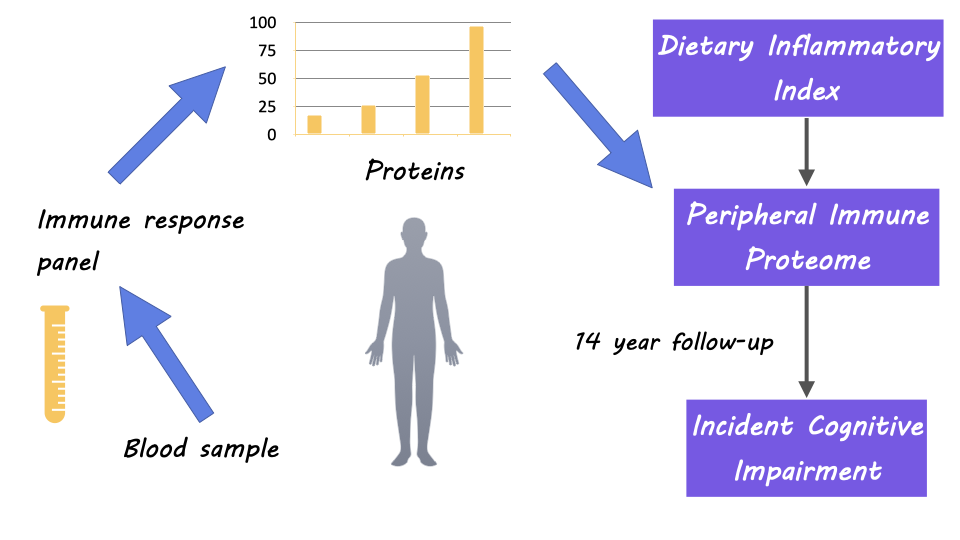
The authors used a subset of data from the Women’s Health Initiative Memory Study which includes samples from 1528 women, on average aged 71 at the first timepoint. At the first timepoint, researchers surveyed participants about their diet, collected blood samples to assess markers of inflammation, and performed assessments of cognition. Each annual follow-up included cognitive assessments as well. Using a pre-defined tool known as the Dietary Inflammatory Index, the authors placed each diet on a continuum from “anti-inflammatory” (e.g. tomatoes, fruits, nuts) to “pro-inflammatory” (refined carbohydrates, fried foods). 151 inflammatory and immune proteins were assessed in blood samples and included for analysis. Cognition was assessed by clinicians, who categorized participants as having “no impairment”, “mild cognitive impairment”, or a “probable dementia.” Importantly, the authors controlled for covariates that could confound the relationship between an inflammatory diet and cognitive decline, such as education. Finally, in separate datasets, the authors validated the association of proteins identified in the first study with a) age to onset of dementia in both sexes and b) brain atrophy measured with magnetic resonance imaging in both sexes in areas related to AD.

What did they find?

First, the authors found in the main sample that a more inflammatory diet at baseline was associated with 55 of the 151 inflammatory proteins in blood samples, including, for example, proteins involved in pro-inflammatory signaling (interleukin-6), and regulation of phagocytosis. They also found associations between an inflammatory diet and genes regulating inflammatory responses and responses to pro-inflammatory signals. Of the proteins associated with an inflammatory diet, the authors found 6 proteins were weakly associated with an increased likelihood of future cognitive impairment, with these proteins involved in processes such as gene transcription and immune signaling. In the first validation study, 5 of the 6 proteins had been measured, and all 5 of them were associated with increased risk of dementia and 3 of them were associated with earlier onset of dementia. From the second validation study, the authors found 3 of the 6 proteins were associated with greater brain atrophy in regions associated with AD-related dementia, and all 3 were also associated with increased rates of dementia in the first validation study.

What's the impact?

This study found a set of proteins that were associated with an inflammatory diet, a subset of which were also associated with cognitive impairment, the risk for AD, and AD-related brain atrophy. The genes that regulate these proteins could become possible therapeutic targets for AD treatments. An anti-inflammatory diet could also provide a protective effect for high-risk individuals, although further research is needed to confirm this.

Access the original scientific publication here.

Human Brain Organoids Can Integrate into the Adult Rat Visual System

Post by Megan McCullough

The takeaway

Human brain organoids, grown from human stem cells, can integrate both structurally and functionally into adult rat brains.

What's the science?

One promising treatment for restoring brain function after an injury is cell transplantation. Human brain organoids, created from pluripotent stem cells, are an avenue of research currently being studied for therapeutic potential. Previous studies have shown that it is feasible for human brain organoids to integrate into rat brain systems, but there has been limited research into the functional integration of these organoids into the networks of injured mammalian brains. This week in Cell Stem Cell, Jgamadze and colleagues transplanted human brain organoids into damaged cavities in the visual cortex of adult rats to examine potential integration. 

How did they do it?

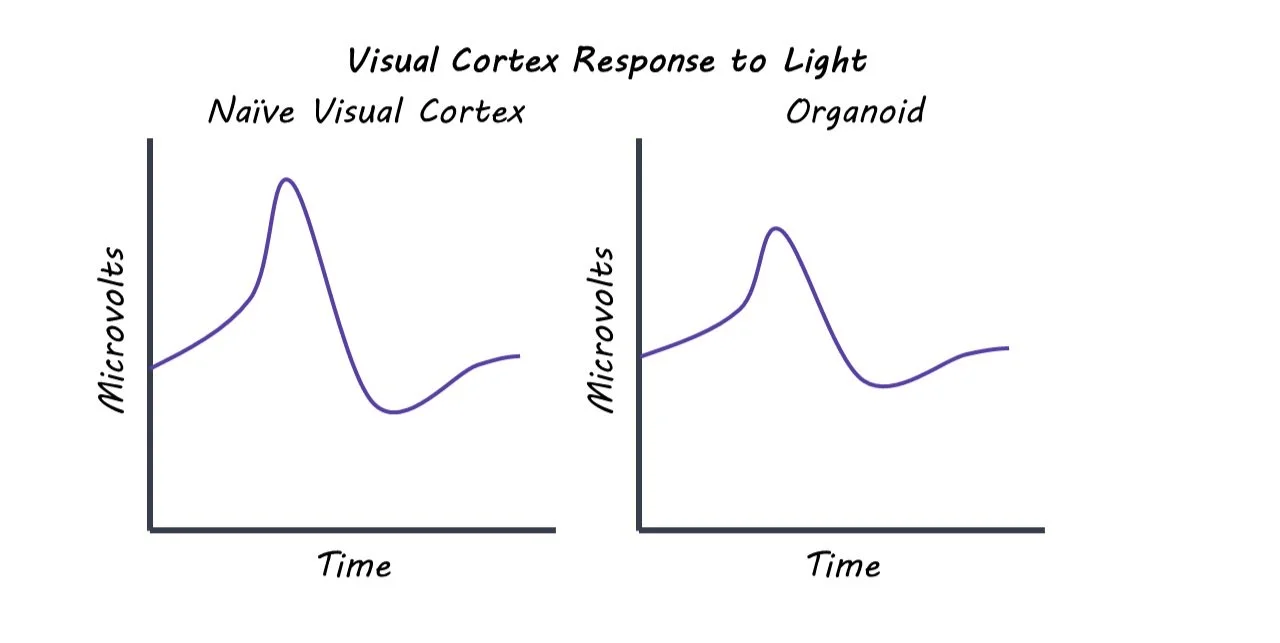
The authors transplanted brain organoids into the visual cortexes of rats. These tissues were generated from human stem cells and expressed the fluorescent marker GFP - a protein that lights up once exposed to ultraviolet light, allowing the authors to identify the organoids once grafted into the rat brains. The organoids had been growing for around 80 days, longer than in previous studies, to allow for maturation and cell differentiation. The authors then conducted a histological (tissue) analysis on the human grafts to confirm the human origin of the cell tissues, examine potential cell maturation, and observe any immune response from the host tissue. This was done to examine how the cell grafts evolved over time. Viral tracers were also injected into the eyes of the rats which allowed the authors to observe the connections between the human cells and rat cells. Next, the authors looked for functional integration of the transplanted organoids. Extracellular recordings were conducted to test for neural activity in the grafted tissue in response to presenting the rats with visual stimuli.

What did they find?

The authors found that in a three-month time period, human brain organoids integrated into the visual system of rat brains. Histological analysis showed that although there was inflammation at the graft site, there was only a mild immune response from the host tissue. This suggests that cell transplant can be a viable option into mammalian brains. This analysis also showed that the human cell tissue continued to differentiate and mature once transplanted. In addition to structural integration, the transplanted organoids also showed functional integration. The grafted human neurons received inputs from the visual system, forming connections via synapses with the host neurons. The brain organoids demonstrated both spontaneous and evoked neural activity, providing further evidence of functional integration. When the rats were exposed to flashing lights, the organoid neurons responded to the stimulation in similar way that the host cells responded.  

What's the impact?

This study found that human brain organoids can both structurally and functionally integrate with the visual system of rats. The human neurons formed connections with the rat neurons and displayed electrical activity in response to visual stimulation. This research shows the possibility of using lab-grown neural tissue to reconstruct brain circuitry after brain injury or stroke.