How Does the Hippocampus Ensure Consistent Memory of Distinct Environments?

Post by Elisa Guma

The takeaway

A subset of “environment cells” in the hippocampus create an internal representation of specific environments — regardless of salient events that may happen — allowing us to maintain stable memory of distinct environments.  

What's the science?

The hippocampus plays a central role in shaping our perception of our environment, allowing us to recognize our surroundings and navigate through them. Within the hippocampus, a subset of cells called “place cells” are responsible for coding information regarding physical location in space, which allows for the creation of an internal representation of a specific environment. However, it is unclear whether the neuronal representation of these environments remains stable after salient (i.e., noticeable or important) events that lead to the creation of distinct new memories occur within them. This week in Cell Reports Kobayashi and Matsuo examine whether the neuronal representation of an environment changes due to subjugation to emotional, hippocampus-dependent experiences (contextual fear conditioning and extinction training) by imaging activity of hippocampal neurons.

How did they do it?

To be able to measure neuronal activity in freely moving animals, the authors used calcium imaging techniques; they injected a viral vector into the dorsal hippocampus (CA1 region) of mice; this vector will transfect neurons with a protein that will fluoresce green when a neuron is active. To record fluorescent activity, the authors implanted a small lens with a mini microscope over the dorsal hippocampus. After recovering from surgery, the mice completed the following behavioral paradigm while neuronal activity was recorded:

Day 1: mice freely explored (5 minutes) a novel experimental chamber (environment B) so authors could analyze the neuronal representation of one novel environment

Day 2: mice were placed in a different novel conditioning chamber (environment A) and allowed to freely explore (5 minutes) before returning to their home cage. Following this initial exploration, mice were placed back in this same chamber (environment A) and given 3 foot shocks (fear conditioning). After fear conditioning, the mice underwent two 30-minute extinction training sessions (with a 5-minute break in-between) wherein they were placed back in the same environment (environment A) without shock to attenuate the fear memory.

Following a 30-minute break, the mice were placed back in this environment two different times to assess contextual fear memory and memory attenuation.

Day 3: mice were exposed again to both environments, A, and B, to test for memory extinction and then placed in environment B again for 4 minutes.

The authors compared neural activity in each of the behavioral sessions across days to determine when activity was highest. The authors employed a data dimensionality reduction technique (i.e., trained a t-distributed stochastic neighbor embedding (t-SNE)) on the neural activity which places each data point in a two- or three-dimensional map, giving the authors a better idea of how similar or different neural activity was across the behavioral paradigms.

Next, the authors tried to find cells, dubbed “environmental cells”, that stably encoded a particular environment. They screened the neural activity from each cell to determine whether certain cells exhibited higher rates of activity in a specific environment. To assess the specificity of these “environmental cells’” activity, they used environmental cell activity to train a decoder to predict whether the neuronal activity of a cell was responding to environment A or B.
What did they find?

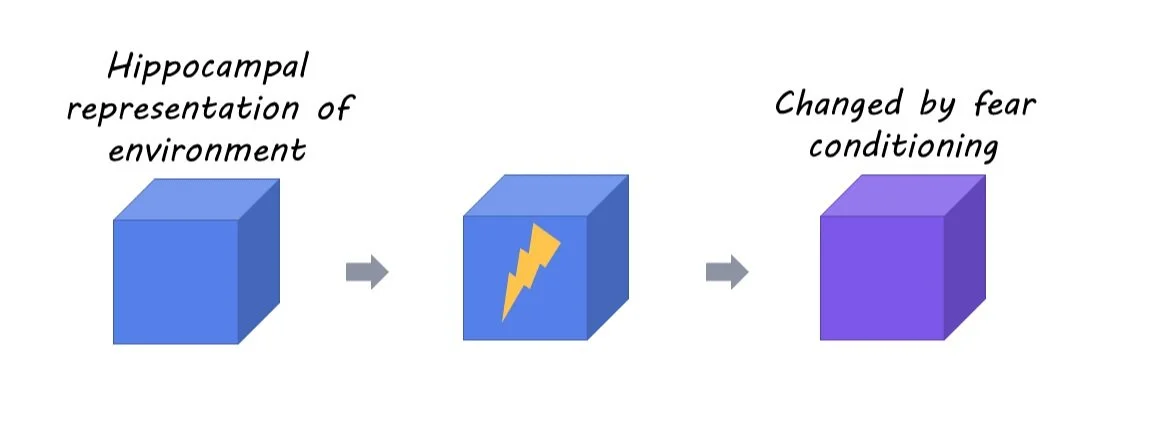
First, the authors observed that neuronal activity of the hippocampus was elevated when mice were first exposed to novel environments A and B (compared to baseline activity in their home cage), indicating that this region is responsive to exposure to novel environments. Hippocampal activity was further elevated during both the fear conditioning (foot shock exposure) and fear memory retrieval (when mice were placed back in the conditioning chamber in environment A). Increases were specifically observed in the non-freezing compared to freezing periods of the mice’s activity which may reflect fear memory retrieval processing. Further, the authors confirmed that these increases in hippocampal activity were not correlated with the mice’s motor activity, but rather with the aversive stimulus of the foot shocks.

Decomposition of the neural activity using the t-SNE identified several patterns of activity. Neural activity was more similar within the same environment than across different environments. Further, fear conditioning reduced the similarity of neural activity within environment A, while extinction training increased similarity (compared to pre-fear conditioning activity).

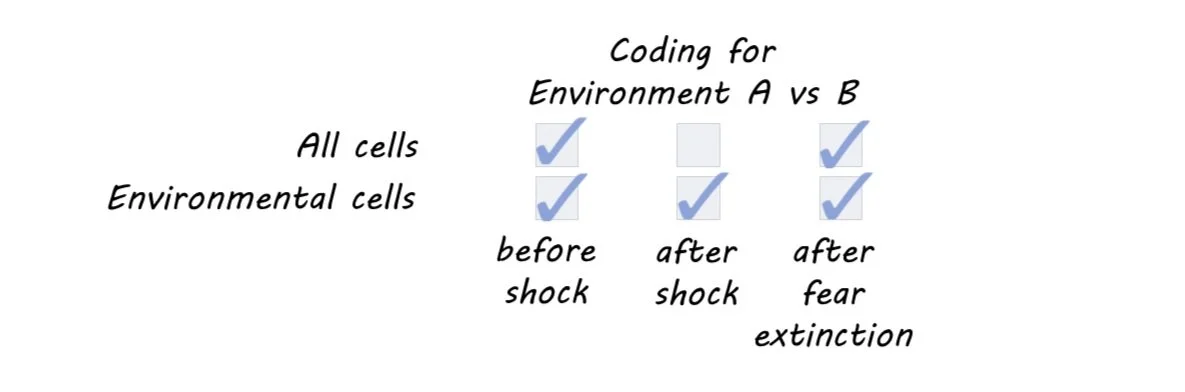
The authors identified “environment cells”: one subset (1.8%) which seemed to be consistently more active in environment A than in other environments, and another subset  (4.7%) which were consistently more active in environment B. Next, the authors found that these environment cells were not specialized to encode a specific location within the environment, as only a minority of these cells were identified as place cells (15-25%). Finally, the decoder they trained was able to predict which of the two environments the cells were coding for.
What's the impact?

This study identifies that fear conditioning and extinction training dramatically alter hippocampal activity in the environment where those exposures occurred. Additionally, they identify a subset of hippocampal cells that respond exclusively to the environment, and that these cells decode different environments with high accuracy. These findings provide important insights into the neuronal basis of spatial memory and the neuronal basis for how environments are coded.  
Gray Matter Atrophy Correlates with Neurotransmitter Dysfunction in Multiple Sclerosis

Post by Lincoln Tracy

The takeaway

Region-specific gray matter atrophy may impact neurotransmitter systems (e.g., dopamine, serotonin), which may contribute to clinical manifestations and symptoms of multiple sclerosis. 

What's the science?

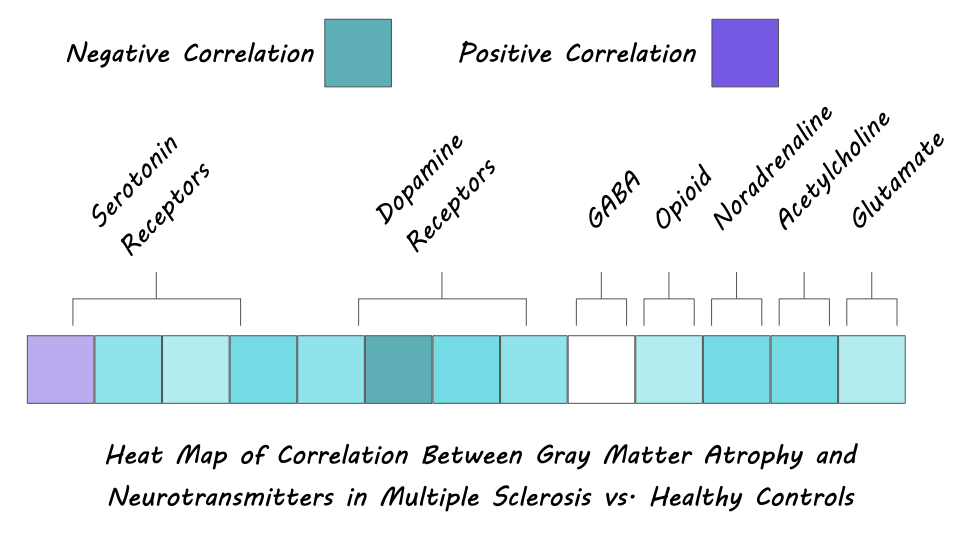
Multiple sclerosis (MS), a chronic neurological disease, displays specific topographic and temporal patterns of gray matter atrophy. The progression of gray matter atrophy corresponds with clinically relevant symptoms of MS, such as locomotor disability, cognitive impairment, fatigue, and depression. Evidence from studies of MS and other neurodegenerative disorders suggests an imbalance of excitatory and inhibitory neurotransmitters as one of the pathological substrates contributing to neuro-axonal loss and progressive gray matter atrophy, underlying the development of specific symptoms. This week in Molecular Psychiatry, Fiore and colleagues sought to determine whether MS severity and common MS symptoms were associated with atrophy of specific brain regions that were spatially correlated with specific neurotransmitters. 

How did they do it?

The authors recruited 286 MS patients (173 women) and 172 neurologically normal individuals (92 women) to act as controls. All MS patients completed a neurological evaluation and a series of tests and questionnaires to measure their cognitive function, fatigue, and depression, before undergoing a magnetic resonance imaging (MRI) scan to quantify gray matter atrophy. The atrophy patterns in the MRI scans were correlated with maps of where different neurotransmitter systems were distributed throughout the brain. The authors compared regional gray matter volumes between MS patients and controls to assess what areas of the brain showed significant gray matter atrophy and whether such a pattern of gray matter atrophy was spatially correlated with specific neurotransmitter systems. The authors also tested whether patients with different clinical MS phenotypes (e.g., relapsing/remitting or progressive) displayed differences in brain atrophy. Finally, they explored whether differences in cognitive impairment, fatigue, and depression were associated with gray matter atrophy and neurotransmitter distribution in patients with MS. 

What did they find?

First, the authors found MS patients had more severe gray matter atrophy compared to the neurologically normal controls, specifically in the fronto-temporo-parieto-occipital regions and the cerebellum. These atrophied areas were associated with a higher distribution of serotonin, dopamine, mu-opioid, noradrenaline, acetylcholine, and glutamate receptors. Second, progressive MS patients had more gray matter atrophy in the cerebellum, hippocampus, left temporal cortex, left putamen, and left insula than patients with relapsing-remitting MS, but this pattern of gray matter atrophy was not associated with any significant neurotransmitter distribution. Finally, cognitively impaired MS patients had more widespread atrophy in the cortex, deep nuclei, and cerebellum compared to cognitively preserved MS patients. The atrophied regions were spatially correlated with a higher distribution of dopamine, noradrenaline, serotonin, acetylcholine, and glutamate receptors. MS patients with fatigue had atrophy in the bilateral precuneus and a suite of other brain regions including the right superior temporal gyrus, but no associations with neurotransmitter distribution were observed. There were no differences in gray matter atrophy between MS patients with and without depression. Overall, these results suggest gray matter atrophy in specific brain regions may negatively affect specific neurotransmitter systems, which in turn may contribute to different presentations and symptoms of MS.   

What's the impact?

The results of this study may improve our understanding of the pathophysiological processes underlying the various clinical manifestations of MS, including common symptoms such as cognitive impairment and fatigue. If future studies confirm these results, the findings could pave the way for the development of new neurotransmitter-modulating therapies for MS, which may result in improved quality of life for patients. 

Neurons Receiving Input From a Computer Chip Demonstrate Learning in a Game of “Pong”

Post by Lani Cupo

The takeaway

The future of artificial intelligence is reimagined with DishBrain, a new technology that combines neurons, grown in a petri dish, with stimuli and feedback from electrical circuits. The authors present a “Pong”-playing system that they claim embodies the foundation of sentience.

What's the science?

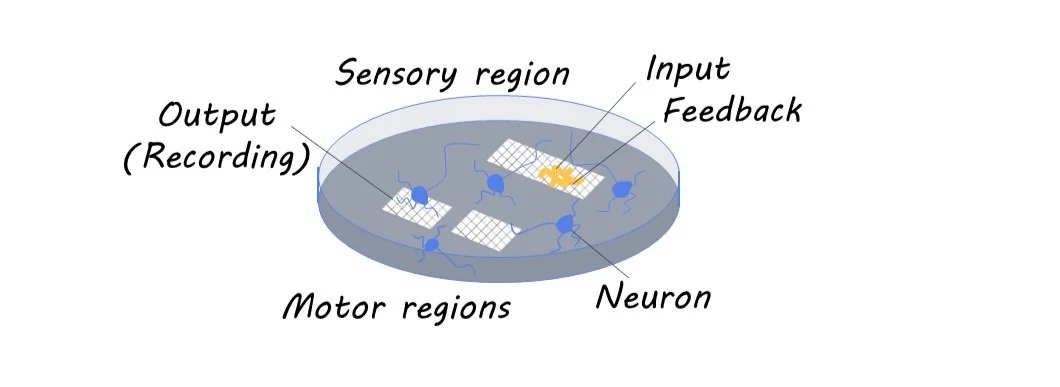
Neurons and computer hardware share a common language: electricity. It has been theorized that combining real biological neurons with silicone hardware would allow a synthetic system to represent complexity that modern computers (using binary) alone cannot capture. Previously, however, the advantages of biological neural circuits have not been integrated into digital, silicone systems. Recently in Neuron, Kagan and colleagues present a form of synthetic biological intelligence called DishBrain: a petri dish of neurons embedded with a multi-electrode array that provides electrophysiological stimulation and recording to create a simulated game world that allows the neural circuit to learn the game “Pong” in real-time.

How did they do it?

The authors first generated cortical neurons from two sources: human pluripotent stem cells and mouse embryos. These neurons were then allowed to mature on plates made of multi-electrode arrays, developing into complex, interconnected neural circuits. The authors developed a system that leveraged software to not only record electrical activity from the neurons but also provide noninvasive electrical stimuli that mimic action potentials. In order to demonstrate real-time learning, the authors simulated the game “Pong”. They provided “sensory” information representing a ball moving on a trajectory. Electrophysiological activity in a predefined “motor” cluster of neurons was recorded, representing moving a paddle up or down. If the movement would result in an interruption of the ball’s trajectory, a predictable stimulus was presented to all the neurons at once, serving as positive feedback. If, however, the movement would not interrupt the ball’s path, an unpredictable stimulus was provided. The authors examined the hit-miss ratio, which they defined as the average rally length, as a metric of learning. As experimental controls, they compared the cell cultures to three different conditions: 1) Petri dishes with only cell culture media (no cells), 2) rest sessions, where the cells could control the paddle, but received no "sensory input", and 3) sessions that replicated the experiment, but where the paddle was controlled by random noise. With the recordings of cell firings, the authors examined functional connectivity within the culture and how cell activity related to performance in the task.

What did they find?

At the start of the sessions, they found that human stem cells performed worse than the mouse neurons and controls at the task, possibly due to increased exploratory behavior. However, by the end of the session, both mouse and human-derived cultures performed better than controls, and the human cultures performed slightly better than the mouse, indicative that learning occurred over the session. Importantly, the authors found that feedback was necessary for learning - the cultures only improved in average rally length when feedback was provided to the system. Overall, connectivity within the culture was stronger during gameplay than during rest, which could suggest a direct relationship between activity in “sensory” regions receiving input and “motor” regions supplying output. Increased neuron firing was also related to better performance in the game, although most important was that neuron activity was fairly symmetrical across the surface of the actual physical chip, suggesting a balanced culture.

What's the impact?

Because of the learning in response to environmental stimuli, the authors present DishBrain as a sentient form of synthetic biological intelligence, as the system was “responsive to sensory impressions through adaptive internal processes.” While advances would still be required in terms of hardware and “wetware” of the biological interface, the authors suggest a new direction for artificial intelligence. Their findings not only manifest what was previously confined to the realm of science fiction in terms of inventions but also some of the moral and ethical quandaries as well.