Controlled Breathwork Improves Mood and Reduces Anxiety

Post by Leanna Kalinowski

The takeaway

Engaging in daily 5-minute breathwork exercises and mindfulness meditation improves mood and reduces anxiety. Cyclic sighing – a voluntary breathwork exercise that primarily focuses on exhales –  showed the greatest benefits compared to other voluntary breathwork techniques.

What's the science?

Controlled breathwork techniques have emerged as a promising avenue for improving mood and reducing stress. Methods that involve passive observation of the breath, such as meditation and yoga, are common practices that have well-demonstrated mental health benefits. These practices have different physiological effects from voluntary breathing techniques, where inhaling and exhaling patterns are directly controlled. However, little is known about how passive and voluntary breathing techniques uniquely affect mental health. This week in Cell Reports Medicine, Yilmaz Balban and colleagues evaluated the difference between passive and voluntary breathing exercises and their effectiveness in improving mood, anxiety, and physiological measures.

How did they do it?

108 participants were divided into four groups – a mindful meditation (control) group and three voluntary breathwork (treatment) groups – and instructed to complete their assigned daily breathing exercise at home for 28 days:

1)    Mindful Meditation (control group): Participants were instructed, for 5 minutes, to close their eyes and observe their breathing while focusing their mental attention on their forehead region. If their focus drifted from that region, they were told to first focus back on their breath, and then refocus back on their forehead.

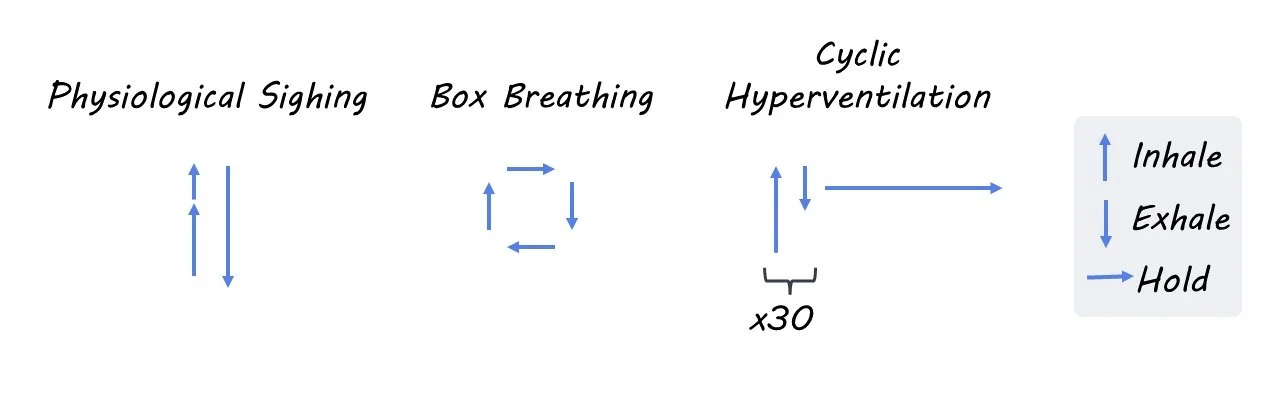
2)    Cyclic Sighing (breathwork group 1): Participants were instructed to, repeatedly for 5 minutes, inhale slowly until their lungs are expanded, inhale once more to maximally fill their lungs, and then slowly and fully exhale their breath.

3)    Box Breathing (breathwork group 2): Participants were first instructed to take the “CO2 tolerance test”, which includes taking a full deep breath, exhaling as slowly as possible, and then timing how long it takes to empty their lungs. Then, repeatedly for 5 minutes, they inhaled for the same duration it took to empty their lungs in the CO2 tolerance test, held their breath for that same duration, then exhaled for that same duration, then held their breath again for the same duration.

4)    Cyclic Hyperventilation with Retention (breathwork group 3): Participants were instructed to inhale deeply and then exhale by passively “letting their air fall out from the mouth”. They repeated this pattern for 30 breaths, after which they exhaled via the mouth and calmly waited with empty lungs for 15 seconds.

Participants completed two surveys that measured affect and anxiety at baseline and again after the experiment. They also wore a wrist strap during their breathing exercises that collected several physiological measures, including their daily resting heart rate, respiratory rate, and hours of sleep. These measures were collected remotely via a smartphone app.
What did they find?

The researchers found that, following 28 days of breathing exercises, all four groups experienced an increase in daily positive affect, a decrease in negative affect, and a reduction in anxiety. While there were no differences between the meditation (control) and breathwork groups in anxiety and negative affect changes, the three breathwork groups had a higher increase in daily positive affect compared to the meditation group. Upon evaluating the physiological measurements, researchers found a similar pattern: the three breathwork groups had a higher reduction in baseline respiratory rate than the meditation group. For both the positive affect and respiratory rate results, group differences were largely influenced by the cyclic sighing group, suggesting particularly beneficial effects for breathing techniques that emphasize exhaling. No other physiological changes were observed in any of the groups.

What's the impact?

Results from this study suggest that engaging in intentional breath control exercises (e.g., the cyclic sighing technique) provides more benefits to mood than passive breath observation exercises (i.e., mindfulness meditation). While all four breathing techniques were effective in improving mood and decreasing anxiety, daily 5-minute cyclic sighing shows the most promise in being a low-commitment approach to managing stress. Future studies should evaluate whether the consistent practice of these techniques, beyond one month, remains effective in improving psychological outcomes.
Can Wearable Devices Be Used to Identify Patients at Risk Following a Traumatic Event?

Post by Kulpreet Cheema

The takeaway

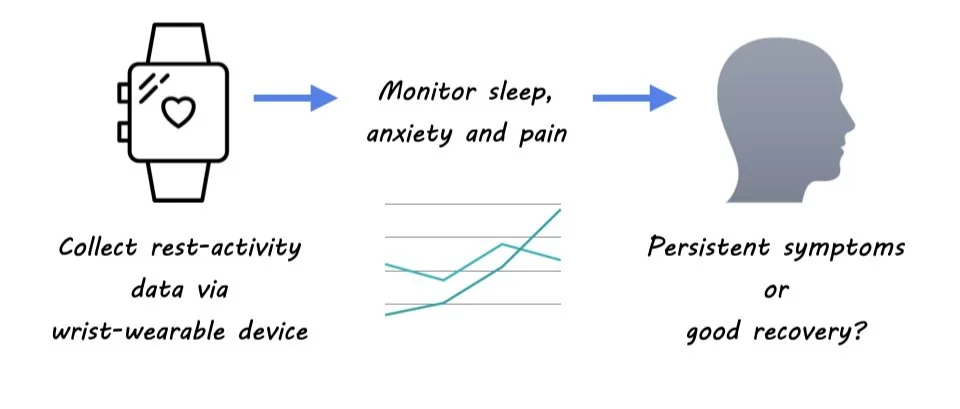
Wrist-wearable devices can be used to track pain, anxiety, and sleep-related outcomes in individuals who’ve suffered from exposure to trauma in order to identify who might be at risk of persistent symptoms vs. recovery. Less movement during the day and more sleep disruption at night was associated with increased pain while changes in the number of sleep-wake transitions were associated with changes in sleep, pain, and anxiety.

What's the science?

After a traumatic event, socioeconomically disadvantaged individuals are at a greater risk of developing adverse posttraumatic neuropsychiatric sequelae (APNS). Some APNS symptoms include pain, depression, anxiety, and sleep disruption. Data pertaining to these symptoms can be collected with wrist-wearable devices, however, the utility of such devices to measure APNS symptoms following trauma exposure is unknown. This week in JAMA Psychiatry, Straus and colleagues aimed to evaluate if wrist-wearable devices can detect biomarkers to predict recovery after a traumatic experience.

How did they do it?

Data from 2021 participants, who had come to an emergency department within 72 hours of experiencing a traumatic experience, was analyzed. After their emergency room visit, participants wore a watch by Verily Life Sciences for eight weeks and self-reported ten symptoms related to APNS. Some APNS symptoms included in the self-report were pain, depressive symptoms, sleep discontinuity, and anxiety. The authors also collected accelerometry data from the watch, from which rest-activity features of sleep and average daily activity were estimated. Linear mixed models were used to derive and validate the relationships between the self-reported symptom data and the 24-hour rest-activity features.

What did they find?

The authors found nine significant rest-activity biomarkers correlated with APNS symptoms of pain, sleep, and anxiety. Reduced daily activity variance was positively associated with increased pain, meaning that the individuals who reported pain were less active during the day and more restless during the night.

In addition, individuals who reported having anxiety and sleep quality difficulties also had more sleep/wake transitions. Similarly, fewer sleep-wake transitions were associated with improved anxiety and sleep quality. This suggests a bidirectional relationship between sleep quality and anxiety. Further, it suggests that improving sleep quality might help improve anxiety in people dealing with traumatic stress.

What's the impact?

The study was the first to examine the utility of rest-activity data obtained from a wearable device in tracking APNS-related outcomes in individuals dealing with traumatic stress. The findings suggest that the data obtained from wearable devices could be used to screen for which individuals are at risk of persistence of APNS symptoms. In addition, these biomarkers can be used in the clinic to help understand the recovery process and provide appropriate treatment approaches.

Access the original scientific publication here

A Brain Region Critical in Creating Cognitive Maps

Post by Anastasia Sares

The takeaway

The lateral orbito-frontal cortex (lOFC), is a brain region in the frontal lobe, just above the eyes, that helps us interact with the world by mapping associations between different events. While previously it has been given the role of “deploying” these maps (deciding when to use them), this new study suggests that the lOFC might be involved in creating those association maps in the first place. 

What's the science?

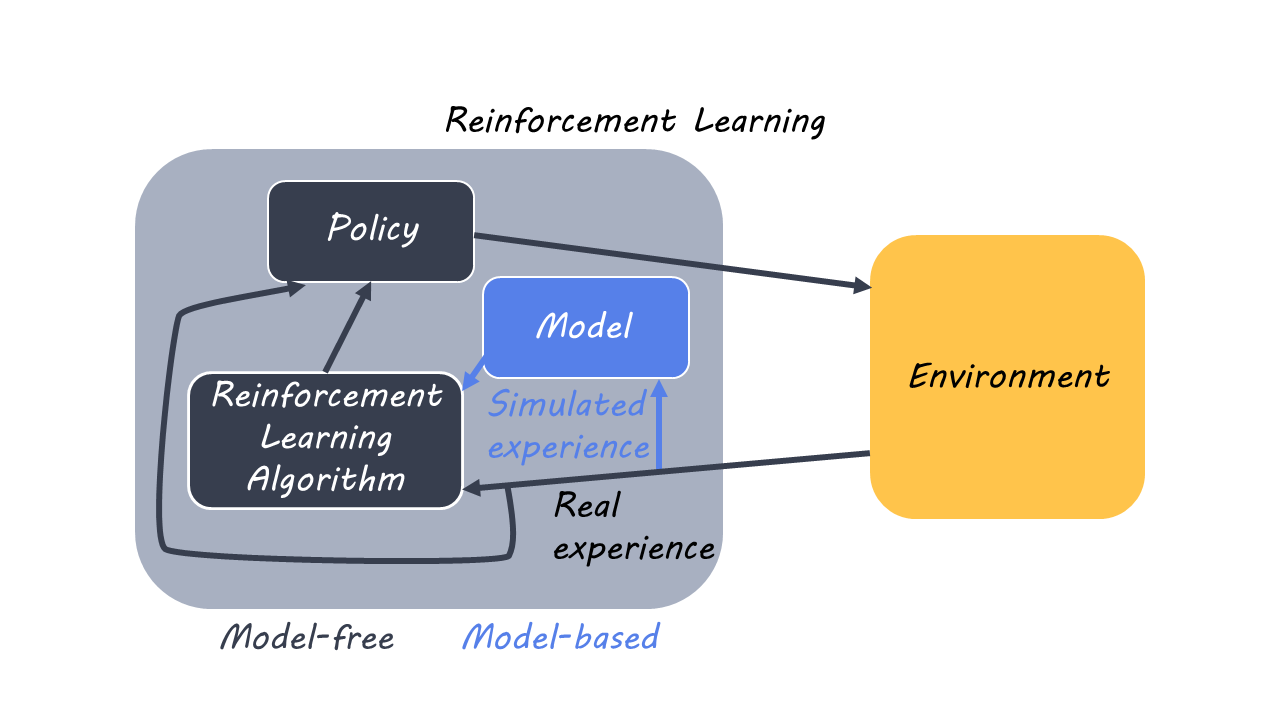
Reinforcement learning is how we develop knowledge through our interactions with the environment. When we perform actions, we get feedback about the results of those actions, and if they result in a reward, we are more likely to repeat those actions again later. Reinforcement learning can be divided into model-free learning, where we learn directly from the consequences of our actions, and model-based learning, where we create a map of associations (in other words, a model) that can help us make decisions based on context.

This week in Nature Neuroscience, Costa and colleagues tested what happens when the lOFC is taken out of commission.

How did they do it?

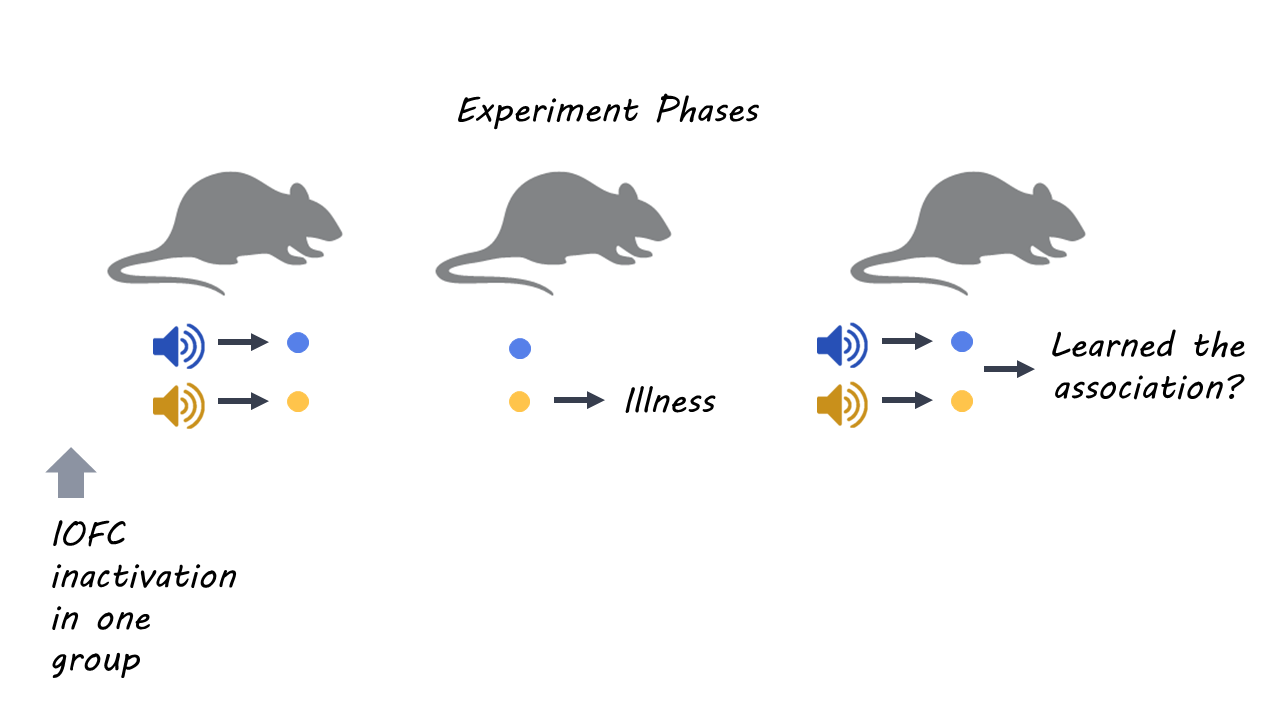
The authors first trained rats to associate sound stimuli with getting food pellets, with one sound predicting banana-flavored pellets and another sound predicting bacon-flavored pellets. The rats learned that sounds were associated with a food reward, but at this phase, there was no reason for them to learn the distinction between the two sounds.

In the second phase, both types of pellets were again given to the rats, but after they ate one kind of pellet (let’s say the banana one), they would be administered lithium chloride, which made them feel nauseous. Here, the rats learned a connection between one type of pellet and nausea, but the sounds were not involved.

In the final phase, the rats were again presented with the sounds, and the authors measured how long the animal searched for a food pellet after hearing the sound. The rats had never learned a direct association between the sounds and nausea, so they would have to create this connection themselves based on information from the first two phases. Specifically, they would need to rely on an internally-created “model” or associative map linking the relevant sound to the bad pellet (even though the type of sound had not mattered before).

Two groups of rats participated in this experiment. The first was a control group, and the second group had been bio-engineered (by applying a custom viral agent) so that the lOFC could be temporarily “turned off” by administering a drug just before the learning session in the first phase. If the lOFC was involved in creating association maps, then turning it off for in the first learning phase should make the rats unable to learn the association between sound cues and nausea. However, if the lOFC is only involved in “deploying” these association maps, then turning it off in phase 1 should have no effect on their ability to use them later.

What did they find?

When the control rats heard the specific sound that predicted the “bad” pellets (the ones that had made them nauseous), they did not go to the food bowl as often as when they heard the other sound. This means they had clearly learned the distinction between different sounds, the foods they signaled, and the predicted result of eating those foods, and were able to put this information together in the final test to guide behavior. In contrast, rats whose lOFC was deactivated in phase 1 reduced their trips to the food bowl for both sounds at test time. These rats thus had the ability to form a rudimentary map to guide behavior, however, this map lacked the specific information that would allow them to choose the “good” pellets and avoid the “bad” ones.

The authors also put the rats through an object recognition task, which required them to distinguish between new and old objects. In this case, the rats with the deactivated lOFC performed similarly to the control rats, indicating that the lOFC is not involved in basic learning.

Finally, the authors created some mathematical models to try and reproduce the results. They found that the best explanation of the impaired animals’ behavior was an imprecise mapping from sounds to pellet flavors during the first learning phase. 

What's the impact?

Model-based reinforcement learning is a crucial function of the brain, and abnormalities in this system can lead to maladaptive behavior. For example, problems with association maps are present in mental illnesses such as schizophrenia, substance abuse, and obsessive-compulsive disorder. Therefore, understanding more about how this area of the brain works may help us better diagnose and treat these conditions.

Access the original scientific publication here.