A Year in Review: Top Trends in Neuroscience in 2021

BrainPost is ending the year with a review of some of the top neuroscience trends we saw emerge in 2021. Here are 8 of the biggest trends that helped to shape an impactful year of brain research.

  • The Impact of a Global Pandemic on Brain, Behavior and Mental Health

  • Using Machine Learning to Advance Our Understanding of the Brain

  • How the Immune System Interacts with Our Brains

  • Uncovering How Sleep Affects Memory and Brain Function

  • The Impact of Environment-Gene Interaction on Brain Development

  • Mapping Memory Formation and Storage

  • How We Perceive Time

  • Alternative Therapies for Psychiatric Illness

The Impact of a Global Pandemic on Brain, Behavior and Mental Health

Post by Lani Cupo 

What did we learn?

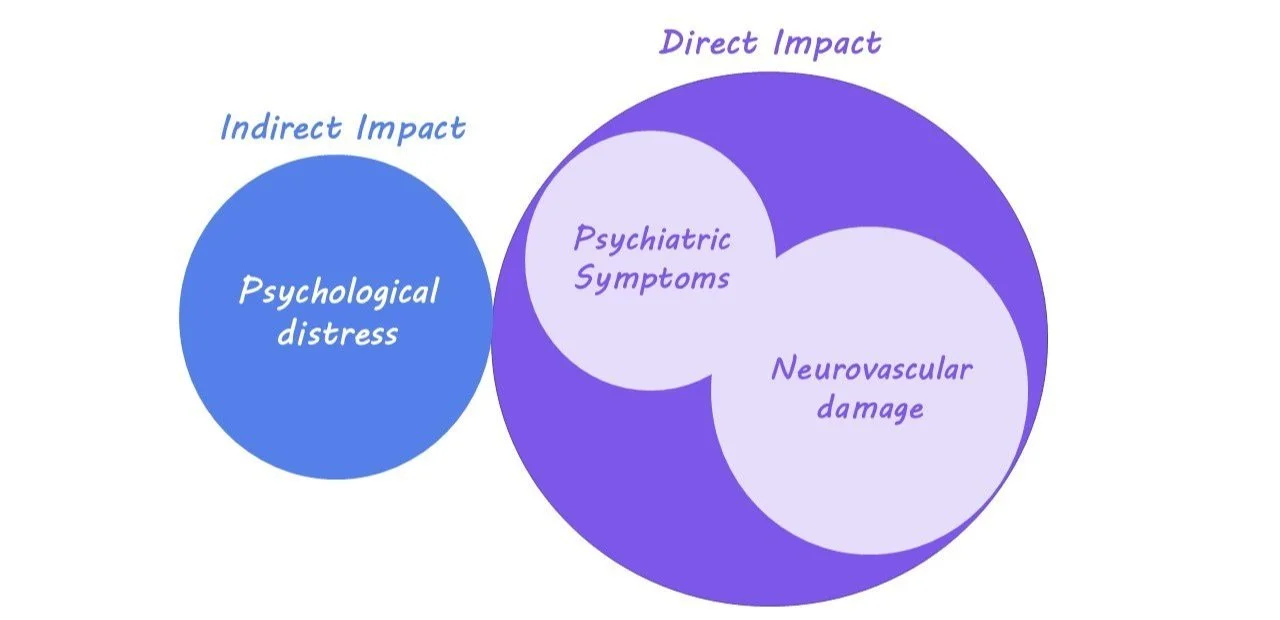
Along with the heavy toll the COVID-19 pandemic has taken on physical health around the globe, there is a rising mental health cost as well, the effects of which are still being discovered. One contributing factor is the experience of increased psychiatric symptoms (e.g. impaired attention, anxiety, insomnia, and depression) among survivors of COVID-19, with some evidence for more severe COVID-19 symptoms being associated with more severe psychiatric symptoms. We also gained a deeper understanding of how the virus affects brain function at the biological level. COVID damages neurovasculature resulting in damage to the blood-brain barrier. The mechanism of action by which COVID impacts the neurovasculature is still unknown, however, it may be through a protein enzyme produced by the virus. However, even those uninfected by the COVID virus are experiencing higher rates of psychological distress during the pandemic, with one study in Israel finding young, unemployed women were at the highest risk for experiencing worsened mental health. Even in the workplace, research indicates that remote work has an impact on team collaboration, leading to more asynchronous communication, such as messages and emails as opposed to synchronous meetings, with employees becoming more siloed. This isolation could contribute to worsened mental health outcomes for those working from home. Overall, the pandemic and measures taken to control the virus can contribute to worsened mental health among survivors, their loved ones, and the general population, the effects of which are still unfolding. 

What's next?

As much of the world scrambles to respond to new variants and organize the distribution of COVID tests and vaccines, attention must be paid to not only the direct consequences of the virus but the indirect impact on mental health as well. Even as there are advancements in treating and preventing COVID-19, the long-term psychiatric consequences that are starting to emerge cannot be disregarded. Mental health is not separate from overall public health, but rather intricately connected. Future research will only continue to uncover insights on how COVID-19 is impacting our brain health as the pandemic unravels.

Using Machine Learning to Advance Our Understanding of the Brain

Post by Leigh Christopher

What did we learn?

2021 saw a big step forward in the use of Machine Learning in neuroscience. It’s no secret that the brain’s complexity is vast, and although scientists have come closer to understanding how it functions, there is still a long way to go. To truly understand some of the mechanisms of the brain, for example how a disease progresses or how we make complex decisions, machine learning can be a valuable tool. Research this year showed that neural networks - otherwise known as ‘deep learning’ - could be used to decode meaningful information from raw neural recordings - such as an animals’ spatial location, speed, or direction, highlighting how powerful machine learning can be in connecting complex neural activity to specific behaviors. Another study used neural networks to better understand how different brain areas process visual information. They were able to predict exactly how the brain would respond to particular stimuli and confirm their hypothesis that the brain responds to specific categories of visual information. Other research this year focused on how to apply machine learning to advance personalized medicine. One study in particular applied machine learning techniques to predict individual drug responses and outcomes in temporal lobe epilepsy, taking into account individual disease characteristics. Rather than classify patients into specific groups, they were able to use the variability in their data to provide more nuanced insights into how patients might respond to various treatments - an important step towards personalized medicine that could apply to a wide range of diseases.

What's next?

2021 was an important year for progressing our understanding of the brain, and further incorporating machine learning techniques into research methodologies. Although there was a big step forward, we are only at the tip of the iceberg in terms of the potential for machine learning to change the way we conduct neuroscience research, and develop real-world applications to advance science and medicine. As we saw this year, machine learning can be used to link complex brain activity to a specific behavior, to help us understand how the brain operates at a system-wide level, to better characterize diseases, and advance personalized medicine. The applications of machine learning are broad, however, there is a need to better translate the insights from these powerful techniques into impact. 2022 will hopefully be a year in improving the interpretability of machine learning for widespread use amongst the scientific community.