
Uncovering How Sleep Affects Memory and Brain Function

Post by Elisa Guma

What did we learn?

Sleep is an important part of our daily routine and a fundamental building block for our physical and mental health. Further, there is no major psychiatric disorder in which sleep is not affected. Although its complex physiology is not yet fully understood, recent findings suggest that during sleep, the brain is able to clear neurotoxins that accumulate during waking hours. Researchers have observed a dramatic increase in the volume of the interstitial system – the fluid-filled space that surrounds the cells of the brain – during sleep, which facilitates the flow of fluids through the brain, increasing the clearance rate of neurotoxins. The rate of clearance can be halted by just one poor night of sleep, leading to an accumulation of neurotoxic proteins in the brain. These neurotoxins include proteins such as B-amyloid, tau, and a-synuclein, whose pathological accumulation has been associated with the neurodegenerative diseases Alzheimer’s and Parkinson’s. This provides compelling evidence for the role of sleep in keeping our brain healthy and suggests that the disruption of adequate toxin clearing due to poor sleep may be a risk factor for neurodegenerative diseases. 

Sleep also plays a critical role in consolidating experiences into long-term memories. This year Skelin et al. uncovered that in order to support this process, the hippocampus produces a specific pattern of neural activity during sleep, sharp-wave ripples, characterized by large, fast, waves of activity, which stimulate high-frequency neuronal activity in regions of the memory circuit, the amygdala and temporal lobe. The activity of hippocampal neurons during sleep appears to act in concert with distant brain regions to coordinate the consolidation of memory. 

What's next?

These advances made in our understanding of sleep physiology help us to understand its critical role in supporting our health and wellbeing. Future work is needed to uncover the relationship between poor sleep and risk for psychiatric and neurodegenerative diseases. Maintaining healthy sleep habits is not always an easy task, but here are a few suggestions for good sleep hygiene below (more here).

  1. View sunlight in the morning by going outside, and do it again the later afternoon prior to sunset to help entrain your circadian clock

  2. Try to maintain a consistent sleep schedule

  3. Avoid caffeine within 8-10 hours of bedtime

  4. Avoid viewing bright lights, especially bright overhead lights between 10 pm and 4 am

  5. Limit daytime naps to less than 90 minutes

  6. Keep a cool bedroom

2022 should be an exciting year in furthering our knowledge of how sleep impacts our brain function and our day-to-day lives.
The Impact of Environment-Gene Interaction on Brain Development

Post by Elisa Guma

What did we learn?

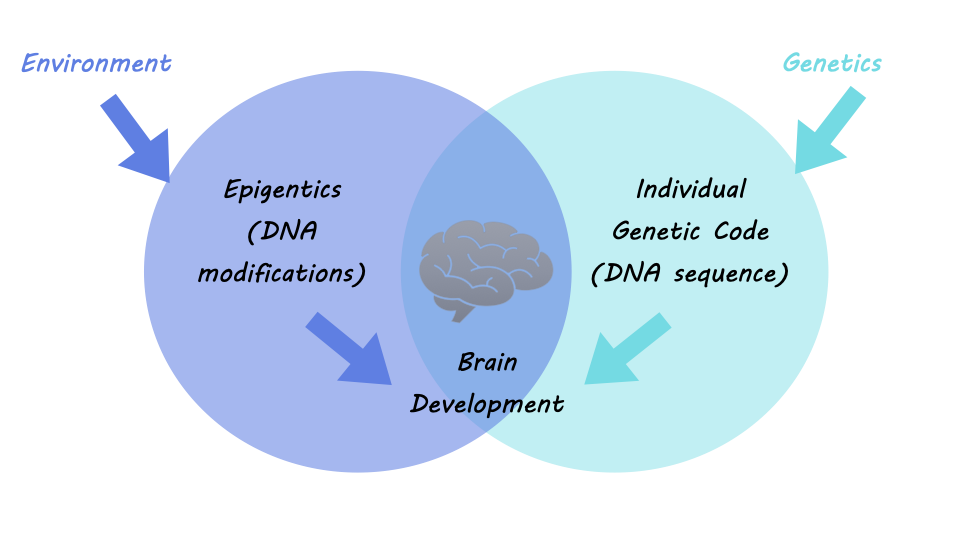
Brain development is a highly orchestrated, complex process driven by genetic background and its interaction with the environment, which can exert both positive and negative influences on development. For example, exposure to an enriched environment promotes the development of healthy brain circuits. Furthermore, environmental enrichment has been shown to help aid in the production of new neurons (neurogenesis) in the hippocampus, which may buffer against age-related cognitive decline. Recent evidence suggests that environmental enrichment may be exerting these positive effects by inducing epigenetic changes in the DNA of hippocampal neurons. More specifically, it can reverse the negative effects of aging on DNA methylation in neurons of the hippocampal dentate gyrus involved in neuroplasticity and neurogenesis, critical for learning and memory (see Zocher and colleagues).

Unfortunately, environmental exposures may also disrupt neurodevelopment, which may, in turn, increase the risk of developing psychiatric illness. These negative effects may be particularly heightened if coupled with genetic risk. Just as the hippocampus has been found to be sensitive to positive environmental pressures, it is also susceptible to negative influences. Recent evidence by Song and colleagues has shown that exposure to both a genetic risk factor (risk gene for schizophrenia, DISC1) and an environmental risk factor (in utero exposure to maternal infection) can disrupt the structural and functional development of projections from the hippocampus to the prefrontal cortex in early development. This pathway may underlie many of the cognitive deficits associated with psychiatric illness.

What's next?

Our genes and the environment we are exposed to act in concert to shape our brain and behavioral development. Understanding how these factors interact during specific developmental windows could help us identify how and when to intervene during a child’s development. Identifying potential environmental interventions to buffer against both environmental and genetic risk factors for psychiatric illness will be an interesting avenue for future research in 2022.

A Better Understanding of Memory Formation and Storage

Post by Shireen Parimoo

What did we learn?

The hippocampus is central to memory formation and retrieval as it receives and integrates information from across the brain. Memory for associations or episodic information (such as an event consisting of location, people, and time information) are particularly reliant on the hippocampus as it is thought to bind the different elements of an event together into a single representation. The formation and retrieval of memories are supported by the structure and function of the hippocampus and its interactions with the neocortex.

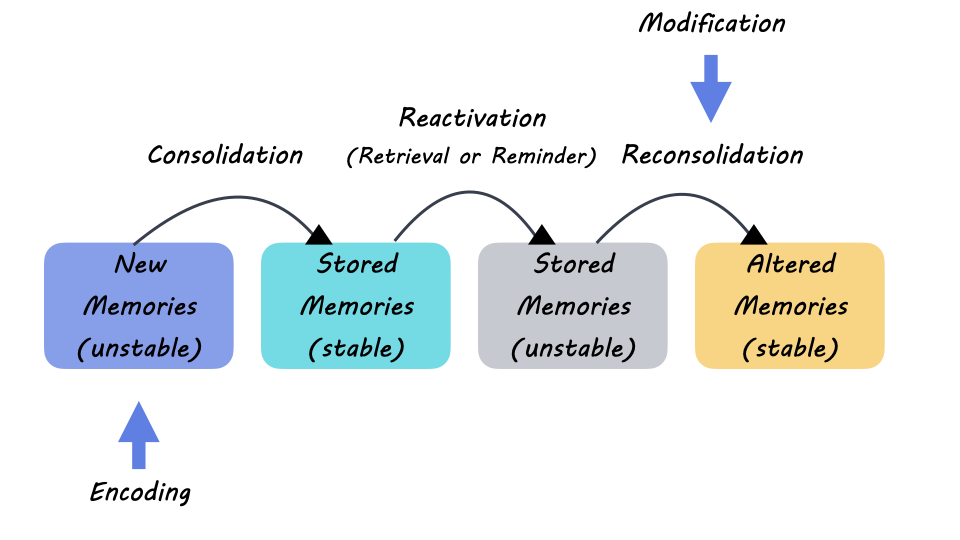
2021 only further advanced our understanding of the hippcampus’ pivotal role in how memories are formed and accessed. During memory encoding, Griffiths and colleagues showed that oscillatory activity within the hippocampus was related to better associative memory. Specifically, greater theta-gamma coupling during mnemonic binding predicted better memory for associations (e.g., a pattern and an item), while memory for single items was related to alpha/beta activity in the occipital cortex during stimulus perception. Gava and colleagues found that individual elements of associative events (e.g., location) are represented by different firing patterns in the same set of co-active hippocampal neurons and demonstrated how these representations are updated across repeated and novel experiences. Relatedly, Gonzalez and colleagues reported that dopamine receptors in the hippocampal CA1 subregion are not involved in retrieving an already-formed memory, but they are important for the consolidation and reconsolidation (i.e. a process whereby memories are reactivated, changed, and restabilized) of new memories. Memory reconsolidation is especially important for schema creation, as it allows information to be linked together across different memories to form a generalized representation of a concept (e.g., the concept of an “office”).

Hippocampal interaction with other brain regions is also important for storing and retrieving memories, particularly newer memories. During retrieval of autobiographical memories, for example, Gilmore and colleagues observed that activity in the posterior hippocampus was selective for recent compared to remote memories. The hippocampus also had greater functional connectivity with cortical regions during recall of recent memories rather than remote memories, further illustrating its differential involvement in temporally graded retrieval. Together, these studies highlight the diversity of hippocampal involvement across different stages of memory formation and retrieval, ranging from encoding and reconsolidation to temporally graded retrieval of autobiographical memories.

What's next?

As a field, cognitive neuroscience is getting increasingly closer to mapping out the neural mechanisms underlying memory formation and retrieval. We currently have some of the puzzle pieces showing how different anatomical brain regions or distinct brain circuits play a role in memory formation and retrieval. These seemingly disparate findings create exciting possibilities for future research to demonstrate how these pieces interact with each other to provide a more comprehensive picture of how the brain forms and stores memories.