Applying Deep Learning to Extract Meaningful Information from Raw Neural Recordings

Post by Lina Teichmann

What's the science?

Neural recordings contain a vast amount of information but require a lot of time and expertise to disentangle and interpret. Deep learning is a machine learning method that can be used to try and interpret and decode the content of large datasets, to better understand which elements of the data are informative. This week in eLife, Frey et al. show that a convolutional neural network (a type of deep learning model) requiring few assumptions can decode meaningful information from raw neural recordings. Training their network on neurophysiological data recorded from rodents and humans, the authors demonstrate that the network is able to decode a variety of stimuli from the raw, unsorted neural recordings.

How did they do it?

The neural network takes neural data that has been decomposed into a three-dimensional representation of time, recording channels, and frequency as inputs. The model contains convolutional layers and fully connected layers that share their weights across channels and time, respectively, to reduce computational load and improve the generalizability of the model. The model was trained in a supervised fashion on rodent and human neural data. Electrophysiological recordings, two-photon calcium imaging, and electrocorticography (EcoG) were used to test whether the model can decode stimuli across different recording modalities, different species, and different brain areas. The model was trained to decode position information, auditory stimuli, and finger movements.         

What did they find?

The model proved successful at decoding information from the raw neural recordings. First, the authors showed that the model could successfully decode position information from electrophysiological recording from mice hippocampus. The ability to decode different positional factors was driven by different features of the neural data. For example, self-location decoding was shown to be dependent on pyramidal cells in CA1 while motion speed was driven by theta oscillations and interneurons. Head direction decoding was driven by CA1 interneurons. To show that the model works beyond recordings from the hippocampus and can also be used for different types of datasets, the authors showed that the model could be used to successfully decode sounds from two-photon calcium imaging of the auditory cortex. Finally, the model also succeeded at decoding finger movements from ECoG recordings of human subjects.

lina (2).jpg

What's the impact?

Understanding how neural signals represent behavior is at the heart of neuroscience. Oftentimes, this is a challenging endeavor, as prior knowledge about the nature of these representations is required to process and analyze the data accordingly. The authors show here that deep learning can be used to read out meaningful information from raw neural recordings, allowing new and unbiased insights into how stimuli are represented in the neural code.

Frey et al. Interpreting wide-band neural activity using convolutional neural networks, eLife (2021). Use these links to access the original scientific publication and the code

Overlapping Neural Circuitry of Traumatic Brain Injury and Trauma-Related Psychiatric Disorders

Post by Amanda McFarlan

What's the science?

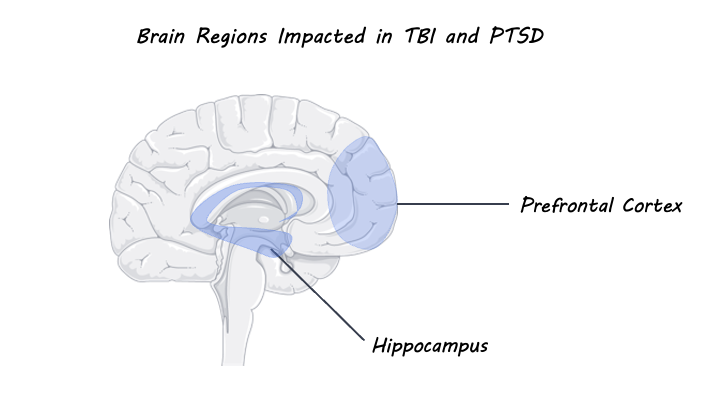
Traumatic brain injury (TBI) occurs after sudden trauma to the brain and can result in physical outcomes including white matter degradation, neuronal loss and neuroinflammation as well as emotional and cognitive responses. TBI-related outcomes including emotion dysregulation have been shown to overlap with symptoms of posttraumatic stress disorder (PTSD), a psychiatric disorder that can occur after witnessing or experiencing a traumatic event. Indeed, neuroimaging studies have shown that TBI and PTSD are both associated with changes in connectivity and activation of prefrontal and subcortical brain areas that are involved in emotion regulation. This week in Biological Psychiatry, Weis and colleagues discussed the role of emotion dysregulation in TBI and PTSD outcomes.

What do we already know?

It has been shown that post-injury outcomes that follow TBI are associated with an increased risk for the development of persistent postconcussion syndrome (PCS) and psychiatric conditions including PTSD, major depressive disorder, general anxiety disorder, and substance use disorder. Researchers have proposed that this increased risk may be due to the presence of acute or chronic emotion dysregulation that occurs as a result of the physical and emotional trauma of TBI. Indeed, individuals with TBI or PTSD show significant overlap in symptoms resulting from emotional dysregulation including changes in mood and cognition, enhanced fear learning, and avoidance behaviours. These symptoms have been shown to be significantly worse in individuals with a comorbid diagnosis for TBI and PTSD compared to a diagnosis of TBI or PTSD alone, although the underlying mechanisms for this comorbidity are not well understood. The overlap in symptoms for TBI and PTSD can be explained by molecular changes that occur as a result of physical and/or emotional trauma in areas of the brain involved in emotion regulation. For example, dysregulation of the hypothalamic-pituitary-adrenal axis (involved in regulating the body’s stress response) in response to trauma can lead to maladaptive stress response and excess secretion of glucocorticoids. Heightened levels of glucocorticoids can subsequently result in increased release of glutamate in the prefrontal cortex and hippocampus (both areas involved in emotion regulation) which can be damaging to neurons and even cause cell death.

TBI_PTSD.png

What’s new?

In one study, preclinical models have shown that TBI-induced trauma results in molecular changes in subcortical structures involved in emotion regulation behaviour such as the amygdala and hippocampus. Further mild TBI has been associated with decreased resting-state functional connectivity between the prefrontal cortex and the insula. Studies using diffusion tensor imaging have shown that TBI and PTSD are both associated with white matter pathology which increases with the severity of TBI or PTSD. When looking at individuals with TBI, there is evidence of abnormalities in fronto-limbic white matter tracts (which connect the cingulate cortex to the hippocampus), while individuals with PTSD show decreased fractional anisotropy of the cingulum bundles. It is important to note, however, that TBI and PTSD were examined separately in the majority of this research. Even though worse outcomes are associated with comorbid diagnoses, structural and functional MRI studies that evaluate TBI and PTSD simultaneously are lacking. Nevertheless, the findings from these imaging studies show that white matter tracts that connect areas of the brain involved in emotion regulation are altered by both TBI and PTSD. This suggests that interventions that focus on emotion regulation may be particularly helpful for treating both conditions. In support of this, cognitive behavioural therapy, which focuses on improving emotion regulation, has been shown to be very effective in treating long-term comorbid PTSD and TBI.

What’s the bottom line?

Emotion dysregulation has an important role in the shared outcomes of TBI and PTSD. Early intervention with treatments like cognitive behavioural therapy that focus on improving emotion regulation may be helpful to minimize stress-induced molecular changes that occur following a traumatic event. In all, investigating the underlying changes in brain circuitry associated with TBI and PTSD through the lens of emotion regulation may be helpful for determining best practices for prevention and intervention when treating TBI and PTSD.


Weis et al. Emotion Dysregulation Following Trauma: Shared Neurocircuitry of Traumatic Brain Injury and Trauma-Related Psychiatric Disorders. Biological Psychiatry (2021). Access the original scientific publication here.

Misophonia: A Hatred of Specific Sounds

Post by Anastasia Sares

Characterizing a “new” disorder

Have you ever known someone who couldn’t stand the sound of people chewing? Are you that person? This isn’t just a fringe behavior or a quirk, it has a name: misophonia, literally, “hatred of sound”. The term was newly coined in 2001, describing a condition that may affect up to 20% of people despite not yet being in any official diagnostic manual. People with misophonia have aversive emotional reactions, including anger and distress, to specific sounds that do not bother other people. There are many proposed diagnostic tests for it, but no consensus on a gold standard yet.

Sensations and attention

Researchers have proposed relationships between misophonia and several other disorders: obsessive-compulsive disorder, phobias, hyperacusis (sensitivity to sound frequencies or volume), or synesthesia (when sensory stimulation produces a response in other senses). However, misophonia seems to occupy a niche all on its own. It is unlike a phobia because the primary emotion is anger rather than fear. It is different from synesthesia because sounds are associated with emotions, rather than with other sensory characteristics. People with misophonia sometimes avoid social situations, but not out of fear of judgment (like those with social anxiety)—they simply want to avoid situations where trigger sounds are likely to occur.

The brains of people with misophonia show differences in structure and function, in areas such as the anterior insula (which processes emotions such as anger and disgust), and the amygdala (involved in the fight-or-flight response). There are also differences in connectivity of the brain’s attention and salience networks. The interplay between these networks and the amygdala may be a key feature of misophonia.

What’s new?

Misophonia is rapidly garnering increased interest from researchers. There are already 25 new publications with the keyword “misophonia” this year alone (according to listings on PubMed). This year, people worked to characterize the prevalence of misophonia in different populations and refine tests for it. Though common triggers of misophonia include human oral/nasal sounds like chewing and breathing, Hansen and colleagues highlighted that not all misophonic triggers are human-produced (for example, a crow cawing or a bonfire), and called for a revision of the proposed “diagnostic” criteria. Ferrer-Torres and colleagues focused on the COVID-19 pandemic and the isolation that came with it, showing that people with misophonia experienced worse quality of life and even increased heart-rate variability, perhaps due to an inability to escape trigger sounds during confinement (trigger sounds are often associated with close family members or friends).

anastasia.jpg

What’s the bottom line?

The recognition of misophonia and its prevalence is important to better understand the condition. Further, its recognition validates the experiences of people with these symptoms. There is still a lot of scientific work to be done in characterizing misophonia before we reach a good understanding, but fortunately, research on this condition is growing more and more each year.

References

Jastreboff, M.M., and Jastreboff, P.J. (2001). Components of decreased sound tolerance: hyperacusis, misophonia, phonophobia. ITHS News Lett. 2, 5–7.

Kılıç, C., Öz, G., Avanoğlu, K. B., & Aksoy, S. (2021). The prevalence and characteristics of misophonia in Ankara, Turkey: population-based study. BJPsych Open, 7(5), e144. https://doi.org/10.1192/bjo.2021.978

Ferrer-Torres, A., & Giménez-Llort, L. (2021). Sounds of Silence in Times of COVID-19: Distress and Loss of Cardiac Coherence in People With Misophonia Caused by Real, Imagined or Evoked Triggering Sounds. Frontiers in Psychiatry, 12(June), 1–12. https://doi.org/10.3389/fpsyt.2021.638949

Ferrer-Torres, A., & Giménez-Llort, L. (2021). Confinement and the Hatred of Sound in Times of COVID-19: A Molotov Cocktail for People With Misophonia. Frontiers in Psychiatry, 12(May), 1–12. https://doi.org/10.3389/fpsyt.2021.627044

Kumar, S., Tansley-Hancock, O., Sedley, W., Winston, J. S., Callaghan, M. F., Allen, M., Griffiths, T. D. (2017). The Brain Basis for Misophonia. Current Biology, 27(4), 527–533. https://doi.org/10.1016/j.cub.2016.12.048

Eijsker, N., Schroder, A., Smit, D. J. A., van Wingen, G., & Denys, D. (2020). Structural and Functional Brain Abnormalities in Misophonia. Biological Psychiatry, 87(9), S225–S226. https://doi.org/10.1016/j.biopsych.2020.02.585

Siepsiak, M., & Dragan, W. (2019). Misophonia - A review of research results and theoretical concepts. Psychiatria Polska, 53(2), 447–458. https://doi.org/10.12740/PP/92023

Hansen, H. A., Leber, A. B., & Saygin, Z. M. (2021). What sound sources trigger misophonia? Not just chewing and breathing. Journal of Clinical Psychology, (February), 1–17. https://doi.org/10.1002/jclp.23196

Wu, M. S., Lewin, A. B., Murphy, T. K., & Storch, E. A. (2014). Misophonia: Incidence, phenomenology, and clinical correlates in an undergraduate student sample. Journal of Clinical Psychology, 70(10), 994–1007. https://doi.org/10.1002/jclp.22098