
Common Brain Circuits in Patients with Depression

Post by Leanna Kalinowski

What's the science?

The mapping of psychiatric symptoms onto specific brain circuits is typically based on a correlation between the symptoms and brain activity, leading to difficulties in attempting to causally translate this information into effective treatments for psychotic disorders. Three modalities, brain lesions, transcranial magnetic stimulation (TMS), and deep brain stimulation (DBS), have been used to link depression symptoms to specific brain circuits based on the location of lesions or stimulation sites that affect symptom severity. However, it is unclear whether these three modalities converge on the same brain circuit or therapeutic target. This week in Nature Human Behaviour, Siddiqi and colleagues analyzed datasets of patients with depression symptoms to determine whether brain lesions, TMS, and DBS sites converge on the same brain circuits.

How did they do it?

The authors examined 14 datasets that included magnetic resonance imaging or computed tomography scans of 461 brain lesions, 151 TMS sites, and 101 DBS sites, in addition to scores on a continuous scale from a validated depression questionnaire for each patient. They then mapped each lesion or stimulation site onto a brain circuit using a normative human connectome database based on data from 1,000 healthy subjects. This method was used to create a circuit map of each patient’s lesion or stimulation site. Then, to determine whether the three modalities converge on the same circuit, the circuit maps were compared to each other by computing correlations between the depression score and brain lesion/stimulation site.

The authors also compared circuit maps derived from patients with major depressive disorder with those derived from patients with other disorders to determine whether this circuit is associated with depression severity irrespective of baseline diagnosis. Finally, they extended this approach to additional datasets of patients with brain lesions or DBS sites associated with motor symptoms of Parkinson’s disease to determine whether this approach is relevant beyond depression.

What did they find?

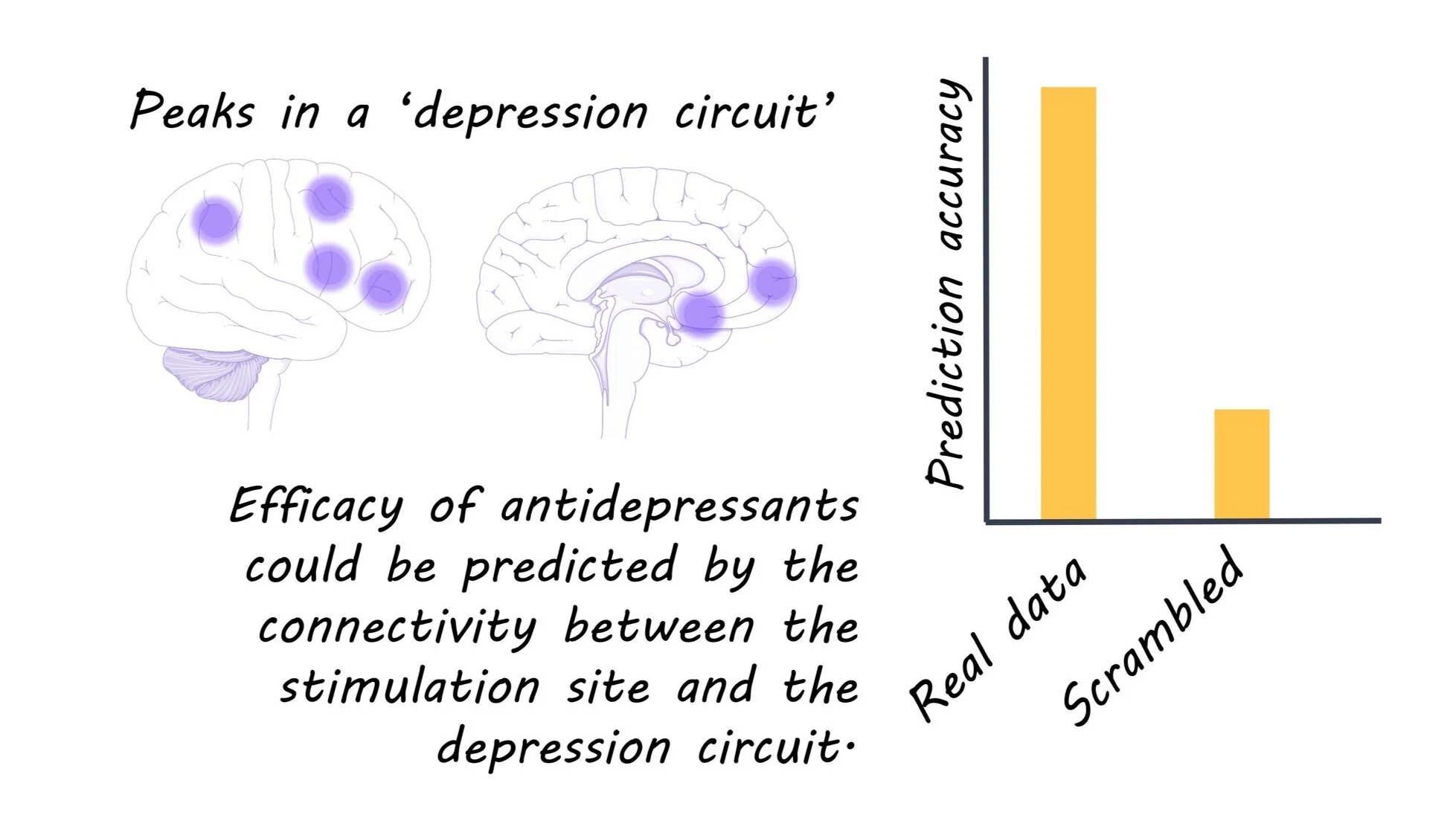
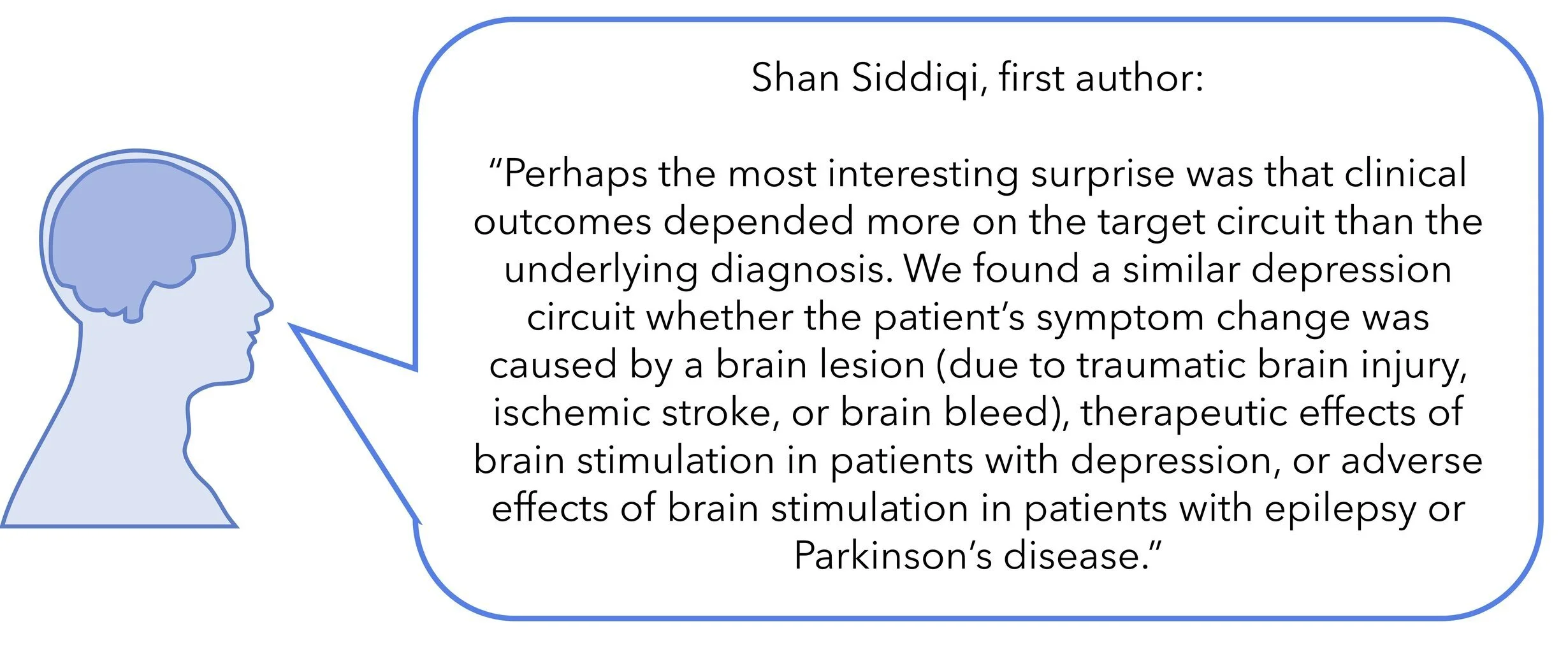
First, the authors found that brain lesion and stimulation sites that modulate depressive symptoms are connected to a similar circuit, providing evidence that these three modalities converge on common brain circuitry. This convergent circuit included brain regions and circuits previously implicated in depression. Next, they identified similar depression circuits in patients with major depressive disorder, penetrating brain injury, stroke, epilepsy, and Parkinson’s disease. This indicates that depression symptoms map to a common circuitry regardless of baseline diagnosis. Finally, they found that this approach could be extended beyond depression by demonstrating that brain lesion and stimulation sites associated with Parkinson’s disease symptoms map onto similar circuits.
leanna.jpg

What's the impact?

This study demonstrates that brain lesions, TMS, and DBS all converge on common brain circuitry, representing potentially improved therapeutic targets for depression symptoms regardless of diagnosis. The methods used to determine these common circuits generalize to Parkinson’s disease, indicating that this approach may also be used to identify brain circuits involved in other neuropsychiatric diseases. Further work is needed to determine whether this approach provides improved therapeutic targets in patients with neuropsychiatric diseases.
quote.jpg

Siddiqi et al. Brain stimulation and brain lesions converge on common causal circuits in neuropsychiatric disease. Nature Human Behaviour (2021). Access the original scientific publication here.

Dopamine Controls How New Information Updates Reactivated Memories

 Post by Leanna Kalinowski

What's the science?

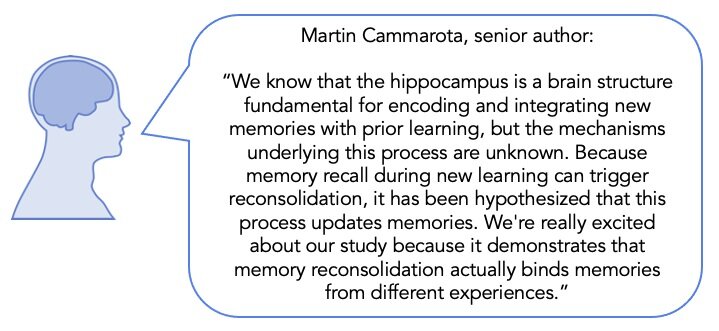
When new memories are acquired, they are initially unstable. The process of memory consolidation is required to stabilize new memories. Consolidated memories are long-lasting, however when reactivated during memory recall, these memories can become destabilized once again. Memory reconsolidation is the process of restabilizing memories that were destabilized during the recall process. While it is known that memory reconsolidation is a protein-synthesis-dependent process and can be impacted by dopamine receptor blockade, its biological role is not fully understood. This week in PNAS, Gonzalez and colleagues tested whether hippocampal dopamine D1/D5 receptors control whether new memories are linked to old ones through reconsolidation or whether they are consolidated as independent traces.

How did they do it?

Rats underwent a novel recognition task, a common test of episodic memory (memory of events) that capitalizes on rodents’ innate preferences for novelty by measuring the amount of time spent interacting with a previously encountered versus novel object. In this experiment, rats first underwent a training session where they were exposed to two different but behaviorally equivalent novel objects (objects A and B). 24 hours later, they underwent a reactivation session where they were exposed to a familiar object from the training session (object A) and a novel object (object C) to destabilize the memory. 24 hours after this, memory retention was tested by exposing the rats to one of three test sessions: 1) exposure to an object from both the training and reactivation sessions (object A) and a novel object (object D), 2) exposure to an object from only the training session (object B) and object D, or 3) exposure to an object from only the reactivation session (object C) and object D. Time spent interacting with each object was measured.

leanna (1).jpg

Twenty minutes before the reactivation session, rats received an infusion of either saline or a dopamine D1/D5 receptor antagonist into the CA1 region of the hippocampus to test whether dopamine D1/D5 receptor blockade impacts memory destabilization. Five minutes after the reactivation session, rats were then given one of four substances into the CA1 to pharmacologically dissociate consolidation and reconsolidation: saline, to serve as a control; anisomycin, which inhibits consolidation and reconsolidation by blocking protein synthesis; AIP, which inhibits consolidation by blocking CaMKII activity; or ZIP, which inhibits reconsolidation by blocking PKMζ activity.

What did they find?

First, the researchers found that rats given saline after reactivation were able to discriminate familiar objects from the novel object regardless of their treatment before reactivation, showing that dopamine inhibition has no effect on memory retention. Next, they found that dopamine inhibition is necessary for memory destabilization but does not protect against amnesia induced by anisomycin.

Finally, they found that the memory of a new object during recall of an old object can be formed by either consolidation or reconsolidation mechanisms, depending on the activation state of hippocampal D1/D5 receptors. The first mechanism, which was activated when dopamine receptors were inhibited, leads to new memories being formed through consolidation. This requires activation of CaMKII and would be employed when new experiences share little similarity with old ones. The other mechanism, which was activated when dopamine receptors were activated, leads to new memories being formed through reconsolidation. This requires activation of PKMζ and would be employed when information from novel and past events overlap. The latter mechanism is essential for the construction of schemas, which are networks of related knowledge that help animals to rapidly incorporate new information into related representations to preserve its relevance.

What's the impact?

This study shows that, depending on the activation of hippocampal dopamine D1/D5 receptors, the memory of a novel object that was presented during recall of a familiar object can be formed by either consolidation or reconsolidation; however, only reconsolidation can link memories of the two objects together. Given that learning seldom occurs in a cognitive vacuum, these findings have broad implications for how new memories are linked with old ones during the reconsolidation process. They also highlight the importance of considering these mechanisms during reconsolidation-based psychotherapy, since recall of a single memory during these sessions can make other memories within the schema susceptible to modification.

Cammarota_Jul27.png

Gonzalez et al. Dopamine controls whether new declarative information updates reactivated memories through reconsolidation. PNAS (2021). Access the original scientific publication here.

Cognitive Behavioral Group Therapy and Mindfulness Based Stress Reduction Recruit Similar Brain Regions

Post by Lincoln Tracy

What's the science?

Social anxiety disorder is a common psychiatric disorder that affects around one in every eight people. Individuals affected by social anxiety disorder experience significant burdens on social functioning and quality of life. Two different treatments – cognitive behavioral group therapy (CBGT) and mindfulness-based stress reduction (MBSR) – have been proven effective in treating SAD. Previous research into the effects of CBGT and MBSR on social anxiety disorder has predominantly relied on self-report measures but has shown similar effects on decreasing negative thoughts while increasing mindfulness skills. Evidence suggests that CBGT and MBSR activate similar brain regions involved in emotion regulation. However, there is yet to be a study that directly compares the effects of CBGT and MBSR on emotion-regulating brain activation and how this activation relates to symptoms at 1-year post-treatment. This week in JAMA Psychiatry, Goldin and colleagues tested for common and specific effects of CBGT and MBSR on brain activity during emotion regulation in adults with social anxiety disorder.

How did they do it?

The authors recruited 108 patients with a diagnosis of social anxiety disorder. None of the patients were currently taking medication for their disorder. The patients were randomly assigned into one of three evenly sized groups: CBGT, MBSR, or the waitlist control group. Patients in the CBGT and MBSR groups received 12 2.5-hour sessions of their respective therapy from qualified instructors and received workbooks to supplement the 12 sessions. Assessments were completed at baseline and at 1-year post-treatment, consisting of self-report measures and completing an emotion regulation task while undergoing a functional magnetic resonance imaging (fMRI) scan. Pre- and post-treatment data were compared to determine: 1) the effects of treatment on negative emotions and brain activation compared to waitlist controls; 2) whether there were specific treatment effects on negative emotions and brain activation, and 3) if treatment-specific effects on negative emotions and brain activation related to social anxiety symptoms at 1-year post-treatment.

What did they find?

First, the authors found that compared to the waitlisted control patients, patients who received CBGT or MBSR displayed greater pre-treatment to post-treatment decreases in negative emotions while also increasing the recruitment of regulation-associated brain regions such as the prefrontal cortex when completing the emotion regulation task. Second, the authors found no difference between CBGT and MBSR with respect to negative emotions and brain responses during the emotion regulation task. This means that similar brain regions were activated during the task regardless of which treatment the patients received. Finally, the authors found that post-treatment negative emotion was associated with social anxiety symptoms at 1-year post-MBSR, but not post-CBGT.

What's the impact?

This study demonstrates that CBGT and MBSR may strengthen overlapping skills in dealing with social anxiety disorder and may rely on common emotion-regulating areas of the brain to produce these improvements. Both treatment approaches may be effective and have long-term benefits in patients with social anxiety disorder through the use of similar emotion regulation strategies. Further research is required to compare the effects of CBGT and MBSR with pharmacotherapy, as well as testing patients with different mood and anxiety disorders to see if the current results generalize to other clinical populations. 

Goldin et al. Evaluation of cognitive behavioral therapy vs mindfulness meditation in brain changes during reappraisal and acceptance among patients with social anxiety disorder: A randomized clinical trial. JAMA Psychiatry (2021). Access the original scientific publication here.