Decision Processes Leading to Unhealthy Food Choices

Post by Andrew Vo

What's the science?

After making poor dietary choices, we often blame our actions on either a strong preference for tasty (but oftentimes unhealthy) food, or on poor self-control. Traditional computational models characterize such value-based decisions as a dynamic accumulation of evidence that biases us towards one option over another. These models, however, do not account for distinct contributions of separable attributes to a decision (e.g., how health and taste attributes are integrated with different weights and at different times in evidence accumulation). This week in Nature Human Behaviour, Sullivan and Huettel use an updated computational framework to better understand how distinct attributes influence decision processes that could lead to unhealthy food choices.

How did they do it?

The authors recruited a group of young adults who arrived hungry at the lab after a four-hour fast. They were then asked to rate 30 different snack foods based on tastiness, healthiness, and ‘wanting’ attributes. Before beginning the main task, participants received a behavioral primer that emphasized the importance of either healthy or tasty choices. During a main, binary choice task, they were presented with pairs of food items (that they had previously rated) and were asked to indicate which they would like to eat more. Of the 300 self-paced trials, half were designed to be “conflict trials” in which one option was tastier but less healthy than the other, whereas the other half were non-conflict trials in which both options were closely matched.

Participants’ food choices and response times (RTs) were fitted using a multi-attribute, time-dependent, drift diffusion model (mtDDM) (a statistical model). This model has the advantage of distinguishing the various contributions of different attributes to a decision. To do this, it estimates (1) drift slope, which captures the rate of evidence accumulation for each attribute, and (2) drift latency, which describes when each attribute begins to exert its influence during evidence accumulation.

What did they find?

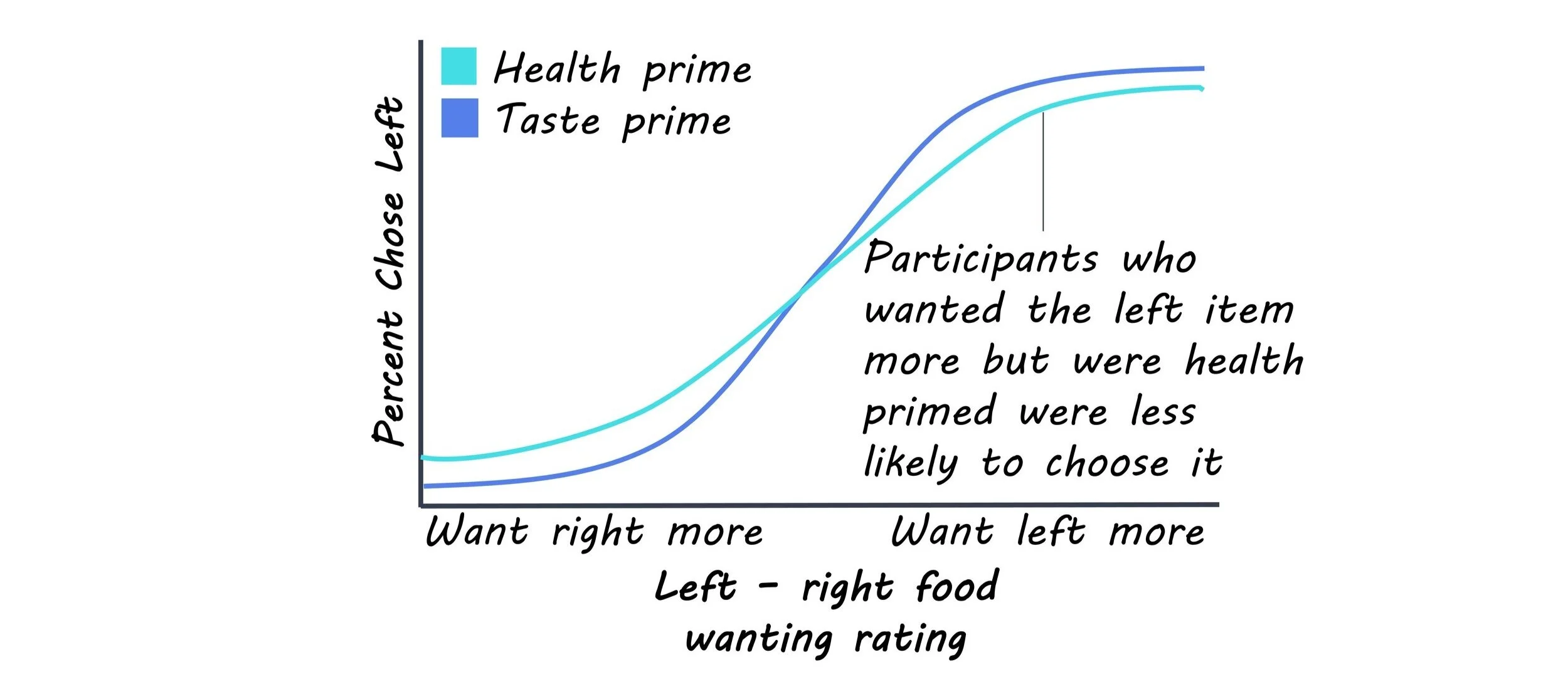
The authors found faster RTs for conflict versus non-conflict trials, as participants made fast unhealthy choices over healthier ones. Those participants who were primed with health information were found to put less weight on taste information, which marginally increased their likelihood of making healthy choices.

The mtDDM estimated that taste drift slopes were larger (steeper) than health drift slopes and taste drift latencies were earlier than health drift latencies. These results suggest that bias towards tasty versus healthy food choices is due to a greater weighting and earlier entry of taste information into evidence accumulation. To test whether slope and latency independently influenced food choices, multiple linear regressions of drift slope and latency differences (i.e., taste minus health) were performed. Both drift slopes and latencies predicted individual differences in the likelihood of healthy food choices. Finally, examining the relationship between trial-by-trial RTs and healthy choices in conflict trials, the authors found that longer RTs were associated with healthier food choices. This suggests that longer RTs allow time for slower-processed healthy information to influence evidence accumulation.
andrew (4).jpg

What's the impact?

This study demonstrates how the influence of different attributes on decision-making processes might explain our food choices. The results provide insight into how we can augment our thinking to make better decisions for our long-term benefit, such as considering the healthiness alongside the tastiness of a food item or taking more time to seek out health information on a food choice. Understanding the timing of decision processes in the brain might also be key to creating effective interventions that help people make better choices — not just in terms of diet but also in financial decisions, for example. Much like how you should look before you leap, consider pausing before you place that next restaurant order.

Sullivan & Huettel. Healthful choices depend on the latency and rate of information accumulation. Nature Human Behaviour (2021). Access the original scientific publication here.
Psilocybin Triggers Synaptic Remodeling

Post by Shireen Parimoo

What's the science?

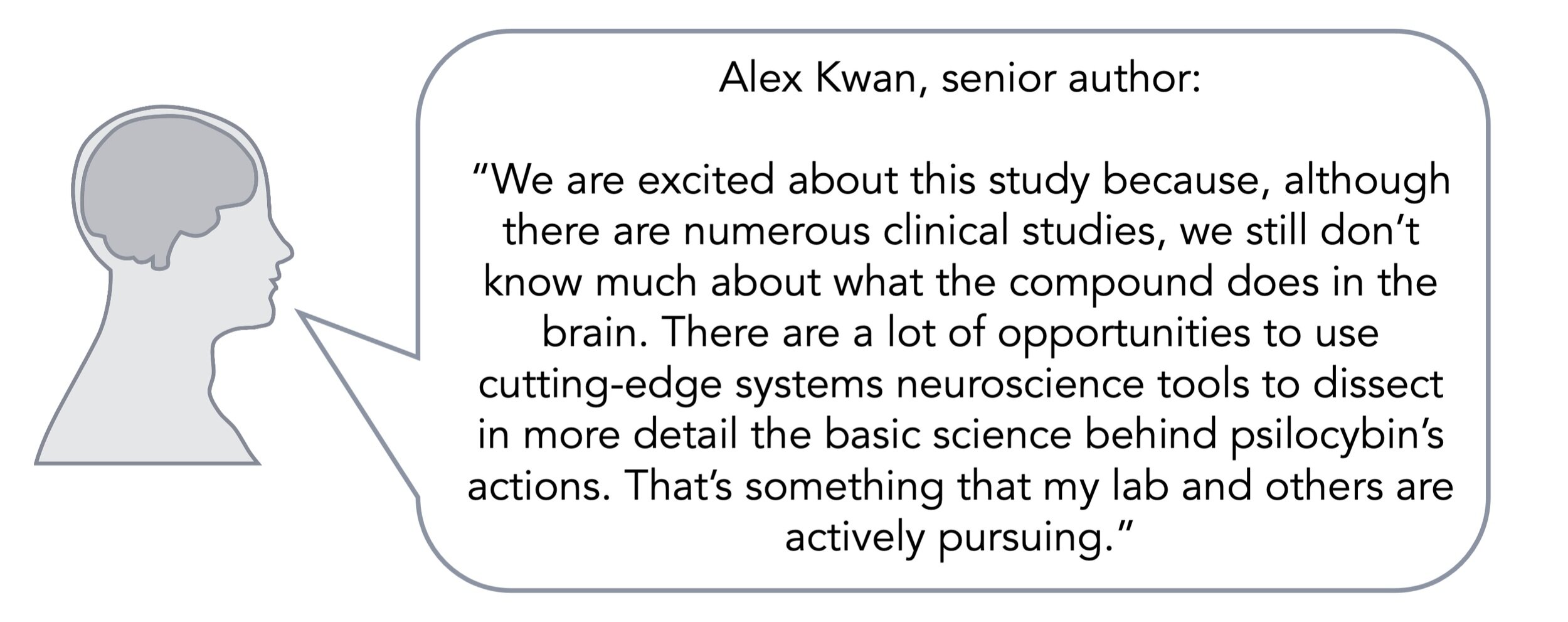
Psychedelics are hallucinogenic compounds that alter perception, mood, and cognition. Although they are most commonly known for recreational use, psychedelics are increasingly being recognized for their therapeutic potential to treat psychiatric disorders like major depression and PTSD. Psilocybin, commonly referred to as magic mushrooms, is a serotonergic psychedelic substance that is currently being tested in clinical trials to treat depression. Currently, the efficacy of psilocybin use on depressive symptoms and its impact on neuronal functioning are unclear. This week in Neuron, Shao and colleagues examined the impact of a single dose of psilocybin on learned helplessness behavior in mice, as well as its impact on dendritic structure and functioning of the medial prefrontal cortex (mPFC).

How did they do it?

Six- to ten-week-old mice underwent a learned helplessness protocol in which they were given hundreds of inescapable foot shocks on two consecutive days. On the third day, the mice were tested on their learned helplessness behavior by receiving foot shocks that they could avoid by escaping into a different chamber. The authors measured the time it took the mice to escape (escape latency) and recorded escape failures if the mice failed to leave the chamber within 10 seconds of receiving the foot shocks. They used a statistical clustering technique (k-means clustering) on these measures to classify mice as “susceptible” or “resilient” to learned helplessness. After receiving a single dose of either saline, ketamine, or psilocybin treatment on the fourth day, the mice were once again tested on learned helplessness on the fifth day (Test 2).

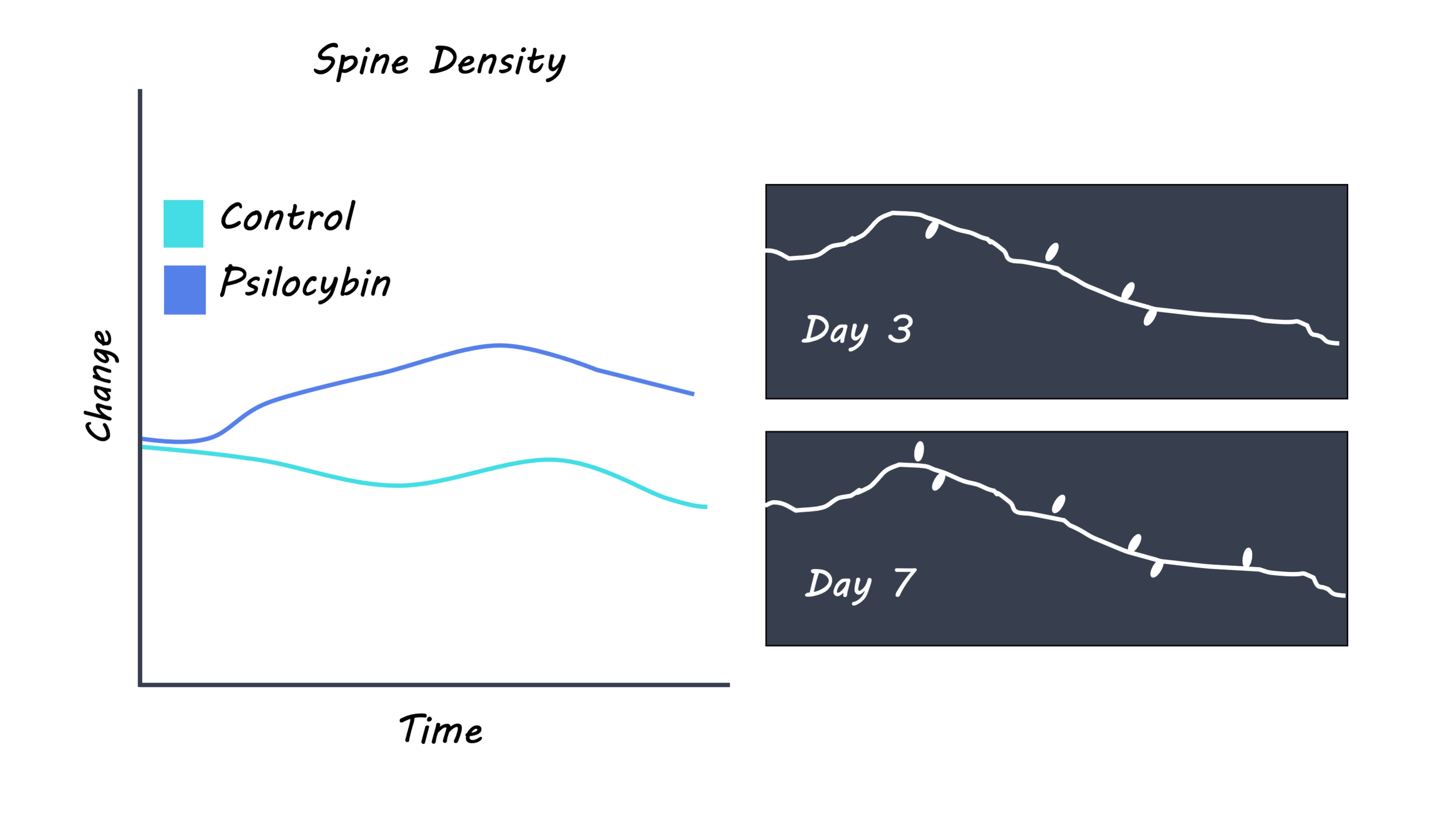
To examine the effects of psilocybin on mPFC neurons, 2-photon imaging was performed to characterize dendritic spine properties prior to and after treatment. Specifically, the authors assessed spine width, protrusion length, density, formation rate, and elimination rate up to 34 days after saline and psilocybin treatment. Lastly, they performed whole-cell electrophysiological recordings to determine whether psilocybin modulated the activity of pyramidal neurons in the mPFC.

What did they find?

Psilocybin treatment reduced escape failures at Test 2, including in nearly all the mice that were considered to be particularly susceptible to learned helplessness. A single dose of psilocybin also resulted in morphological changes on dendrites, including an increase in spine width, longer spine protrusions, and greater spine density due to an increase in the formation of new dendritic spines (rather than reduced elimination of spines). In fact, half of the newly formed spines remained intact after a week, and up to 37% of those remained intact after a month. Interestingly, the long-term stability of these new dendritic spines was only seen on some dendrites, which suggests that certain sub-population of neurons in the cingulate/premotor mPFC might be more amenable to the effects of psilocybin than others. The authors further replicated this pattern of results in the primary motor cortex and in the prelimbic/infralimbic regions of the mPFC, showing the generalizability of psilocybin’s effects on dendritic remodeling. Lastly, psilocybin led to increased miniature excitatory potentials 24 hours after administration, as compared to saline treatment. Together, these findings demonstrate that a single dose of psilocybin triggers dendritic remodeling, enhances excitatory neurotransmission in the mPFC, and is sufficient to reduce depressive symptoms like learned helplessness in mice.

psilocybin_jul13.png

What's the impact?

This study shows that a single dose of psilocybin quickly triggers both behavioral and synaptic changes in the mouse mPFC. The therapeutic potential for psilocybin use is particularly exciting because many antidepressants take several weeks to have a noticeable effect on behavior and cognition. This study provides a promising first step in understanding how psilocybin affects different brain regions implicated in major depression and paves the way for future research to extend these findings to humans.  

Kwan_Jul13.png

Shao et al. Psilocybin induces rapid and persistent growth of dendritic spines in frontal cortex in vivo. Neuron (2021). Access the original scientific publication here.
Gut Microbiota Regulate Social Behaviour

Post by Lina Teichmann

What's the science?

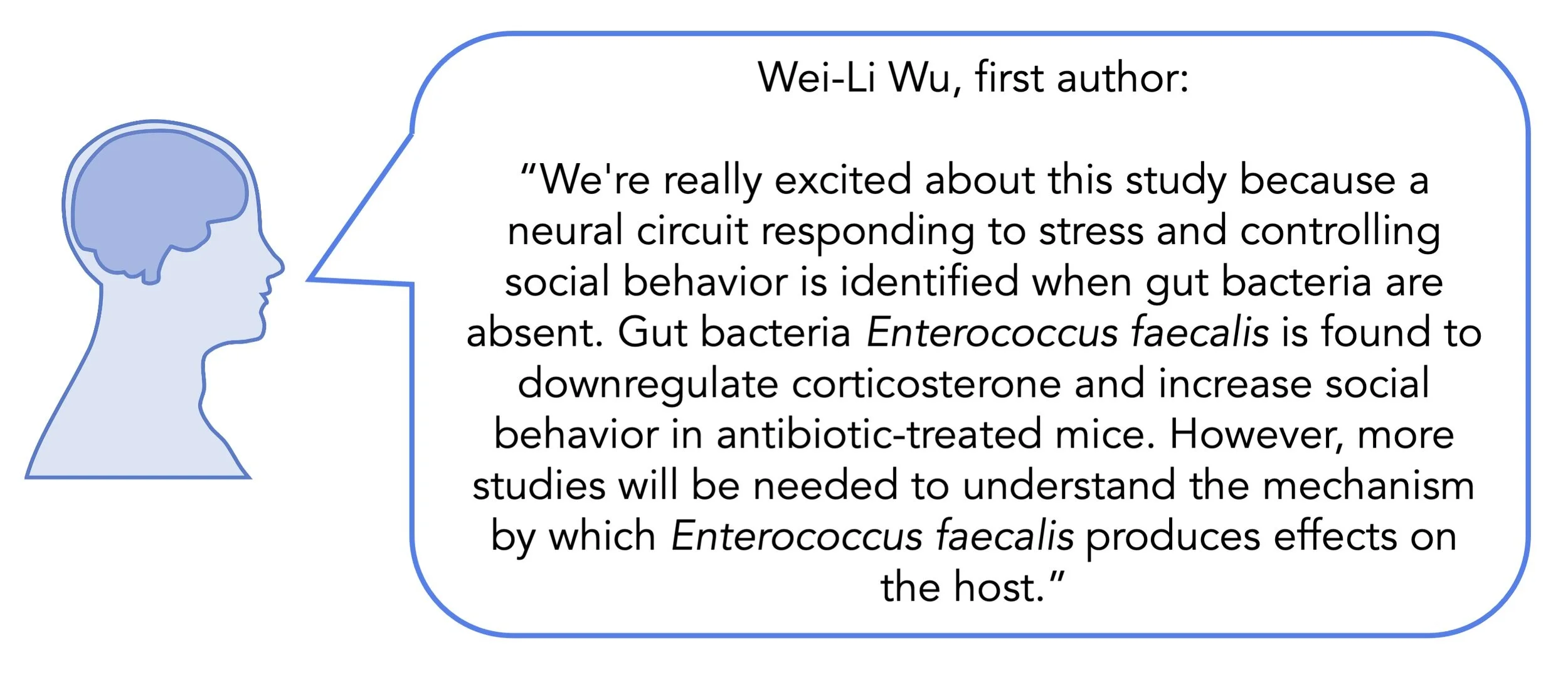
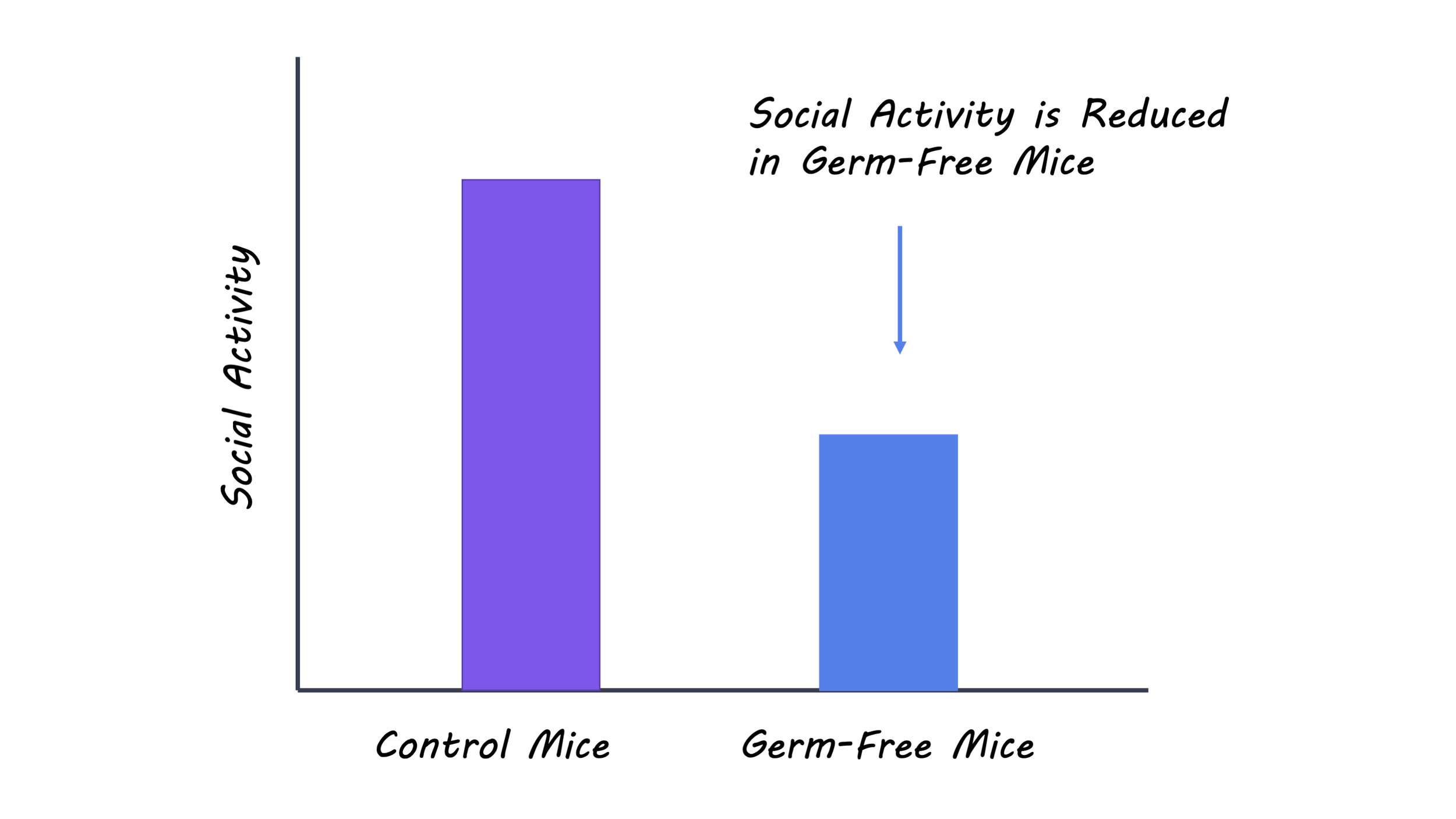
Communication between the gut and the brain can affect social interactions between mice. For example, mice selectively bred without gut microbiomes (germ-free mice) display reduced social behavior towards stranger mice. Similarly, in humans there is evidence for a link between gut bacteria and psychiatric disorders that affect social behavior. This week in Nature, Wu examined how gut microbiota modulate social behavior in mice and showed that specific gut bacteria influence social behavior by modulating stress responses in the brain.

How did they do it?

A group of germ-free mice without gut microbiomes and a group of mice that were treated with antibiotics to deplete gut microbiomes were compared to specific-pathogen-free control mice. The social activity of the different mice was observed and assessed. In addition, neuronal activation in several brain regions was tested after the mice had social encounters, and corticosterone (stress hormone) levels were measured. The researchers also examined whether artificially reducing corticosterone production can change the degree of social activity in germ-free and antibiotic-treated mice. To identify which species of bacteria are involved in reducing stress after social interactions, microbiome profiling and in vivo selection were used.

What did they find?

Germ-free and antibiotic-treated mice displayed reduced social behavior towards new mice. In addition, several brain regions involved in stress responses such as the paraventricular nucleus of the hypothalamus, the bed nucleus of stria terminalis, and the hippocampal dentate gyrus showed increased activity after social interaction. Increased levels of corticosterone were found in germ-free and antibiotic-treated mice after social encounters with stranger mice, indicating higher stress levels. If corticosterone was reduced by surgically removing the adrenal gland or using pharmacological inhibitors, sociability could be restored in the microbiome-depleted mice. Similarly, removing glucocorticoid receptors, using glucocorticoid receptor antagonists, or inactivating specific neurons in the paraventricular nucleus of the hypothalamus restored social impairments in the antibiotic-treated mice. Lastly, the authors found that a specific bacterial species, Enterococcus faecalis, was involved in reducing corticosterone levels after social interactions.

Gut_Jul13.png

What's the impact?

The findings demonstrate that specific gut bacteria in mice lead to reduced production of corticosterone to suppress stress responses when new mice are encountered. The current work identifies a neural circuit that responds to gut bacteria and demonstrates how sociability can be restored in gut microbiota depleted mice. These findings provide new insight into the gut-brain connection, and may help in the development of treatments for disorders affecting social behavior.

Wu_Jul13.png

Wu et al. Microbiota regulate social behaviour via stress response neurons in the brain, Nature (2021). Access the original scientific publication here.