
Gut Microbiota Regulate Social Behaviour

Post by Lina Teichmann

What's the science?

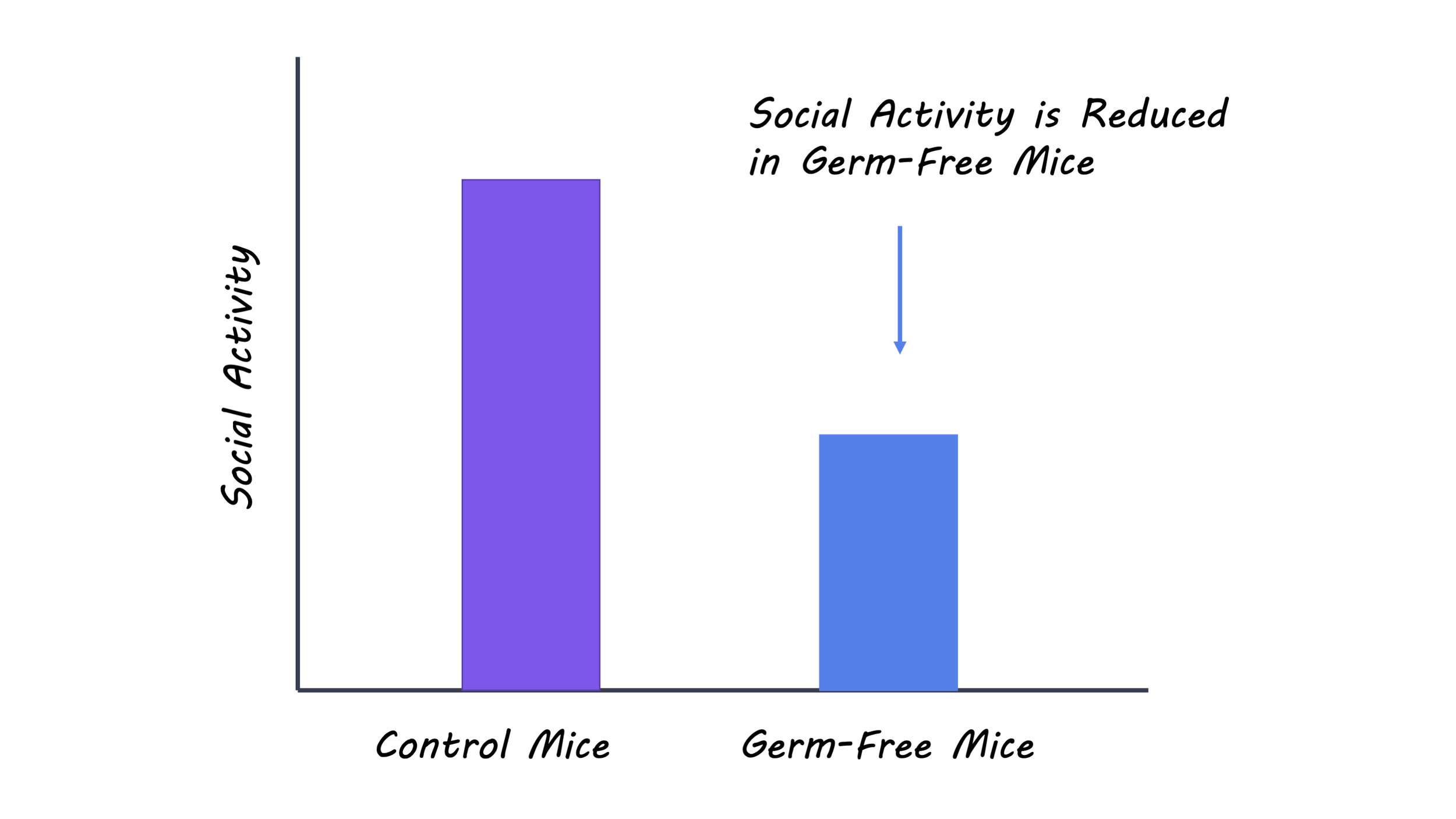
Communication between the gut and the brain can affect social interactions between mice. For example, mice selectively bred without gut microbiomes (germ-free mice) display reduced social behavior towards stranger mice. Similarly, in humans there is evidence for a link between gut bacteria and psychiatric disorders that affect social behavior. This week in Nature, Wu examined how gut microbiota modulate social behavior in mice and showed that specific gut bacteria influence social behavior by modulating stress responses in the brain.

How did they do it?

A group of germ-free mice without gut microbiomes and a group of mice that were treated with antibiotics to deplete gut microbiomes were compared to specific-pathogen-free control mice. The social activity of the different mice was observed and assessed. In addition, neuronal activation in several brain regions was tested after the mice had social encounters, and corticosterone (stress hormone) levels were measured. The researchers also examined whether artificially reducing corticosterone production can change the degree of social activity in germ-free and antibiotic-treated mice. To identify which species of bacteria are involved in reducing stress after social interactions, microbiome profiling and in vivo selection were used.

What did they find?

Germ-free and antibiotic-treated mice displayed reduced social behavior towards new mice. In addition, several brain regions involved in stress responses such as the paraventricular nucleus of the hypothalamus, the bed nucleus of stria terminalis, and the hippocampal dentate gyrus showed increased activity after social interaction. Increased levels of corticosterone were found in germ-free and antibiotic-treated mice after social encounters with stranger mice, indicating higher stress levels. If corticosterone was reduced by surgically removing the adrenal gland or using pharmacological inhibitors, sociability could be restored in the microbiome-depleted mice. Similarly, removing glucocorticoid receptors, using glucocorticoid receptor antagonists, or inactivating specific neurons in the paraventricular nucleus of the hypothalamus restored social impairments in the antibiotic-treated mice. Lastly, the authors found that a specific bacterial species, Enterococcus faecalis, was involved in reducing corticosterone levels after social interactions.
Gut_Jul13.png

What's the impact?

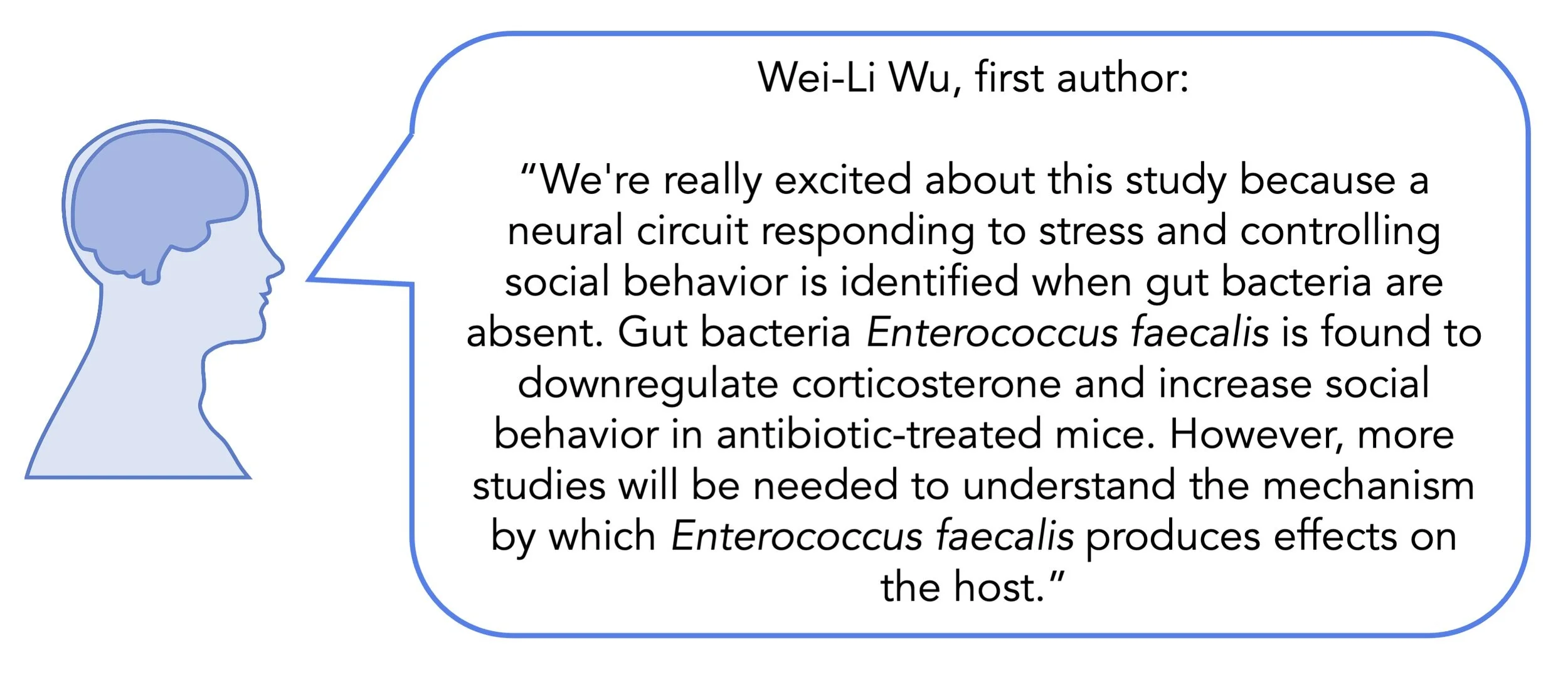
The findings demonstrate that specific gut bacteria in mice lead to reduced production of corticosterone to suppress stress responses when new mice are encountered. The current work identifies a neural circuit that responds to gut bacteria and demonstrates how sociability can be restored in gut microbiota depleted mice. These findings provide new insight into the gut-brain connection, and may help in the development of treatments for disorders affecting social behavior.
Wu_Jul13.png

Wu et al. Microbiota regulate social behaviour via stress response neurons in the brain, Nature (2021). Access the original scientific publication here.
Can rTMS Reduce Chronic Neuropathic Pain?

Post by Lani Cupo

What's the science?

Pain is a vital signalling system for survival. However, when the nervous system sustains damage from physical trauma or is impacted by diseases such as diabetes and alcoholism, abnormal firing of nerves can lead to a form of chronic pain known as neuropathic pain. While common therapies include pharmacological interventions, noninvasive therapies such as repetitive transcranial magnetic stimulation (rTMS), where an electromagnetic pulse is applied outside the head, have been proposed as potential non-pharmacological treatments. Nevertheless, the potential benefits of the technique have not been well characterized in patients with neuropathic pain. This week in Brain, Attal and colleagues published the results of their randomized, double-blind, placebo-controlled trial on a large sample of patients with neuropathic pain, examining the effects of rTMS in two brain regions (primary motor cortex [M1] and dorsolateral prefrontal cortex [DLPFC]) on subjective measures of well-being. 

How did they do it?

rTMS is a technique that involves using a coil outside the skull to apply local, high-intensity electromagnetic pulses which can permeate to the brain’s cortex. These pulses produce electrical currents in neurons. In this experiment, 165 participants were randomized in terms of which brain region (M1 or DLPFC) would be stimulated and whether they would receive the active TMS or a placebo where both researchers and participants thought they were receiving the stimulation. The protocol for rTMS comprised several phases: first, 5 sessions over 5 consecutive days, followed by a 3 week period where participants received 1 session per week, a 6 week period where they received 1 session every 2 weeks, and finally a 12 week period where they received 1 session every 3 weeks for a total of 15 sessions over 22 weeks. To measure the impact on average pain, the authors administered a questionnaire (Brief Pain Inventory) to assess pain at baseline (the average scores of two timepoints before the first session of rTMS), immediately before each subsequent session, and 3 weeks after the final session. Additional metrics included self-report of pain from three additional questionnaires, pain journals, reports of anxiety and depression, and subjective reports of improvement from both the patients and the clinicians. The authors examined the difference between the four groups (M1-rTMS, M1-placebo, DLPFC-rTMS, DLPFC-placebo) accounting for variability between different clinics and multiple timepoint measurements. 

What did they find?

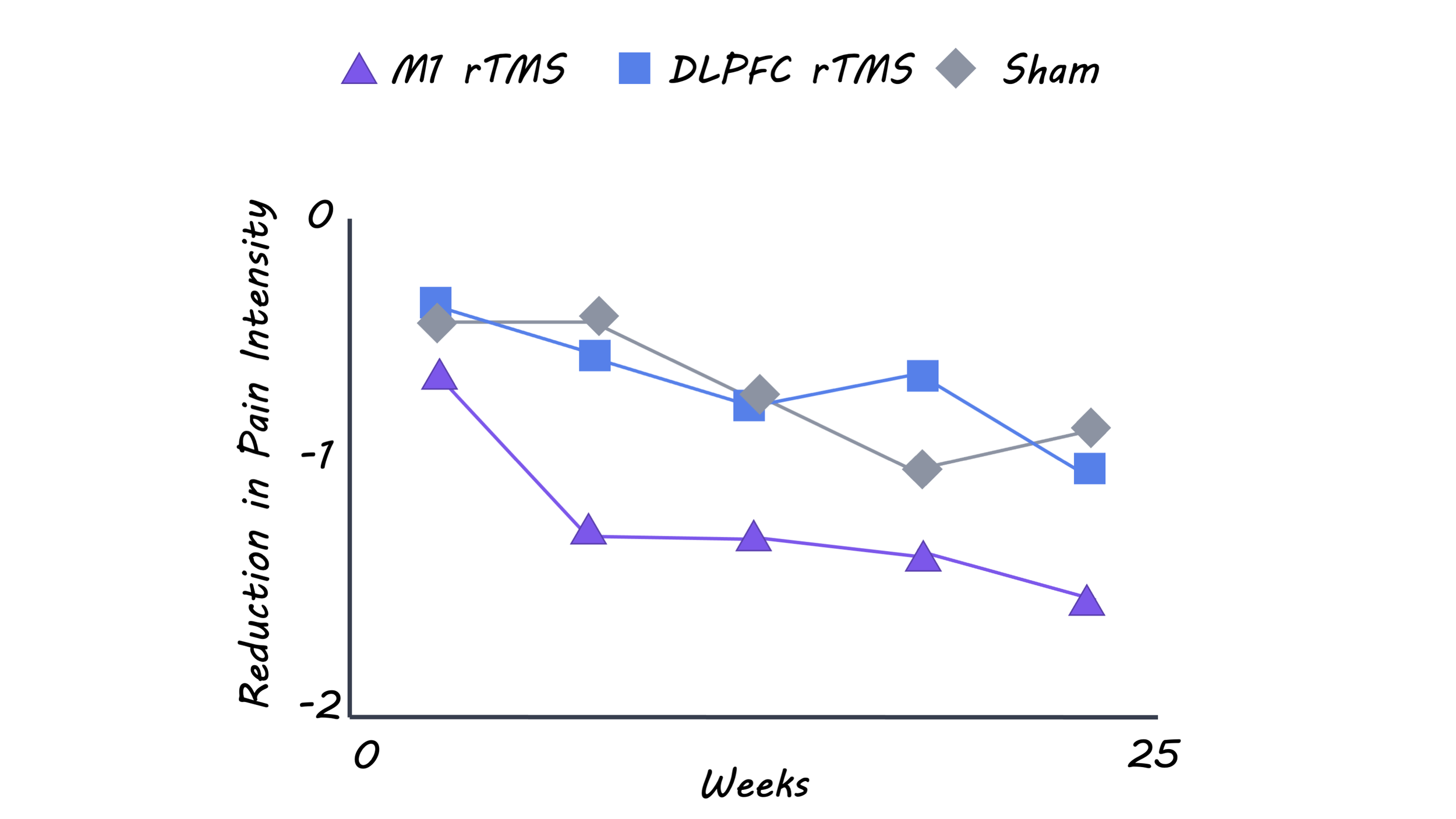
The authors found a significant difference between rTMS and placebo in the M1, with pain reduction increasing over time to significant levels after 8 sessions of rTMS. This implies that rTMS may be able to alleviate neuropathic pain, however, a single week of repeated sessions may not be sufficient to observe the benefits. In contrast, there was no significant impact of rTMS in the DLPFC when compared to placebo controls. A similar pattern was observed in the secondary outcomes, demonstrating the increased efficacy of rTMS in M1 compared with the DLPFC. Despite the positive effects, neither rTMS in the M1 or DLPFC improved outcome measures related to the quality of life, such as mood or sleep. Finally, it was observed that only a subset of the patients reported being “much” to “very much” improved following rTMS (<33%), and future research will investigate what factors determine which patients respond well to the treatment.

Pain_Jul6.png

What's the impact?

This study is one of the first to investigate the impact of rTMS on neuropathic pain in a large sample of individuals with a double-blind, placebo-controlled study. The authors found that rTMS of the M1 was effective at reducing neuropathic pain. These findings suggest that therapies like rTMS could provide an alternative option for pain management that does not rely on potentially addictive pharmacological treatments.

Attal et al. Repetitive transcranial magnetic stimulation for neuropathic pain: a randomized multicentre sham-controlled trial. Brain (2021). Access the original scientific publication here.

Visual Hallucinations in Schizophrenia

Post by Anastasia Sares

What’s the science?

Sensory disturbances and hallucinations are common occurrences for people with psychotic disorders, including schizophrenia and schizotypal disorders. Most research on hallucinations has focused on auditory hallucinations (like hearing voices), since these are more common. But visual hallucinations are also possible—and we may have been underestimating their prevalence. This week in Frontiers in Psychiatry, Silverstein, and colleagues reviewed the research on visual hallucinations in schizophrenia, emphasizing how they involve multiple brain systems.

What do we already know?

Visual impairments are well documented in schizophrenia. They range from so-called “low-level” problems, like sensitivity to changes in light levels, all the way to “high-level” problems, like difficulties with face or object recognition. Distortions of facial features, object size and location, or even temporary partial blindness, are also possible. Estimates of the prevalence of full-blown visual hallucinations in schizophrenia vary wildly (from 4% to 65%, depending on the study). According to Silverstein and Lai, this could be a result of unstandardized clinical evaluations. If clinicians don’t ask specifically about visual hallucinations, they could go under-reported. Moreover, there is a disagreement about the nature of these hallucinations: whether they are predominantly rich and detailed, involving people and 3D objects well-integrated with the environment, or whether they are more likely to be simple geometric shapes or lights.

A sensory disorder

There are a number of proposed explanations for visual hallucinations in schizophrenia, but most have to do with a problem in the brain’s sensory processing. Here are a few:

1.     A “low-level” problem with vision, like degeneration of the retina, prevents people from getting information about the outside world, forcing their brain to fill in the blanks;

2. A deficiency of the neurotransmitter acetylcholine in some brain areas leads to “fuzzy” sensory input that is easily misinterpreted—at the same time, an excess of acetylcholine in other areas could cause mental associations and imagery to be experienced as external stimuli.

3.     Cellular and network changes in regions like the hippocampus (a memory structure) and the default mode network (a rumination and self-reflection network), can conspire to make remembered or imagined events intrude and replace incoming sensory information.

Many of these ideas have simultaneously gained support over the years, including (maybe surprisingly), simple degeneration of the neural tissue in the eye. These sensory anomalies could combine with a person’s own fears or ideations, leading to false explanations for the unusual sensations; this would explain how the delusions characteristic of schizophrenia come about.

What’s new?

Silverstein and Lai suggest that these various mechanisms might produce disturbances or hallucinations that differ in character: low-level deficits in the eye might only produce visual disturbances, while differences in the default mode network or hippocampus could result in rich and detailed hallucinations. However, they stress that future researchers will have to work hard to determine the chain of causality from the brain to behavior—currently, we only have correlational evidence.

anastasia (1).png

What's the bottom line?

Schizophrenia was, and sometimes still is, stigmatized as a result of hallucinations. Viewing it as a sensory disorder can help us to understand and approach it with a little more compassion. Further, understanding the mechanisms underlying hallucinations and how they function at a systemic level helps to provide a deeper understanding of this complex condition.

Silverstein_Jul6.png

Silverstein & Lai. The Phenomenology and Neurobiology of Visual Distortions and Hallucinations in Schizophrenia: An Update. Frontiers in Psychiatry (2021). Access the original scientific publication here.