We Arrive at Negative Conclusions More Easily Under Threat

Post by D. Chloe Chung

What's the science?

We accumulate information over time to make important decisions, sometimes even in highly stressful situations. As there is often endless information available to us, we need to decide when to stop gathering information in order to make judgments. However, under stressful, threatening conditions, we are prone to make decisions even with a small amount of information (e.g. hearing a faint sound in a dark alleyway, perceiving it as a threat, and concluding that the environment is dangerous). This week in the Journal of Neuroscience, Globig and colleagues investigated how we process information in threatening situations.

How did they do it?

A total of 83 participants were divided into a threat manipulation group and a control group. The threat manipulation group was informed that they would later have to deliver a speech on an undisclosed topic in front of judges. Then, they were asked to solve difficult math problems in a limited time. These anticipated threats were designed to increase the anxiety and stress levels in participants. On the contrary, the control group was told that they would later have to write a short essay on a random topic that would not be judged and were given easier math problems to solve. After the manipulation, both groups played the “Factory Game”: Participants had to determine whether they were in a telephone or television factory based on the number of telephones or televisions shown on a moving conveyor belt that they were observing. During this test, for each participant, one type of factory was randomly assigned as the “desirable” factory and the other one as the “undesirable” factory. Participants were told that they would earn points when they visit the desirable factory but lose points when they visit the undesirable factory. They were also told that they would earn points when making a correct judgment about the factory type but would lose points upon a wrong judgement. The two payments were independent of each other.

What did they find?

After first checking that the level of anxiety was successfully increased in the “threat manipulation group” participants, the authors observed that the threat manipulation group tended to determine that they were in the undesirable factory (for example, the television factory) after observing a smaller proportion of undesirable items (televisions) compared to the control group. This means that with perceived threats, participants were more likely to draw conclusions based on less evidence, but only when drawing conclusions about the undesirable condition specifically. When it came to the desirable factory, the presence of perceived threats did not change the amount of evidence required to draw conclusions about the desirability of the situation. To understand how threat affects evidence accumulation specifically the authors used a computational modelling approach, finding a higher relative rate for negative evidence in the threat manipulation group. They found that threat biases the way in which participants weigh valenced (positive or negative) information.

chloe (4).jpg

What’s the impact?

This work confirms that the way we collect and process evidence can be greatly impacted by threats present in our situation, suggesting that we draw conclusions about our undesirable situation quickly, and with little evidence. Findings from this study suggest that, for those who are more sensitive to threats due to anxiety or other mood disorders, this process of accumulating negative information faster could be harmful as it may lead to an overly negative assessment of their situation.

Globig_quote.png

Globig et al. Under threat weaker evidence is required to reach undesirable conclusions. Journal of Neuroscience (2021).Access the original scientific publication here.
Environmental Enrichment Can Counteract the Effects of Aging on DNA Methylation

Post by Shireen Parimoo

What's the science?

Environmental enrichment (EE) in early life and development is related to improved cognition and has been shown to reduce behavioural deficits in diseased and aging mice. The beneficial cognitive effects of EE occur due to increased neuroplasticity and neurogenesis in the hippocampus, which is important for learning and memory. Age-related cognitive decline is linked to changes in DNA methylation, an epigenetic mechanism by which methyl groups are added to DNA molecules. As a result, DNA methylation can regulate gene expression and consequently, influence aspects of neuronal development and functioning. Currently, it is not known whether EE promotes hippocampal neuroplasticity and neurogenesis through epigenetic mechanisms. This week in Nature Communications, Zocher and colleagues used DNA methylation sequencing and gene enrichment analyses to examine the impact of EE on hippocampal dentate gyrus (DG) neurons.

How did they do it?

Six-week-old female mice were raised in an enriched environment (EE) or a standard environment for three months. The authors used reduced representation bisulfite sequencing to identify regions of the genome that showed changes in DNA methylation (i.e., differentially modified genes) in the DG. They also performed gene set enrichment analysis to determine which types of neuronal pathways those differentially modified genes were involved in. To examine the effect of EE on aging, the authors compared DNA methylation and gene enrichment profiles of young and old mice raised in both a standard environment and an EE. They also compared older and younger EE mice to assess whether EE could counteract the effect of aging on DNA methylation. Additionally, they investigated whether adult exposure to EE had a similar impact on DNA methylation as lifelong EE exposure. To do this, 14- and 3-month-old mice were housed in EE and their DNA methylation and gene enrichment profiles were compared after three months. Lastly, the authors analyzed human genomic datasets to identify genes that are dysregulated in pathological aging (e.g., Alzheimer’s disease, cognitive decline). They compared these genes to the differentially modified genes in EE mice in order to understand the link between EE-induced methylation and cognition.

What did they find?

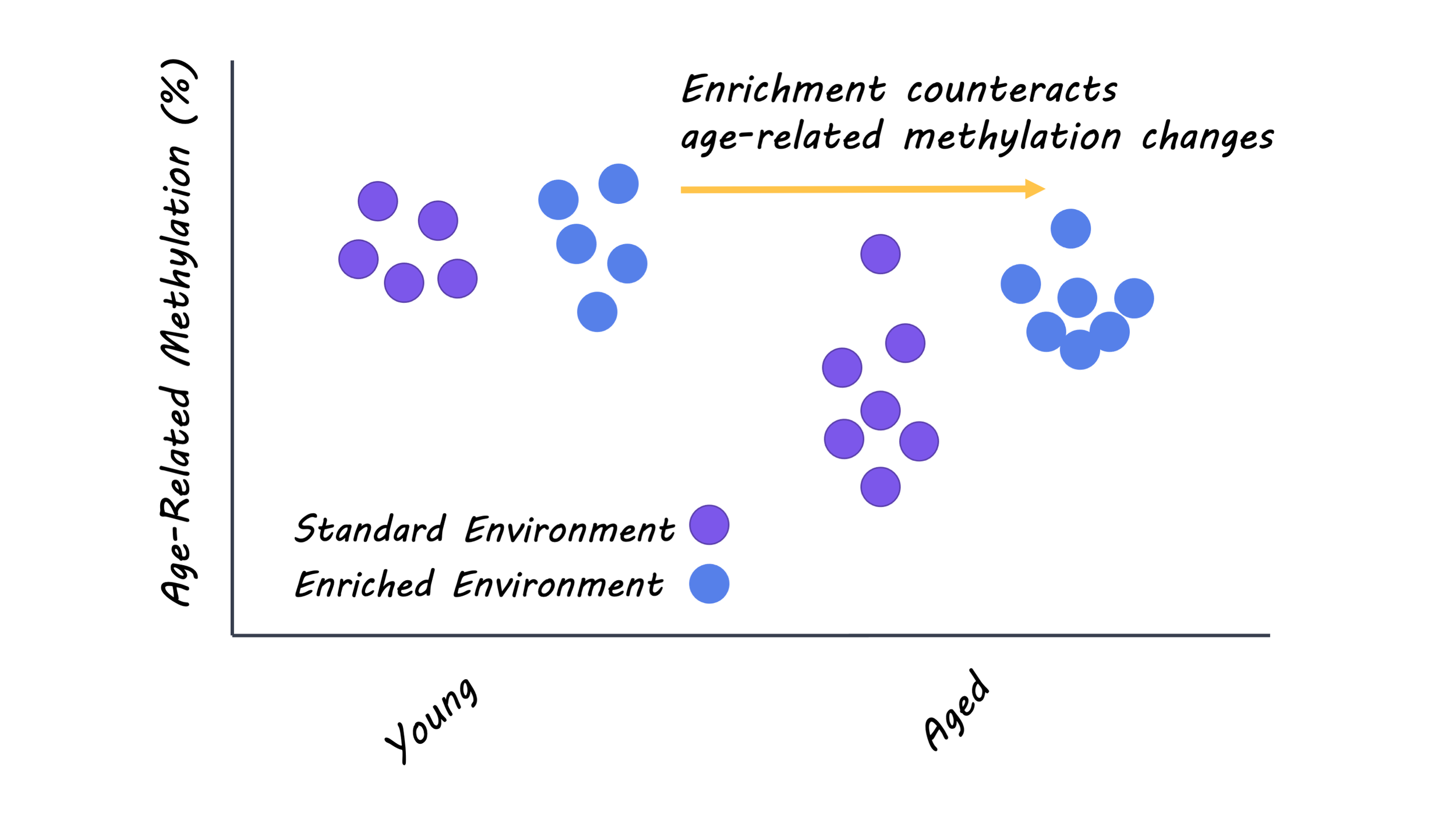
There were no global differences in DNA methylation between mice raised in EE and standard environments, but there was evidence of differential modification of genes in EE mice. That is, methylation on some locations on the genome, such as enhancer regions, resulted in gene enrichment (increased gene expression) whereas other locations were depleted (decreased gene expression). The enriched genes were involved in neuronal structure, neurotransmitter signaling, neurogenesis, and synaptic plasticity. Interestingly, enriched genes in older mice raised in a standard environment (compared to younger mice) were involved in overlapping processes with enriched genes in EE mice, indicating that EE and aging have similar effects on DNA methylation in the DG.

Enriched genes were associated with neuroplasticity, cell signaling, and hippocampal neurogenesis. In fact, there were 60% more newborn DG neurons in older EE mice than in the standard environment mice, further demonstrating that EE is associated with increased neurogenesis. Moreover, many of the genes that were enriched by EE in older mice were depleted in older mice raised in a standard environment, indicating that age-related methylation was counteracted by EE-induced methylation. This was the case in mice who were exposed to EE early on, as well as in older age. Finally, many of the genes that were differentially modified by EE in mice were also dysregulated in human adults with neuropathology (e.g., Alzheimer’s disease). Together, these findings indicate that EE alters the DNA methylation of genes that are putatively associated with cognitive functioning through their downstream effects on neural signaling, neuroplasticity, and neurogenesis.

What's the impact?

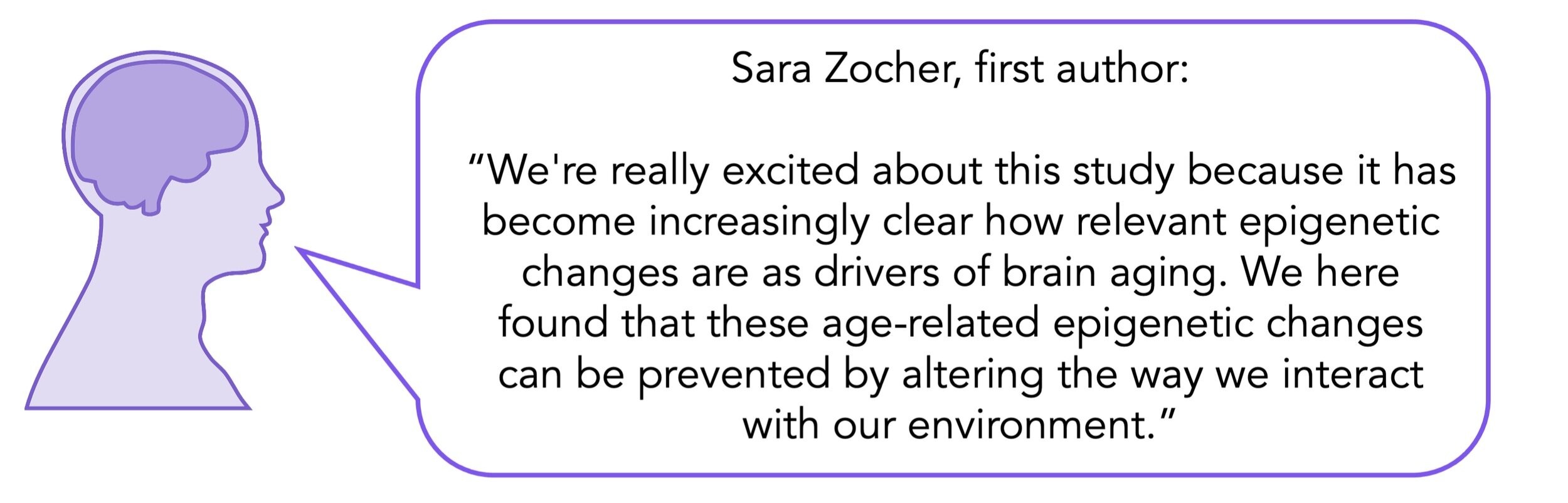
This study is the first to show that EE can alter and reverse the effects of aging on DNA methylation in mouse hippocampal DG neurons, particularly in genes involved in neuroplasticity and neurogenesis that are crucial for learning and memory. This work paves the way for future research to explore the specific mechanisms by which EE alters DNA methylation and subsequently influences cognitive functioning.

Zocher_quote.png

Zocher et al. Environmental enrichment preserves a young DNA methylation landscape in the aged mouse hippocampus. Nature Communications (2021). Access the original scientific publication here.

Impact of Mathematical Education on Brain Development

Post by Elisa Guma

What's the science?

The level of mathematical education and attainment in an individual has been associated with better education progress, employment status, mental and physical health, and financial stability, to name a few indices.  Additionally, it has been suggested that mathematical education may affect neural development, impacting neural structure and function. In certain countries, such as the United Kingdom and India, a 16-year-old adolescent may choose to stop studying math for their final two years of high-school education (A-levels), therefore, understanding the putative long-term impacts of this choice is essential and may impact certain educational policies. This week in PNAS, Zacharopoulos and colleagues used magnetic resonance spectroscopic and functional imaging to investigate whether a lack of mathematical education impacts adolescent brain function and neurochemistry.  

How did they do it?

In order to assess whether the continuation of mathematical education had an effect on brain function, the authors recruited 87 A-level (high-school) students in the United Kingdom (~16 years old; 56 females). All participants completed two imaging sessions comprising of (1) magnetic resonance spectroscopy (MRS) with a voxel placed in two regions known to be involved in numeracy (the intraparietal sulcus and the middle frontal gyrus) to measure γ-aminobutyric acid (GABA) and glutamate (the major inhibitory and excitatory neurotransmitters, respectively) and (2) a resting-state functional magnetic resonance imaging (rs-fMRI) session to measure brain functional connectivity. Additionally, their anxiety associated with math and their mathematical ability were both assessed at the time of the scan, and 19 months following the first assessment.

The authors ran a binary logistic model to assess whether the GABA and glutamate concentrations measured in the middle frontal gyrus and intraparietal sulcus at study onset could predict whether students had continued to study math. They also assessed whether GABA concentrations in the middle frontal gyrus (as this was the significant biomarker) were predictive of mathematical ability at the second assessment (~19 months later). Next, the authors used the rs-fMRI data to investigate whether a lack of math education was associated with differences in functional connectivity between the middle frontal gyrus and the rest of the brain and whether the GABA concentrations in this region would modulate the observed connectivity.

In the second set of experiments, the authors wanted to determine whether the effects of math education on neural function observed in their first experiment were due to pre-existing differences, or as a result of the math education itself. To do so, they recruited 42 pre-A-level students (~14 years old; 21 females) who had not yet started A-levels but had chosen whether they would study math as part of their A-level curriculum.

What did they find?

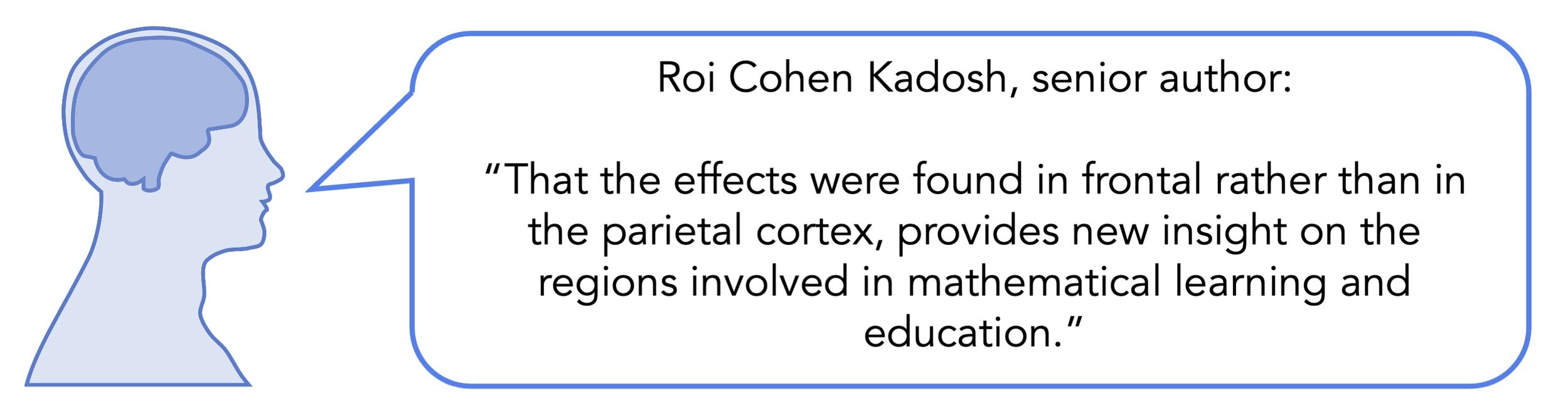
First, the authors found that students who chose to cease studying mathematics had lower performance on tests for numerical operations and higher anxiety associated with math. Next, the authors found that (~16-year-old) students who did not pursue math education in their A-levels had lower GABA concentrations in the middle frontal gyrus relative to those who continued their math education and that the GABA concentrations in this region could successfully classify students based on their continuation or cessation of math education. Inclusion of math ability measures was shown to successfully classify whether adolescents lacked math education, but math anxiety was not. The results were consistent after controlling for the choice of other subjects such as biology, chemistry, and physics, while it failed to classify students who lack these other subjects, suggesting that this effect is very particular to mathematical attainment. Finally, GABA levels in this brain region were predictive of future mathematical reasoning ability (reassessed ~19 months later), suggesting that these effects are long-lasting. Interestingly, the functional connectivity between the middle frontal gyrus and the rest of the brain was not affected by math education, however, higher GABA concentrations in the middle frontal gyrus were associated with weaker functional connectivity of this region to the parietal cortex, while low GABA concentrations were associated with increased connectivity.

elisa (4).jpg

In their second set of experiments in the younger (pre-A-level, ~14-year-old) cohort of students, students who had chosen to stop studying math showed lower performance than those who had chosen to continue, however, there were no group differences in math anxiety. Moreover, they were not able to classify individuals into math vs. ‘non-math’ educational decision groups based on their middle frontal gyrus GABA concentrations, indicating that the differences observed in the older cohort are likely, not due to pre-existing baseline differences.

What's the impact?

This study suggests that adolescent brain development may be affected by a lack of math education. Lower concentrations of GABA in the middle frontal gyrus were associated with this lack of math education and sustained for ~19 months following examination; however, this association was not present prior to the cessation of math education in younger adolescents.  This work provides insight into the biological impact of a difference in education on brain development. It also highlights the importance that policy decisions regarding education may have on adolescent brain development.  

Kadosh_quote.png

George Zacharopoulos et al. The impact of a lack of mathematical education on brain development and future attainment. PNAS (2021). The original scientific publication here.