
Does Sleep “Clean” Our Brains?

Post by Lani Cupo

Why do we spend so much of our life asleep?

An Irish proverb states: “A good laugh and a long sleep are the best cures in the doctor’s book.” We spend almost one-third of our lives asleep, but what makes sleep restorative, and why do we need so much of it? Sleep has many benefits like facilitating memory consolidation and emotion regulation, but today we focus on the role sleep plays in clearing the brain of neurotoxins that accumulate during waking hours. During daily functioning, the brain accumulates proteins such as β-amyloid (Aβ), α-synuclein, and tau over the course of waking hours. Accumulation of these proteins over the lifespan may contribute to brain pathology, so it is important that concentrations of these proteins are regulated. Recent evidence suggests that sleep may in part fill this role, helping to protect the brain by clearing the excess of these proteins.

What do we know?

Brain tissue is composed of three main components: neural cells, vasculature, and the interstitial system (ISS) referring to the space between cells and blood vessels. Most recent research on the brain focuses on cells such as neurons and glia, however, the ISS forms the microenvironment of the brain. It occupies 15-20% of total brain volume and plays a pivotal role in healthy brain functioning. Evidence from mice suggests that during sleep, interstitial volume can increase up to 60% allowing for increased flow between interstitial fluid and cerebrospinal fluid (CSF), the fluid in which the brain is floating. This might facilitate the improved clearance of toxins from brain tissue. While the mechanism allowing for the change in volume is still unknown, one hypothesis is that support cells known as astrocytes shrink during sleep, resulting in the observed volumetric changes.

To examine whether sleep facilitates the clearance of metabolites via CSF, one study in humans injected individuals with a CSF tracer they could image with magnetic resonance imaging (MRI) and investigated the impact of acute (one night) sleep deprivation on tracer clearance as a proxy for metabolite clearance. Following a night of sleep deprivation, tracer clearance was reduced, suggesting less effective clearance of neurotoxins. This finding is significant not only because it presents some of the first live human evidence, but also because the authors were able to assess clearance in deep structures within the brain.

During wakefulness, ISS contraction increases tissue resistance, reducing the influx of CSF. This potentially alters not only the clearance of excess neurotransmitters but also aggregates of proteins in the brain. Circadian rhythms, which help regulate sleep cycles, may also impact clearance by altering the permeability of the blood-brain barrier, the interface between circulating blood and the central nervous system. During sleep, this barrier becomes more porous, further impacting the clearance of proteins. Examining the clearance of the Aβ protein, one study in mice found the protein was cleared twice as fast during sleep as compared to wakefulness. This holds important implications for neurodegenerative disorders, as the accumulation of Aβ plaques is a hallmark of Alzheimer’s Disease (AD) pathology.

What are the implications for Alzheimer’s Disease?

Sleep is an important factor in the emergence of neurodegenerative disorders, such as AD and Parkinson’s Disease. When there is an imbalance between Aβ production and clearance in the brain, the protein can stick together causing aggregates, known as plaques, to form. Excess tau protein can also get stuck together forming “tangles”. The formation of Aβ plaques and tau tangles contribute to the loss of neurons and their connections. Similar to human studies, rodent models show that sleep deprivation elevates concentrations of Aβ, with concentrations increasing consistently over prolonged sleep deprivation. While an increased risk for AD has been associated with a shorter duration of sleep, the causal link between sleep deprivation and heightened risk for AD remains to be determined. It also remains unclear whether the mechanistic link between sleep disturbances and AD involves neurotoxin clearance.

The specific mechanism of toxin clearance from the brain is still unknown, although preliminary research implicates a specific water channel known as aquaporin-4 in the removal of interstitial waste. Recent studies implicate a brain region known as the locus coeruleus (LC) in the regulation of sleep - signaling from the LC is associated with states of wakefulness. This region displays volumetric abnormalities in AD, suggesting that it may be related to the pathophysiology of the disease.

What is the takeaway message?

During the time we sleep our brain tissues undergo changes that facilitate more efficient cleansing of the toxins and waste that naturally accumulate in our brains over the course of the day. This mechanism could underlie the observed association between neurological disorders like AD and sleep disturbance, however, it remains unclear whether sleep deprivations exacerbate AD pathology or if AD pathology exacerbates sleep disruption. Of course, if you don’t get enough sleep it does not mean that you will develop a neurological disorder, however, the research strongly suggests that sleep is a critical factor in brain health. Overall, the benefits of sleep are many-fold, and we are still learning exactly how sleep supports and protects our brain.


References

Albrecht, et al. Circadian Clocks and Sleep: Impact of Rhythmic Metabolism and Waste Clearance on the Brain. Trends in Neurosciences. (2018). Access the original scientific publication here.

Eide, et al. Sleep Deprivation Impairs Molecular Clearance from the Human Brain. Brain: Journal of Neurology. (2021). Access the original scientific publication here.

Goldstein & Walker. The role of sleep in emotional brain function. Annu Rev Clin Psychol. (2014). Access the original scientific publication here.

Huang, et al. Sleep, Major Depressive Disorder and Alzheimer’s Disease: A Mendelian Randomisation Study. Neurology. (2020). Access the original scientific publication here.

Lei, et al. The Brain Interstitial System: Anatomy, Modeling, in Vivo Measurement, and Applications. Progress in Neurobiology (2017). Access the original scientific publication here.

Mendelsohn & Larrick. Sleep Facilitates Clearance of Metabolites from the Brain: Glymphatic Function in Aging and Neurodegenerative Diseases. Rejuvenation Research (2013). Access the original scientific publication here.

Xie, et al. Sleep Drives Metabolite Clearance from the Adult Brain. Science (2013).Access the original scientific publication here.
Neuroinflammation Within Human COVID-19 Brains

Post by Lina Teichmann

What's the science?

A variety of neurological symptoms have been associated with COVID-19. For example, patients frequently experience loss of smell as well as headaches, fatigue, and memory impairments. This week in Immunity, Schwabenland and colleagues examined the effects of COVID-19 on the brain on a cellular, immunological, and anatomical level.

How did they do it?

Brain tissue of 25 COVID-19 patients was examined post-mortem and compared to brain tissue of three groups of control patients. These patients either (1) died of non-infectious causes which had little or no influence on the brain, or (2) had a history of severe respiratory diseases and were treated with extracorporeal membrane oxygenation, or (3) patients who had multiple sclerosis - an autoimmune disease of the central nervous system. The authors used imaging mass cytometry (IMC), a technique that allows for the spatial mapping and detection of immune populations in the brain. They examined the brain stem as well as the olfactory bulb in a subgroup of the patients as the olfactory bulb is the potential entry site for SARS-CoV-2.

What did they find?

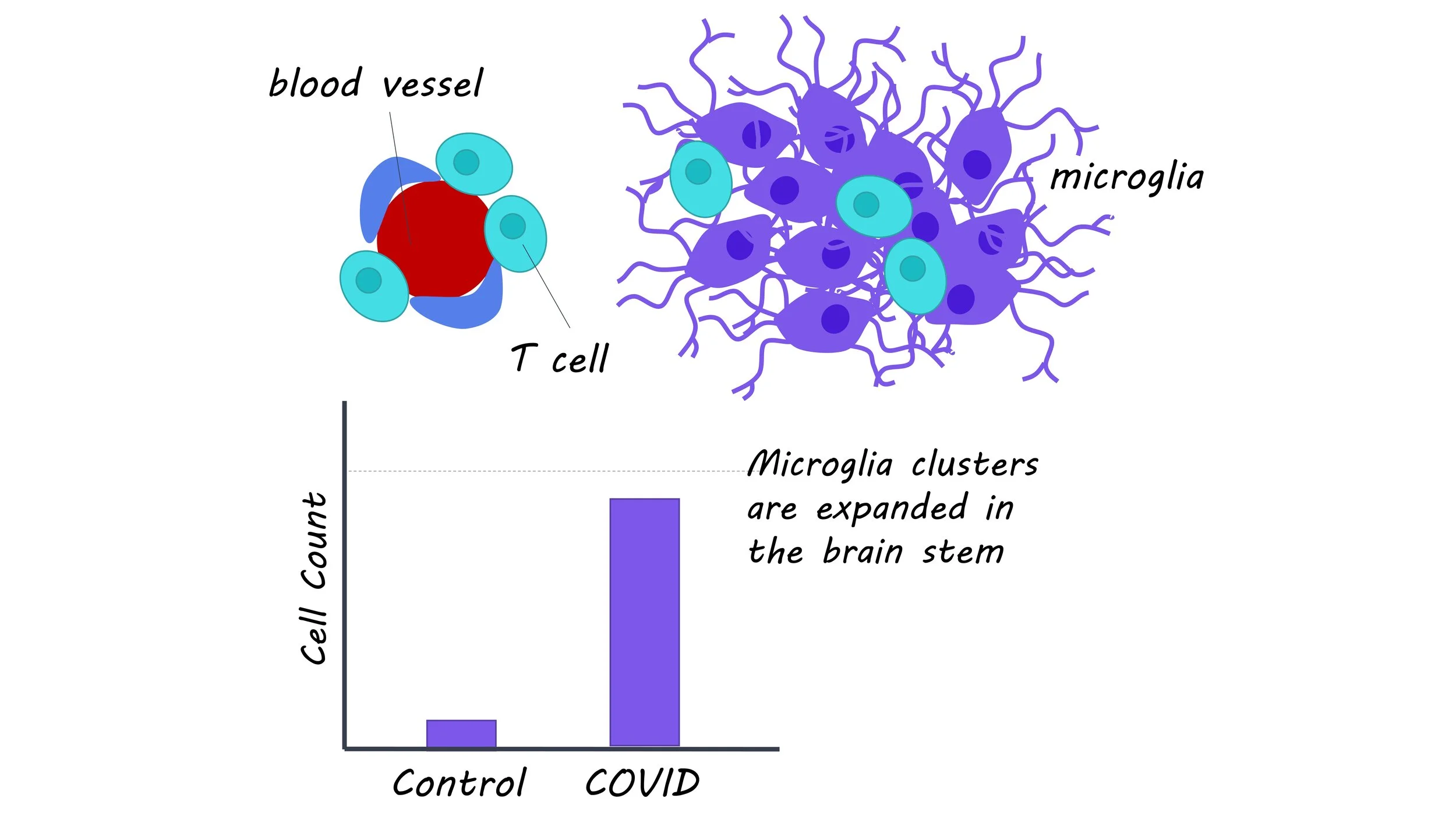
The results showed profound neuroinflammation in the brain tissue of COVID-19 patients with altered brain immune responses and associated neuronal damage, neither of which occurred in the control patient groups. Segmenting the IMC images showed that there were immune cell clusters of innate (non-specific immediate immune response) and adaptive (specific and long-lasting immune response) immune cells in COVID-19 patients that were not present in the brain tissue of the controls. The specific immune activation in COVID-19 brains consisted primarily of CD8 and CD4 T cells around blood vessels and clusters of macrophages and microglial cells that were associated with the disease. The specific characteristics of the immune infiltrate indicated microvascular injury in COVID-19 patients and a damaged blood-brain-barrier. In addition to vascular damage, the results also showed that the immune infiltration in COVID-19 patients was associated with axonal damage. Together, these results elucidate the specific inflammatory patterns of COVID-19 in the brain and indicate that the immune response in the central nervous system is particularly affected by the disease.

lina (1).jpg

What's the impact?

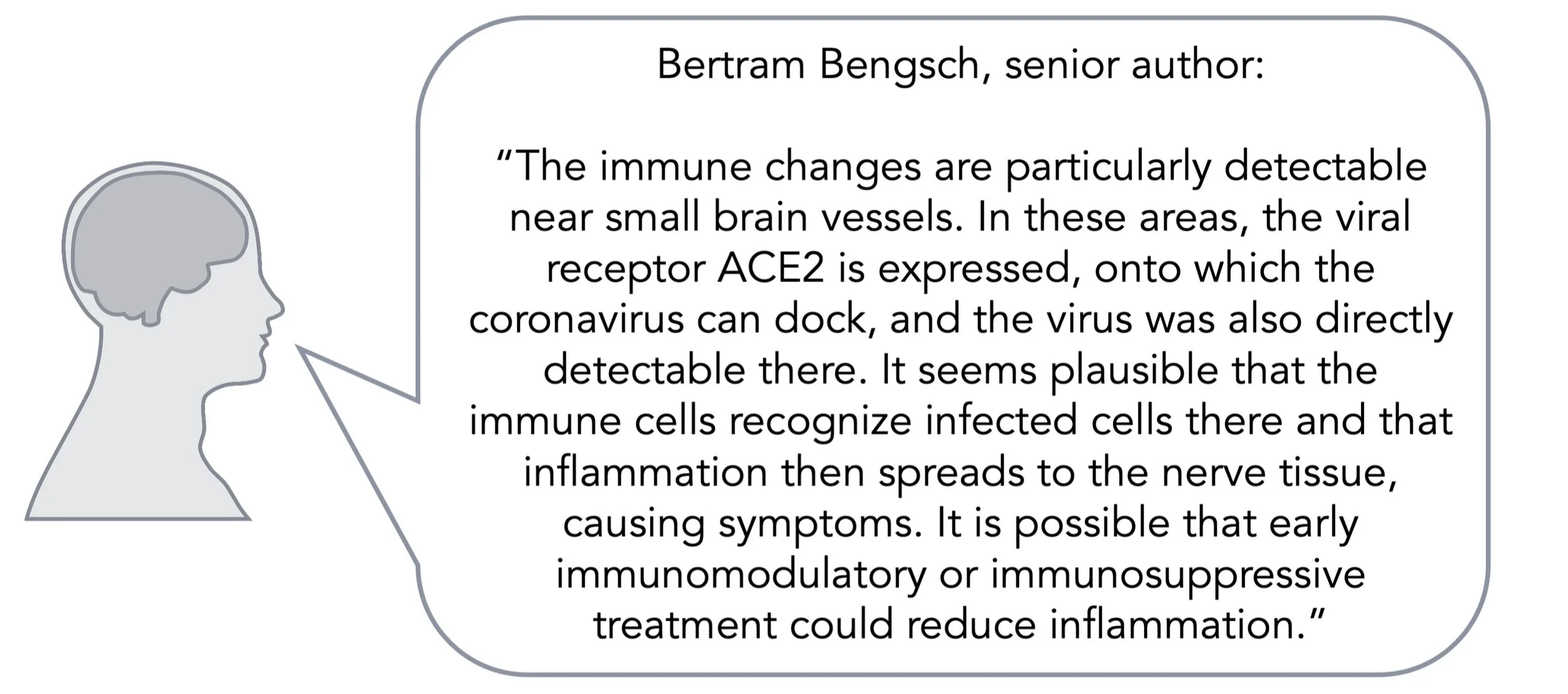
It is essential to understand the effects of SARS-CoV-2 on the body and brain. Schwabenland and colleagues identified neuroinflammatory responses triggered by COVID-19 and highlighted how the immune response is modulated due to the disease. These findings deepen our understanding of COVID-19 and offer new opportunities to develop treatments that could suppress neuroinflammation.

Bengsch_quote_June15.png

Schwabenland et al. Deep spatial profiling of human COVID-19 brains reveals neuroinflammation with distinct microanatomical microglia-T cell interactions. Immunity (2021). Access the original scientific publication here.

The US Food and Drug Administration Approves Use of Aducanumab for Alzheimer’s Disease Treatment

Post by Shireen Parimoo

Treatments for Alzheimer’s disease

Alzheimer’s disease (AD) is a neurodegenerative illness characterized by the deposition of amyloid-β (Aβ) plaques and neurofibrillary tangles in the brain that lead to widespread neurodegeneration, resulting in dementia and eventual death. AD affects more than 20 million people in the world, and with a growing global aging population, it has become increasingly crucial to develop treatments that can stop or delay the progression of AD symptoms.

Over the decades, several drugs have been developed and tested in randomized clinical trials. The drugs that have previously been approved for treating symptoms of AD help regulate the level of neurotransmitters in the brain. For example, the drug Donepezil helps temporarily mitigate memory-related symptoms by preventing the breakdown of acetylcholine. So far, however, none of these drugs have been effective in preventing the progression of AD or treating the underlying neuropathology. In fact, no new drug has been approved by the United States Food and Drugs Administration (FDA) for AD treatment since 2003.

In The Lancet Neurology, Lon Schneider provides an overview of a novel AD drug – aducanumab – created by the company Biogen. Schneider outlines the mechanism by which the drug targets AD pathology along with the history of its development. Aducanumab is a monoclonal antibody that is markedly different from other AD drug candidates because it directly binds to and clears out Aβ deposits in the brain, thereby targeting the hypothesized neuropathological mechanism underlying AD progression.

Is aducanumab effective?

Early randomized clinical trials showed that aducanumab injections over a year reduced Aβ levels in patients with prodromal or mild AD, though the clinical effects were less conclusive. Following up on these promising results, 1650 patients were enrolled in two separate multi-year phase 3 trials in 2015 to determine the efficacy of aducanumab in reducing the clinical symptoms of AD.

Despite initially promising results, several factors halted further testing of the drug. Firstly, there were issues with uneven participant dropout, missed doses, and poor compliance with the treatment protocol between the placebo and drug groups. Secondly, futility analyses conducted to monitor the interim efficacy of the drug showed mixed results and undesirable side effects like brain swelling. Specifically, differences in clinical symptoms between patients taking aducanumab and placebo only emerged in one of the trials. Moreover, it is unclear whether the differences were due to the drug’s efficacy in improving symptoms or because of worsening symptoms in the placebo group.

Finally, some of the positive results were observed in patients who received high doses of aducanumab, were genetically less at risk for experiencing side effects, and were highly compliant with the treatment protocol. In contrast, the placebo group consisted of more patients who were genetically predisposed to developing side effects and experienced greater clinical decline. Together, these factors posed a challenge to the validity of the findings from the clinical trials.

What’s happening now?

In June 2021, the FDA approved aducanumab under its accelerated approval pathway. This decision came after the FDA advisory committee had initially voted against approving the drug in November 2020. The accelerated approval approach is typically taken when the benefits provided by a drug under consideration outweigh those of existing treatments and are likely to have desirable long-term effects as well.

According to the FDA, their primary reason for approving aducanumab was the reliable dose- and time-dependent reduction in Aβ plaques. It is hoped that in turn, a lower Aβ burden will reduce further clinical decline, even though the evidence for this effect is currently uncertain. The next steps include conducting phase 4 clinical trials to confirm the clinical benefits of aducanumab in AD patients.


Schneider, L. A resurrection of aducanumab for Alzheimer’s disease. Neurology (2020). Access the original scientific publication here.

https://www.fda.gov/drugs/news-events-human-drugs/fdas-decision-approve-new-treatment-alzheimers-disease