How Memories are ‘Rotated’ to Avoid Sensory Interference

Post by Lincoln Tracy

What's the science?

Being able to maintain short-term memory of recent stimuli like sights, sounds, and smells is vital to cognition. These memories provide the context for making important decisions and are especially critical in developing predictions about future events. Predictions are based on expectations, which one learns by associating the current stimulus with the memory of what happened previously. Although sensory and memory information both play a key role in cognition, scientists are unsure how the brain incorporates new sensory information and memory representations without interference. This week in Nature Neuroscience, Libby and Buschman used an auditory-based implicit sequence-learning paradigm to explore the brain mechanisms responsible for avoiding interference between sensory and memory representations.

How did they do it?

The authors began by inserting silicon recording arrays into the right auditory cortex of adult male mice. After surgery, mice were exposed to an implicit sequence-learning paradigm involving sequences of four auditory chords over four consecutive days (1,500 sequences per day). Each sequence began with a pair of contextual chords, either A and B (AB context) or X and Y (XY context). The AB and XY context pairs predicted what chord would follow: in two-thirds of cases the AB context was followed by a C chord and the XY context was followed by a C* chord. However, in 20% of cases, the context pair was followed by the other C/C* stimulus (i.e., ABC* and XYC). All sequences ended with the same D chord. Auditory cortex neuronal activity was recorded during the sequence-learning paradigm. The authors then trained linear support vector machine classifiers (a type of machine learning model) to discriminate between neuronal firing rate responses to each pair of stimuli. Each classifier defined an encoding axis; stimulus information in different neuronal populations could be estimated at each moment by projecting the firing rates onto the encoding axes.

What did they find?

First, the authors found that experience over time led to the mice learning the auditory sequences. When the A or X context chords were presented on day 4, there was predictive neural encoding of the expected C or C* stimulus. In addition, the presentation of the C/C* stimulus evoked a response along the A/X sensory axis, a phenomenon known as postdiction. Postdiction is when new information updates the perception of previously experienced events. Second, they found that while the alignment of A/X and C/C* sensory representations allowed for prediction and postdiction, it also led to interference between current and previous sensory inputs and representation. The authors determined that an orthogonal (i.e. rotated to be perpendicular to sensory inputs) memory representation was being created to avoid interference. Third, they found that the orthogonalization of memory representation occurred due to two clusters of conjunctive neurons: stable and switching. Stable neurons maintained contextual preference across the chord sequence while switching neurons switched their A/X contextual preference during the sequence. Finally, using a computational model, the authors found the combination of stable and switching neurons was the most efficient way to rotate sensory representations into orthogonal memory representations, avoiding interference. In other words, memories were rotated to avoid new incoming sensory information that could interfere with memory formation.

lincoln (4).jpg

What's the impact?

This study revealed that the brain avoids interference between sensory and memory representations by rotating the memory representations to become orthogonal to incoming sensory inputs. As mice became familiar with the sequence of sounds, the neural representations of associated stimuli became aligned in the auditory cortex. This alignment explains postdiction, where new information is used to update the perception of previously experienced events. Further work is required to better understand the mechanisms underlying stable and switching neuronal populations. 

Timothy_quote_April20.jpg

Libby and Buschman. Rotational dynamics reduce interference between sensory and memory representations. Nature Neuroscience (2021). Access the original scientific publication here.

How Does COVID-19 Impact Our Brain?

Post by D. Chloe Chung

What's the deal with COVID-19 and our brain?

Since the outbreak of human coronavirus disease 2019 (COVID-19) back in December 2019, countless lives have been lost. As of April 2021, it is projected that 140 million people have become infected by the 2019 novel coronavirus (2019-nCoV) that causes COVID-19 and about 3 million people have died from the disease globally. COVID-19 is primarily a highly contagious respiratory illness similar to severe acute respiratory syndrome (SARS) and Middle East respiratory syndrome (MERS) both of which are caused by different strains of coronavirus.

At the very beginning of this pandemic, healthcare professionals and researchers focused primarily on the respiratory symptoms of COVID-19, as symptoms include severe coughing, breathing difficulties, and pneumonia. However, it was soon discovered that COVID-19 entails multiple non-respiratory symptoms including anosmia (loss of smell and taste) as well as various short- and long-term psychiatric symptoms. For example, the “brain fog” that some COVID-19 patients experience during or after acute COVID-19 infection has been highlighted by the media and is characterized by substantial and persistent deficits in cognition or attention. Notably, SARS or MERS patients also experienced cognitive deficits such as memory decline and poor concentration. Neuropsychiatric symptom presentation varies widely across COVID-19 patients. In addition to brain fog, patients can experience neuropsychiatric symptoms such as psychosis, insomnia, depression, and anxiety. More severe but also rarer, some patients even suffer from severe strokes and suicidal thoughts. The biological mechanisms underlying the contribution of COVID-19 to psychiatric illness need to be investigated further.

The link between COVID-19 and neuropsychiatric issues

Many research studies — mostly retrospective — have been conducted to understand the critical association between COVID-19 and neurological symptoms. For example, a recent study that examined more than 60,000 COVID-19 patients in the United States reported that people who were infected and recovered from COVID-19 were significantly more likely to develop various psychiatric issues such as anxiety, dementia, and insomnia. Interestingly, the severity of these psychiatric issues was shown to be modestly associated with the severity of COVID-19: psychiatric symptoms tend to be more prominent if the patient suffered from a more severe case of COVID-19. This association suggests that these neurological symptoms could be at least partially induced by COVID-19-related pathobiology, such as the degree of inflammation or the amount of virus these patients contracted. Moreover, this study found that individuals with a history of psychiatric disorders were at a higher risk of being diagnosed with COVID-19, suggesting that psychiatric disorders can be a risk factor in addition to an outcome of the disease. A more recent study assessing the prevalence of neurological and psychiatric disorders 6 months after COVID-19 diagnosis in 236 000 patients found that 33% developed such a disorder in the 6 month period. This study also found that for most of the disorders studied, the chances of developing the disorder were higher post-COVID-19 infection compared to the risk for a control group recovering from other respiratory tract infections. Finally, a relationship between COVID-19 severity and the chances of developing of a neurological or psychiatric disorder was also noted.

Another study administered cognitive tests to people who were infected and recovered from COVID-19 and compared them to age-matched control participants who have never contracted the virus. From these tests, COVID-19 survivors showed worsened continuous and selective attention compared to controls. Of note, when blood samples collected from the study participants were analyzed for signs of inflammation, a positive correlation was found between the level of one of the inflammatory factors and the degree of impairment in attention. While further investigation is needed (this study was not longitudinal and had a small number of participants), it can be speculated that there could be an important link between inflammation and COVID-19-related psychiatric symptoms.

covid_img_april20.png

How does the novel coronavirus affect the brain?

As COVID-19 patients and survivors continue to report various psychiatric problems, researchers began to wonder how the novel coronavirus can affect our brain – is it possible that this virus enters the human brain? How might this virus damage our brain? Since the angiotensin-converting enzyme 2 (ACE2) has been discovered as the cellular receptor for the novel coronavirus, many researchers have tried to understand whether this receptor can facilitate the entry of the virus into the brain. While the role of the receptor in virus entry to the brain remains to be investigated, analyses of publicly available transcriptomics datasets revealed that ACE2 is widely expressed in both the human and mouse brain. Specifically, in the human brain, ACE2 was expressed in excitatory and inhibitory neurons as well as astrocytes and oligodendrocytes, while its expression level varied across different brain regions. These results collectively suggest that ACE2 in the brain could potentially serve as an entry point for the novel coronavirus into the central nervous system.

Further supporting experimental evidence was presented by a recent study that evaluated the possibility of the novel coronavirus invading the brain using multiple different experimental models. First, the study demonstrated using the human brain organoids that the virus can indeed infect neurons and increase their metabolism. Interestingly, the virus was found to replicate by hijacking the innate machinery of infected neurons, while depriving the oxygen supply of neighboring neurons which eventually leads to their death. Importantly, ACE2 was required for the novel coronavirus infection as blocking ACE2 essentially prevented the virus from infecting neurons in the organoids. Second, the study utilized a genetic mouse model that increases the expression of the human version of ACE2 to demonstrate that the novel coronavirus can invade the brain in vivo. On top of this “neuroinvasion”, the novel coronavirus was found to induce rearrangement of blood vessels in the infected brain region, suggesting that the novel coronavirus can damage the brain by changing brain blood supply and potentially resulting in damaging infarcts (tissue death caused by insufficient blood supply).

Another approach to studying neuroinvasion by the novel coronavirus, several studies have examined brain tissues of COVID-19 patients who passed away from severe complications directly. Specifically, in the study described above, patient tissues from different brain regions were stained with antibodies that can detect spike protein of the novel coronavirus. With this staining method, the virus was found in cortical neurons and endothelial cells of COVID-19 patient brain tissues, indicating that the novel coronavirus may be neurotropic. Another study that analyzed brain tissues from about 60 COVID-19 patients also reported infarcts as one of the most prominent pathological features in the brain. Microthrombi, or small blood clots, were also found to be associated with infarcts, consistent with blood clotting commonly reported in COVID-19 patients. High expression of ACE2 protein expression was notably found in blood vessels, which suggests that these endothelial cells may be targeted by the coronavirus, leading to subsequent damage to blood vessels and eventually neuropsychiatric symptoms

What can we do for “brain fog” and other neuropsychiatric symptoms?

It has been more than a year now since this devastating disease was named COVID-19 by the World Health Organization (WHO), and we are just at the beginning of understanding the impact of COVID-19 on our brain health. For the next few months or years, we will continue to learn what long-term neuropsychiatric effects are caused by the novel coronavirus, especially in individuals who have survived severe cases. Currently, treatment options suggested for brain fog and other neuropsychiatric issues associated with COVID-19 mostly focus on keeping healthy daily habits, such as sleeping well, eating a balanced diet, and exercising regularly. While adopting these healthy habits may be generally beneficial, there is potential for more tailored treatments. As we learn more about what happens in our brain during the disease course of COVID-19, future studies may find effective therapies against these symptoms and help alleviate the delayed onset of unexpected neuropsychiatric complications in COVID-19 survivors.

In addition to neuropsychiatric symptoms of COVID-19 discussed here, stress and anxiety from uncertainty, social isolation, and economic challenges during this pandemic have had a tremendously negative impact on mental health, even in those who were not directly infected by the virus. With COVID-19 vaccines becoming available to more people, there is further work to be done to prevent further global burden on mental health.

References

Zubair et al. Neuropathogenesis and Neurologic Manifestations of the Coronaviruses in the Age of Coronavirus Disease 2019: A Review. JAMA Neurology (2020).        Access the original scientific publication here.
Iadecole et al. Effects of COVID-19 on the Nervous System. Cell (2021). Access the original scientific publication here.

Taquet et al. Bidirectional associations between COVID-19 and psychiatric disorder: retrospective cohort studies of 62 354 COVID-19 cases in the USA. Lancet Psychiatry (2021). Access the original scientific publication here.

Bryce et al. Pathophysiology of SARS-CoV-2: the Mount Sinai COVID-19 autopsy experience. Modern Pathology (2021). Access the original scientific publication here.

Wu et al. The outbreak of COVID-19: An overview. Journal of the Chinese Medical Association (2020). Access the original scientific publication here.

Zhou et al. The landscape of cognitive function in recovered COVID-19 patients. Journal of Psychiatric Research (2020). Access the original scientific publication here.

Song et al. Neuroinvasion of SARS-CoV-2 in human and mouse brain. Journal of Experimental Medicine (2021). Access the original scientific publication here.

Chen et al. The Spatial and Cell-Type Distribution of SARS-CoV-2 Receptor ACE2 in the Human and Mouse Brains. Frontiers in Neurology (2021). Access the original scientific publication here.

Boldrini et al. How COVID-19 Affects the Brain. JAMA Psychiatry (2021). Access the original scientific publication here.

Lee et al. Microvascular Injury in the Brains of Patients with COVID-19. New England Journal of Medicine (2020). Access the original scientific publication here.

Taquet et al. 6-month neurological and psychiatric outcomes in 236 379 survivors of COVID-19: a retrospective cohort study using electronic health records. The Lancet (2021). Access the original scientific publication here.

Individual Differences in Brain Activity Related to Human Intelligence

Post by Elisa Guma

What's the science?

One of the characteristics of humans is the ability to perform cognitively challenging tasks in varied situations. This adaptability is typically used as a measure of general intelligence. However, there is still debate over whether general intelligence should be studied as one general ability, or as a mixture of many distinct psychological processes. For more than three decades, neuroscientists have tried to tie this question to the brain's functional architecture. It has been proposed that to meet task demands, specific brain regions become transiently active and that these brain regions are part of heavily overlapping dynamic functional networks. This week in Nature Communications, Soreq and colleagues sought to investigate how different cognitive tasks and performance on those cognitive tasks relate to dynamic brain activity.

How did they do it?

The authors relied on an established intelligence test which included twelve cognitive tasks. The data they used had online test responses from over 60,000 participants. They also obtained functional magnetic resonance imaging (fMRI) data from healthy young adults as they performed the exact same test. These data enabled them to identify the brain regions found to be consistently active for all 12 tasks ('domain-general regions’). To identify these brain regions, the authors relied on a classic yet often underused conjunction analysis method. These regions are considered task agnostic since they are active for all tasks and contain very little or no task-specific information. Areas outside the 'domain general' mask include the regions in which task-specific information is stored. The authors then compared how similar tasks were using either a cortical mask (a selection of particular brain regions) containing general and specific regions or the domain-general mask. By applying the same approach to the online behavioural data, they could compare brain and psychometric (the behavioural test data) task similarities.

Next, they wanted to see how distinct tasks were. In other words, they asked: Can we tell that a person is doing a particular task only from their neural information? The authors examined the relationships between neuronal information based on brain activity (the relative local metabolic requirements of each brain region) and dynamic functional connectivity (how different brain regions interact in specific time windows). To quantify brain activity, the authors assessed all voxels contained within the ‘domain general’ mask, and to quantify dynamic functional connectivity the authors parcelled the 'domain general' mask into distinct regions For the cortical mask, the authors used an unbiased parcellation set based on resting-state fMRI data. Using these mined features (i.e. brain activity and connectivity), the authors performed a machine-learning-based classification analysis with the 12 cognitive tasks. 

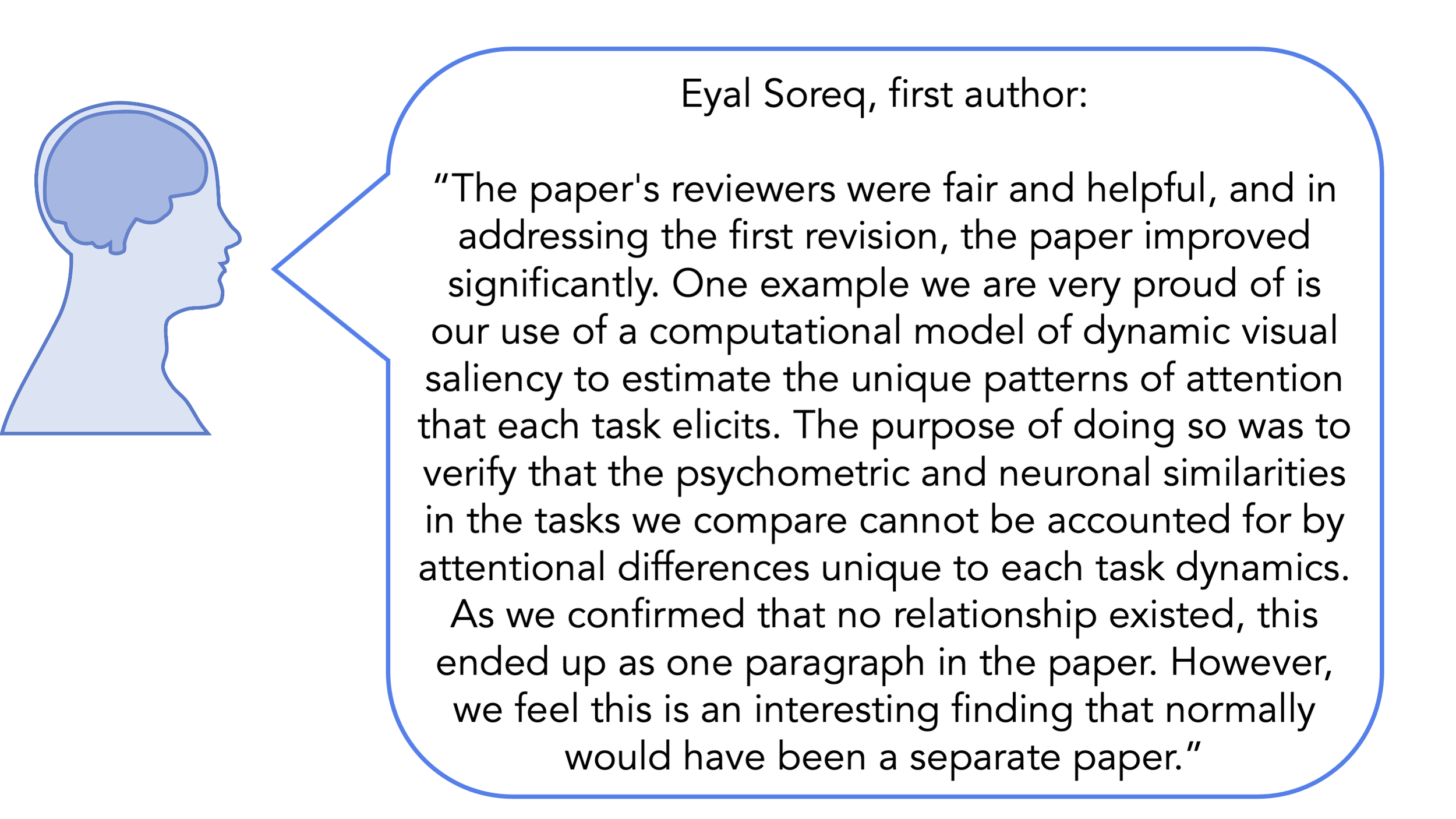
In response to the reviewers' comments, the authors were asked to confirm that their ability to correctly classify between the different tasks was not influenced by the motor or visual differences between the tasks but rather was a function of the different cognitive abilities required of each task. The authors accomplished this by aggregating the various tasks into three meta-labels (i.e. cognitive, visual, and motor) and conducting another classification analysis, this time comparing the actual task meta-label assignment to permuted ones. Furthermore, following the reviewers' criticism, the authors examined whether neuronal information can predict how well an individual will perform on the intelligence test. Specifically, they calculated each individual's task performance principal component analysis (PCA) and overall classification accuracy from the brain (i.e., how well we can correctly predict from your brain what tasks you are performing).

What did they find?

The authors first replicated the existence of a task-active (i.e., domain-general) network that showed activity across all 12 tasks. This network consisted of areas including the parietal, visual, and motor areas. The authors then demonstrated that cortical and domain-general similarities are highly correlated with psychometric similarity. This suggests that they all rely on the same mixtures of the underlying physiological and neurobiological systems that actually perform the tasks. In addition, the slight difference between the domain-general mask and the cortical mask suggests that the domain-general mask is not entirely homogeneous.

Classification of tasks based on either brain activity or connectivity from domain-general regions yielded impressive model performance with 37% and 43.1% accuracies which are 5 times better than chance (8%) for a balanced 12-tasks classification problem. The same learning algorithm, however, using cortical information, produced dramatic improvement, achieving 49% and 69% accuracy. Connectivity and activity complemented each other - the model trained on both measurements outperformed independent models (with 74%). 

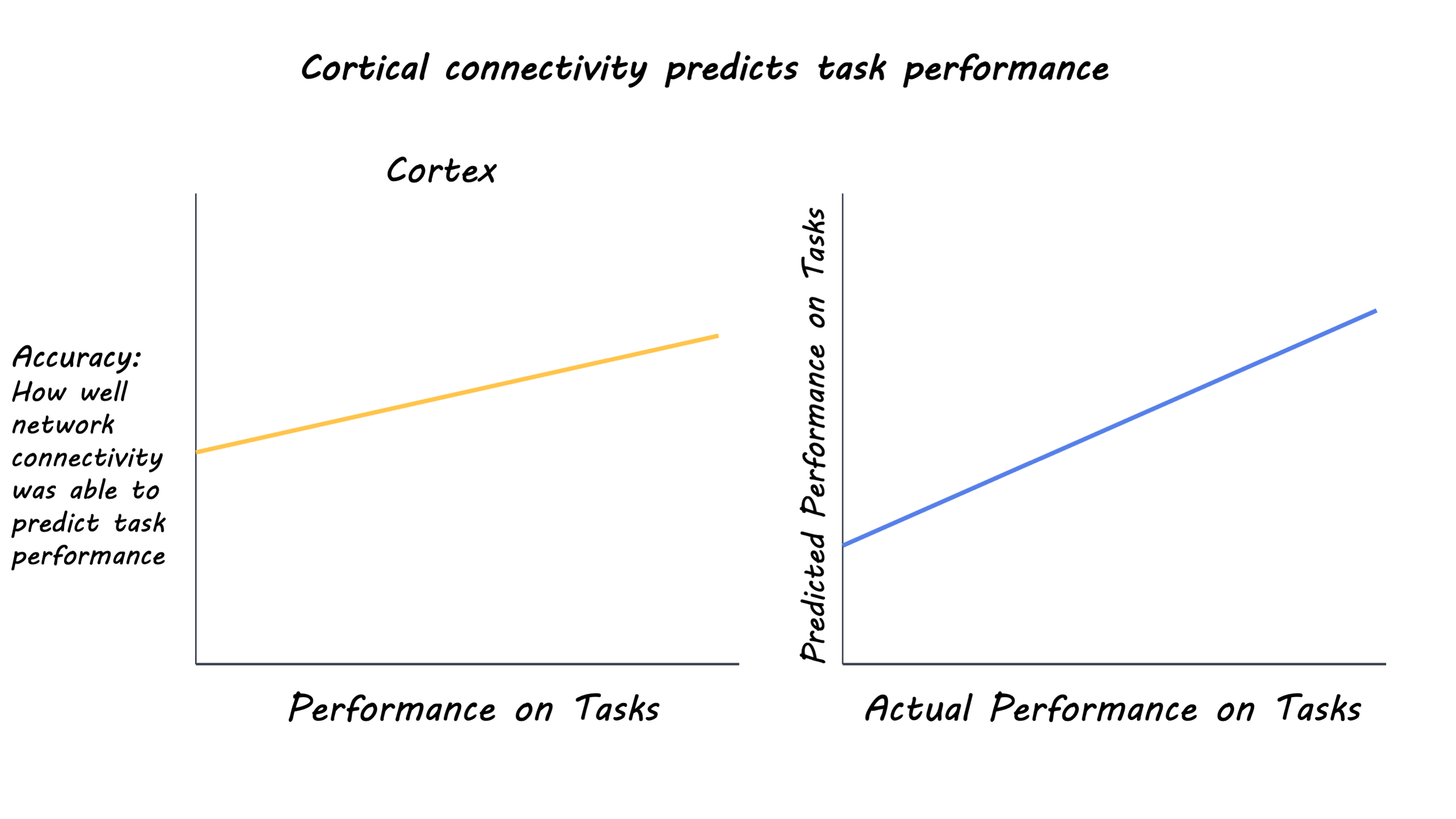
Then the authors showed that the actual assignment of tasks into different cognitive and motor meta-labels significantly outperformed permuted assignments that maintained the same imbalance. It is possible that we decode these tasks by a mixture of networks that carry out both cognitive and motor functions. Additionally, they demonstrated a link between the accuracy of the models at the individual level and the performance of the tasks being classified. Tasks from higher-performing individuals were classified more accurately. Finally, they demonstrated that they could accurately predict individual performance and that this ability was mainly due to connectivity between different prominent resting state networks, such as default mode and dorsal attention.

intelligence_April13.png

What's the impact?

This study used a combination of machine learning techniques applied to fMRI and psychometric data to show that performance on cognitive tasks could accurately predict dynamic brain connectivity networks and that more similar cognitive tasks activated more overlapping networks. Further, better performance on cognitive tasks was related to the ability to activate more specific dynamic networks and to flexibly switch between them. The data presented here provide interesting information about how human intelligence and brain activity may be related. Finally, this framework may be applied to clinical data in hopes of identifying markers for quantifying disease pathologies.

Soreq_April13.png

Soreq E al. Neuroimaging evidence for a network sampling theory of individual differences in human intelligence test performance. Nature Communications (2021). The original scientific publication here.