Mechanisms Underlying Learning-Associated Neural Plasticity

Post by Lina Teichmann

What's the science?

Altering strategies or flexibly adapting to changes in any given environment is critical for survival. In the context of spatial navigation, learning leads to increased connectivity between the ventral hippocampus (vHPC) and the medial prefrontal cortex (mPFC). While this vHPC-mPFC connectivity enhances initial performance in the learned task, it makes it harder to flexibly adapt to new circumstances. This week in Nature, Park and colleagues examined neural mechanisms underlying adaptive learning. They tested mice on spatial learning tasks and investigated how novelty impacts vHPC - mPFC circuitry to allow for cognitive flexibility.

How did they do it?

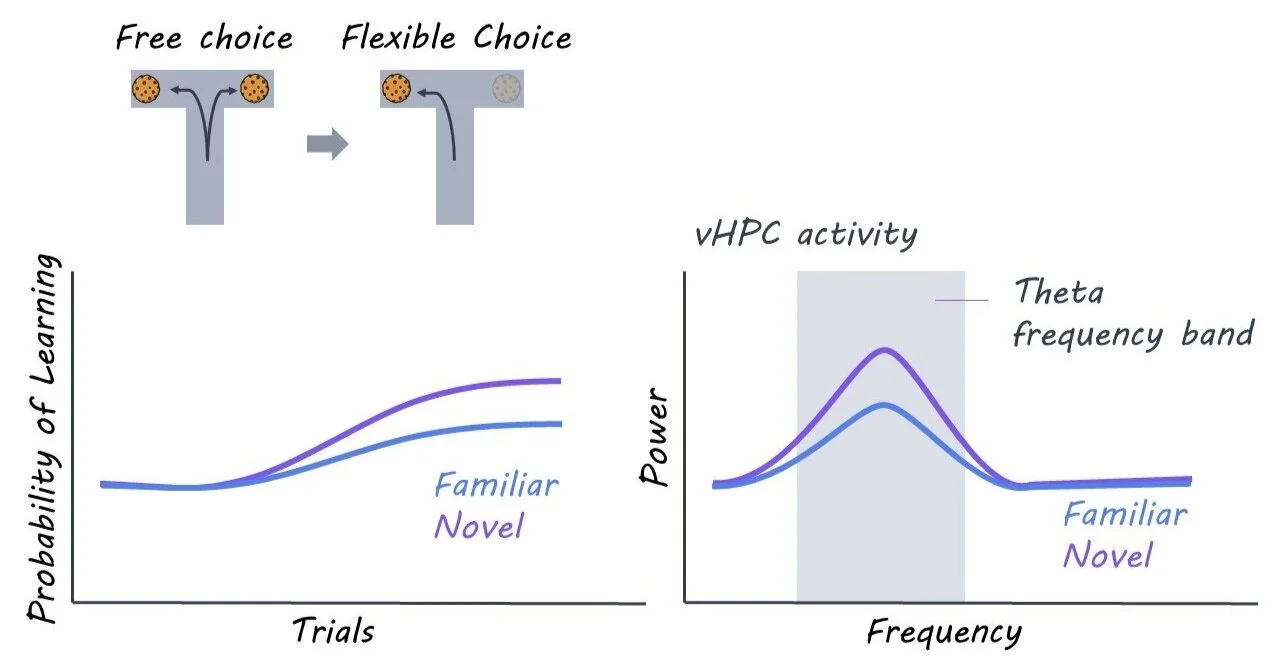
Groups of mice freely explored a T-shaped maze in which they were rewarded for visits to either arm of the maze. Over the course of three days, mice simply chose one particular arm side to get the reward. Next, in a new ‘flexible choice’ task, the mice had to overcome their bias of choosing one arm over the other to receive a reward. To examine the effect of novelty on cognitive flexibility, a subgroup of mice was exposed to a new spatial environment or a new mouse before starting the flexible choice task. The mice which were exposed to novel environments learned to overcome their spatial bias and adapt to the new task more rapidly than mice who were not exposed to novelty before completing the task. This suggests that novelty had a positive effect on flexible learning. Recording neuronal activity from electrodes implanted into vHPC, dorsal HPC, and mPFC, the authors examined the neural firing reflecting learning-associated plasticity. In addition, they used optogenetics to stimulate vHPC terminals in the mPFC to directly examine the effect of novelty on vHPC-to-mPFC synaptic transmission. To test whether dopamine D1 receptors modulated learning through novelty, they also infused dopamine receptor agonists and antagonists.

What did they find?

Mice exposed to novel environments showed stronger theta rhythms, which are associated with learning. Theta rhythms reorganized the firing pattern of vHPC neurons in the novelty-exposed mice group, leading to a decrease in connectivity between vHPC and mPFC. This decreased connectivity means that adherence to the old task strategy is weakened, which more readily allows for adaptation to new task demands. In other words, to improve spatial learning in a new task, the vHPC – mPFC connectivity must first be reset, which is facilitated by novelty. Learning the new task strengthens the vHPC – mPFC connectivity once again and the mPFC encodes information associated with the old and the new task which allows for cognitive flexibility.
Lina.jpg

What's the impact?

This study demonstrates that novelty triggers a reset of vHPC - mPFC circuitry, enhancing new learning in mice. The findings elucidate the neural mechanisms involved in flexible adaptation to changing environments and open future avenues for examining how novelty affects learning in humans.

Park_March9.jpg

Park et al. Reset of hippocampal-prefrontal circuitry facilitates learning. Nature (2021). Access the original scientific publication here.

What Effect Does Music Have on the Brain?

Post by Amanda McFarlan

Music and the brain

Listening to music can be very visceral - it can evoke strong emotions, trigger memories and modulate physiological responses in the body. For example, songs with an upbeat tempo and major chords can evoke feelings of cheerfulness, while songs with a slower tempo using minor chords can evoke feelings of sadness. Learning to play music, especially from a young age, has been shown to have positive benefits that extend beyond enhanced musical abilities. Here, we will discuss how musical training as well as listening to music changes the brain.

What happens to our brain when we play music?

Playing a musical instrument is a complex task requiring coordinated use of multiple brain areas. Consider playing the guitar: The motor cortex and basal ganglia control the synchronized movements in the right and left hands for strumming and fingering. Meanwhile, feedback from the somatosensory cortex about hand, finger, and body positioning is relayed to brain areas like the cerebellum and prefrontal cortex for continuous modulation of movements. The auditory cortex analyzes the sounds being produced so play can be adjusted if necessary. If the musician is following a musical score, the visual system reads and interprets the musical symbols on the page

With such complex integration of nearly all sensory systems and higher-order cognitive processing in the brain, it is reasonable to think that playing a musical instrument might lead to changes in brain plasticity. Indeed, it has been shown that compared to non-musicians, musicians have larger brain volumes in areas involved in auditory and visuo-spatial processing, motor control and feedback integration. Studies have also demonstrated differences in how musicians vs. non-musicians process sounds — both for simple tones or complex melodies. For example, one study found that musicians had stronger cortical activation when they were presented with piano tones compared to pure tones, and that this activation was related to the age at which the individual began practicing their instrument. A different study found that auditory cortical representations in highly trained musicians are enhanced for musical timbres that are associated with their principal instrument, but not for musical timbres associated with other instruments. Musicians are also known to have enhanced abilities for musical imagery. In one study, participants were presented with the beginning of familiar melodies and were asked to imagine the melody. They were then presented with a tone and had to decide whether or not it was the next tone in the melody. Musicians were better at identifying whether the presented tone was correct compared to non-musicians. Thus, musical training may lead to a superior ability for musical imagery.

Considering the overlap between cortical networks for music and language, researchers have hypothesized that the two may be related. Research shows that musical training can have beneficial effects on language processing and in particular, in the discrimination of pitch. Musicians have a more robust neural representation of pitch contours compared to non-musicians. This increased ability was associated with the number of years of training, suggesting that years of experience may lead to better pitch discrimination.

What happens to our brain when we listen to music?

Not everyone plays a musical instrument, but nearly everyone listens to music. Just like playing an instrument, listening to music requires the activation of many brain areas, like the auditory cortex to discern and analyze pitches, timbres, rhythms, etc. in the music. Listening to music also recruits high-order brain areas involved in emotions, memory and attention. Indeed, listening to music can influence mood and arousal and evoke strong emotional responses including joy, sadness or tranquility. 

Unlike other rewarding stimuli like food or drugs of abuse, music does not have an obvious benefit for survival, nor addictive properties. However, music has been reported to produce very strong feelings of euphoria for the listener in some cases, commonly described as ‘chills down the spine’. Brain imaging studies have shown that listening to ‘chills down the spine’ music compared to neutral music results in increased cerebral blood flow to reward-related brain areas (e.g. the ventral striatum). The nucleus accumbens (also implicated in reward) was also found to be activated while listening to unfamiliar joyful music compared to silence and singing compared to speech. In line with these findings, positron emission tomography (PET) imaging studies have shown that dopamine release in the nucleus accumbens occurs during passages of music that induce ‘chills down the spine’.

music_March9.jpg

In addition to having a rewarding effect and regulating mood, listening to music can affect arousal. Studies have shown that listening to relaxing music (slow tempo, low pitch and no lyrics) can reduce stress and anxiety brought on by an invasive medical procedure. Furthermore, music therapy that uses relaxation techniques and classical music was shown to reduce stress-related hormones and the activity of the hypothalamic-pituitary-adrenal (HPA) axis, responsible for the body’s stress response. The brainstem is thought to play an important role in changes in arousal while listening to music. One hypothesis to explain how music regulates stress and arousal is via the initiation of reflexive responses in the brainstem, which mediates heart rate, pulse, blood pressure, and body temperature. Listening to fast, upbeat music can cause an increase in these vital signs, while slow, relaxing music can decrease them.  

How does music affect the developing brain?

A large body of research demonstrates the benefits of exposing children to music at a young age. As discussed in the previous sections, playing music involves the recruitment of many different areas of the brain. One study showed that school-age children who received 15 months of musical training had increased grey matter density compared to age-matched children who did not receive musical training. Similarly, an MRI study revealed differences in macro and microscopic brain structure, including the maturation of cortical thickness in the temporal lobe, in students in a music program, but not those in a sports program. Research has shown that musical training in young children benefits speech. For example, rhythmic training can have a positive effect on both phonological processing and reading. One study in 9-month old babies revealed that babies who participated in a 12-session music program were better able to identify violations in music and speech versus a control group. Another study in young children found that those who received music (versus painting) instruction demonstrated stronger reading and pitch discrimination. Finally, musical training can also impact math skills. Students with low mathematics achievement improve in number production (reading, writing and counting numbers) after participating in non-instrumental musical training classes. All together, these findings suggest that musical training in young children can have beneficial effects that extend beyond enhanced musical abilities.

How can music help heal us?

The effects of music on mood and arousal make it a useful tool to improve well-being. Music therapy is a type of treatment whereby trained professionals administer music-based interventions, modulating attention, emotion, cognition, behaviour and communication. For example, listening to or playing music can be a useful distraction from negative sensations such as pain, anxiety, or sadness. Music-based interventions have been shown to decrease anxiety, perceived pain and depression symptoms in cancer patients. Therapeutic approaches using music can be helpful for the treatment of disorders such as depression, anxiety, and post-traumatic stress disorder, which are known to be associated with limbic system abnormalities. Further, music therapy can also have therapeutic effects in neurological disorders like stroke and Alzheimer’s disease. Music is a natural way to improve mood and well-being and is a promising tool for a wide variety of diseases or conditions. A greater understanding of the neurochemical effects of music is developing, however, more research is needed to understand the full potential of music therapy.

References

Chanda, M. L., & Levitin, D. J. (2013). The neurochemistry of music. Trends in cognitive sciences, 17(4), 179–193. https://doi.org/10.1016/j.tics.2013.02.007

Fernandez S. (2018). Music and Brain Development. Pediatric annals, 47(8), e306–e308. https://doi.org/10.3928/19382359-20180710-01

González-Martín-Moreno, M., Garrido-Ardila, E. M., Jiménez-Palomares, M., Gonzalez-Medina, G., Oliva-Ruiz, P., & Rodríguez-Mansilla, J. (2021). Music-Based Interventions in Paediatric and Adolescents Oncology Patients: A Systematic Review. Children (Basel, Switzerland), 8(2), 73. https://doi.org/10.3390/children8020073

Koelsch S. (2009). A neuroscientific perspective on music therapy. Annals of the New York Academy of Sciences, 1169, 374–384. https://doi.org/10.1111/j.1749-6632.2009.04592.x

Pantev, C., & Herholz, S. C. (2011). Plasticity of the human auditory cortex related to musical training. Neuroscience and biobehavioral reviews, 35(10), 2140–2154. https://doi.org/10.1016/j.neubiorev.2011.06.010

Särkämö, T., & Soto, D. (2012). Music listening after stroke: beneficial effects and potential neural mechanisms. Annals of the New York Academy of Sciences, 1252, 266–281. https://doi.org/10.1111/j.1749-6632.2011.06405.x

Wang, S., & Agius, M. (2018). The neuroscience of music; a review and summary. Psychiatria Danubina, 30(Suppl 7), 588–594.

Integration of New Memories in the Hippocampal Network

Post by Anna Cranston

What's the science?

The incorporation of new memories without disrupting acquired ones is critical for adaptation and survival. Prior memories have been shown to influence and promote further learning as well as the ability to re-active memories held in the hippocampus network. However, the exact network-level operations underlying cross-memory interaction are not yet known. This week in Nature Neuroscience, Gava and colleagues investigate the organizational mechanisms that allow for the continuous integration and interaction of hippocampal memories.

How did they do it?

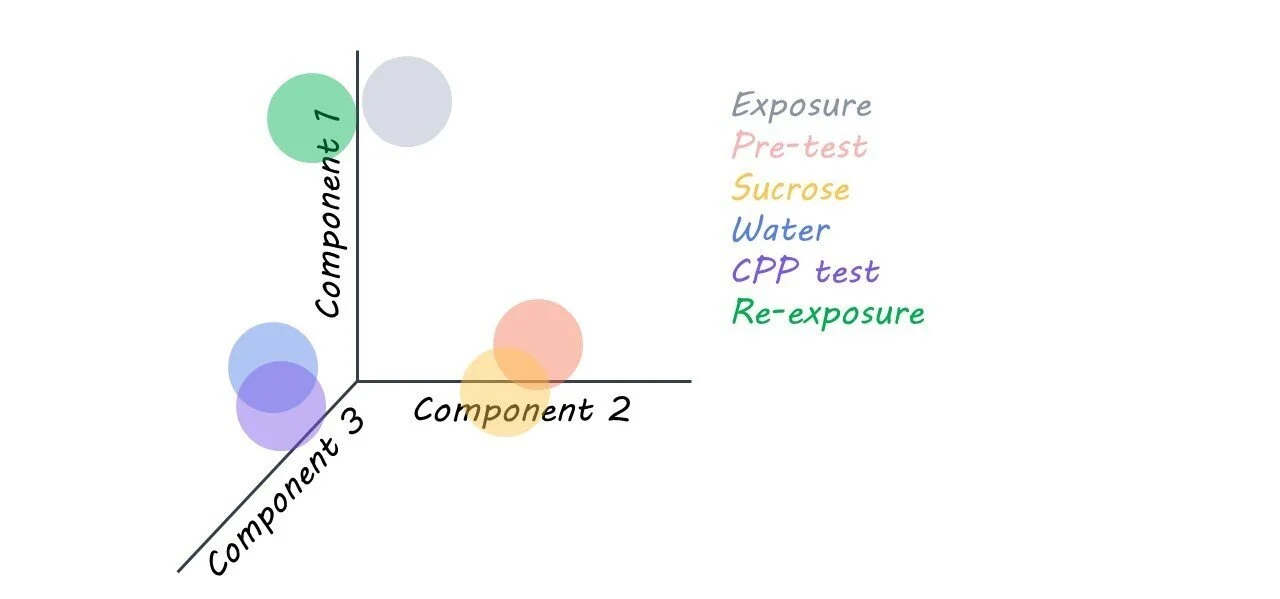
The authors took recordings from the dorsal CA1 region of the hippocampus in mice, using microdrives containing electrodes that were surgically implanted at the site of the CA1 hippocampal pyramidal layer. In these recordings, mice were exploring a familiar environment before and after associating a separate, novel environment with a reward (sucrose), using a behavioral test known as the conditioned place preference (CPP) task. They analyzed the compartment preference for the mice that were conditioned by sucrose solution in the CPP task, while simultaneously recording neuronal spiking in these mice. Next, using recordings of spike trains, which are representations of neuronal activity at defined time-points, the authors recorded the mice during active exploration to determine the firing pattern relationships between sets of co-active, or nearby neurons during each task. The authors also constructed mathematical graphs that represent the spike relationships among CA1 principal cells recorded in a given CPP task session. Finally, they analyzed spatial coherence and topology of neuronal cluster firing, to determine grouped firing patterns of neurons (how the neurons co-fire together) that depended on the location of the mice during the task.

What did they find?

Through the spike train recordings obtained during the CPP performance task, the authors found that the new CPP memory reorganized pre-existing hippocampal firing topology. In addition, through a principal component analysis of co-firing maps generated from recordings throughout the CPP tasks, they found that the co-firing maps could be described by three principal components (in other words, the data varied primarily along three axes in three ways): 1) Similar co-firing patterns could be seen across different sessions in the same environment, indicating the location of the memory and considered to represent the core or main part of the memory, 2) Different co-firing patterns described different aspects of the behavioural task/CPP sessions, and 3) Different co-firing patterns differentiated between exposure and re-exposure to an environment. Overall, new memories obtained during the CPP task influenced existing firing patterns of hippocampal neurons representing prior memory. Finally, the authors found that high- and low-activity cells contribute differently to these hippocampal network co-firing axes, working together to segregate memories by space, novelty, and events.

anna.jpg

What's the impact?

This study investigated the topology of neuronal co-activity and found that memory information spans multiple functional axes of the neuronal network in the mouse hippocampus. Their findings reveal underlying principles of organization for how memories are integrated, and provide novel insights into the division of labor between distinct types of hippocampal neurons.  

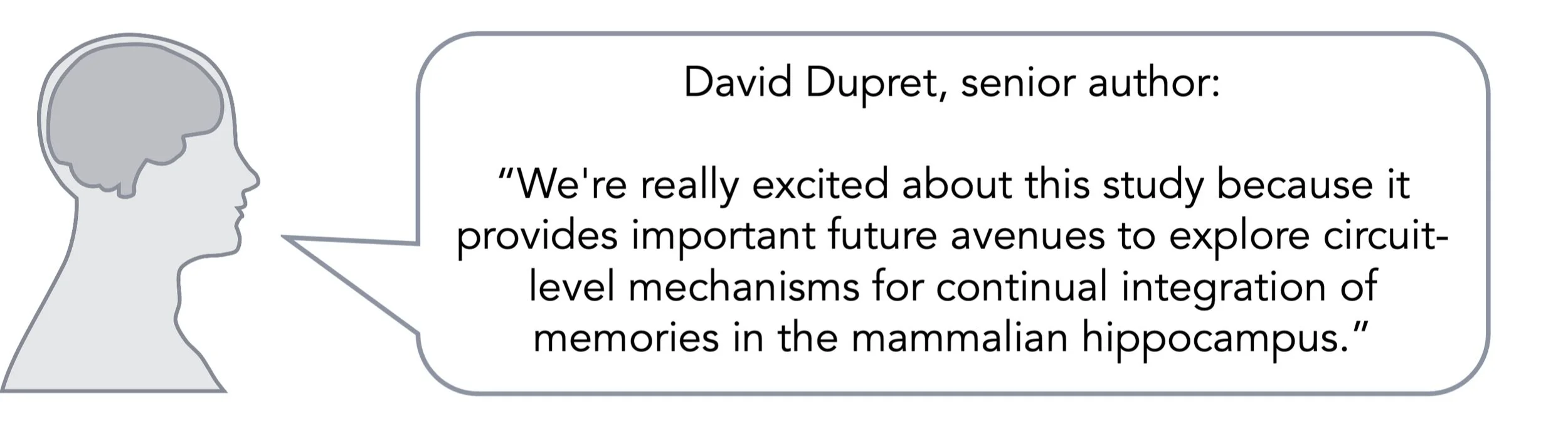
Dupret_March2.jpg

Gava et al. Integration of New Memories in the Hippocampal Network. Nature Neuroscience (2021). Access the original scientific publication here.