Reactive Astrocytes Worsen Alzheimer’s Disease Pathology

Post by Elisa Guma

What's the science?

Reactive astrocytes are a cellular component of gliosis and often detected in neurodegenerative diseases such as Alzheimer’s disease. There is diversity in their degree of astrocyte reactivity ranging from mild or moderate to severe, reflected in both their morphology and function. Although they are known to play a role in the pathogenesis of Alzheimer’s disease, their function remains elusive due to the lack of appropriate experimental models. This week in Nature Neuroscience, Chun and colleagues demonstrate the importance of these cells in Alzheimer’s disease pathogenesis using a newly developed animal model.        

How did they do it?

The authors developed a novel animal model of toxin-triggered reactive astrocytes by crossing two mouse lines; one expressing receptors sensitive to diphtheria toxin (DTR mouse), the other localizing that expression only to astrocytes (GFAP-CreER mouse) resulting in what they refer to as the GiD mouse. Systemically administering diphtheria toxin to the GiD mice (which binds to the diphtheria toxin receptors on astrocytes) allowed the authors to experimentally control when, and to what severity, reactive astrocytes are induced. First, the authors investigated the dose-dependency of astrocyte reactivity in these mice by either administering the diphtheria toxin for 2 days to induce moderate reactivity, or 16 days to induce severe hypertrophy, and used immunohistochemistry to evaluate astrocyte morphology.

Next, the authors wanted to understand what neurotrophic or neurotoxic factors were released by the moderate or severe reactive astrocytes. Reactive astrocytes have previously been shown to activate the monoamine oxidase B (MAO-B pathway), which causes increased GABA release and increases oxidative stress; to test this, the authors performed microdialysis in the hippocampus to measure GABA and hydrogen peroxide (H2O2; a by-product of oxidative stress) levels following induction of reactive astrocytes. To determine whether hydrogen peroxide was necessary for inducing neuroinflammatory reactions, they administered a hydrogen peroxide blocker and examined the downstream effects on reactive astrocytes.

The authors also wanted to investigate whether reactive astrocyte production of hydrogen peroxide could be associated with Alzheimer’s disease pathology. They evaluated neuronal function (by staining for neuronal markers), the presence of phosphorylated tau protein (involved in neurodegeneration in Alzheimer’s disease), and memory performance in GiD mice who had severe reactive astrocytes. They also overexpressed reactive astrocytes in a commonly used Alzheimer’s disease animal model (APP/PS1 model) which typically lacks many important hallmarks of Alzheimer’s disease such as tauopathy, atrophy, and neuronal death, and measured the downstream molecular and behavioural effects. Finally, to further validate their findings, the authors examined hydrogen peroxide-mediated reactive astrocytes, tauopathy, and neurodegeneration in an in vitro human Alzheimer’s disease brain model, which recapitulates human amyloid-beta pathology, and by immunostaining tissue from the temporal cortex of individuals with AD to determine whether markers of reactive astrocytes and oxidative stress were present.

What did they find?

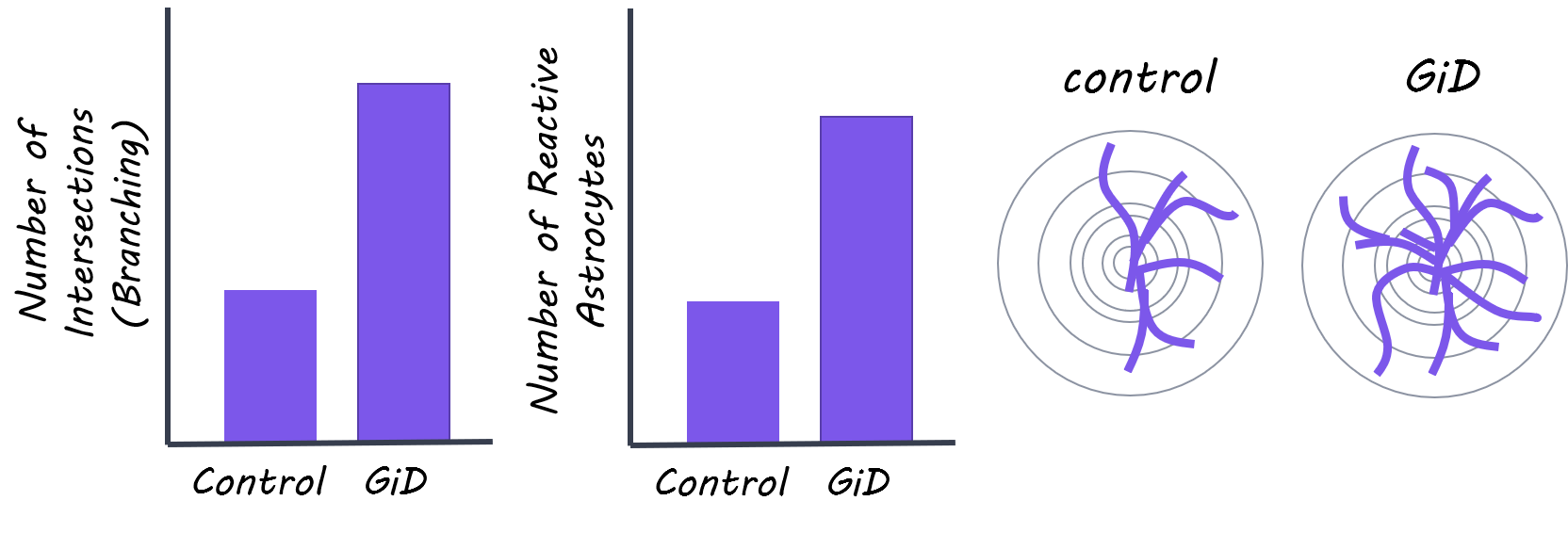
The authors confirmed that following diphtheria toxin injection, their GiD mouse model presented reactive astrocyte hypertrophy, rather than cell death, in several brain regions including the cortex, hippocampus, striatum, and amygdala. Astrocyte hypertrophy was sensitive to dose such that longer activation via diphtheria toxin administration (16 days) led to a greater number of reactive astrocytes with a greater degree of branching than a short administration (2 days) resulting in severe vs. moderate reactivity. 

Next, when severe reactive astrocytes activate the MAO-B pathway, the authors detected an increase in hydrogen peroxide production, but not GABA, in the hippocampus, reflective of an increase in oxidative stress. Further, the authors found that hydrogen peroxide production was necessary for reactive astrocyte hypertrophy, increased oxidative stress, and for the activation of microglia, as blocking hydrogen peroxide impeded astrocyte reactivity. Furthermore, they found that mice who had severe reactive astrocytes also had disrupted hippocampal pyramidal layer neurons, an increase in phosphorylated tau, and significant memory impairments. These effects were all prevented by blocking hydrogen peroxide, suggesting that it plays a role in neurodegeneration.
Elisa (1).png

Increasing astrocyte reactivity in the APP/PS1 mice caused neuronal degeneration and impaired memory function. This indicates that by introducing severe reactive astrocytes in the APP/PS1 mouse line the missing neurodegeneration-related hallmarks of Alzheimer’s disease can be precipitated, suggesting that severe reactive astrocytes are sufficient for neurodegeneration. To further validate the relevance of their findings to Alzheimer’s disease pathology, they observed that induction of reactive astrocytes in an in vitro human Alzheimer’s disease model led to an increase in hydrogen peroxide production and phosphorylated Tau, which were reversed by administration of a hydrogen peroxide blocker. Finally, the authors detected an increased presence of reactive astrocytes and markers of oxidative stress in post-mortem samples of the temporal cortex from Alzheimer’s disease patients.

What's the impact?

The authors present compelling evidence for the causal relationship between reactive astrocytes and neurodegeneration. They show that excessive hydrogen peroxide production (from monoamine oxidase B) in severe reactive astrocytes leads to many pathological changes relevant to Alzheimer's disease, such as glial activation, tauopathy, neuronal death, and memory deficits. These findings were recapitulated in an Alzheimer’s disease culture model, another Alzheimer’s disease mouse model, and in the brain of Alzheimer’s disease patients, providing further evidence for reactive astrocytes’ critical role in neurodegeneration.

Chun et al. Severe reactive astrocytes precipitate pathological hallmarks of Alzheimer’s disease via H202-production. Nature Neuroscience (2020). Access to the original publication can be found here.
Children Are Fundamentally Different in Visual Perceptual Learning

Post by D. Chloe Chung

What's the science?

Visual perceptual learning is the phenomenon in which our visual performance improves as we continue to practice perceptual tasks composed of visual cues. Visual perceptual learning can also be influenced by our age. It has been previously reported, for example, that older individuals perform drastically different in visual learning compared to younger adults. However, it has been unexplored whether visual perceptual learning also changes during development, such as from childhood to adulthood. This week in Current Biology, Frank and colleagues show that visual perceptual learning is different in children and young adults as they do not handle visual information in the same way.

How did they do it?

On the first day of the study, 20 healthy children (7-10 years old) and 20 healthy young adults (18-31 years old) fixated their gaze to the center of the screen and monitored 70 dots of which some of them were moving in the same direction. At the end of each of 300 trials, the participants were asked if they noticed the motion of dots to be coherent or random. Their “detection threshold” was determined based on the minimum percentage of dots moving in the same direction required for the participants to perceive the coherent motion. The next day, during the “pretest” session, the participants again monitored moving dots and determined the direction of the dots’ motion, similar to the first day of the study. On the third day of the study, participants had the first of several “exposure sessions” where they were exposed to moving dots either at threshold or at suprathreshold levels for coherent motion detection while completing a visual task at screen center. Specifically, on each trial, participants were presented with a stream of eight images, either “target” (two different animals) or “distractor” (six non-animal objects), surrounded by dots moving in a certain direction. At the end of each of 110 trials, participants were shown with four animal photos and asked to answer which two animals (targets) were presented in what order on this trial. A total of 12 exposure sessions was conducted on separate days. On the last day of the study, the participants underwent the “post-test” session where they repeated the same task from the “pre-test” session” to see if their visual performance for motion direction discrimination improved after the exposure sessions. Additionally, the participants took another test that measures their selective attention, in which they had to determine peripheral stimuli among distractors while focusing on the main target at the center of the visual field.

What did they find?

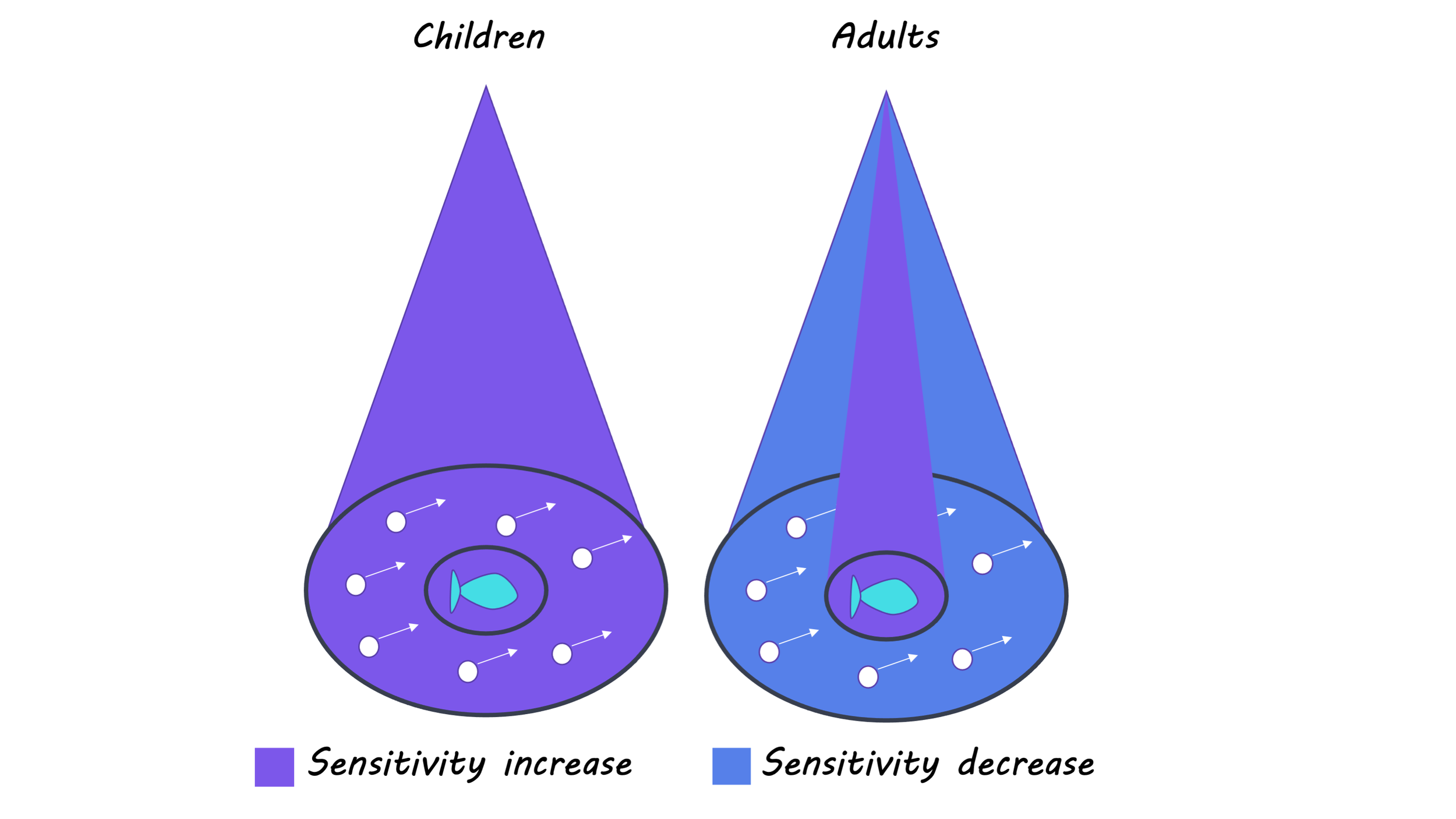
First, the authors found that children and young adults had a comparable detection threshold, meaning that the participants were similar in their baseline ability to detect the coherent motion of dots regardless of their age. Next, the authors evaluated whether the participants improved in distinguishing the motion of moving dots after being repeatedly exposed to moving dots while completing a central visual task. Between the pre-test and post-test, both children and young adults showed approximately 40% performance improvement in their performance when the moving dots were presented at the threshold level. Interestingly, when moving dots were presented at the suprathreshold level, children still showed improved visual performance while adults drastically decreased in their performance, indicating that visual perceptual learning substantially differs between two age groups. This noticeable change in performance only occurred for motions that were linked to targets that the participants had to focus on during the exposure session.

vision_img_nov24.png

To rule out the possibility that children’s improvement in visual performance was due to their inability to ignore visual features that were irrelevant to tasks during their visual exercise, the authors analyzed the correlation between selective attention ability and visual performance change for motion discrimination after suprathreshold exposure across participants. This analysis showed that children with greater selective attention ability also showed greater performance increases. Importantly, this correlation between selective attention ability and visual performance change was not found among young adults, emphasizing that mechanisms of visual perceptual learning are fundamentally different between children and young adults.

What’s the impact?

This study is the first one to report that visual perceptual learning remains dynamic as we advance from childhood to adulthood, due to differences in the way children handle visual cues compared to young adults. Findings from this study provide another important piece of evidence that similar to many of our other learning abilities, visual perceptual learning can dramatically change throughout our lifetime. For future studies, it will be interesting to investigate specific brain regions or neurotransmitters that are involved in the mechanistic differences between children and adults in their visual perceptual learning.

Frank_quote_Nov24.jpg

Frank et al. Fundamental Differences in Visual Perceptual Learning between Children and Adults. Current Biology (2020). Access the original scientific publication here.

Modulating Gamma Oscillations with Deep Brain Stimulation Improves Motor Symptoms in Parkinson’s Disease

Post by Amanda McFarlan

What's the science?

Deep brain stimulation is a commonly used treatment for improving motor symptoms in individuals with Parkinson’s disease. This treatment consists of stimulating the subthalamic nucleus (nucleus within the basal ganglia that contributes to the control of involuntary movement) via implanted electrodes to help regulate brain activity and improve motor function. It has been shown that deep brain stimulation leads to a reduction in pathologically enhanced beta oscillations in the brain. Additionally, recent findings have suggested that modulations in gamma oscillations may also play a role in the improvement of motor deficits following deep brain stimulation. This week in Brain, Muthuraman and colleagues investigated the effect of deep brain stimulation on resting state oscillatory activity in the brain in individuals with Parkinson’s disease.

How did they do it?

The authors recruited 31 participants who were diagnosed with Parkinson’s disease and had received chronic treatment with deep brain stimulation for 6-12 months prior to the study. For half of the participants, deep brain stimulation was optimal when it was delivered at 130 Hz, while the other half experienced optimal results when deep brain stimulation was delivered at 160 Hz. All participants received a preoperative MRI brain scan and a postoperative CT scan. The authors recorded 10-minute periods of resting state electroencephalography (EEG) activity in four conditions: (1) deep brain stimulation off, (2) deep brain stimulation at clinically effective frequency, (3) deep brain stimulation 20 Hz below the clinically effective frequency, and (4) deep brain stimulation 20 Hz above the clinically effective frequency. The authors performed post-hoc analyses examining beta and gamma frequency bands to determine the effect of deep brain stimulation on oscillatory activity during resting state.  

What did they find?

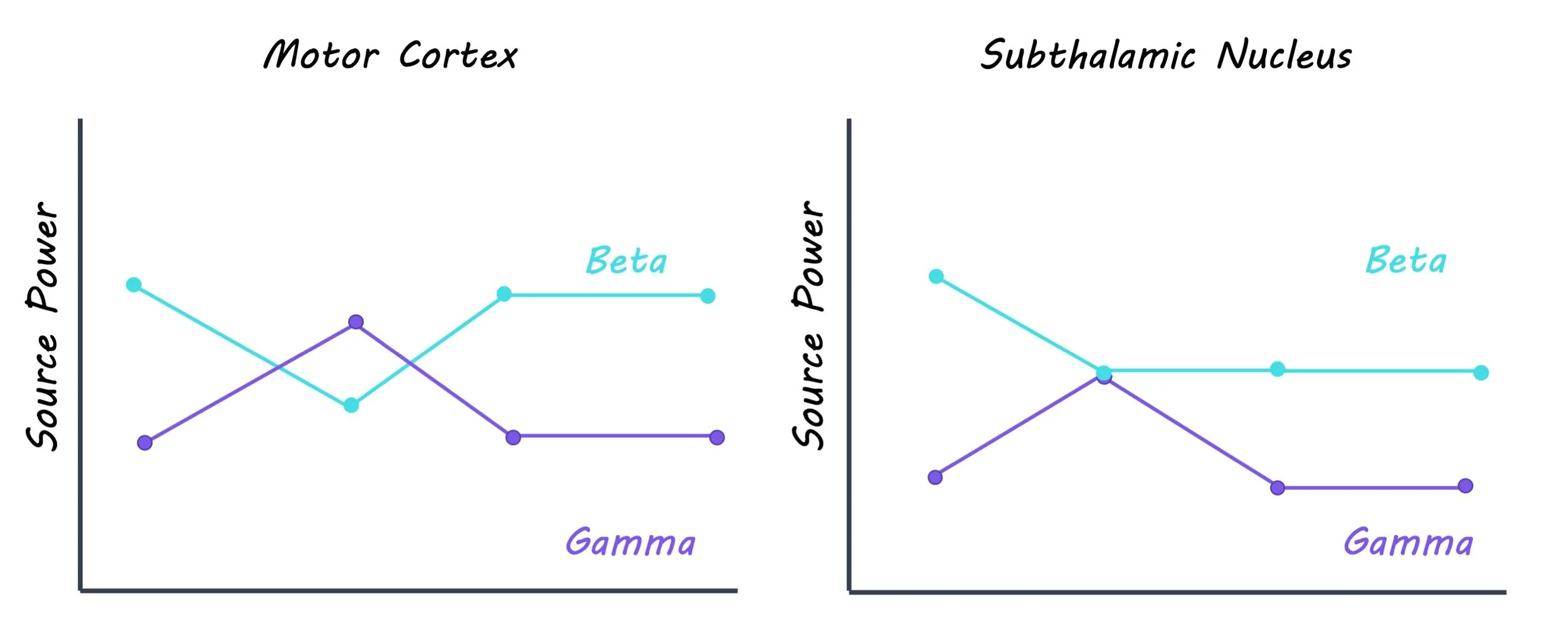
The authors determined that motor impairments were only significantly reduced following clinically effective deep brain stimulation. They found that clinically effective deep brain stimulation also significantly reduced beta power and increased gamma power in cortical regions of the brain that form connections to the basal ganglia. The beta and gamma power for these regions were negatively correlated with one another while the deep brain stimulation was on, but were not significantly correlated when the stimulation was off. Furthermore, the authors observed cross-frequency coupling of gamma oscillations during clinically effective deep brain stimulation in the cortico-basal ganglia brain network. The cross-frequency coupling of gamma oscillations was also shown to be negatively correlated with motor deficits

DBS_image.jpg

What’s the impact?

This study demonstrates that oscillatory activity within the cortico-basal ganglia network is altered following clinically effective deep brain stimulation. The authors showed that alterations in gamma oscillations may play an important role in improving the motor deficits associated with Parkinson’s disease. Together, these findings provide insight into the network-level effects of deep brain stimulation which may be useful in future studies for optimizing treatment for Parkinson’s disease using deep brain stimulation.  

DBS_quote_nov17.jpg

Muthuraman et al. Cross-frequency coupling between gamma oscillations and deep brain stimulation in Parkinson’s disease (2020). Access the original scientific publication here.