Belief Updating in Bipolar Disorder Predicts Relapse

Post by Flora Moujaes

What's the science?

Bipolar disorder affects around 3% of the population and is characterized by periods of mania and depression, interspersed with periods of wellbeing. A key question in bipolar disorder research is whether it is possible to predict when relapse will occur in order to treat patients earlier. One approach to addressing this question is to examine how bipolar disorder patients learn about self-relevant information. We know that healthy individuals update their beliefs more in response to new positive information than negative information. This pattern of learning is often distorted in individuals with mental health disorders. For example, individuals with depression update their beliefs more in response to negative information than positive information, leading to a more pessimistic outlook. This week in Elife, Ossola and colleagues investigate whether it is possible to predict when an individual with bipolar disorder will relapse by examining how they update their beliefs.

How did they do it?

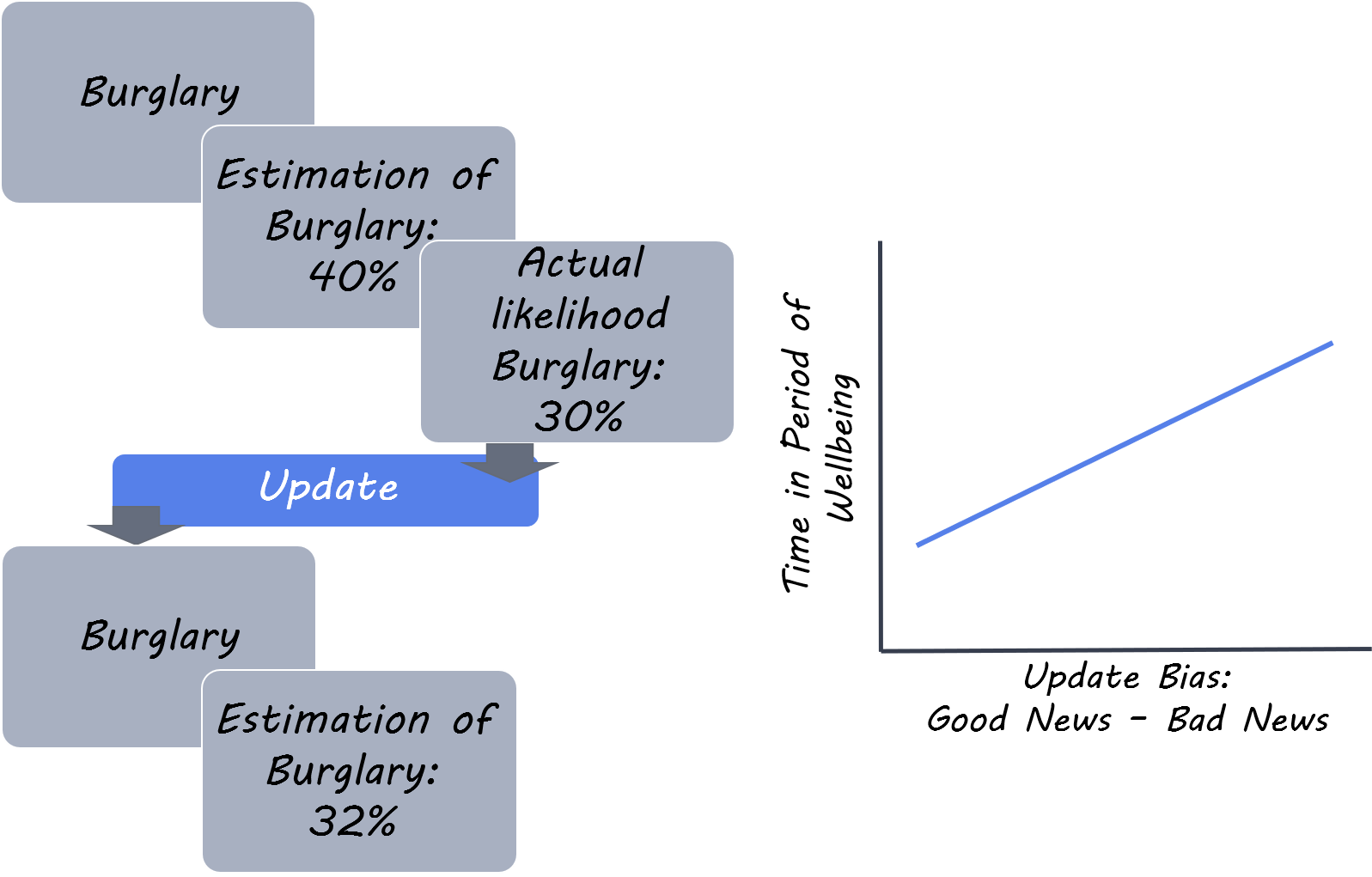
In order to explore whether changes in belief updating could predict relapse in bipolar disorder, 36 individuals diagnosed with bipolar disorder performed a belief-updating task during a period of wellbeing. They were then monitored for symptoms of bipolar disorder every 2 months for the next 5 years. In the task, participants were presented with 40 adverse life events, such as a robbery, and asked to estimate how likely it was to happen to them in the future (first estimate). They were then presented with information about how likely the event was to happen in a demographically similar population. The information provided was either positive (e.g. robberies occur less frequently than the participant estimated in the demographic similar to them) or negative (e.g. robberies occur more frequently than the participant estimated). In a second session, participants were then asked to provide an estimate of how likely the same event was to happen to them (second estimate). By measuring the difference between the first and second estimate, the task is able to capture how participants update their beliefs based on new information. The researchers also controlled for confounding factors such as participants' memory, and their familiarity with the adverse event.

What did they find?

The researchers found that there was an association between belief updating and time to relapse. Participants who were more likely to update their beliefs in response to good news relative to bad news took longer to relapse. Interestingly, the reduction of a positivity bias in belief updating was predictive of both depressive and manic episodes, which is consistent with the clinical observation that stressors are equally likely to trigger episodes of depression and mania. 
flora (1).png

The researchers also showed that change in belief updating was a better predictor of when participants would relapse than traditionally used clinical and demographic indicators such as age, education, gender, medication, duration of illness, and depression score. Finally, they used a machine learning method (leave-one-out validation) to show that including the update bias in their model was crucial in order for the model to predict the time to relapse.

What's the impact?

This is the first study to show that greater belief updating in response to positive information relative to negative information predicts a longer time to relapse in individuals with bipolar disorder. This indicates that biased processing of information in a manner that supports an optimistic outlook is linked to a more favorable course of bipolar disorder, while biased processing of information in a manner that supports a pessimistic outlook may provide a more fruitful environment for clinical symptoms to manifest. Not only is this finding important for understanding the relationship between valence-dependent learning and mood, but it may have wide-reaching clinical implications in terms of developing preventative treatments, the identification of high-risk patients, and developing tools for the early diagnosis of affective disorders.
Ossola_quote.jpg

Ossalo et al. Belief updating in bipolar disorder predicts time of recurrence. Elife (2020). Access the original scientific publication here.
Targeted Activation of Hippocampal Place Cells Drives Behaviour

Post by Cody Walters

What’s the science?

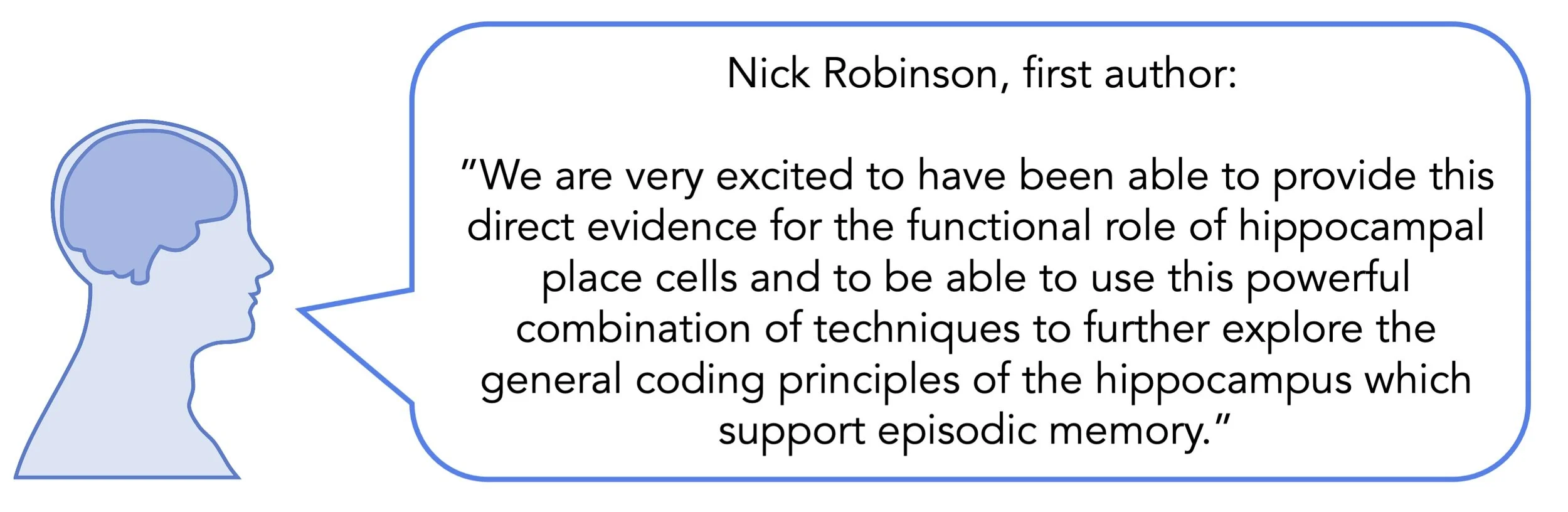
The hippocampus contains neurons that are preferentially active at specific locations in space. The coordinated activity of these hippocampal ‘place cells’ is thought to form a cognitive map that stores spatial information and is used during memory-guided decision-making. While much research has been done correlating place cell activity with spatial memory, there has been comparatively little research examining the causal relationship between place cell activity and behavior. This week in Cell, Robinson et al. provided direct causal evidence that place cell activation can trigger a learned, location-specific behavior.

How did they do it?

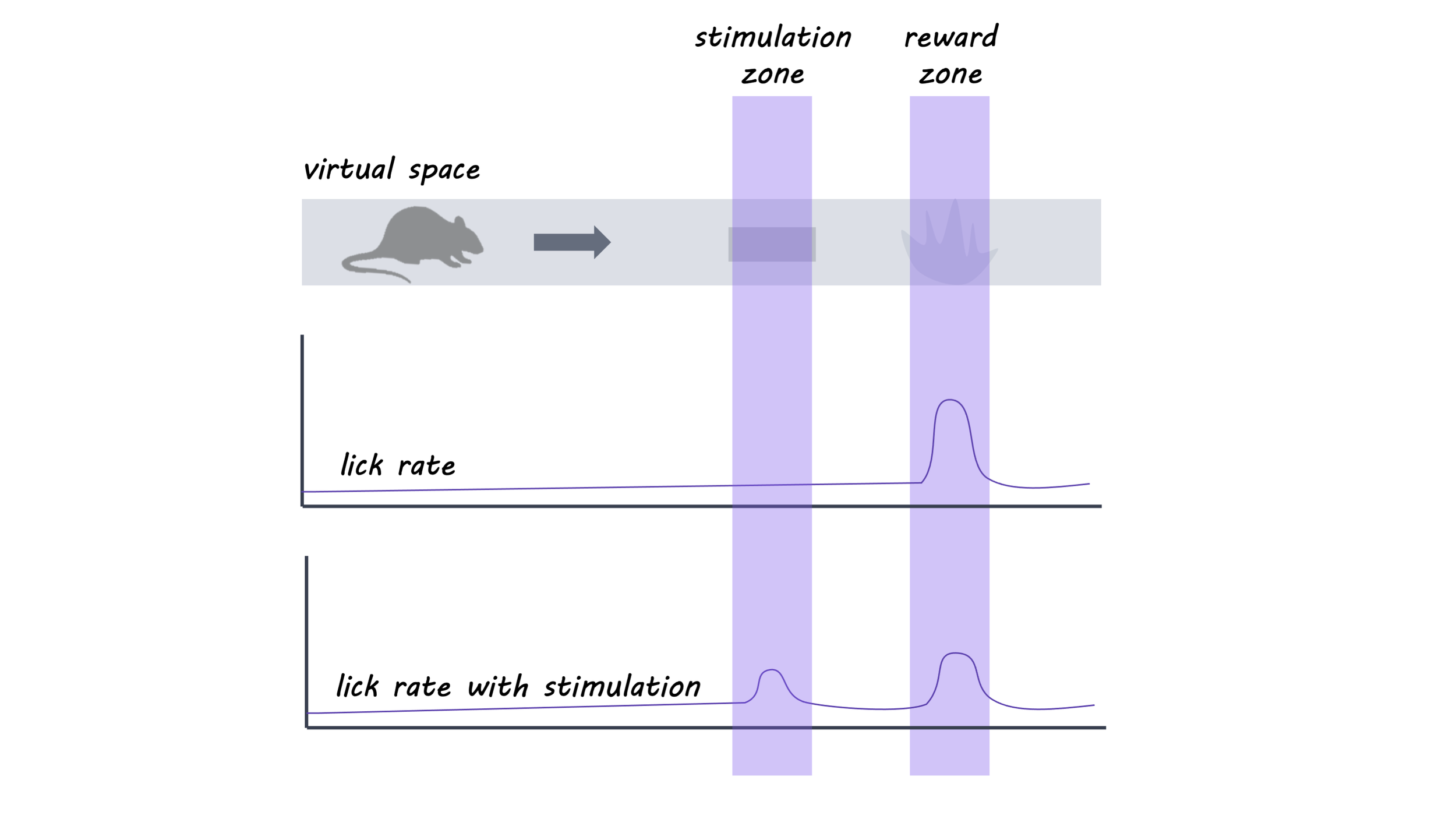
The authors used a virtual reality spatial navigation task in which head-fixed mice navigated a linear track. The authors then used two-photon calcium imaging to measure layer CA1 pyramidal cell calcium fluorescence (a proxy for neuronal firing) and two-photon targeted optogenetics to selectively drive the activity of specific hippocampal neurons. In the virtual reality linear track, mice had to navigate to the reward zone (near the end of the track), remain stationary there for 3 seconds, then lick 3 times in order to receive a sugar-water reward. The virtual environment had an optogenetic stimulation point midway between the start zone and the reward zone. Hippocampal neurons were classified as being either start zone place cells, reward zone place cells, other place cells (corresponding to a position on the track other than the start zone or reward zone), or non-place cells (showing no spatial tuning).

What did they find?

The authors found that reward zone place cell stimulation resulted in an increase in licking behavior at the stimulation point. This result suggests that place cell activation can retrieve a learned behavior associated with the location in space encoded by those place cells. Furthermore, the authors found that the reward zone place cell activation resulted in a progressive deceleration near the stimulation point. On the other hand, start zone place cell activation resulted in reward zone overshoots and more time spent outside the reward zone.

cody_img_nov17.png

Targeted optogenetic stimulation of place cell populations was found to either enhance or suppress calcium activity in non-targeted hippocampal neurons. The authors then demonstrated that the magnitude of suppression was greatest during the start zone place cell and reward zone place cell stimulation conditions (with no observed difference in the magnitude of suppression during non-place cell stimulation relative to the no stimulation condition). This result suggests that place cells might be involved in recruiting inhibitory interneurons to regulate network excitability. Lastly, the authors showed that optogenetic stimulation shifted place fields toward the stimulation point and caused a reduction in reward zone lick rate.

What’s the impact?

This study demonstrates that place cell stimulation can trigger location-specific behavior and cause place field remapping. This study extends our knowledge of the hippocampal cognitive map and its functional significance by providing direct evidence of a causal link between place cell activation and spatial behavior.

Robinson_quote.jpg

Robinson et al. Targeted Activation of Hippocampal Place Cells Drives Memory-Guided Spatial Behavior. Cell. (2020). Access the original scientific publication here.

The Relationship Between Fear and Fun

Post by Anastasia Sares

What's the science?

We usually think of fear as a purely negative emotion to be avoided at all costs, but people often put themselves in fearful situations intentionally, for fun. A child who initiates a game of chase with a caregiver and an adult watching a horror film are both examples of participating in this kind of behavior. However, this thrill is difficult to measure in a laboratory. This week in Psychological Science, Andersen and colleagues showed that fear and enjoyment coexist in a haunted-house experience and that there is a “sweet spot” of maximum enjoyment for each individual when the right level of fear is reached.

How did they do it?

Instead of trying to measure fear and pleasure in a laboratory experiment, the authors gathered their data directly at a haunted-house attraction. Participants were visitors to the attraction that agreed to take part in the study. Heart-rate monitors were attached to participants during the experience and they filled out questionnaires before and after. They also agreed to be videotaped, and independent raters later reviewed the videos to analyze them for signs of surprise, fear, and enjoyment. The heart rate data was split into different frequency bands using low-pass and band-pass filters. These reflected large-scale changes (for example a rise and fall in heart rate over the course of 10+ seconds) and small-scale changes (changes that happened over the course of fewer than 10 seconds). Both large- and small-scale fluctuations in heart rate were compared with the participants’ fear and enjoyment ratings on the questionnaires.

What did they find?

In the questionnaires, participants rated both their fear and enjoyment for three separate jump-scare events and their overall fear and enjoyment for the entire experience. The relationship between fear and enjoyment had an inverted-U shape, with enjoyment peaking when fear was not too little and not too much. The inverted-U shape found in this experiment is also common to other enjoyment- or engagement-related phenomena, like curiosity and music enjoyment. Large-scale fluctuations in heart rate were related to fear: the more fluctuation, the more fear. However, the small-scale fluctuations in heart rate had an inverted-U shape to the enjoyment ratings, indicating that these small-scale fluctuations were related to enjoyment.

Anastasia (1).png

What's the impact?

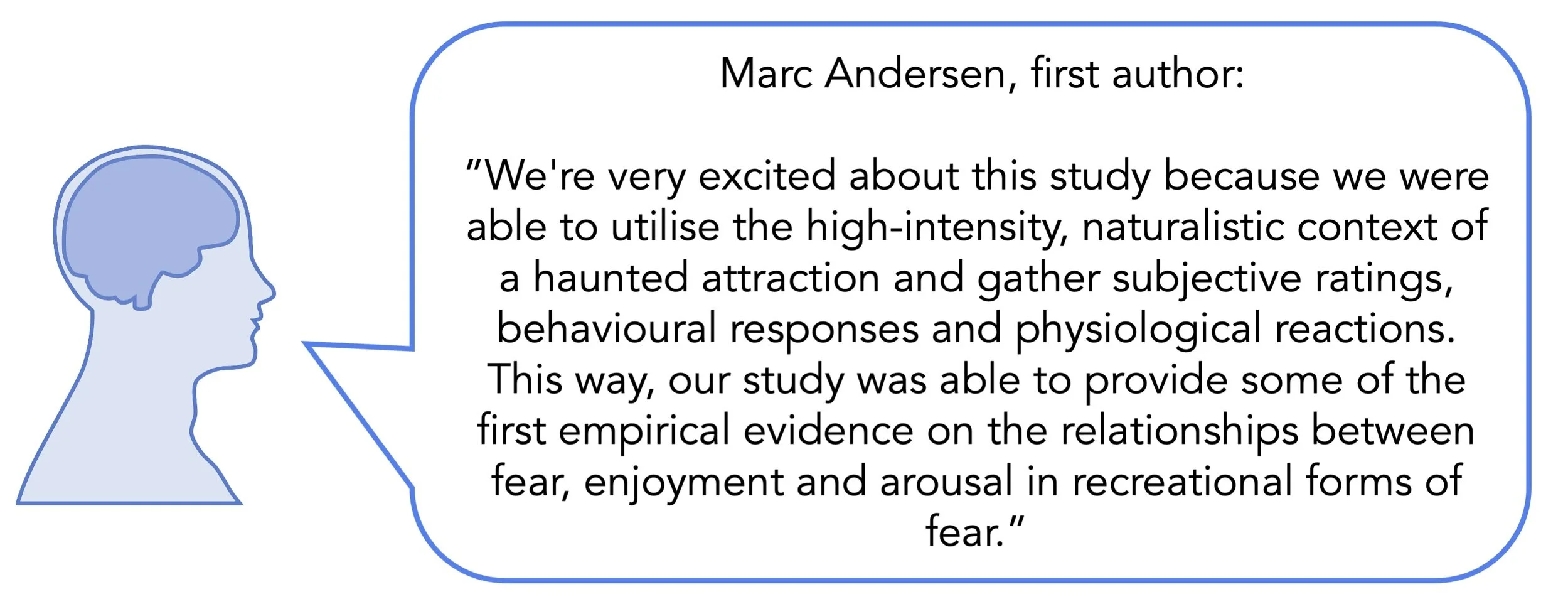
The authors suggest that fear-seeking is a form of play. In other words, it helps us to simulate dangerous situations, learn how to manage our emotions, and react accordingly. This study also demonstrates the value of studies that are performed in a naturalistic environment. Control and consistency are important in experimentation, but sometimes we can gain valuable insights from studies conducted in more naturalistic environments that mimic real-life experiences.

Andersen_quote_nov9.jpg

Andersen et al. Playing with fear: A field study in recreational horror. Psychological Science (2020). Access the original scientific publication here.