
Olfactory Support Cells, Not Primary Neurons, Are Targeted in COVID-19

Post by Lincoln Tracy

What's the science?

The most common neurological symptom of the coronavirus disease 2019 (COVID-19) is the partial or complete loss of smell and/or taste. This finding has resulted in researchers developing simple smell tests (like scratch-and-sniff stickers) that can be used to screen for COVID-19. But how does SARS-CoV-2 (the virus that causes COVID-19) affect the cells and circuits that allow us to smell and taste? This week in Neuron, Cooper and colleagues speculate on the pathophysiological mechanisms of SARS-CoV-2 on the olfactory system.

What do we already know?

Previous research has shown that coronaviruses infect the upper airways and cause the common cold, which is associated with short- and long-term changes in smell and taste. Researchers have proposed several different mechanisms for these changes in smell, including increased mucus production and direct damage to olfactory neurons that detect odors. Damaged olfactory neurons can be replaced over time, which may cause distortions in our sense of smell. However, the history behind the loss of smell associated with COVID-19 suggests that SARS-CoV-2 affects the olfactory system in a different way compared to the less severe and more common coronaviruses. 

What’s new?

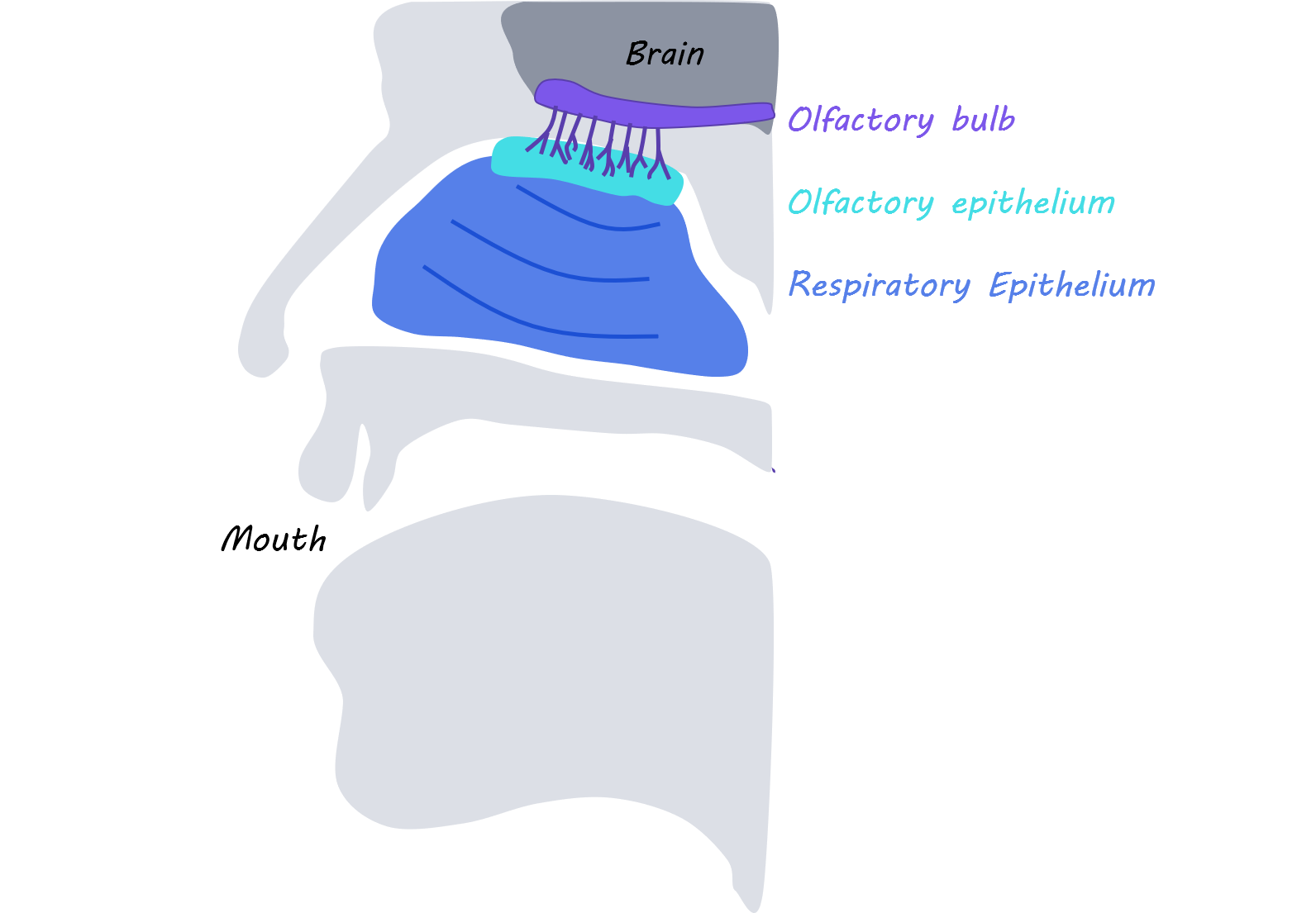
The authors propose that rather than directly infecting olfactory sensory neurons, SARS-CoV-2 impacts our ability to smell by affecting a variety of cells in the olfactory epithelium that houses neurons. Many of the cell types within the olfactory epithelium support and assist olfactory neurons in different ways. First, the cells in the olfactory epithelium may become inflamed. Inflammation of the epithelium may block the nasal clefts or the narrow passages that allow air to reach the epithelium, which prevents us from detecting smells and odors. Second, the inflammation following SARS-CoV-2 infection may cause the release of inflammatory intermediates such as cytokines. Inflammatory intermediates have been reported to reduce the expression of odorant receptors on olfactory neurons. It is the odorant receptors that detect odors that give rise to our sense of smell. Finally, SARS-CoV-2 infecting the support cells may make the microenvironment of the olfactory epithelium detrimental to functioning. For example, Bowman’s glands secrete mucus that is essential for detecting odors. SARS-CoV-2 infection may cause changes in the secreted mucus, meaning that olfactory functioning is inhibited. The result of each of the proposed mechanisms is an indirect interruption of olfactory neuronal function, interfering with our sense of smell and taste.
lincoln.png

What's the bottom line?

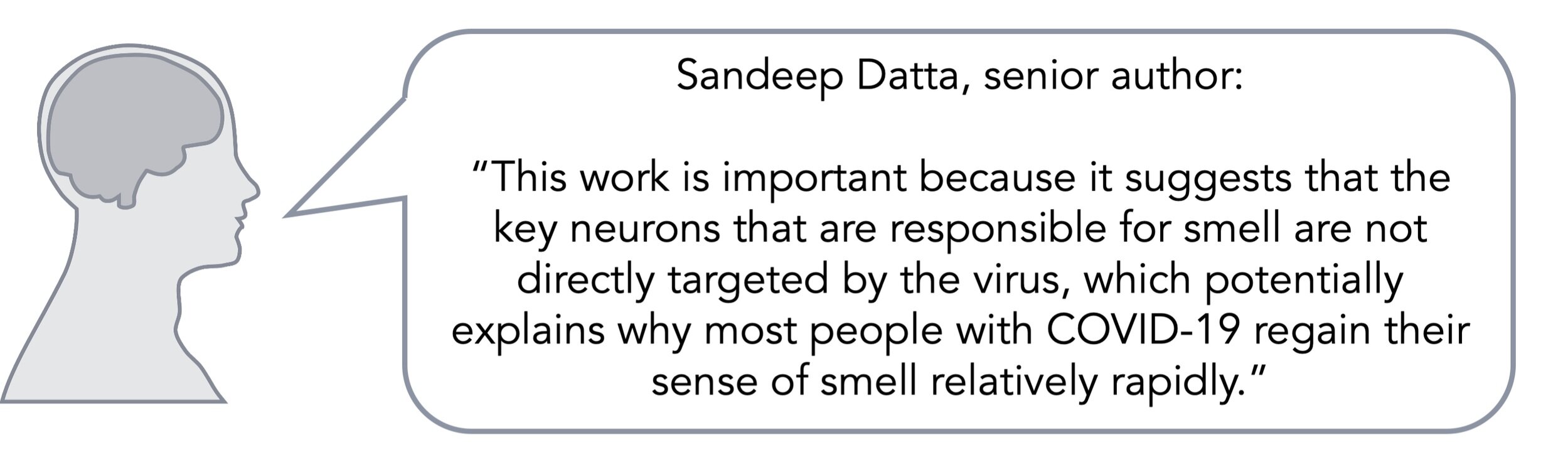
Current evidence suggests that neural function is indirectly altered as a result of SARS-CoV-2 infecting smaller cells that surround and support neurons, rather than the neurons themselves. Cooper and colleagues use COVID-19 to highlight how little we know about the non-neuronal cells and structures that support our ability to taste and smell.  Continuing to study SARS-CoV-2 will help us better understand how viruses can specifically disrupt our senses and more generally affect our neuronal connections. 
Datta_quote_Jul14.jpg

Cooper et al. COVID-19 and the Chemical Senses: Supporting Players Take Center Stage. Neuron (2020). Access the original scientific publication here.

Acute Psychological Stress in Trauma Survivors is Predictive of Post-Traumatic Stress Disorder

Post by Shireen Parimoo

What's the science?

Post-traumatic stress disorder (PTSD) is a psychiatric disorder resulting from a traumatic experience. Symptoms like persistent distress, intrusive thoughts, and flashbacks to the event, among others, can significantly disrupt many aspects of life, such as finding a stable job. People who experience a life-threatening traumatic event are often at risk of developing PTSD. Research shows that self-reported stress and blood biomarkers (e.g., cortisol levels) immediately after trauma are predictive of whether someone is at risk of developing PTSD. However, most hospitals do not screen for PTS symptoms, making it difficult to determine the extent to which psychological stress and physiological factors contribute to the risk of developing PTSD. This week in Nature Medicine, Schultebraucks and colleagues developed and validated an algorithm using medical records and self-reported stress of trauma survivors to predict the trajectory of their PTS symptoms.

How did they do it?

Patients who had experienced a life-threatening traumatic event and were admitted to the emergency department at one of two US hospitals (Grady Memorial, Bellevue Hospital) participated in a prospective longitudinal study. Immediately following the trauma, physiological information like vitals and blood biomarkers were recorded as part of their medical record at the hospitals, along with self-reported measures like immediate stress. These measures were used as predictors to assess the risk of developing PTSD. Following discharge from the hospital, participants’ symptoms were assessed at 1, 3, 6, and 12 months post-trauma using the modified PTSD symptom scale (mPSS; Grady Memorial) or the PTSD checklist (PCL-5; Bellevue). The scores on these scales were used to classify symptoms into categories like non-remitting and resilient. Moreover, although the mPSS and PCL-5 are not diagnostic tools, they can be used for a provisional diagnosis for PTSD based on cut-off scores of 21 and 33, respectively.

The authors developed an algorithm to predict the progression of participants’ PTS symptoms after discharge from Grady Memorial Hospital (the model development sample). They used latent growth mixture models – a statistical technique that accounts for heterogeneity in individual trajectories – to predict symptom trajectory over time. Specifically, the mPSS was used to assess the model’s accuracy in distinguishing between (i) non-remitting symptoms and resilience, and (ii) non-remitting symptoms compared to other symptom categories. They identified predictors that significantly contributed to the model’s diagnostic accuracy and validated the algorithm in the Bellevue participant cohort (the external validation sample). Finally, they developed an algorithm to predict a provisional PTSD diagnosis outcome one year after the traumatic experience. To do this, they trained the algorithm on the development sample and tested it on the validation sample.

shireen (1).png

What did they find?

Nearly a third of the participants received a provisional diagnosis of PTSD one month after the traumatic experience. After 12 months, this percentage dropped to 15.5% and 22% in the Grady Memorial and the Bellevue cohorts, respectively. The model successfully discriminated between non-remitting and resilient trajectories with 83% accuracy in the development sample and 84% accuracy in the validation sample. Self-reported stress, immune markers, and chloride levels were the best predictors of the model’s accuracy. Moreover, the model distinguished between non-remitting and the other symptom trajectories with 96% accuracy, although accuracy dropped to 78% in the validation sample. Lastly, the model predicted a diagnosis of provisional PTSD with 87% accuracy in the validation sample. Altogether, these results demonstrate that self-reported measures of stress are predictive of whether someone will go on to exhibit non-remitting PTS symptoms and might be at risk of being diagnosed with PTSD.

What's the impact?

The authors developed a novel predictive algorithm that uses self-report and medical information collected immediately after a life-threatening traumatic experience to assess the risk of PTSD, which has important implications for performing individualized risk assessment and treatment planning for trauma survivors. In particular, the finding that psychological stress was one of the main predictors of symptom trajectory highlights the importance of collecting self-report measures of stress and PTSD symptoms in trauma centers.

Schultebraucks et al. A validated predictive algorithm of post-traumatic stress course following emergency department admission after a traumatic stressor. Nature Medicine (2020). Access the original scientific publication here.
Two Basal Forebrain Cholinergic Neuron Types Show Distinct Properties

Post by Stephanie Williams

What's the science?

The basal forebrain contains many neurons that release a neurotransmitter called acetylcholine. Collectively, cholinergic (acetylcholine-releasing) neurons have been associated with many different broad cognitive processes, including arousal-regulation, memory, and attention. There is some previous evidence that cholinergic neurons are not a homogenous group, and that there may be subtypes of cholinergic neurons in the basal forebrain that are functionally distinct. This week in Nature Neuroscience, Laszlovszky and colleagues perform both in vivo and in vitro experiments to examine the heterogeneity of cholinergic neurons.

How did they do it?                             

The authors performed a series of electrophysiological and optogenetic experiments in mice performing behavioral tasks (“in vivo”) and in slices of brains that had been extracted from mice (“in vitro”). During the in vivo experiments, the authors recorded from the brains of awake and behaving mice using extracellular tetrodes. Cholinergic neurons were engineered to contain a photosensitive protein called channel rhodopsin that would respond to a particular light, which allowed them to be identified in the basal forebrain. The authors analyzed their recordings to characterize the firing properties of these cholinergic neurons in awake behaving mice. They also used the behavior of mice in conjunction with the in vivo electrophysiological recordings to investigate whether there were distinct subtypes of cholinergic basal forebrain neurons that were linked to behavioral outcomes. They analyzed the activity of cholinergic basal forebrain neurons after reward and punishment to understand if cholinergic neurons signalled information about reinforcements. The authors also recorded from 2 or 3 cholinergic neurons simultaneously to determine whether the cholinergic subtypes showed synchronous activity.  

During the in vitro experiments, the authors wanted to evaluate whether there were two distinct types of basal forebrain cholinergic neurons. They applied current to elicit spikes from cholinergic neurons in basal forebrain slices and measured these using whole-cell patch clamp recordings. The authors used recordings from auditory cortex and from basal forebrain to examine the relationship between basal forebrain cholinergic neurons and cortical activity. They confirmed that the cholinergic neurons were connected to cortical circuits by using a light to activate cholinergic neurons and looking for corresponding activity in cortical areas. They then examined whether the amount of synchrony between basal forebrain cholinergic neurons and auditory cortex was behaviorally significant during an auditory task.

What did they find?

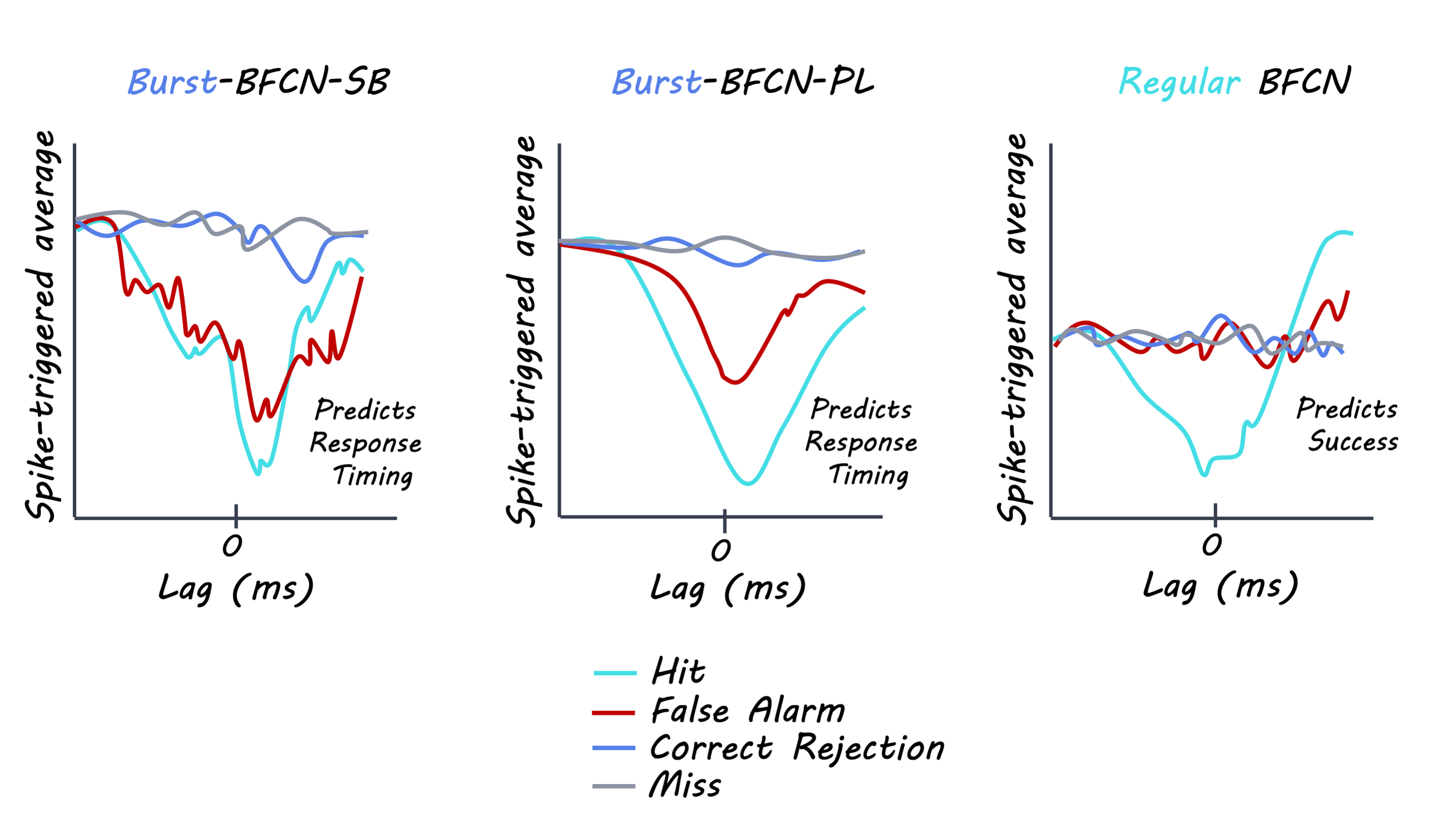
The authors identified two types of cholinergic basal forebrain neurons that showed distinct firing patterns in vivo and in vitro: 1) burst-firing neurons and 2) rhythmic, non-bursting neurons in the posterior basal forebrain. The spiking activity of the burst neurons depended on their membrane potential and the strength of the input to the cell. Sometimes the burst-firing cells fired bursts of discrete action potentials (coined burst-BFCN-SBs), and other times they showed a pattern of spikes with irregular timing between the spikes (coined burst-BFCN-PLs). The bursts of these neurons usually occurred after either administering either water (reward) or an air-puff (punishment), suggesting that the bursting neurons may represent salient stimuli. When the authors compared the activity of cholinergic basal forebrain neurons to the activity of other non-cholinergic basal forebrain neurons, they found that only a small few were capable of the regular rhythmic pattern.

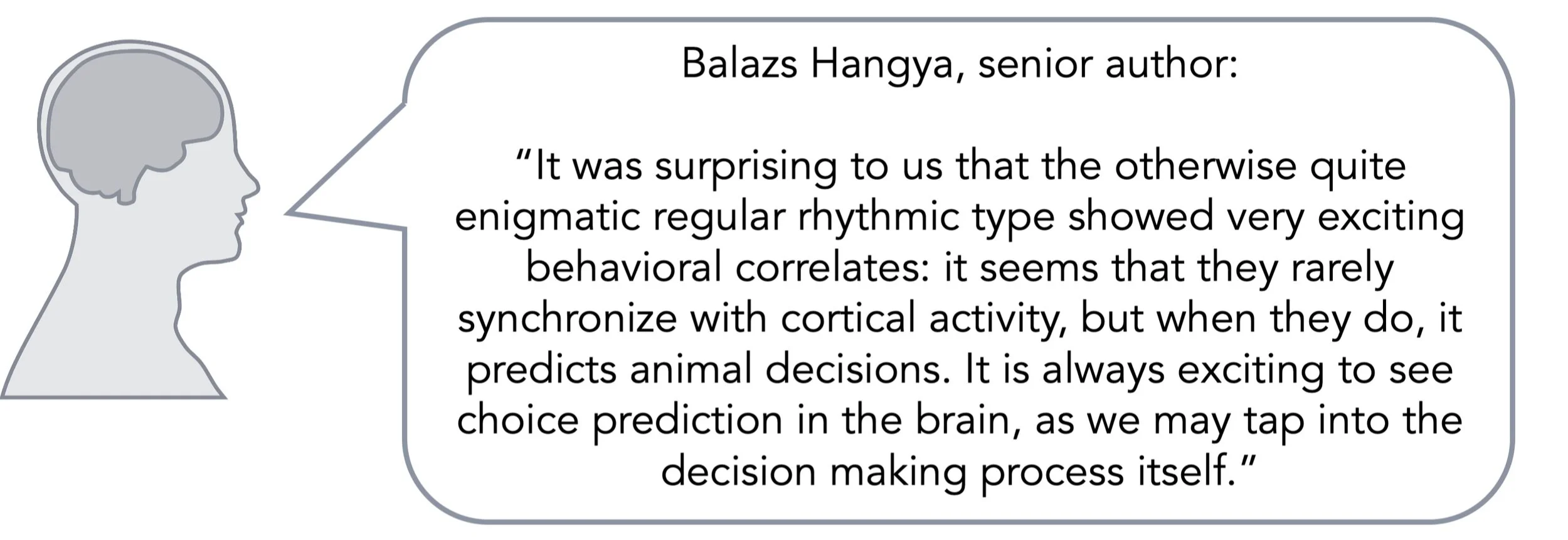
When the authors recorded activity from basal forebrain cholinergic neurons, they found that pairs of bursting basal forebrain neurons often showed synchronous firing (“zero-phase” synchrony). The authors also found that the bursting cholinergic neurons showed synchronization to cortical theta-band oscillations. On the other hand, regular rhythmic basal forebrain neurons did not show strong synchronization to the cortical oscillations, despite the intrinsic theta-rhythmic firing of the rhythmic basal forebrain neurons. They also found that the two subtypes of basal forebrain cholinergic neurons had distinct relationships with behaviour during an auditory task. The synchronization of the bursting neurons with activity in the auditory cortex during the auditory stimulus presentation could predict behavioral response timing (any type of response). Alternatively, the synchronization of regular rhythmic basal forebrain neurons with activity in the auditory cortex was strongest before successful behavior, and predicted correct responses on the auditory task. This finding suggests that the bursting basal forebrain cholinergic neurons may convey unspecific, fast and efficient information.  

BFCN_image_July7.png

What's the impact?

The authors provide clear in vivo and in vitro evidence that there are two basal forebrain cholinergic cell types. They reconcile previous seemingly contradictory evidence by identifying two functionally distinct types of basal forebrain cholinergic neurons, and by characterizing the properties of these two types of neurons.

Hangya_quote_Jul7.jpg

Laszlovszky et al. Distinct synchronization, cortical coupling and behavioral function of two basal forebrain cholinergic neuron types. Nature Neuroscience. (2020). Access the original scientific publication here.