Mild Traumatic Brain Injury Causes Lasting Blood-Brain Barrier Dysfunction

Post by Deborah Joye

What's the science?

Players of contact sports such as American football are at particularly high risk for traumatic brain injury, which occurs when a sudden impact damages the brain. Repeated traumatic brain injury can result in neurodegenerative diseases later in life such as chronic traumatic encephalopathy. The brain’s microvasculature (the many small vessels supplying blood to the brain) can be damaged as a result of a traumatic brain injury. Specifically, dysfunction of the blood-brain barrier, which regulates which molecules can enter the brain, is connected to complications after traumatic brain injury and is also a hallmark of other brain disorders including stroke and epilepsy. To visualize how well the blood-brain barrier is working, researchers can measure how fast a tracer accumulates in the brain. Most previous studies have focused on tracer accumulation that happens very quickly and have seen very few differences. This week in Brain, Veksler and colleagues investigate more subtle blood-brain barrier dysfunction and demonstrate that a specific increase in slow-paced blood-to-brain transport is a hallmark of microvascular pathology that persists long after the initial brain injury.

How did they do it?

First, to test whether blood-brain permeability (leakiness) was different between football players and other groups, the authors performed their modified magnetic resonance imaging (MRI) protocol on 42 football players, and control groups of 27 non-contact sport athletes and 26 non-athletes. After MRI all participants also had blood drawn to test for markers of inflammation, and neuronal or glial injury. To test for changes in blood-brain barrier function over time, football players were scanned both during and after the season. By comparing with healthy brain scans, the authors were able to define the upper limit of “normal” permeability and visualize voxels (like a 3D pixel) where permeability was abnormally high. To test whether blood-brain permeability was associated with abnormalities in white matter, the authors also performed diffusor tensor imaging, which allows visualization of neuronal tracts. To investigate differences between slow and fast blood-to-brain transport, the authors tracked how quickly tracer accumulated in regions of the brain. As an additional comparison group, the authors also performed MRI scans in 51 patients with brain disorders that are known to include blood-brain barrier dysfunction (e.g. tumour, stroke). Finally, to test that brain injury through trauma or vascular injury is causal in blood-brain barrier leakiness, the authors repeated their experiments using both rat and mouse models. The authors performed modified MRI scans on both rat and mouse models of repetitive mild traumatic brain injury, as well as rat models of vascular injury and stroke.

What did they find?

The authors found that compared to healthy controls, football players had a much higher percentage of brain volume with abnormally high blood-brain barrier permeability. Increased leakiness was consistent across scans both during and after the season (roughly 6 months later). Some players showed a gradual decrease in abnormal permeability over time, while the other players actually showed an increase in permeability. An increase in blood-brain barrier dysfunction was associated with age, but not with number of concussions, years playing football, or scores on a concussion assessment test. The authors also found that certain regions of the brain were particularly susceptible to blood-brain barrier dysfunction, including the left temporal and occipital lobes (involved in understanding auditory and visual signals, respectively), the thalamus (an important relay for sensory information), the basal ganglia (important for movement), and white matter tracts (neuron tracts that connect different brain regions).
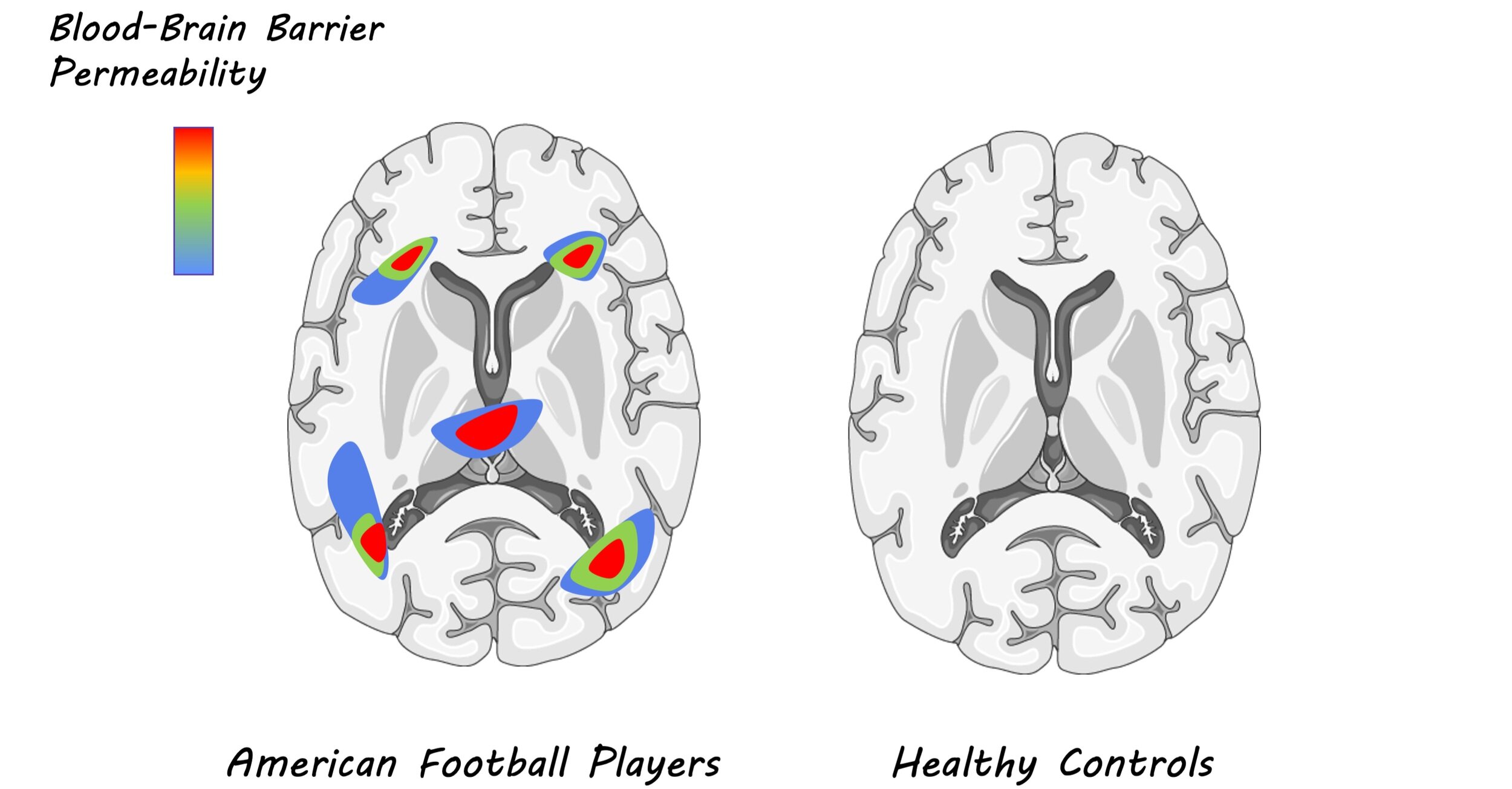
BBB_image_Jun9.jpg

The authors also found that white matter tracts amongst football players showed abnormalities compared to healthy controls. These abnormalities were localized to thalamic radiations (connect the thalamus to the cortex), the corpus callosum (connects the two hemispheres of the brain), and two other long-range tracts which connect multiple brain regions (the inferior fronto-occipital fasciculus and the inferior longitudinal fasciculus). Importantly, measures of blood-based biomarkers for inflammation or glial/neuronal injury were not different between healthy controls and players, suggesting that measures of blood-brain permeability may detect damage that other assessments do not. The authors repeated their experiments in both rat and mouse models of mild traumatic brain injury, vascular damage, and stroke, and found that brain tissue around the core injury site displayed persistent slow transport blood-brain barrier dysfunction.

What's the impact?

This work is the first to use human brain imaging to distinguish between fast and slow leakage through a dysfunctional blood-brain barrier. These data also provide evidence, for the first time, that some football players show evidence of blood-brain dysfunction that lasts for months after the initial injury. Given the place of contact sports such as American football in society and the prevalence of players in many different age groups, understanding the consequences of repetitive traumatic brain injury is critical to developing better treatments and health outcomes. 
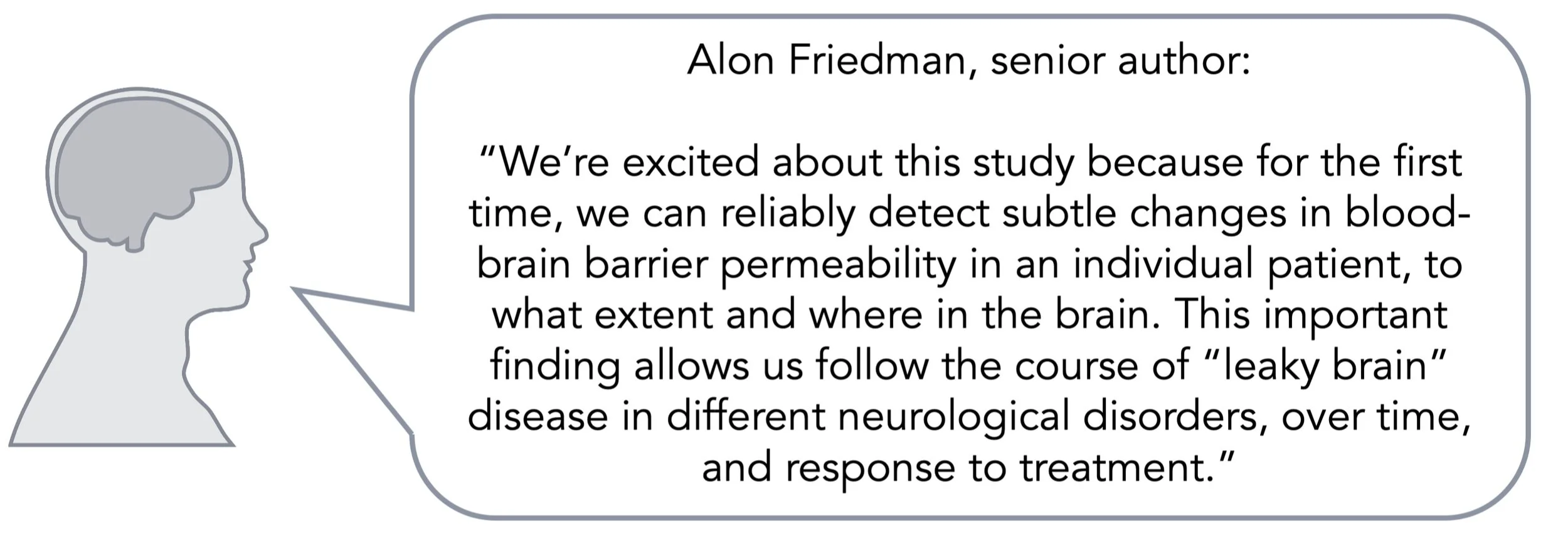
Friedman_Quote_Jun9.jpg

Veksler et al., Slow blood-to-brain transport underlies enduring barrier dysfunction in American football players, Brain (2020). Access the original scientific publication here.
Glutamate and Psychedelic-Induced Positive vs. Negative Ego Dissolution Experiences

Post by Flora Moujaes

What's the science?

Psilocybin is a classical psychedelic that can temporarily induce altered states of consciousness, such as ego dissolution. Ego dissolution is characterized by a reduction in awareness of the self and can be both a positive and a negative experience. Recently, researchers have begun to focus on how psilocybin may be used clinically to help with disorders that involve distortions of self-experience, such as depression. But how does psilocybin act on the brain to create these experiences? We know that once psilocybin is ingested, it is quickly metabolized to psilocin, which then acts on serotonin receptors in the brain. There is also accumulating evidence to suggest that this serotonin receptor activation leads to an increase in glutamate (an excitatory neurotransmitter) release, but to date no study has directly investigated how psilocybin administration relates to brain glutamate levels in humans. This week in Neuropsychopharmacology, Mason and colleagues used magnetic resonance spectroscopy (MRS) to investigate for the first time how psilocybin affects glutamate levels in the brain, and how this relates to the experience of ego dissolution.

How did they do it? 

To explore how psilocybin influences glutamate levels in the brain and the experience of ego dissolution, the researchers administered a low dose of psilocybin (0.17 mg/kg) to 60 participants in a randomized, double-blind, placebo-controlled study. They then conducted two main analyses: (1) Researchers first assessed the influence of psilocybin on glutamate levels in the brain using magnetic resonance spectroscopy (MRS), which can measure the levels of glutamate in specific brain regions. Based on prior literature on psychedelics, they chose to focus on two regions: the medial prefrontal cortex and the hippocampus. (2) The researchers also investigated the association between glutamate levels and the experience of ego dissolution.

What did they find?

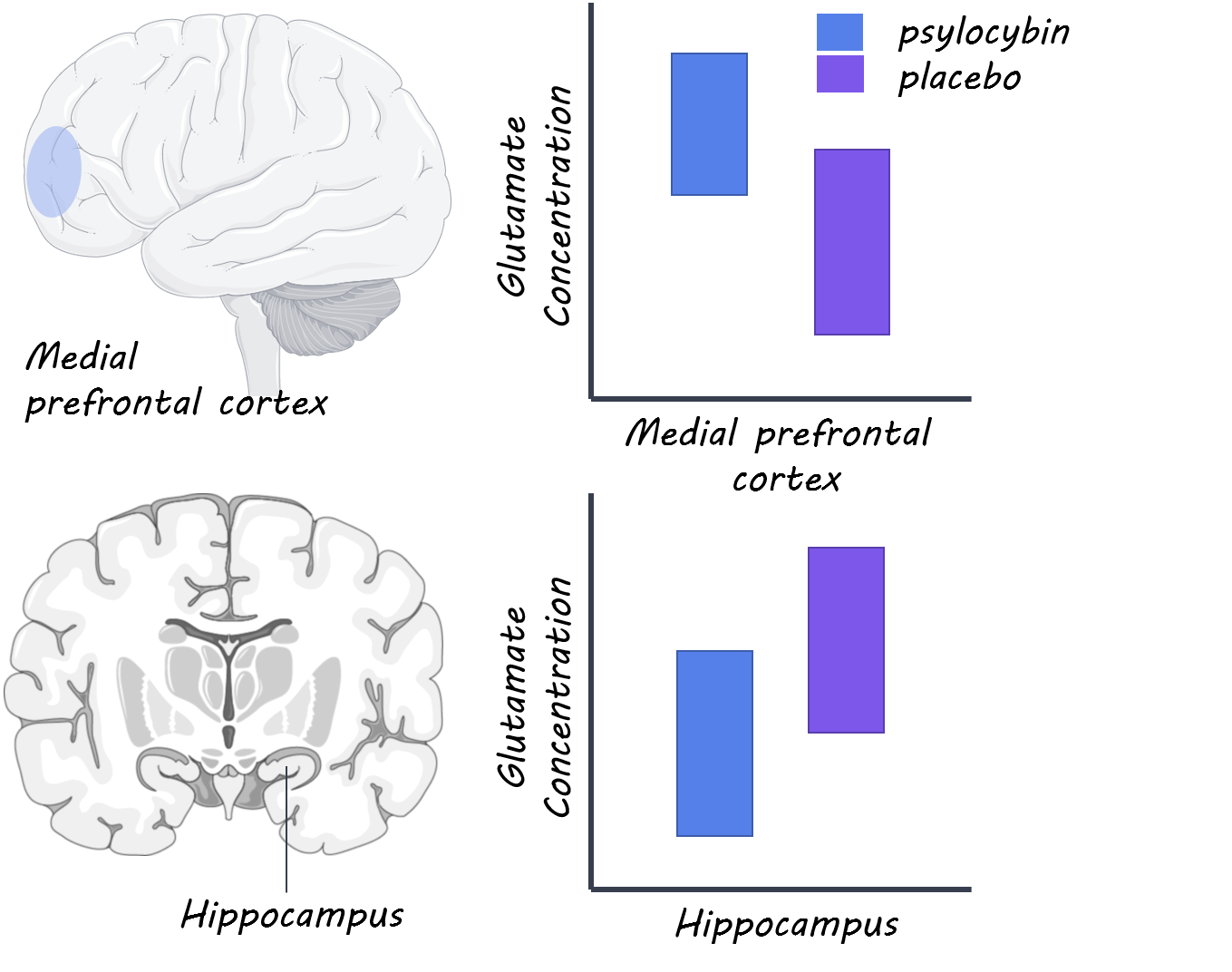
The researchers found that as predicted, psilocybin induced region-dependent alterations in glutamate: following psilocybin administration, glutamate levels in the medial prefrontal cortex increased, while glutamate levels in the hippocampus decreased.  They also found that glutamate alterations in certain regions predicted positive and negative experiences of ego dissolution. (1) Higher levels of medial prefrontal cortex glutamate were associated with negatively experienced ego dissolution. This may help explain the paradoxical effect of psilocybin: administered acutely to healthy controls it has been found to increase feelings of anxiety, but in clinical trials, the administration of psilocybin has been shown to result in long-term anxiety relief for patients. (2) Lower levels of hippocampal glutamate were associated with positively experienced ego dissolution. This finding provides support for the theory that ego dissolution is caused by a temporary loss of access to autobiographical memory, as the hippocampus plays a key role in memory. 

flora_pic.png

What's the impact?

This study is the first to directly assess the effect of psilocybin on glutamate levels in humans. The main finding is that psilocybin-induced changes in glutamate are region-dependent, as psilocybin resulted in increased glutamate in the medial prefrontal cortex and decreased glutamate in the hippocampus. These glutamate changes were related to the type of ego dissolution experienced, as changes in medial prefrontal cortex glutamate were the strongest predictor of negatively experienced ego dissolution, while changes in hippocampal glutamate were the strongest predictor of positively experienced ego dissolution. These insights enhance our understanding of the neurobiological mechanisms underlying psychedelic-induced experiences and may inform ongoing clinical trials exploring the therapeutic effects of psychedelics on disorders that involve distortions of self-experience, such as depression.

Mason_Quote_Jun9.jpg

Mason et al. Me, myself, bye: regional alterations in glutamate and the experience of ego dissolution with psilocybin. Neuropsychopharmacology (2020). Access the original scientific publication here.
Confidence Clouds Evidence-Based Decision Making

Post by Elisa Guma

What's the science?

Confirmation bias is the tendency to search for, interpret, or favour information that confirms or supports one’s prior beliefs. This type of cognitive bias is most evident when opposing parties are very confident in their beliefs and it can have a significant impact on societal functioning by further polarizing beliefs. It can be most troubling when the evidence against one’s position is selectively disregarded. This week in Nature Communications, Rollwage and colleagues sought to investigate the underlying cognitive, computational, and neuronal mechanisms underlying confirmation bias, as they are poorly understood.

How did they do it?

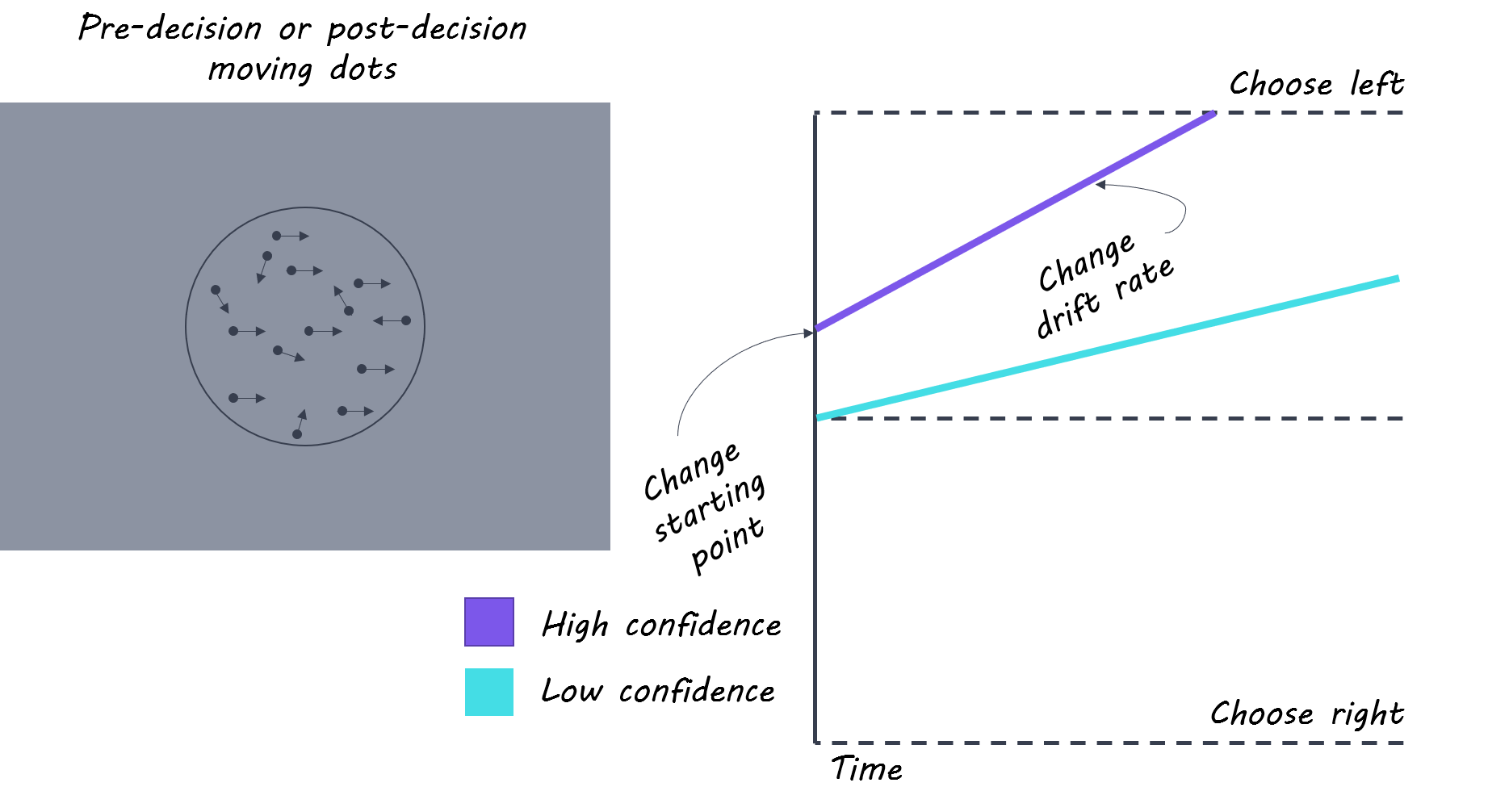
In order to investigate the mechanisms underlying confirmation bias, the authors applied theoretical models to data collected while participants performed a behavioural task and magnetoencephalography (MEG) recordings of brain activity were taken. During the task, participants were shown a series of randomly moving dots (‘pre-decision evidence’) and indicated using arrow keys whether the majority of the dots were moving towards the left or the right of the screen (‘initial decision’) and how confident they were. Reaction time to key press was measured. Next, participants were presented with ‘post-decision evidence’: a second set of moving dots in which the majority of dots were moving in the same direction as the pre-decision evidence. In order to manipulate participants’ confidence without altering reaction times, participants were presented with two conditions for the post-decision evidence; a high positive evidence condition in which the proportion of dots moving in the incorrect direction was 15%, and the dots moving in the correct direction was higher than 15%, or a low positive evidence condition in which only 5% of dots were moving in the incorrect direction, but dots moving in the correct direction were also less than in the high positive evidence condition.  At the end of each trial, participants provided their final decision and another confidence rating. 

The authors hypothesized that confidence would reduce the frequency of participants changing their minds by promoting a bias towards the processing of confirmatory post-decision evidence. To further probe this behaviour, the authors modeled behavioural data using an analysis technique common in decision making studies (drift-diffusion modeling) to test whether there was a drift in response to post-decisional evidence based on selective accumulation of evidence in line with the participant’s initial decision, and how confidence affected this drift rate from the initial decision. This type of modeling allowed the authors to make indirect inferences about how confidence affects evidence accumulation, so they turned to their time-resolved MEG data. They trained a support vector machine classifier (machine learning model) to predict which choice was made on each trial using brain activity in the pre-decision window. The trained classifier was then applied to brain activity in the post-decision window to predict the probability of neural evidence favouring one decision over another.

What did they find?

The authors observed that participants who received a stronger confidence boost from the positive evidence (high positive evidence condition) presented to them in the task showed a greater reduction in changes of mind, independent of the accuracy or reaction time in their responses. This evidence confirmed the authors’ first hypothesis; that confidence is a critical driver of changes of mind. Next, the authors fit the accuracy and reaction time data using theoretical (drift diffusion) modeling. The model with the best fit indicated that when they were highly confident in their choice, participants started the accumulation of evidence process closer to the bound of their initial decision. Further, participants selectively accumulated evidence supporting their initial choice faster (a faster ‘draft rate’) when they were more confident in their choice.

Elisa_picture.png

The influence of confidence on drift rate is clear evidence for confirmation bias. Based on their modeling of the MEG data, the authors observed that there was a confidence-induced confirmation bias driven by selective accumulation of choice-consistent information wherein high confidence leads to an amplified neural response to confirmatory evidence and a blunted response to contradictory evidence. Further, they found that centro-parietal MEG sensors contributed most strongly to the individual’s decision-making activity.

What's the impact?

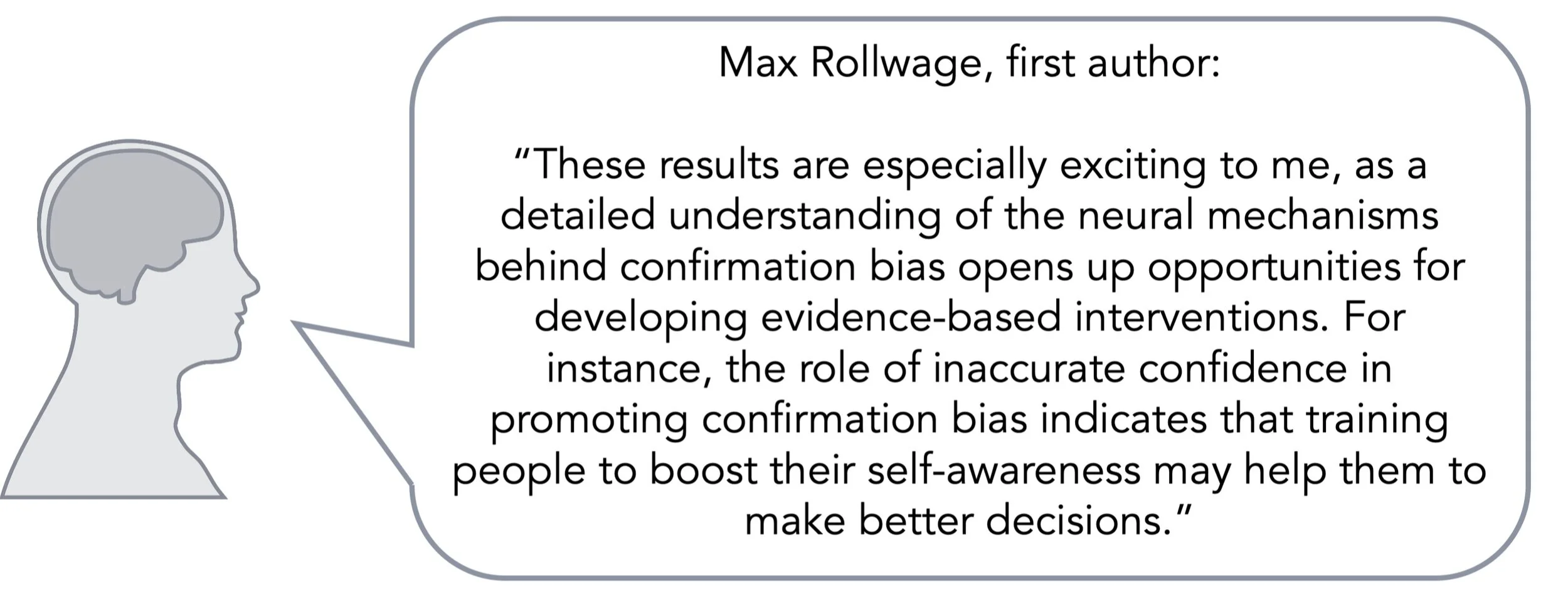
By combining behavioural and neural modeling, this study provides experimental evidence to suggest that high confidence in a decision leads to behavioural confirmation bias and has striking effects on the way our brain processes post-decision evidence. Since the authors observed such biases in a low-level perceptual task, it may suggest that this bias is a core principle of neural information processing. However, most real-world decisions have added motivational, emotional, and social influences that may amplify, or change the way in which confidence affects the processing of post-decisional evidence. Insights gained here may be applied to better understand the drivers of polarization across a range of societal issues.

Rollwage_quote_Jun2.jpg

Rollwage et al. Confidence drives neural confirmation bias. Nature Communications (2020). Access the original scientific publication here.