
Breakdown of Blood-Brain Barrier in APOE4 Carriers is Associated with Cognitive Decline

Post by Amanda McFarlan  

What's the science?

Apolipoprotein E (APOE) is a protein in the body that is important for the metabolism of fats. The E4 variant of this protein (APOE4) is known to be implicated in Alzheimer’s disease and is associated with an increased breakdown of the blood-brain barrier, a semipermeable border that controls which solutes and molecules can pass from the blood into the brain. However, it is still unknown how APOE4 contributes to the memory decline that occurs with Alzheimer’s disease. This week in Nature, Montagne and colleagues investigated the role of the APOE4 gene in blood-brain barrier breakdown and cognitive decline.

How did they do it?

The authors used dynamic contrast-enhanced magnetic resonance imaging to analyze and compare blood-brain barrier permeability in 245 cognitively normal patients who were carriers of either the APOE4 gene (associated with disease states like Alzheimer’s) or the APOE3 gene (considered to confer lower risk for Alzheimer’s). Then, the authors used positron emission tomography to investigate whether the accumulation of Aβ and tau (proteins associated with Alzheimer’s disease) in the brain contributes to the breakdown of the blood-brain barrier in APOE4 carriers compared to APOE3 carriers. They analyzed the uptake of Aβ and tau tracers in four major regions of interest: the hippocampus, the parahippocampal gyrus, the orbitofrontal cortex and the inferior temporal gyrus. Next, the authors investigated whether high levels of soluble platelet-derived growth factor receptor-β in the cerebrospinal fluid, which is known to be associated with blood-brain barrier breakdown and cognitive dysfunction, contributed to APOE4-associated blood-brain barrier permeability. They grouped patients based on whether they had high or low levels of soluble platelet-derived growth factor receptor-β in their cerebrospinal fluid. All patients received a baseline cognitive assessment that was repeated every 2 years for up to 4.5 years. Finally, the proinflammatory cyclophilin A–matrix metalloproteinase-9 pathway has been previously shown to mediate the breakdown of the blood-brain barrier in APOE4, but not APOE3, knock-in mice. Therefore, the authors explored the role of this pathway in APOE4-associated blood-brain barrier permeability and cognitive decline in humans by measuring levels of cyclophilin A and matrix metalloproteinase-9 in cerebrospinal fluid as well as cognitive impairment in APOE4 and APOE3 carriers. 

What did they find?

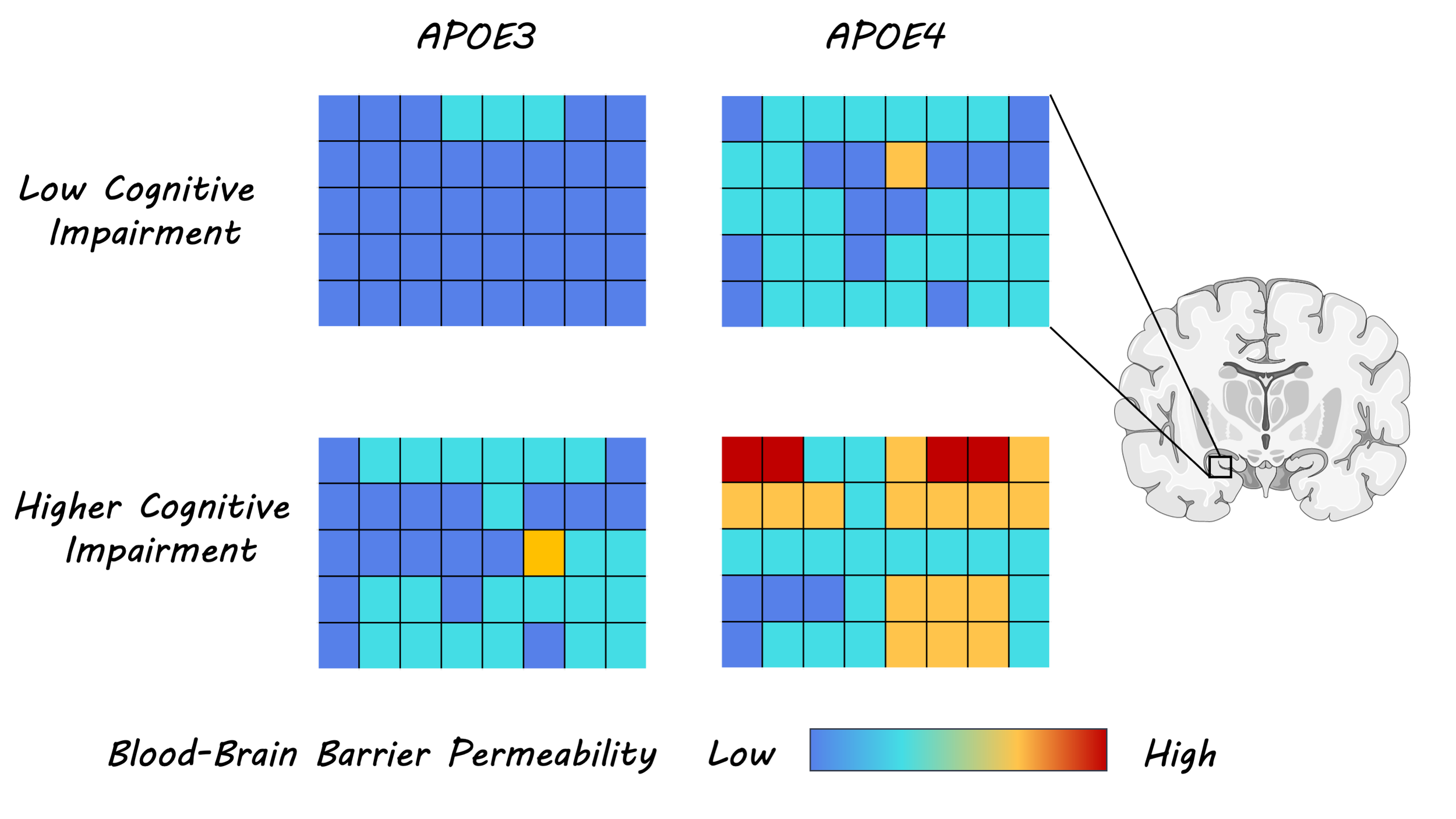
The authors determined that cognitively normal patients who were carriers of the APOE4 gene had higher levels of blood-brain barrier breakdown in the hippocampus and parahippocampal gyrus compared to homozygote carriers of the APOE3 gene. This permeability was shown to increase even further with cognitive impairment in APOE4 carriers, but not APOE3 carriers. APOE4 carriers also had significantly higher levels of accumulated Aβ, but not tau, in the orbital frontal cortex compared to APOE3 carriers. The orbital frontal cortex, however, did not show any evidence of increased blood-brain barrier permeability. Conversely, there was no difference in Aβ or tau levels in the hippocampus, parahippocampal gyrus, or inferior temporal gyrus between carriers of the APOE4 gene and APOE3 gene despite evidence for blood-brain barrier breakdown in APOE4 carriers. Together, these findings suggest that the breakdown of the blood-brain barrier in APOE4 carriers begins in the temporal lobe (a brain region important for memory and cognition) and is independent of Aβ and tau pathology.
apoe4_may12.png

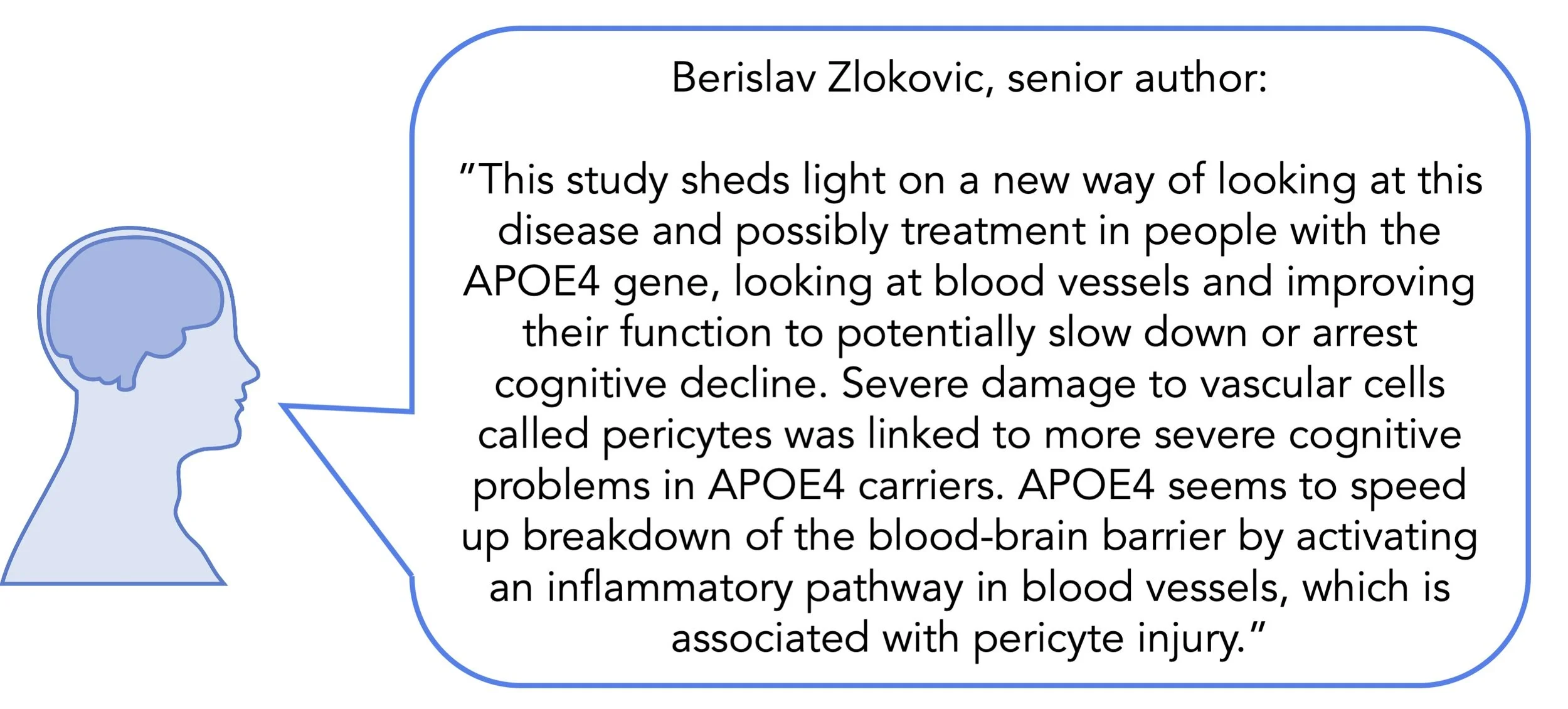
Next, the authors revealed that patients with higher levels of soluble platelet-derived growth factor receptor-β in their cerebrospinal fluid at baseline showed an accelerated cognitive decline compared to patients with lower levels. Moreover, they found that higher levels of soluble platelet-derived growth factor receptor-β in APOE4 carriers, but not APOE3 carriers were a consistent predictor of cognitive decline. Finally, the authors determined that APOE4 carriers had increased levels of cyclophilin A and matrix metalloproteinase-9 that were correlated with cognitive impairment. Together, these findings suggest that the breakdown of the blood-brain barrier in carriers of the APOE4 gene contributes to cognitive decline. 

What’s the impact?

This is the first study to show that increased permeability in the blood-brain barrier in APOE4 carriers is associated with cognitive decline that occurs independently of amyloid and tau pathologies. Furthermore, the authors found that baseline levels of soluble platelet-derived growth factor receptor-β in cerebrospinal fluid could be used as a predictor of cognitive decline in APOE4 carriers. Together, these findings highlight the impact of blood-brain barrier breakdown on cognitive decline and provide insight into possible therapeutic targets that may minimize this breakdown in APOE4 carriers.
Zlokovic_May12.jpg

Montagne et al. APOE4 leads to blood-brain barrier dysfunction predicting cognitive decline. Nature (2020). Access the original scientific publication here.
A New Method for Assessing Stroke Recovery

Post by Anastasia Sares

What's the science?

Stroke is a serious brain injury caused by the blockage or bursting of blood vessels that normally carry oxygen to the brain. This leads to the death of some neurons, which affects the ability of the brain to function. For example, many stroke patients have movement and speech-related difficulties. However, the brain does have the ability to “bounce back” somewhat from a stroke, reconfiguring itself so that lost functions are regained. Doctors aren’t able to fully predict how much an individual will recover, as recovery depends on a number of factors. This week in Brain, Tscherpel and colleagues demonstrate how a combination of transcranial magnetic stimulation (TMS) and electroencephalography (EEG) can be used to reveal a patient’s potential for motor recovery.

How did they do it?

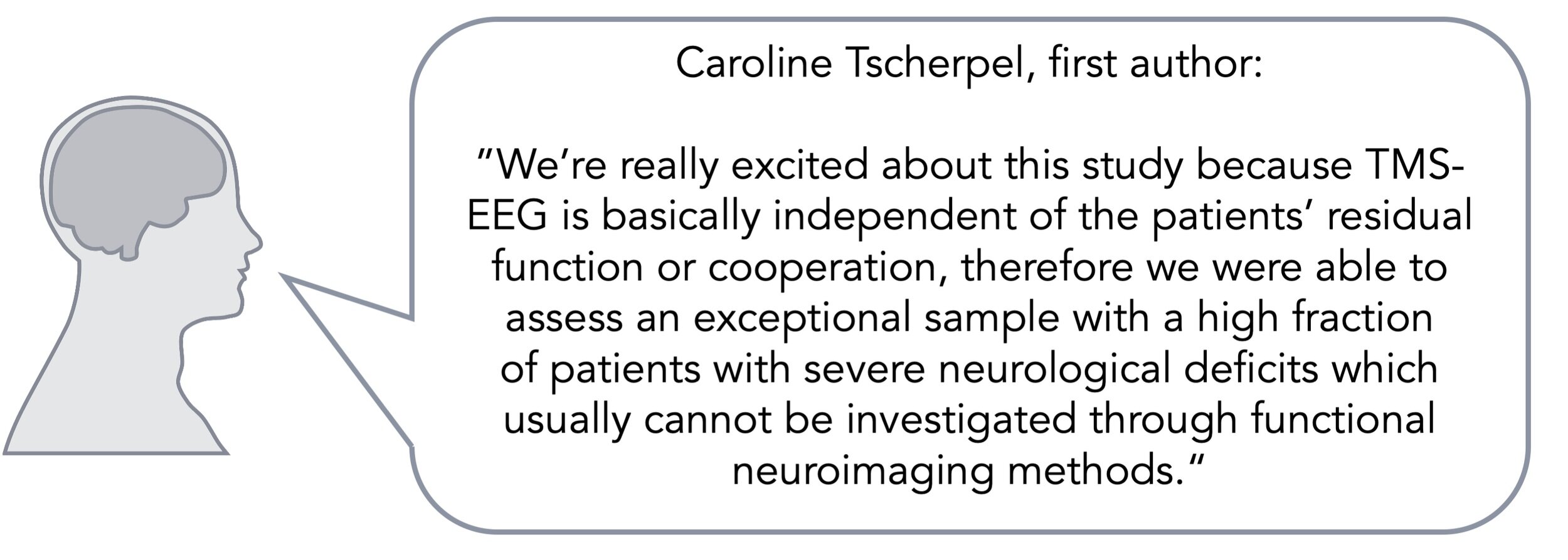
Transcranial magnetic stimulation, or TMS, involves stimulating the brain by using quick magnetic pulses applied to the scalp. The magnetic pulse interferes with the electrical signaling of the neurons, causing some neurons to fire while inhibiting others. Electroencephalography, or EEG, is a technique to measure the electrical signals coming from the brain. By combining TMS and EEG, we can deliver magnetic pulses to a brain area (the motor cortex, in this case) and also measure how the brain responds to that stimulation. The authors used this technique on a group of stroke patients with different levels of severity and compared them with healthy volunteers of the same age range. They evaluated them within the first two weeks of their stroke and followed up about 3 months afterward in order to track their recovery.

What did they find?

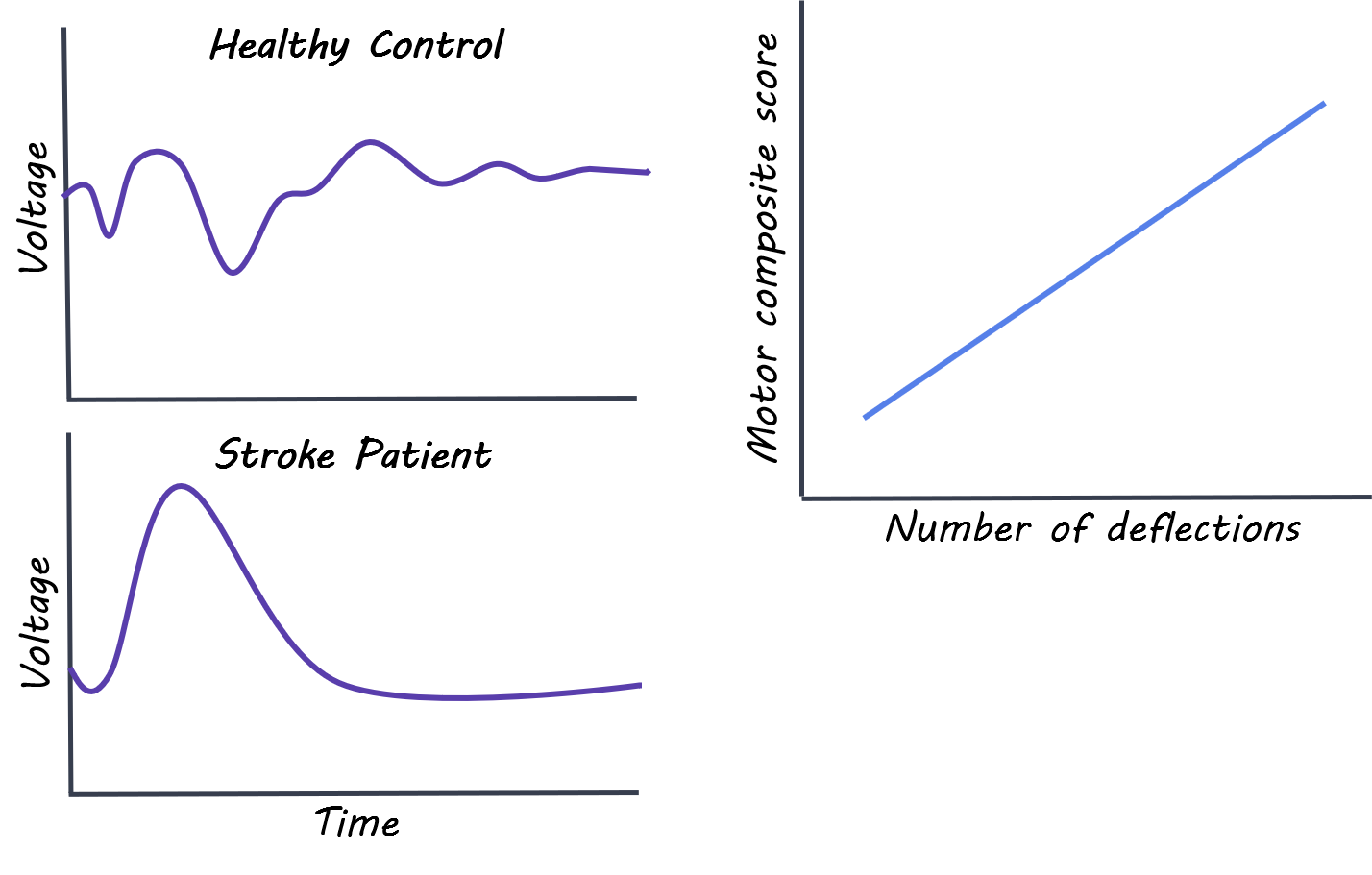
The healthy volunteers with no stroke showed “a sequence of positive and negative deflections” in response to the TMS stimulation, much like ripples. In contrast, some of the stroke patients showed fewer ripples, with the most extreme cases having only one single larger peak of activity. Features of the electrical response were correlated with the patients’ severity at the first visit and also with recovery at the next visit (note that recovery did not depend on the initial severity of the stroke). By looking at the patients’ brain structure, the authors also determined that these abnormalities in the electrical response were related to deep brain structures and white matter, not the neurons in the motor cortex. This indicates that recovery may depend on white matter connections between different regions. 

Anastasia_Image.png

What's the impact?

Doctors have existing tools that can measure the severity of a stroke (motor-evoked potentials, for example), and predict recovery to some extent. However, these tools cannot fully predict recovery, especially for those with severe strokes. TMS and EEG are less expensive than other brain imaging techniques like MRI or PET, so this technique warrants further investigation for tracking stroke recovery in a clinical setting.

TMS_EEG_May12.jpg

Tscherpel et al. Brain responsivity provides an individual readout for motor recovery after stroke. Brain (2020). Access the original scientific publication here.
Brain Synchronization During Inter-Group Hostility

Post by D. Chloe Chung

What's the science?

When we belong to a certain group of people who share similar thoughts or goals with us, we feel safe and work together to accomplish things as a group that we could have not achieved on our own. Despite this benefit, such group mentality and behavior can also lead to negative situations as it can reduce our sense of individuality, prompting us to act in a riskier way, and amplifying hostility towards opponent groups. Previous studies have shown that neural activity of specific brain areas can be synchronized across people who experience collective thinking and group behavior, but this idea has not been tested in the context of group-level hostility. This week in Nature Neuroscience, Yang and colleagues used a non-invasive imaging technique to investigate the neural mechanism underlying inter-group hostility.

How did they do it?

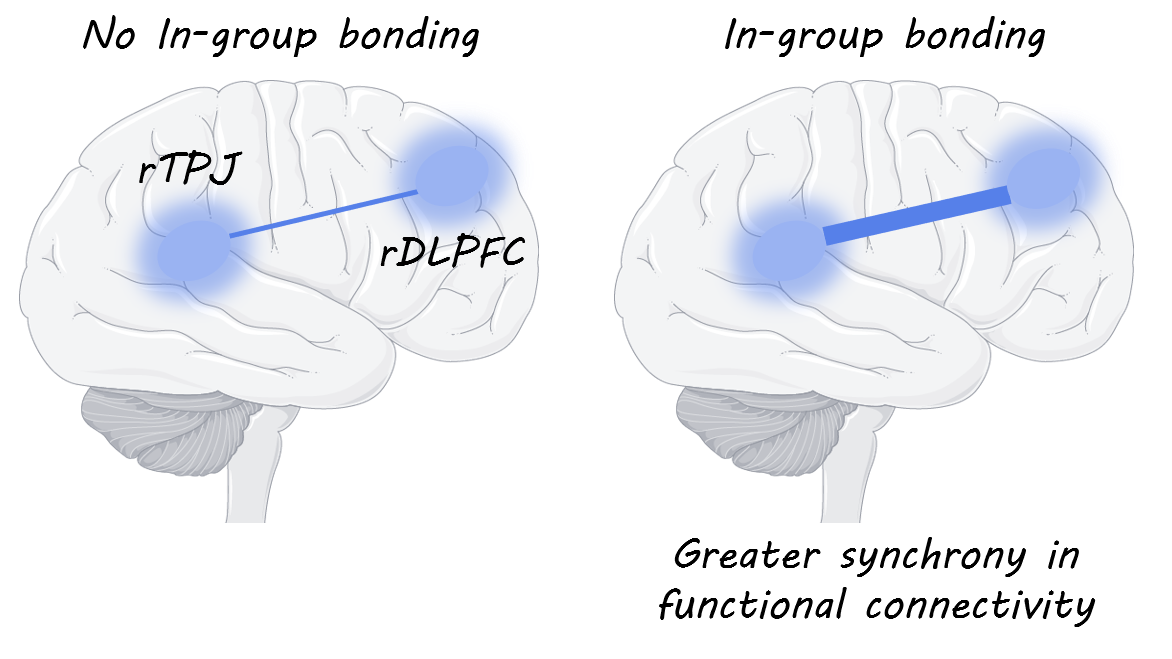
The authors recruited 546 male participants at the age of 18 to 30 and randomly divided them into 182 three-person groups. Two groups were matched to have 24 rounds of competition, where one group was assigned to be the “attacker group” that can aggress the opposite “defender group”. Each participant was given a hypothetical budget from which one could contribute a portion to the team’s ability to defeat the opponent team (“fighting capacity”). If the attacker group had a larger sum of fighting capacity, they could claim the remaining budget of the defender group. However, if the defender group had a larger or equal sum of fighting capacity, both groups could keep their remaining budget. Importantly, if the groups were selected to engage in the in-group bonding exercise, participants wore the same-color team vest (black or white, based on what each person chose during the survey prior to competition) and discussed shared preferences within the group. On the contrary, if the groups were selected to be in the no-bonding control group, they did not wear team vests and discussed neutral topics. During the competition, participants underwent functional near-infrared spectroscopy (fNIRS) to measure individual brain activity in two regions that are important for decision-making: the right dorsolateral prefrontal cortex (rDLPFC) and right temporoparietal junction (rTPJ).

What did they find?

The authors found that defender groups made more contributions towards their fighting capacity than attacker groups. Also, participants who underwent the in-group bonding exercise sacrificed more for the group by making larger contributions and displayed more coordinated behaviors with the same group members. The authors observed that in-group bonding decreased neural activity in the DLPFC, the brain region known to be involved in the inhibition of impulses. Conversely, in-group bonding increased functional connectivity between the rDLPFC and the rTPJ, a brain region that becomes activated during cooperation. These data suggest that an in-bonding exercise can modulate neural activity, resulting in disinhibition and higher risk-taking for the group’s collective goal. Interestingly, the authors found that neural activities in both the rDLPFC and the rTPJ were more synchronized in the in-group bonding condition, specifically in the attacker group. When rDLPFC activity was more synchronized within the group, it was also more likely that the attackers would make a larger contribution to fighting capacity, indicating that neural synchronization has a meaningful link to how people express hostility in a group.

chloe_image.png

What’s the impact?

The authors utilized functional neuroimaging to reveal the neural mechanisms that underlie inter-group conflicts, providing further evidence for neural synchronization as an important mechanism in inter-group hostility. Their findings suggest that group-level hostility, which can be enhanced by in-group bonding, may be mediated by collectively decreased risk aversion among group members. During this modern era where conflicts between groups with various values and ideologies are not uncommon, this study sheds important light on what happens in our brains when we become hostile towards others.

Yang et al. Within-group synchronization in the prefrontal cortex associates with intergroup conflict (2020). Access the original scientific publication here.