
Stopping Tau in its Tracks: Investigating the Spread of Tau Protein in the Brain

Post by Anastasia Sares 

What's the science?

The protein tau is an important factor in many kinds of dementia, including Alzheimer’s disease. It normally stabilizes the structural scaffolding of a neuron (the microtubules). In dementia, tau proteins can accumulate and form tangles, harming the function of the cell and eventually leading to cell death. From there, misbehaving tau proteins can also spread and replicate in nearby neurons. However, this spread depends on the tau proteins entering new cells. This week in Nature, Rauch, and colleagues demonstrated that a protein called LRP1 is a key regulator that allows tau to be taken up into the cell and that inactivating LRP1 can stop the spread of this protein.

How did they do it?

The authors used multiple steps to show the effects of LRP1 on tau uptake, starting in vitro (with isolated cells in a petri dish) and then moving to in vivo (inside the tissue of a living animal). In vitro, they used CRISPR-Cas9 technology to edit the genes of cells in a dish, and then exposed them to tau to see how their genetic manipulations affected tau uptake.

Next, the team used viral technology to affect the levels of LRP1 in living mice (in vivo). Half of the mice were exposed to a genetically-modified retrovirus containing a gene that interfered with LRP1 throughout the brain. Then, all mice were exposed to a second retrovirus carrying instructions to generate a tau protein in the hippocampus. The authors monitored the spread of the tau protein from its original region.

What did they find?

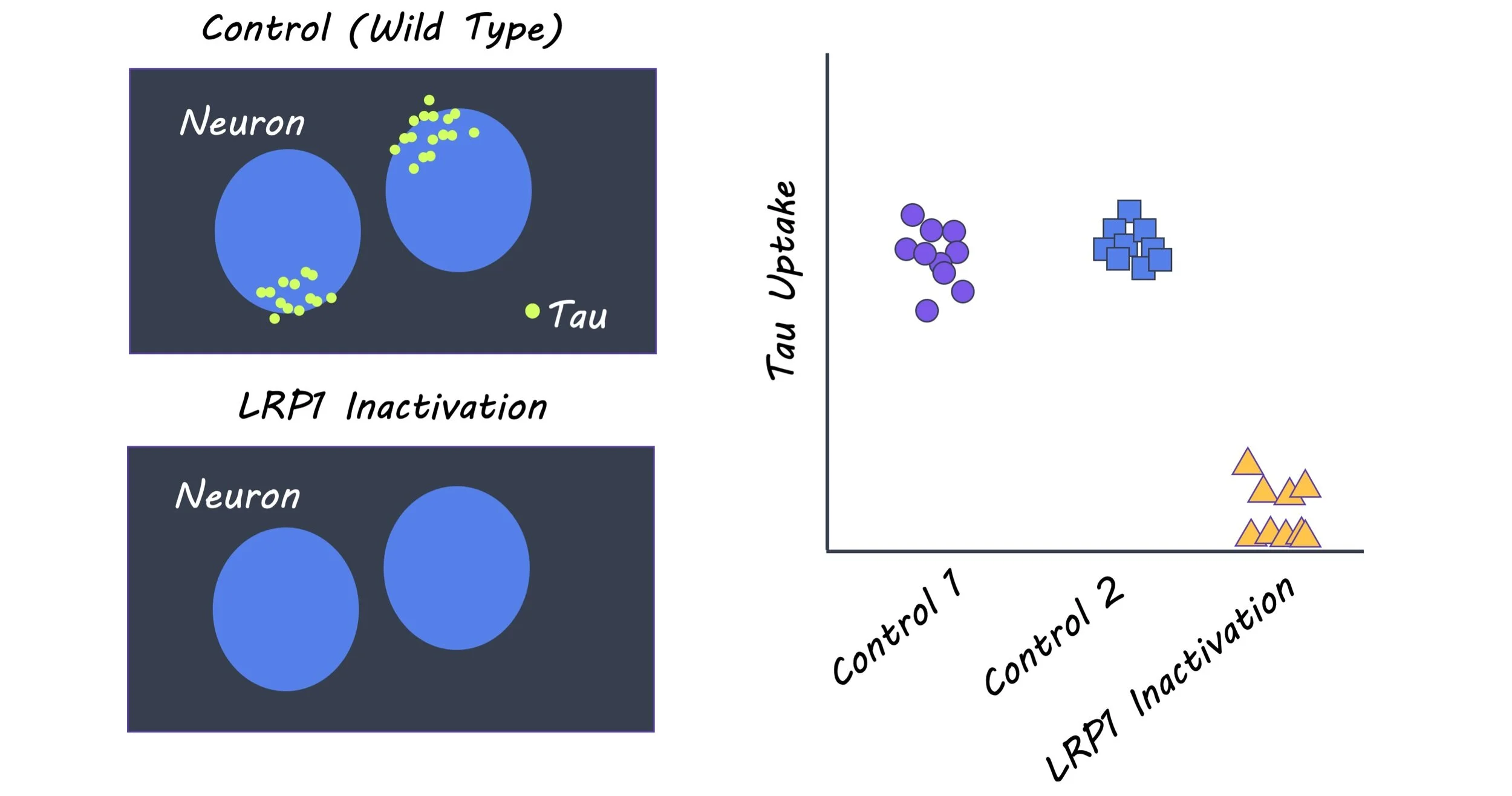
In vitro, cells that were manipulated not to produce LRP1 did not allow tau in, and further tests manipulating sub-regions of LRP1 showed that two specific regions of this protein were involved in transporting tau into the cell (MLRP4 and MLRP2).
Tau_image_Apr21.jpg

In vivo, the animals that had LRP1 inactivated showed less spread of tau to other regions of the brain. Tau introduced to one side of the hippocampus did not make it to the other side, nor did it spread to the cortex as it did in mice who had normal LRP1 activity. These experiments demonstrate that LRP1 is 1) involved in taking up tau into the neuron and 2) the spread of tau across the brain.

What's the impact?

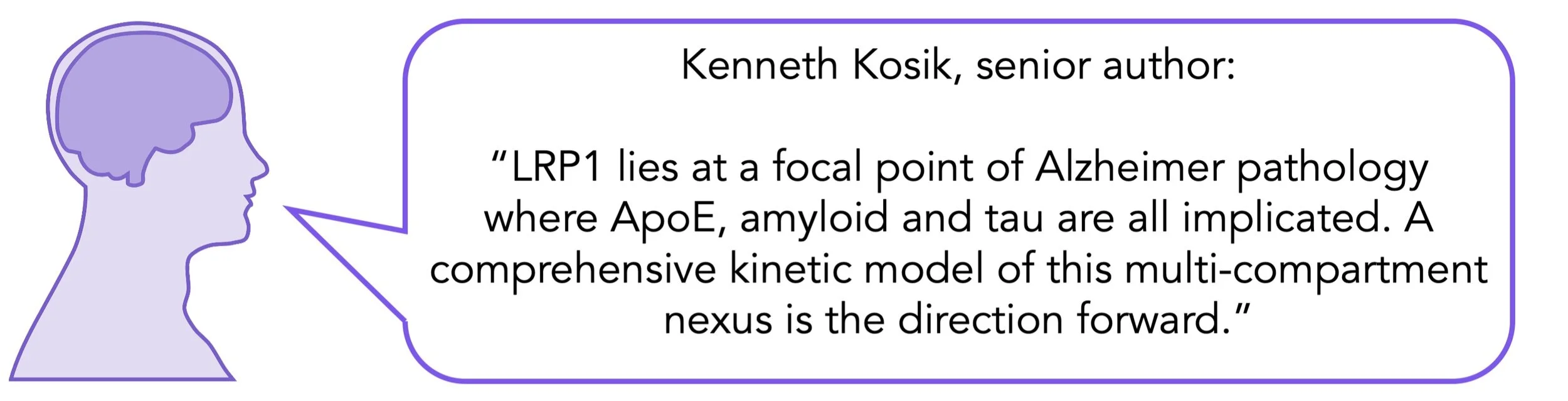
In addition to regulating the spread of tau, the protein LRP1 is known to affect amyloid accumulation, the second major factor in neurodegenerative disease. Therefore, this study and others strongly point to LRP1 as an important target for gene therapy, medication, or other treatments.
Kosik_quote_Apr21.jpg

Rauch et al. LRP1 is a master regulator of tau uptake and spread. Nature (2020). Access the original scientific publication here.
Memories that Share a Common Structure are Linked Together

Post by Amanda McFarlan

What's the science? 

The memories that we form in our everyday lives often share a common structure. For example, many songs are made up of different notes, but follow a similar structure. Additionally, memories are highly susceptible to interference while they are being formed which can disrupt the process of consolidation and therefore, memory retention. This week in Current Biology, Mutanen and colleagues proposed that sharing a similar structure might link memories together and determine how they are stored and modified. They investigated whether sharing a common structure among memories affected their retention and susceptibility to interference. 

How did they do it?

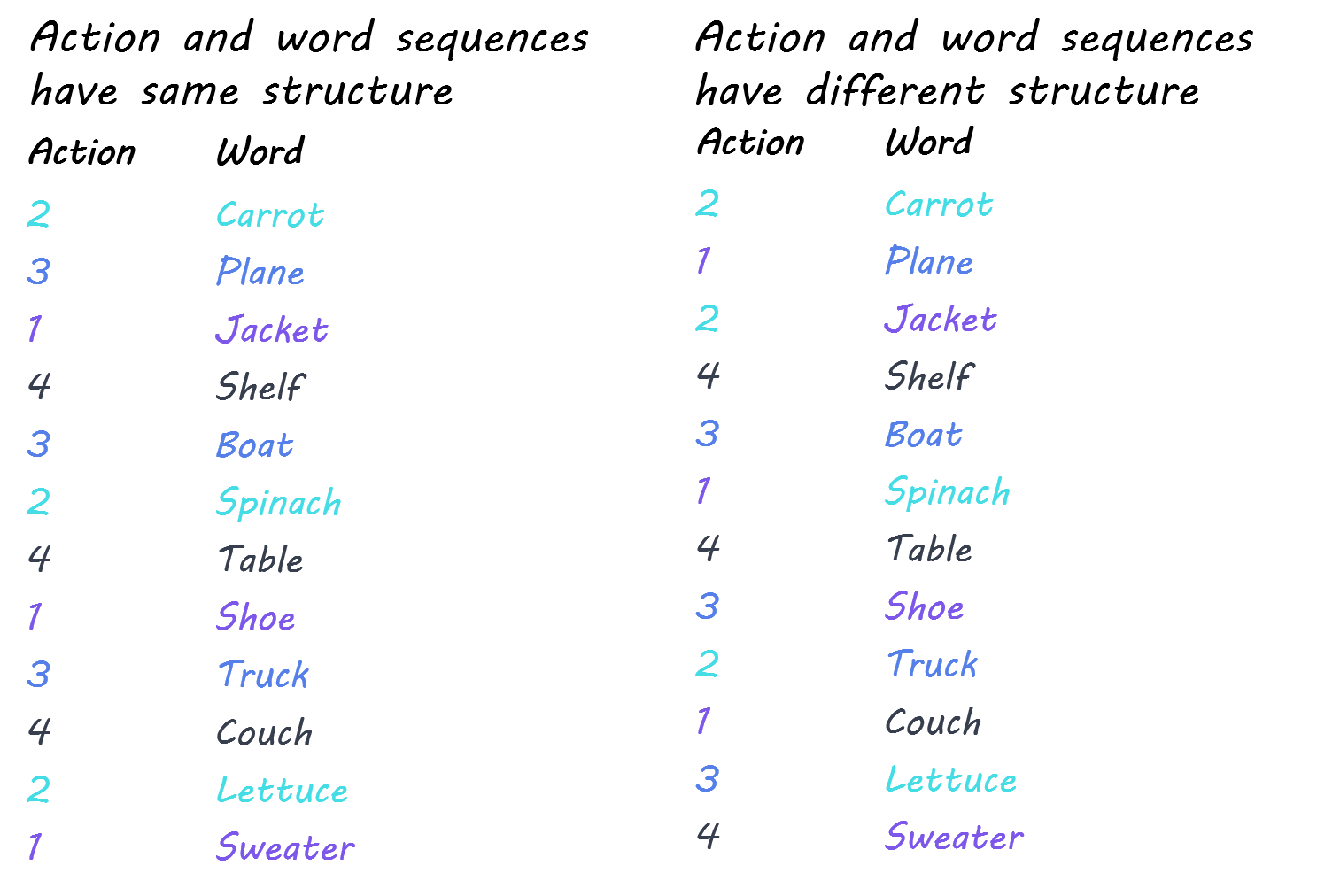
The authors created two memory tasks: a sequence of actions and a sequence of words. The sequential order of actions and words in the memory tasks either followed the same ‘structure’ (each action corresponded to one semantic category of words - e.g. a thumbs-up action always corresponded to a type of vegetable; see figure) or did not follow the same structure. 

The authors performed two experiments, each with multiple stages. In Experiment 1, the steps were: 1) Participants learned a sequence of actions 2) 6 hours later, they learned a sequence of words that either did or did not follow the same structure as the previously learned sequence of actions, 3) Participants were tested on their word recall and then immediately learned a new sequence of words, designed to interfere with memory consolidation, before being asked to recall the first list of words again. 

In Experiment 2: 1) Participants learned a word sequence, 2) 6 hours later, they learned a sequence of actions that either did or did not follow the same structure as the previously learned word sequence, 3) Participants were tested on their ‘skill level’ (measured by their response time) for the sequence of actions, 4) Participants immediately learned a new sequence of actions (to interfere with memory consolidation), and 5) Their skill level was tested again for the first sequence of actions. The authors also tested participants without any prior learning on word recall and measured skill level before and after interference. Finally, the authors investigated how well participants could retain their initial learning by retesting their word recall or measuring their skill level 12 hours after initial learning. 

words_actions.png

What did they find?

In Experiment 1, the authors found that total word recall decreased following interference (i.e. learning new words) during word sequence learning. However, this decrease in word recall was not as robust when the sequence of words and the previously learned sequence of actions followed the same structure versus when they did not. 

In Experiment 2, the authors found that interference during action sequence learning resulted in a reduction in skill level only when the sequence of actions and the previously learned sequence of words did not follow the same structure, while there was no change when they did follow it. The authors also showed that the effect of interference on performance was much greater when participants had not previously learned a sequence of actions or a sequence of words, respectively. Together, these findings suggest that new memories can be protected from interference if they share a common structure with a recently acquired memory. 

Next, the authors revealed that there was a significant improvement in skill level 12 hours after initial learning when the sequence of actions and words had different structures. They also found a significant decrease in serial word recall (the precise order of the words in the sequence) 12 hours after initial learning when the motor and word memory tasks had the same structure, but not when the memory tasks had different structures. Together, these findings suggest that new memories can affect the retention of recently acquired memories when they share the same common structure.

What’s the impact?

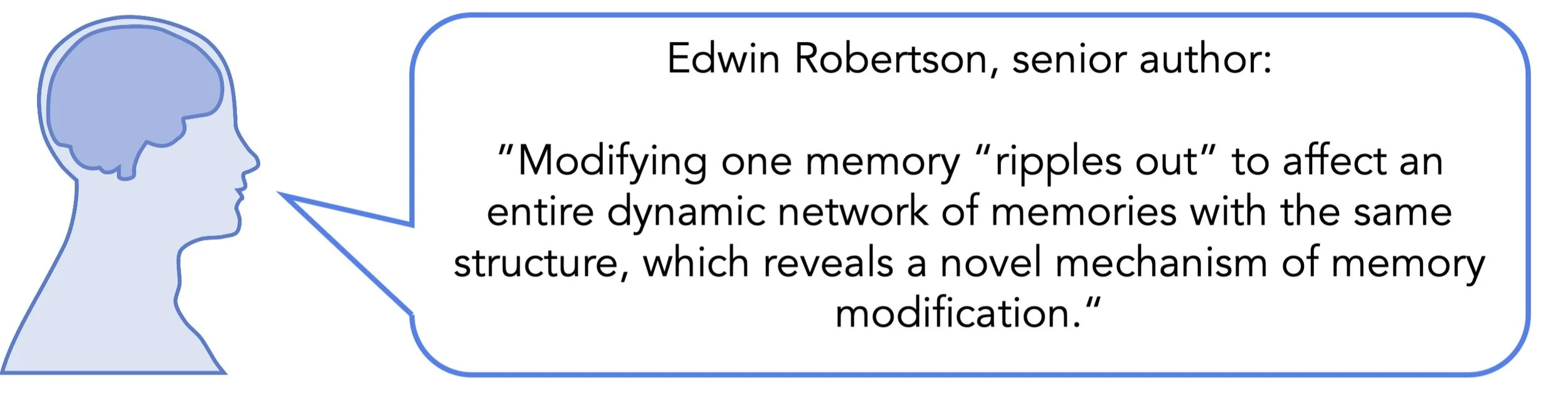
This is the first study to show that memories that share a common structure are linked together. The authors found that, when an earlier memory and a newly formed memory shared a common structure, the newly formed memory was protected from interference while the retention of the earlier memory was disrupted. Together, these findings provide insight into how similarly structured memories are stored and modified.

Robertson_quote_Apr21.jpg

Mutanen et al. A Common Task Structure Links Together the Fate of Different Types of Memories. Current Biology (2020). Access the original scientific publication here.
More Than One Way to Build a Thought

Post by Lincoln Tracy 

What's the science?

Have you ever wondered how you understand a sentence that you’ve never read before? Our brains rely on the principle of compositionality, or how we understand the meanings and order of words within a sentence. Even simple sentences require us to understand each word individually, as well as the order the words are presented in. While several studies over the last 20 years have used functional neuroimaging techniques to study how the brain develops strategies to represent the meanings of different parts of a sentence, less is known about how the brain combines individual meanings of words to store the meaning of a complete sentence. This is particularly true for storing the meaning of sentences, such as who did what to whom. This week in Cerebral Cortex, Frankland and Greene use functional magnetic resonance imaging and encoding models to describe how three brain regions contribute to the representation of relational combinations within a sentence.

How did they do it?

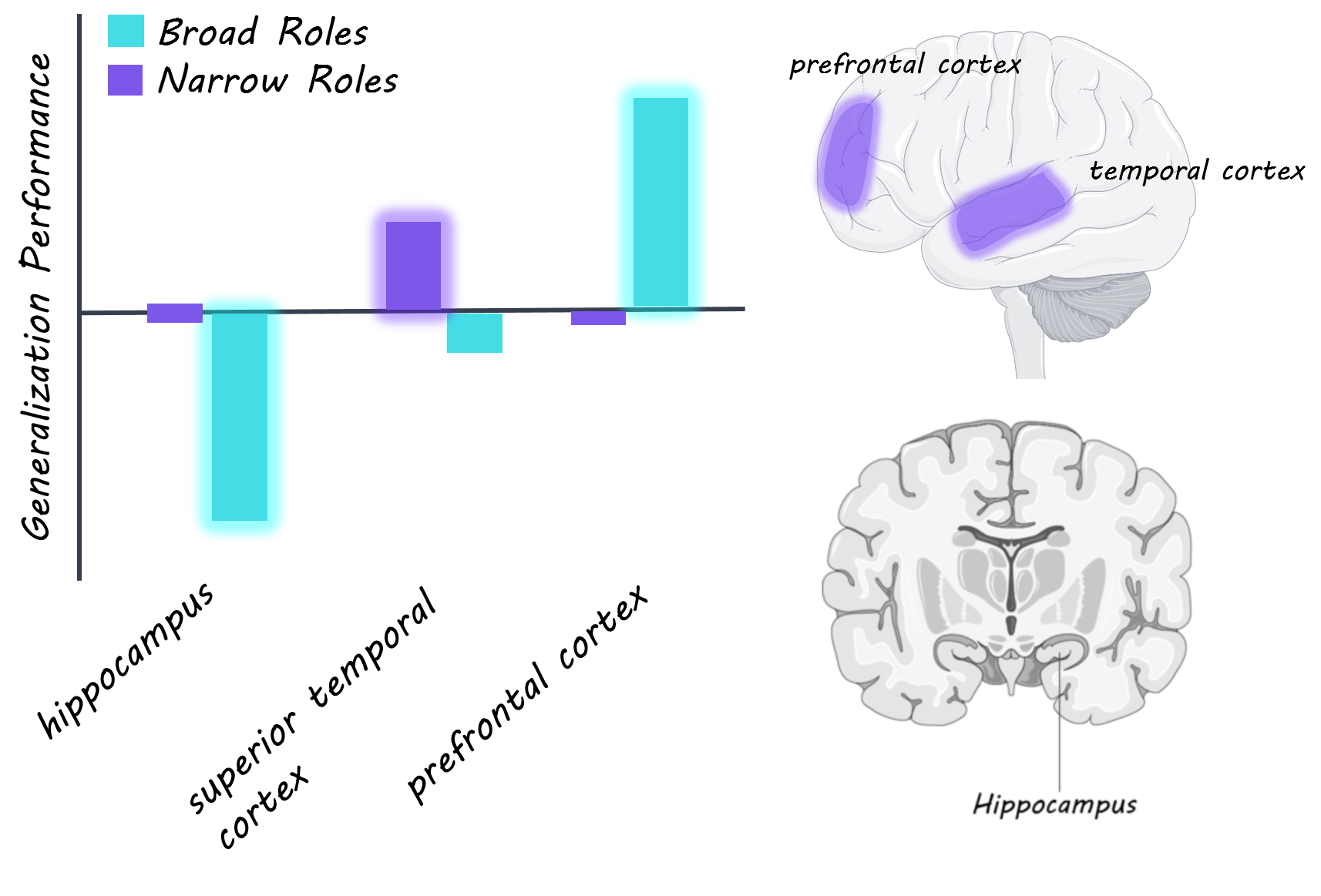
First, the authors created a series of 240 simple and unique sentences from a pool of six animal words and eight verbs. Each sentence described one animal interacting with another animal in some way – e.g., “the hawk surprised the moose”. Second, they recruited 55 English speaking individuals (31 females, mean age of 23 years) from the Cambridge (Massachusetts) area. Each participant underwent a functional magnetic resonance imaging scan where they were presented with each of the 240 sentences, one at a time. On a third of the trials, participants were asked a comprehension question after reading the sentence to test whether they understood and were able to remember the sentence. Once all the scans had been completed, the authors looked at the entire brain to identify regions that encode complex and structured semantic information that was similar across sentences. They also examined activity specifically in the left-mid superior temporal cortex and the hippocampus, two other brain regions known to be associated with representing relationships within an event. Specifically, they were interested in determining what kind of information was stored in each of these regions as we try to understand a sentence.

What did they find?

The authors found that information stored in a part of the brain in the anterior-medial prefrontal cortex can be used to interpret new sentences. That is, this section of the prefrontal cortex uses narrow roles that are re-used across sentences – e.g., the same representation is used for the sentence “the cow approached the goose” and “the cow approached the hawk”. Second, they found that the left-mid superior temporal cortex carries more basic information about the unique structure of new sentences — in contrast to the role of the prefrontal cortex. Third, they found that the hippocampus more commonly treated sentences that contained the same parts as dissimilar; another different role compared to the prefrontal cortex. Taken together, these three regions seem to play different roles in encoding how an event within a sentence is composed. However, the roles of all three regions are important and necessary.

broad_and_narrow_roles.png

What's the impact?

This study identified that while regions within the frontal and temporal lobes of our brain both help us understand a sentence by carrying information about who did what to whom, these regions differ in the level of detail they store. This study also identified that a part of the anterior-medial prefrontal cortex stores information that can be used when trying to understand new sentences. These findings suggest that the medial prefrontal cortex plays an important role in reusing existing knowledge to store information about new combinations of words in sentences, but that the left-mid superior temporal cortex uses a more arbitrary scheme for storing information. Further research is required to understand how the brain adaptively organizes and utilizes these different systems to provide a unified understanding of novel and complex sentences.

Frankland et al. Two Ways to Build A Thought: Distinct Forms of Compositional Semantic Representation Across Brain Regions. Cerebral Cortex (2020). Access the original scientific publication here.