Stress-Induced Lateral Habenula Changes and the Association with Depressive Behavior in Mice

Post by Lincoln Tracy

What's the science?

Chronic stress has been identified as a prominent risk factor for the development of depression in humans. Several animal models of depression exist that involve exposing the animals to chronic stressors, leading to behavioral changes that mimic a subset of core depression symptoms in humans. The problem with this approach is that while depression often presents in different ways in different people, patients are often grouped into one category. Recent studies have identified that the lateral habenula—a small section of the brain near the pineal gland—is hyperactive in depression. This week in Neuron, Cerniauskas and colleagues developed a novel approach to examine the molecular, synaptic, and circuit basis of unique chronic stress-induced behavioral characteristics in mice.

How did they do it?

First, the authors used a chronic mild stress model to induce depression-like symptoms in mice. This involved exposing the mice to a series of stressors over an eight-week period. The authors then used a series of behavioral tasks to assess anxiety-related behaviors (elevated plus maze), interest in rewarding stimuli (sucrose preference test), responses to being placed in an inescapable situation (tail suspension test), and deficits in sociability behavior (social interaction test). Second, they used receiver operating characteristic (ROC) curves to make an unbiased decision as to whether each individual mouse displayed a certain set of behavioral characteristics. Third, they used histology, microscopy, single-cell RNA sequencing, whole-brain input mapping, and electrophysiological techniques to analyze the molecular, synaptic, and circuit adaptions in the lateral habenula after chronic stress.

What did they find?

First, the authors found that mice exposed to chronic stress and the control mice both showed considerable variability in three of the four behavioral tasks. Second, the stress-induced hyperactivity in the lateral habenula was directly associated with connections to the ventral tegmental area and the rostromedial tegmental nucleus—two areas of the brain involved in dopaminergic (or reward) signalling in the brain—rather than the dorsal raphe nucleus, where the serotoninergic neurons are located. Specifically, lateral habenula excitability was associated with increased passive coping rather than anhedonia (an inability to feel pleasure) or anxiety, which are other common symptoms of depression in humans. The authors also identified a subset of genes that together can be used as biomarkers to identify mice that display increased passive coping and allow for the differentiation of lateral habenula neurons that project to the ventral tegmental area or the dorsal raphe nucleus.   
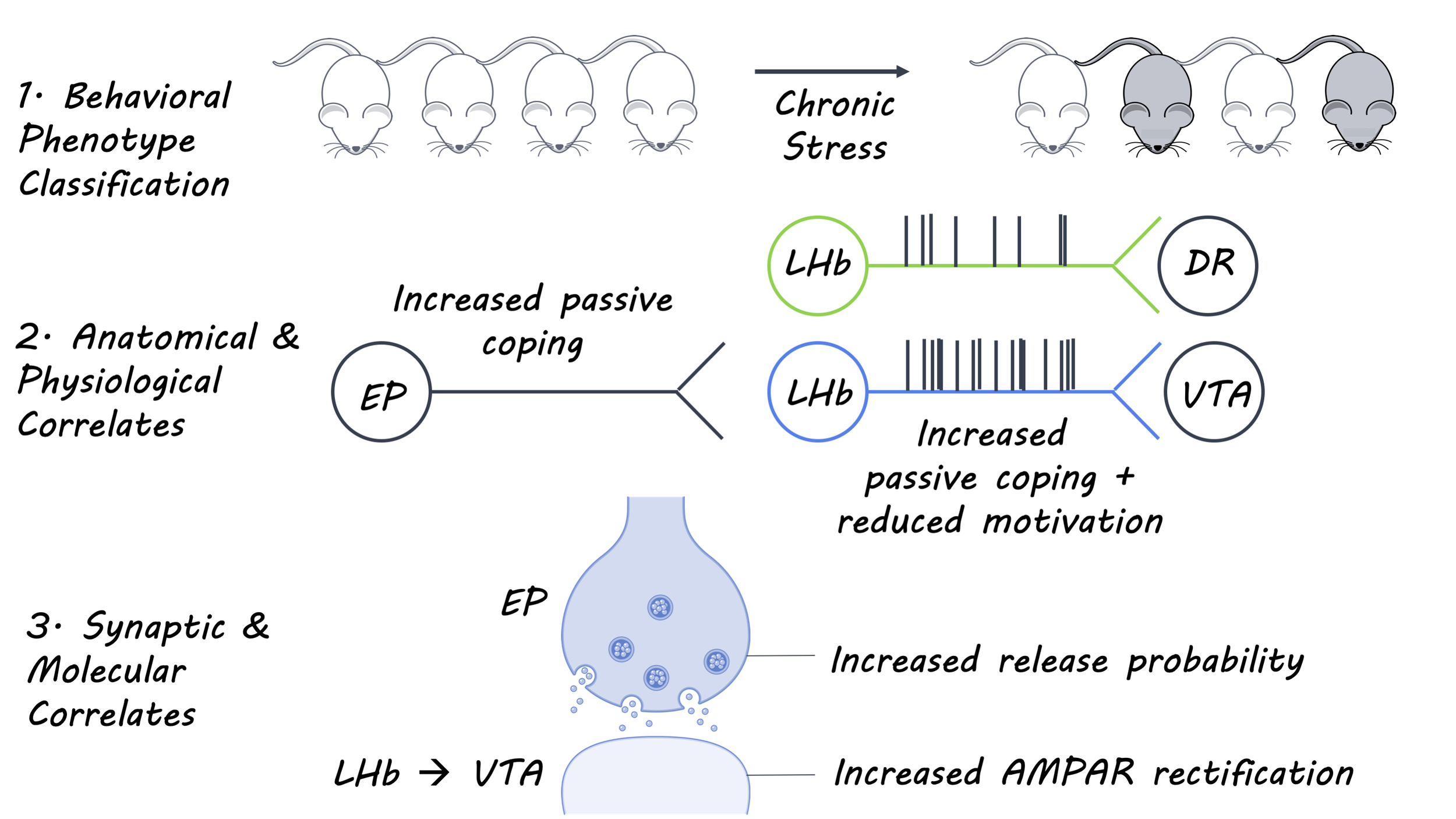
LHb = lateral habenula, EP = entopeduncular nucleus, DR = dorsal raphe, VTA = ventral tegmental area

LHb = lateral habenula, EP = entopeduncular nucleus, DR = dorsal raphe, VTA = ventral tegmental area

What's the impact?

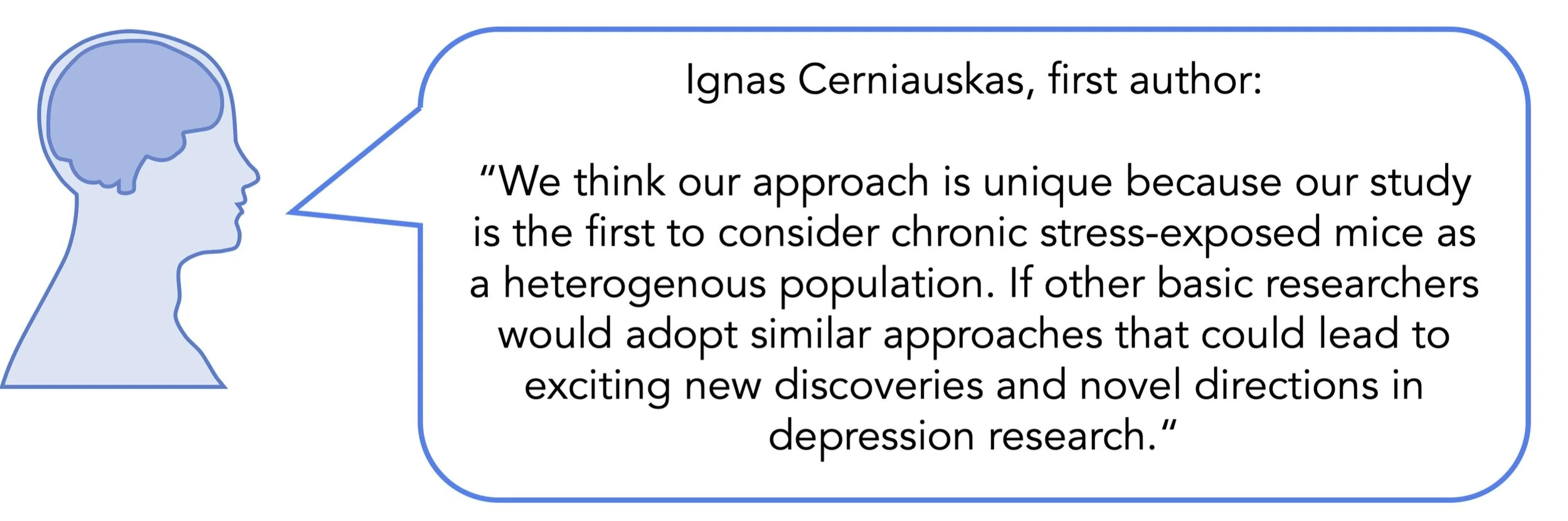
This study demonstrated that mice, like humans, have considerable individual variability in how they respond to chronic stress. It is the first study to link a specific behavioral phenotype (reduced motivated behavior), which is commonly observed in depression in humans to specific molecular, cellular, and circuit changes in the lateral habenula. Even though the study was performed in mice, lateral habenula hyperactivity has also been observed in humans with depression, suggesting that there may be — at least in part — a translational aspect of these findings. This study may serve as a foundation for future research investigating symptom-specific therapeutic interventions as well as predictive biomarkers for depression. 
cerniauskas_nov5.jpg

Cerniauskas et al. Chronic Stress Induces Activity, Synaptic, and Transcriptional Remodeling of the Lateral Habenula Associated with Deficits in Motivated Behaviors. Neuron (2019). Access the original scientific publication here.

Brain Structure and Function are Coupled in a Region- and Behaviour-Specific Way

Post by Elisa Guma

What's the science?

Brain activity is naturally shaped by the anatomical structure underlying it. Whole-brain magnetic resonance imaging techniques have allowed us to identify how the brain is connected both structurally, based on white-matter pathways, as well as functionally, based on the correlated fluctuations of brain activity in different regions over time. A large body of work has focused on understanding the way in which these networks are organized in the context of evolution, development, and disease, but the degree to which brain structure limits brain function is hard to quantify. This week in Nature Communications, Preti and Van De Ville propose a method to quantify this relationship by creating an index to define the structure-function relationship and explore its spatial patterning and behavioral relationship

How did they do it?

The authors used diffusion-weighted magnetic resonance imaging (a measure of brain structure, sensitive to white matter tracts that connect different brain regions) and resting-state functional magnetic resonance imaging data (brain activity at rest) from 56 healthy volunteers from the Human Connectome Project, a publicly available resource. They aimed to define the way in which brain structure and function “couple”, or rather, the dependency of the functional signal on the structural signal. In order to do so, they created a “structural-decoupling index”, which allowed them to quantify the degree to which these signals were coupled (i.e. function depends heavily on structure) or decoupled (i.e. function is less dependent on structure). This was done by first building a structural-connectome of the brain, which allows the brain to be represented as a set of interconnected nodes. The building blocks of this connectome (structural harmonics) were then extracted using matrix decomposition by eigendecomposition of the graph Laplacian. The resting-state activity data was then projected onto the structural-connectome harmonics and the spatial pattern of activation at every time point was represented as a weighted linear combination of structural patterns. Based on the spatial frequency related to each harmonic, the functional signal was then split into two portions: one more coupled with the structure (related to low frequency harmonics), the other more decoupled (related to high frequencies). The amount of function/structure decoupling vs. coupling was quantified per brain region with the structural-decoupling index, to understand whether different brain structures have different degrees of coupling/decoupling. Next, they ranked regions based on the structural-decoupling index to explore the relationship of these regions to different behaviors, using a literature-based meta-analytic, public resource (Neurosynth). Finally, in order to validate these findings, the authors also generated two null models which they compared their model to.

What did they find?

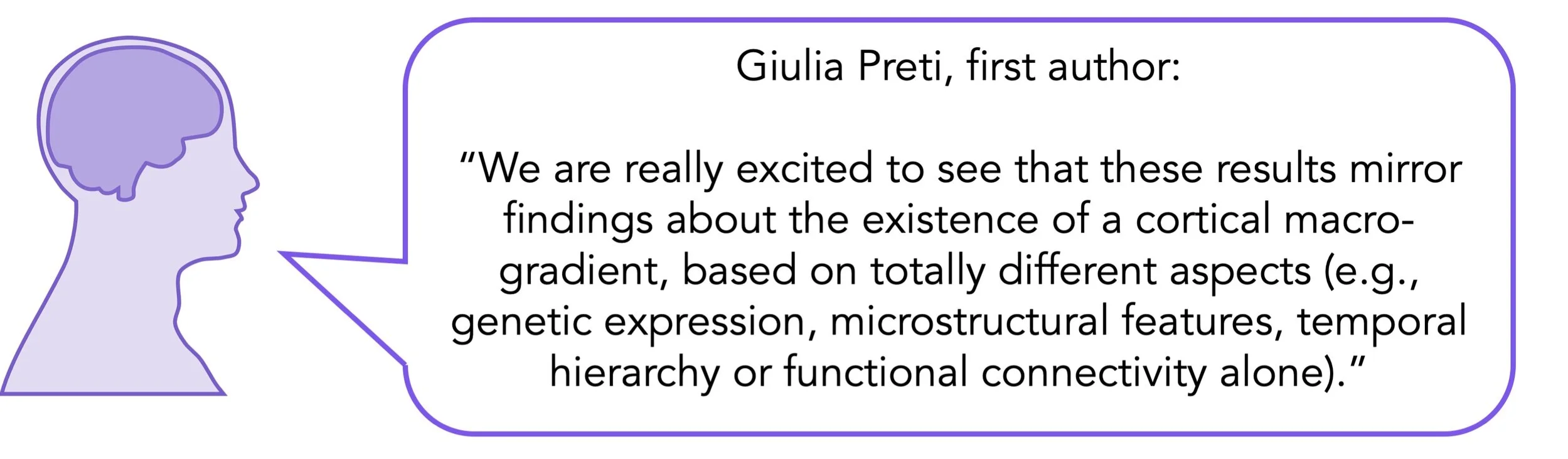
They found that activity in the primary sensory regions, such as the visual, auditory, somatosensory, and motor cortex was more strongly coupled with brain structure. Conversely, the functional activity of higher-order regions such as the parietal lobe, which is part of the executive control network, the temporal lobe, including the amygdala and language areas, and orbitofrontal lobes were more decoupled from brain structure. The authors were also able to relate regions to behaviors based on the structural-decoupling index and found that regions with a low index, or rather, regions in which structure and function were highly coupled, were related to lower-order functions, such as sensory or motor functions. Regions with higher decoupling, in which function was less dependent on structure, were related to more complex functions such as memory, reward, or emotion

elisa_nov5.jpg

What's the impact?

This study identified a novel method with which to quantify the relationship between functional brain activity and underlying brain structure. Further, the authors show that this coupling varies across structures related to different cognitive domains. This method can now be applied more broadly to understand inter- and intraindividual variability in structural and functional coupling and how this coupling might be altered psychiatric disorders.   

preti_nov5.jpg

Preti et al. Decoupling of brain function from structure reveals regional behavioral specialization in humans. Nature Communications (2019). Access the original scientific publication here.
Successful Treatment of Post-Traumatic Stress Disorder Reverses DNA Methylation

Post by Stephanie Williams

What's the science?

Some individuals with post-traumatic stress disorder (PTSD) experience an extinction of their symptoms either spontaneously or following psychotherapy treatment. Many individuals, however, continue to experience symptoms even after treatment, demonstrating that treatment response varies among individuals with PTSD. We know that the development of PTSD is associated with changes in the regulation of gene expression, also known as epigenetic changes, such as the addition of a methyl group to DNA (i.e. methylation), which can change the expression of some genes. Less is known about the epigenetic changes that follow the successful treatment of PTSD. Identifying specific molecular changes associated with successful treatment of symptoms could advance our understanding of the biological process underlying recovery, and explain why some individuals do not respond to treatment. This week in Molecular Psychiatry, Vinkers and colleagues used data collected from trauma-exposed soldiers to identify specific changes in DNA methylation linked to recovery from PTSD symptoms following treatment.

How did they do it?                             

First, the authors confirmed that the PTSD psychotherapy treatment could effectively reduce PTSD symptoms for some individuals, as indexed by decreases in scores on a standard psychological interview, called CAPS. The authors then performed longitudinal genome-wide DNA methylation analyses in two separate cohorts to address questions about epigenetic-related treatment changes. To investigate recovery-related epigenetic changes, the authors analyzed DNA extracted from the blood of 44 male war veteran patients with PTSD and 23 trauma-exposed male war veterans without PTSD (controls). The data were collected from the 2010-2013 longitudinal study BETTER and included blood samples taken before and after the individuals were treated for PTSD. The authors analyzed the methylation profile of both samples for patients who did (N=21) and did not (N=23) respond to treatment. The severity and diagnosis of PTSD were established via an oral interview that was administered by a clinician or researcher. The authors looked for DNA regions that were differentially methylated following symptom reduction in response to the successful treatment of PTSD. Treatment administered to patients was either both (1) eye movement desensitization and reprocessing and trauma-focused cognitive behavioral therapy, or (2) trauma-focused cognitive behavioral therapy alone. To understand whether the different treatment arms induced different molecular changes, the authors compared methylation changes induced by the two treatment types. After identifying several DNA-methylation changes in specific regions in the recovery cohort, the authors analyzed the same regions in a separate PRISMO military cohort, which included blood samples before deployment, and 1 and 5 months post-deployment to Afghanistan. Using the two cohorts, the authors looked for regions that showed opposite patterns of methylation during symptom development and remission.

What did they find?

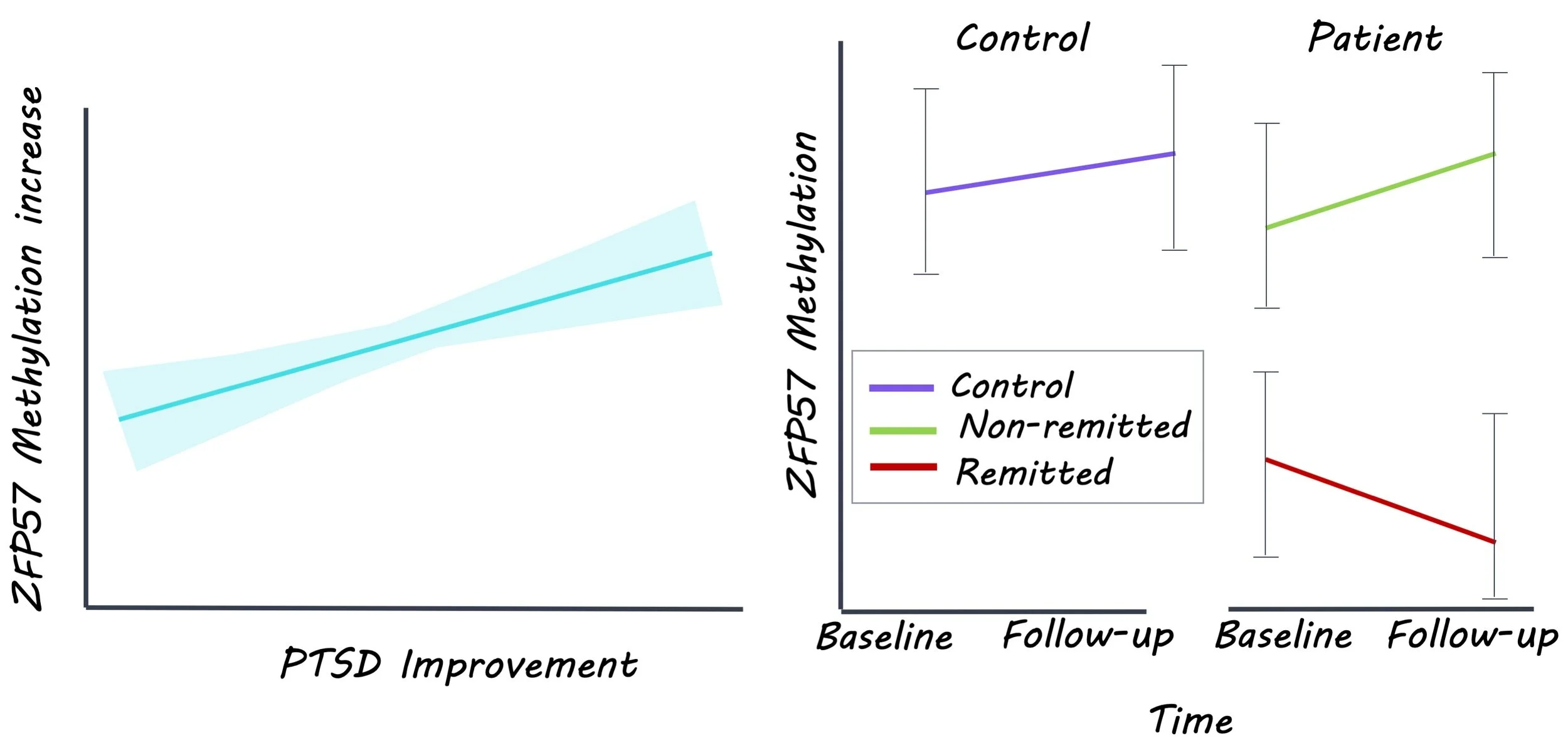
The authors identified twelve differentially methylated regions that were significantly associated with a reduction in PTSD symptoms after treatment in the BETTER cohort. When the authors analyzed the methylation status of the same regions in the PRISMO cohort, they found that only one of the twelve identified regions was significantly decreased in proportion to increased PTSD symptoms during the development of the disorder. The region, called ZFP57, showed an increase in methylation following symptom extinction and a reduction in methylation following the development of PTSD symptoms. The authors interpret this evidence as suggesting that ZFP57 methylation is involved in deployment-related PTSD. Next, that authors compared the two different treatments on methylation of ZFP57 and found that the eye movement desensitization treatment, induced slightly greater methylation than trauma-focused cognitive behavioral therapy. Both of the methylation changes induced by the treatments were disproportionately larger (greater methylation than would have been expected for the reduction in symptom scores) than expected, given the corresponding reduction in PTSD symptoms. The authors interpreted this finding as indicating that the treatment-induced methylation changes were directly influenced by the treatment and not due to symptom remission alone. 

PTSD_img_Oct29.jpg

What's the impact?

The authors have identified specific methylation changes that associate with symptom development and remission. They show that treatments such as cognitive-behavioral therapy and eye movement desensitization can directly affect the biology of patients on a molecular level. Their identification of a specific genomic region, ZFP57, associated with successful treatment of PTSD symptoms will allow future research to parse apart how treatments can exert successful molecular changes to improve future treatment outcomes.

Boks_quote_Oct29.jpg

Vinkers et al. Successful treatment of post-traumatic stress disorder reverses DNA methylation marks. Nature Molecular Psychiatry (2019). Access the original scientific publication here.