Deep Brain Stimulation Normalizes Brain Activity in Parkinson’s Disease

Post by Elisa Guma

What's the science?

Deep brain stimulation (DBS) is an effective and established treatment for Parkinson’s disease, wherein electrodes are implanted in a targeted brain area in order to relieve certain symptoms such as tremor, stiffness and rigidity, and impaired gait. The mechanism by which DBS is thought to improve symptoms is still not fully understood. It was previously thought that improvements were solely due to localized stimulation of specific brain regions, however, they may be due to more global changes in functional brain networks. This week in Brain, Horn and colleagues investigated the effects of DBS on functional brain networks of patients suffering from Parkinson’s disease.

How did they do it?

The authors acquired resting-state functional magnetic resonance imaging (rs-fMRI) data in 20 Parkinson’s patients who underwent surgery to place DBS electrodes in the subthalamic nucleus (STN), and 14 healthy, age-matched controls. RS-fMRI is a technique that measures fluctuations in blood oxygenated level-dependent (BOLD) signals in the brain, which allows for a measure of intrinsic associations between the brain activity of specific regions based on the correlation of signal over time between those brain regions. Patients were first measured with their electrodes turned on, and after a short break, were scanned again with their electrodes turned off in order to see how the electrical stimulation affected global brain activity.

The data was processed using state of the art software, Lead-DBS, which allowed for the localization of the DBS electrodes, as well as analysis of brain volume and activation, with careful regard for artefacts due to motion during scans and metal from the electrodes. This allowed the authors to analyze how the electric field of the DBS-electrodes modulated brain activity in a key motor network referred to as the basal ganglia-cerebellar-cortical loops. These loops include the sensorimotor functional zones of the cortex, striatum, thalamus, internal and external globus pallidus, substantia nigra, and cerebellum. They compared functional brain networks in the DBS-on and -off conditions to those of healthy controls. Further, they investigated how electrode placement modulated the patterns in brain activity they observed.

What did they find?

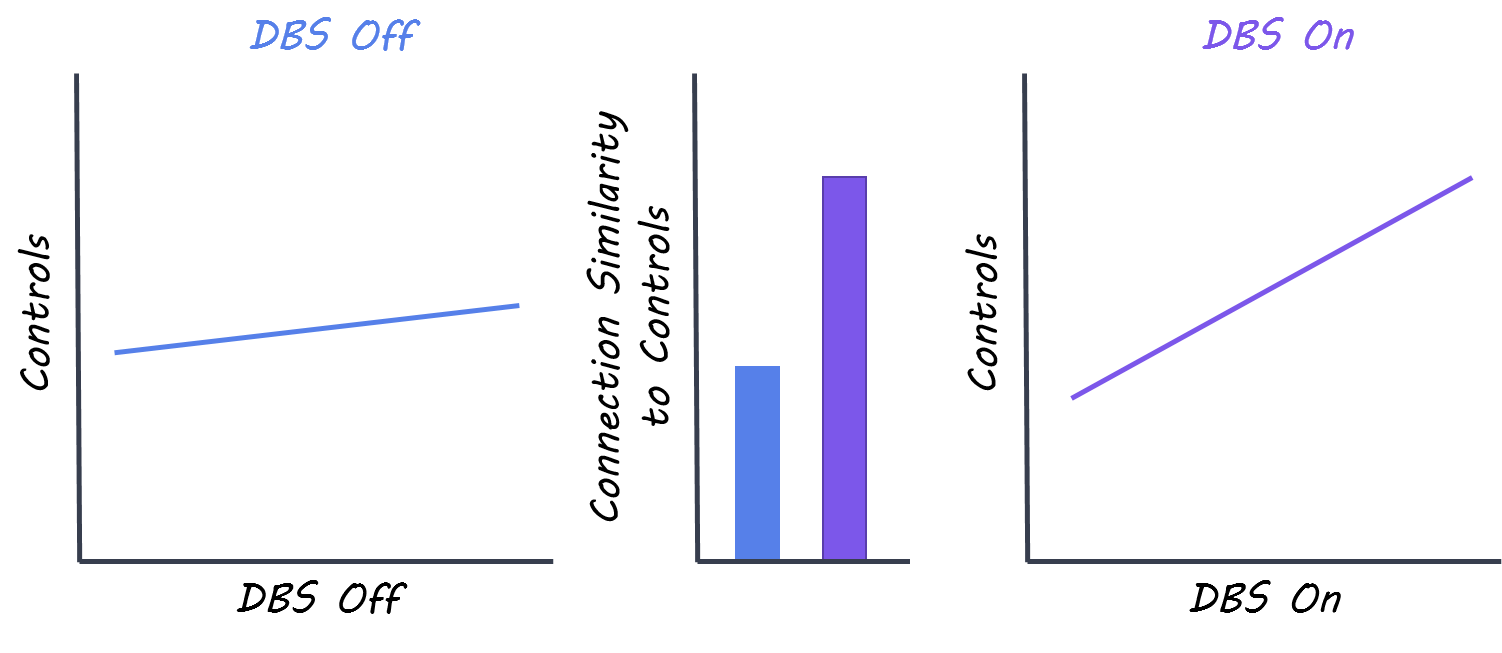
First, the authors found that the accuracy of the electrode placement within the STN determined the strength of connectivity between the STN and the supplementary motor area (a motor network region); the better the placement, the stronger the connectivity between these two regions. Next, they found that connectivity maps between the volume of tissue activated around the STN and the motor network were most similar between DBS-on conditions and healthy controls, suggesting that DBS electrode activity might normalize brain networks towards healthy controls. This was also affected by the electrode placement. Finally, the authors found that connectivity in the DBS-on group was increased in the motor network (between the thalamus and cortex), with a decrease in basal ganglia connectivity (striatum to cerebellum, STN, and STN to globus pallidus).
DBS.png

What's the impact?

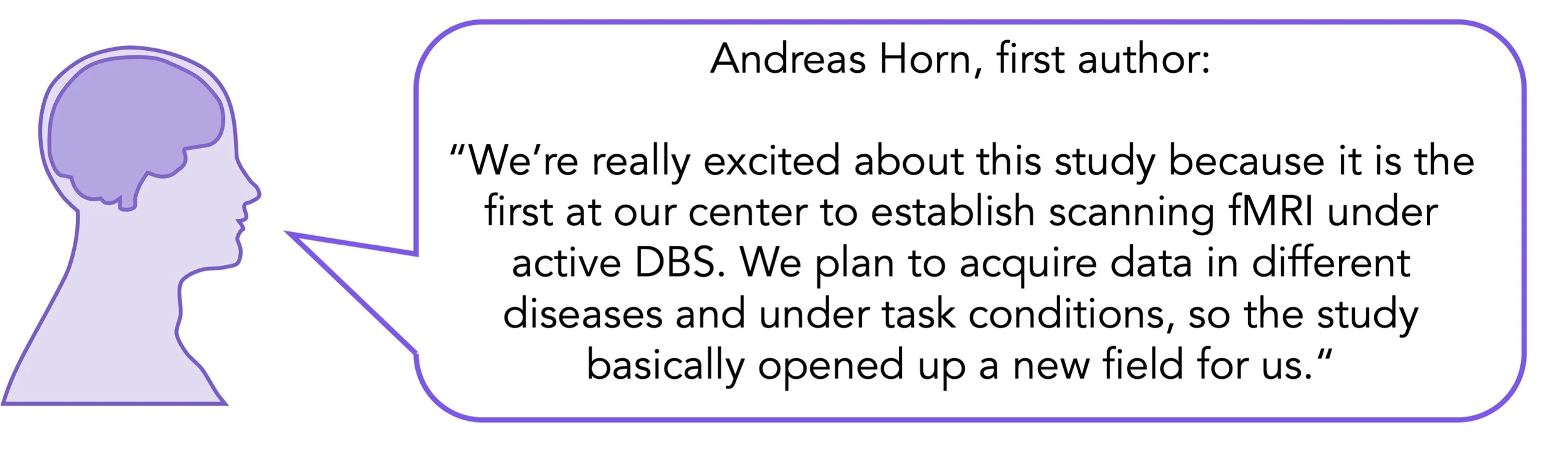
This study is one of the first to demonstrate the feasibility of conducting rs-fMRI in DBS implanted patients. They identify that DBS has a significant effect on brain connectivity throughout the motor network and that these changes were strongly dependent on correct electrode placement. The findings are promising evidence for the use of invasive neuromodulation. Further, DBS provides a framework within which to study how brain networks change in response to targeted stimulation, which could be applied to other populations undergoing DBS treatment, such as those with depression, obsessive-compulsive disorder, or eating disorders.
DBS_quote.jpg

Andreas Horn et al. Deep brain stimulation induced normalization of the human functional connectome in Parkinson’s disease. Brain (2019). Access the original scientific publication here.

A National Experiment Reveals Where a Growth Mindset Improves Achievement

Post by Stephanie Williams

What's the science?

The term “growth mindset” reflects the belief that abilities are not hard-wired into the brain, but can be developed and improved over time. Growth mindset interventions can be effective in changing the beliefs of students who think their academic abilities are fixed. Recently, experimental work in educational settings has investigated how interventions can use ideas related to a growth mindset to intervene in cases of academic underachievement. This week in Nature, Yeager, Hanselman, and colleagues demonstrate that a growth-mindset intervention can effectively improve grades and enrollment in advanced math courses in particular student populations and school environments.

How did they do it?

The authors analyzed the effects of a validated growth-mindset intervention in a nationally representative sample of high schools. Ninth grade students were randomized to a particular condition (intervention vs. control activity), and teachers, as well as researchers, were blind to the condition of each student. The intervention consisted of two 25-minute online modules. In 25-minute self-administered online sessions, students heard stories from both older students and adults, interacted with guided exercises, and were asked to reflect on their own learning. At the end of the second session, students participated in a math task with two options: an easy but low learning task, and a challenging but high learning task. The authors used the percentage of students in the control condition that chose the challenging problem as a metric of challenge-seeking norms for a particular school. The authors monitored the fidelity of the intervention implementation by analyzing the percentage of the module screens students viewed (97%) and analyzing the number of open-ended questions that students responded to (96%).

growth_mindset_1_of_2.png

The authors were interested in identifying which contexts were most conducive to the growth mindset intervention. They analyzed treatment effect heterogeneity by looking at the types of school contexts (availability of resources, motivation to follow an intervention, etc.), and peer contexts (supportive vs. unsupportive of taking intellectual risks) The authors point out that schools on both ends of the resource spectrum could fail to see an effect of the intervention: schools with low-quality curricula don’t offer as many learning opportunities for students, and schools with ample resources may have less of a need for the intervention. The authors assessed the effect of their intervention on the mindset of students, as well as the effect on their GPAs and advanced mathematics course enrollment. They looked at GPAs of all core courses, and also at math and science GPAs in their secondary analysis. These subjects are of particular interest because of the commonly held belief that success in math or science is innate. The authors also re-analyzed the data using a Bayesian machine learning algorithm and compared the findings from both sets of analyses.  

What did they find?

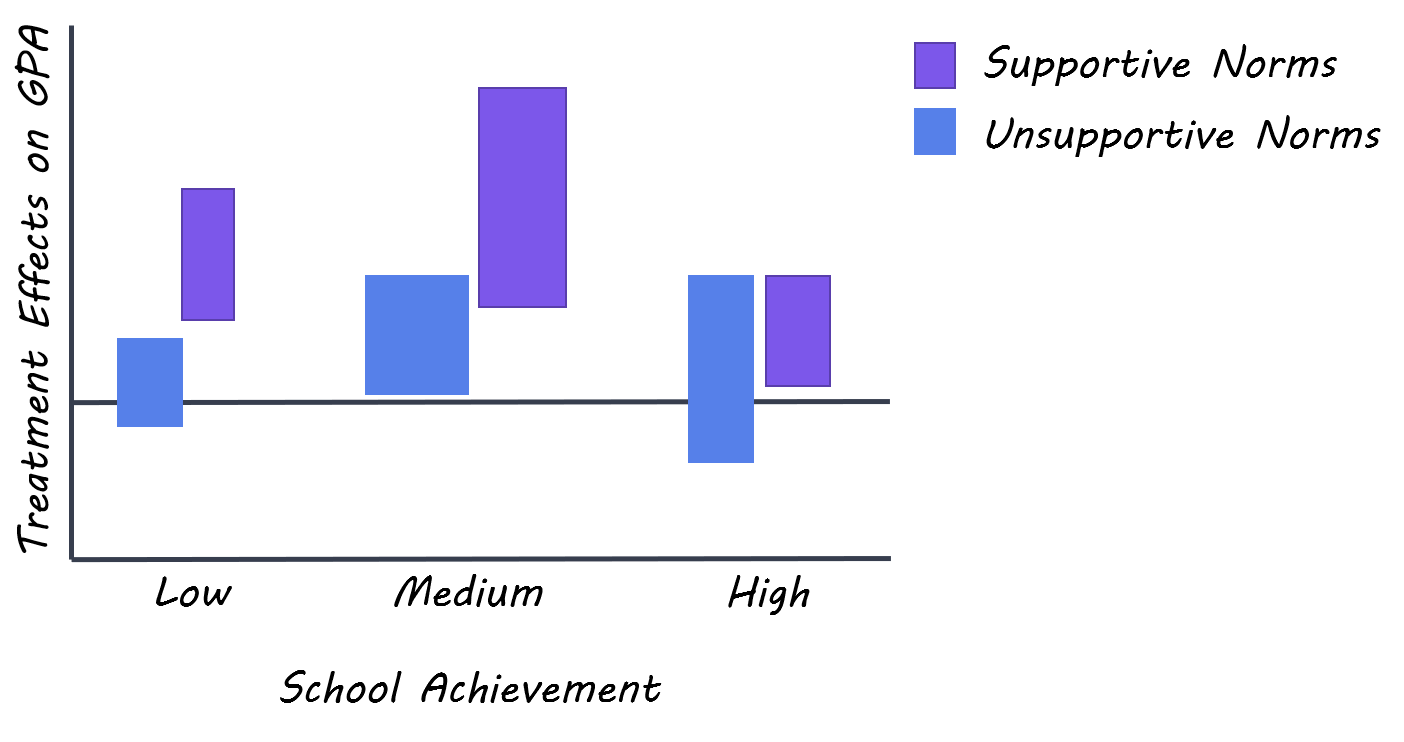
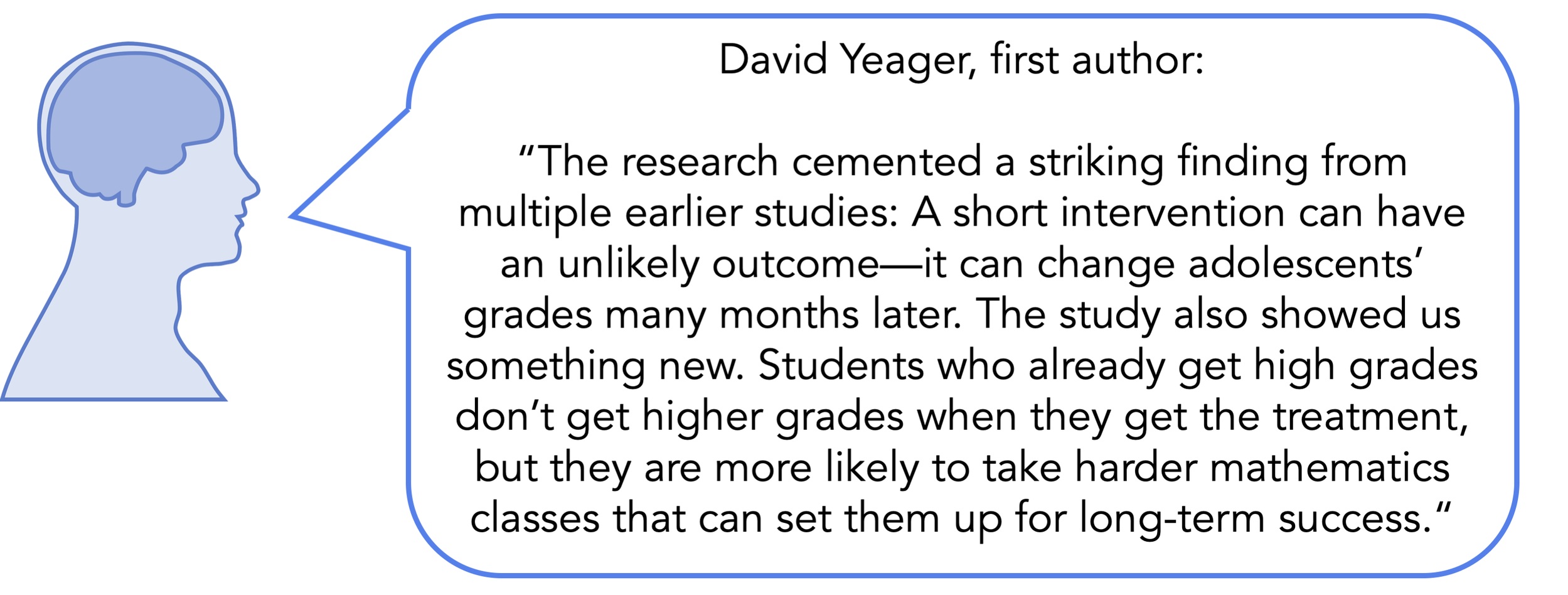
The authors found that lower-achieving students who received the intervention performed better than lower-achieving students who did not receive the intervention. This was true when the effect was quantified by assessing overall GPA as well as math-science GPA. The intervention was more effective in low and medium-achieving schools than in high-achieving schools. The authors found no significant difference in the treatment’s effectiveness in low vs. medium achieving schools, but point out that there is high variability in student performance in low-achievement schools. The intervention did still have an effect on students in high-achieving schools. For the top 25% of high achieving schools, the intervention increased the rate at which students enrolled in advanced math courses the following year by 4 percentage points. Students in school environments with peer norms that supported the adoption of intellectual challenges showed larger GPA benefits from the treatment. The authors interpret this result as suggesting that students in unsupportive environments may feel social pressure not to take intellectual risks in front of their peers. They also suggest that beliefs can affect how students react to ongoing academic challenges. The results from the Bayesian machine learning analysis confirmed these findings. 

growth_mindset_2_of_2.png

What's the impact?

A low-cost growth mindset intervention can have a substantial effect on grades and enrollment rates in advanced mathematics courses. The findings around context-specific treatment effects (e.g. school resources or peer environment) can be used to inform future types of interventions. Future interventions should target the messages students receive about learning ability from schools and assess additional challenges faced by adolescents, including social and interpersonal difficulties.

Yeager_quote.jpg

Yeager, D, Hanselman, P., et al. A national experiment reveals where a growth mindset improves achievement. Nature (2019). Access the original scientific publication here.
Cerebral Blood Flow Changes as a Potential Biomarker of Major Depressive Disorder

Post by Lincoln Tracy

What's the science?

Major depressive disorder (MDD) is a common mood disorder that is believed to be associated with changes in the brain. Researchers have used magnetic resonance imaging (MRI) techniques to identify brain-related biomarkers for other conditions such as Alzheimer’s disease. However, brain-related biomarkers have not yet been identified for use in the diagnosis or treatment of MDD. One noninvasive neuroimaging technique used to measure brain function is arterial spin labelling (ASL). In ASL a magnetic pulse labels blood before it enters the brain. The amount of labelled blood in each region of the brain can then be quantified; greater blood flow is typically indicative of greater activity in that brain region. This week in Molecular Psychiatry, Cooper and colleagues used ASL as part of a randomized, double-blind, placebo-controlled trial aiming to find brain-related biomarkers for the diagnosis and treatment of MDD.

How did they do it?

The authors recruited 200 individuals with MDD as well as 98 non-depressed individuals (to act as controls) as part of a clinical trial. All participants underwent a baseline MRI scan with an ASL sequence prior to starting their allocated treatment for the trial. The baseline MRI and ASL data was split into Discovery-Replication subgroups. The ASL-derived cerebral blood flow (CBF) data from the Discovery group was used in an exploratory manner to identify brain regions where CBF differed between MDD and non-depressed individuals. The Replication group was then used to independently confirm these CBF differences. The blood flow in regions where CBF differences replicated were then correlated with clinical features of MDD (e.g., length of illness, number of MDD episodes, age of MDD onset) to explore potential relationships between CBF and clinical features.  

What did they find?

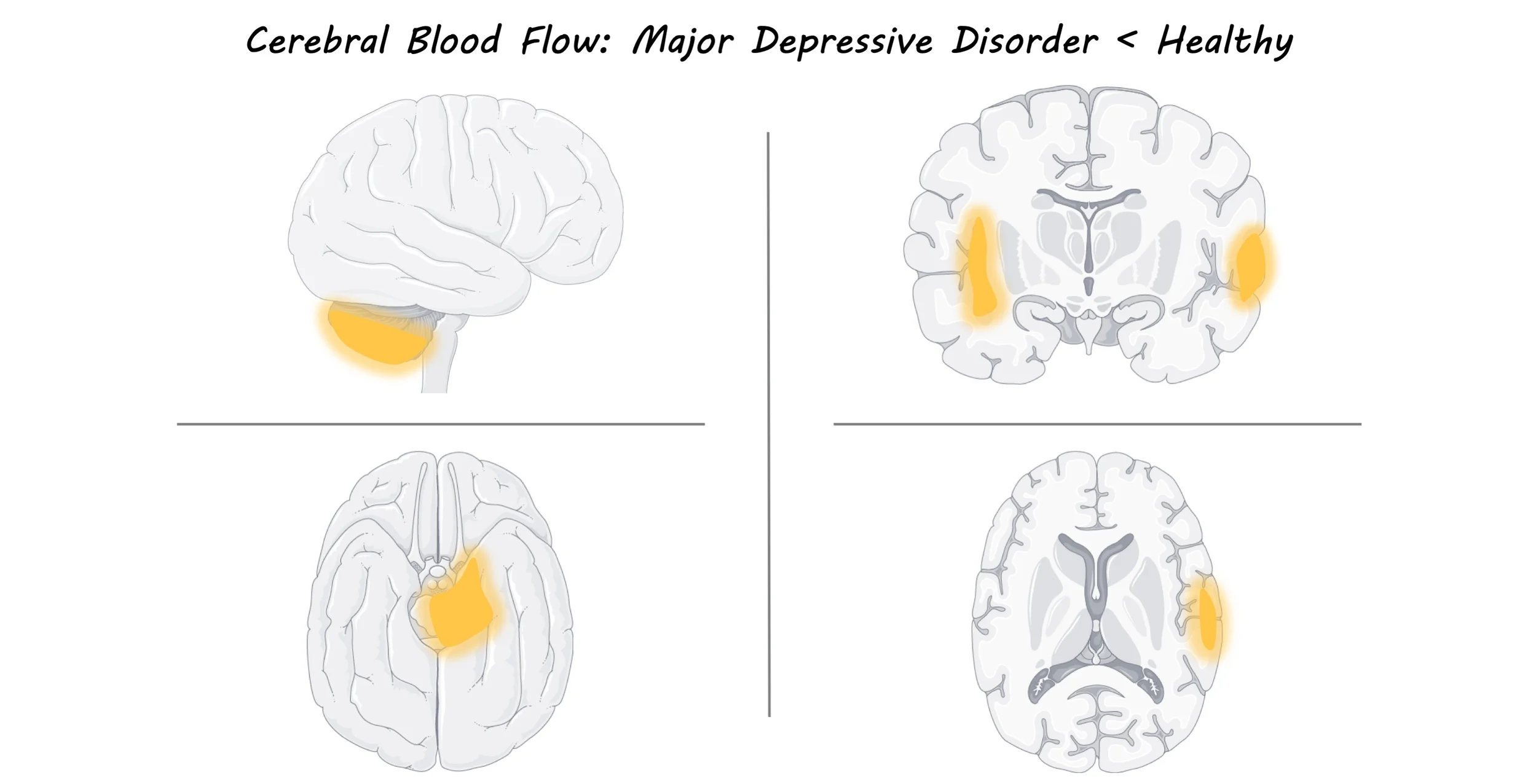
The Discovery sample showed that there were differences in CBF between the MDD and control participants. The MDD participants had lower CBF compared to the control participants in five brain clusters, and greater CBF compared to the control participants in five brain clusters. Using the regions of interest (ROIs) from the Discovery sample, the Replication sample confirmed three clusters where CBF was lower in individuals with MDD compared to the control participants—the cerebellum and midbrain regions, the right middle temporal gyrus, and the left insula. The Replication sample also confirmed three clusters where CBF was greater in individuals with MDD compared to the control participants—the left anterior prefrontal and dorsolateral cortices, the right inferior parietal lobule, and the left inferior parietal lobule. The CBF of several replicated ROIs were correlated with the clinical features of MDD. For example, the decreased CBF within the left insula negatively correlated with the length of illness. That is, a longer length of illness in individuals with MDD was associated with lower perfusion within the left insula.

MDD_image.jpg

What's the impact?

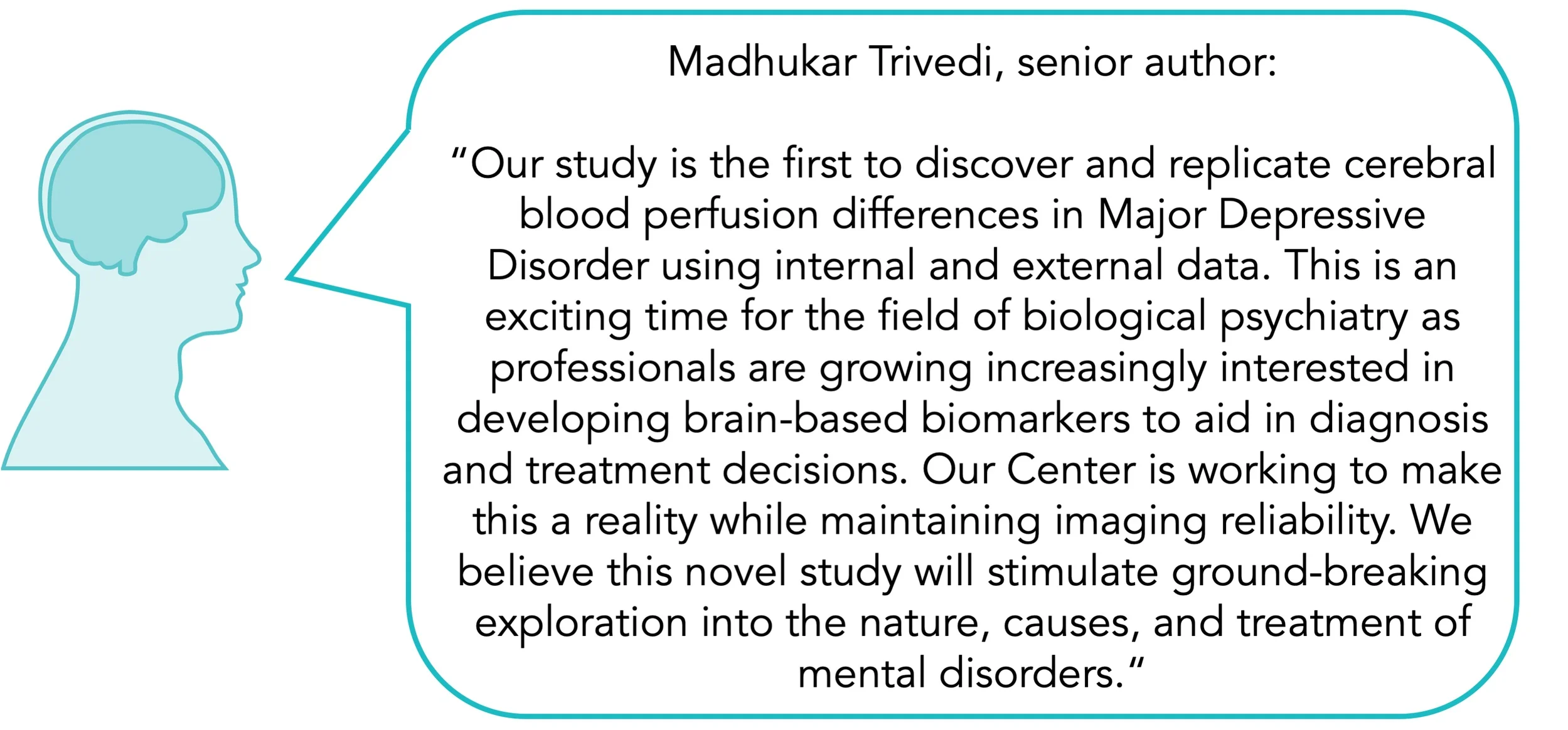
This study is the first to discover and provide unbiased confirmation of CBF differences in a large population of individuals with MDD. These are important and exciting findings for this field of research as there has previously been a lack of discovery-replication work. These findings suggest that CBF could serve as a potential marker for the long-term effects of MDD and may also serve as a potential mediator of responses to treatment. These findings also have implications for future studies aimed at developing CBF as a biomarker for the diagnosis and treatment of MDD and other clinical populations.

Trivedi_quote.jpg

Cooper et al. Discovery and replication of cerebral blood flow differences in major depressive disorder. Molecular Psychiatry (2019).Access the original scientific publication here.