Generating New Neural Patterns With Learning

Post by Anastasia Sares

What's the science?

Plasticity is a common buzzword in the neuroscientific community nowadays. It refers to the brain’s ability to re-organize itself in order to learn new skills or accommodate new information. But is it possible to induce plasticity in the brain and simulate real-world learning? This week in Proceedings of the National Academy of Sciences (PNAS), Oby and colleagues used a brain-computer interface to answer this question.

How did they do it?

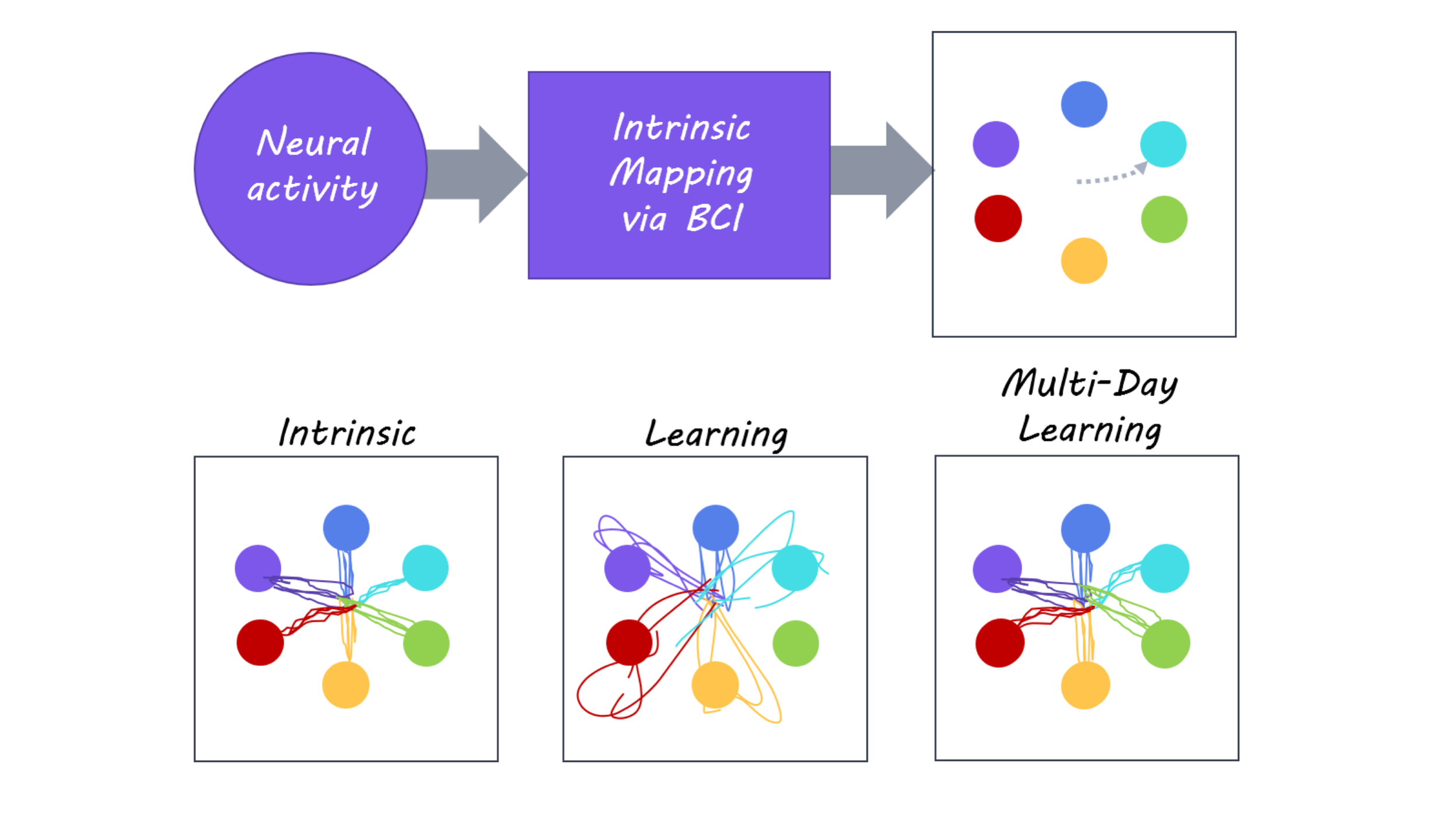
The authors implanted a set of electrodes in the motor cortex of monkeys. The monkeys first observed passively as a random target appeared on the edge of the screen, and a cursor moved towards it. Based on the activity of the neurons recorded during this initial phase, the researchers created a rough mapping of which patterns of neurons were associated with different aspects of the movement. Then, they allowed the monkeys to take control of the cursor by feeding their neural activity directly into the computer. This is known as a brain-computer interface. Throughout, they gave the monkeys rewards when they successfully moved the cursor to the correct target and continued to refine the mapping. This “intuitive mapping,” corresponded to the monkey’s natural neural patterns for this task.
anastasia_img.png

After the intuitive mapping was established, the researchers created new neural mappings that the monkeys would have to learn in order to perform the same task. There were two kinds of remapping. First, there was a simple transformation of the intuitive mapping, which would essentially keep the same neural patterns but re-assign the way they moved the cursor. Think of a video game controller that goes right when you press the “left” button. Second, they used a complex transformation, which forced the monkeys to produce completely new neural patterns, with different groups of neurons working in synchrony—a new kind of controller. The monkeys were then trained to complete the same task with these new mappings, either introducing them immediately or incrementally. Again, they were given rewards throughout, and their learning was tracked by measuring how many times they could move the cursor to the correct target in under 7.5 seconds.

What did they find?

The simple new mappings were easily learnable within a day and generally did not result in new patterns of neural activity. The complex mappings, on the other hand, were best learned over a number of days, with incremental training (gradually going from the intuitive mapping to the new mapping). The monkeys’ progress with the complex mappings over time resembled the way we learn other new, complex skills. The speed of their movements during the late stages of learning was faster than what would have been possible with the intuitive mapping, meaning that new neural activity patterns had been established in the monkey’s brains. Analyses of the neural activity for these complex mappings revealed changes in both the amount of firing for different neurons, as well as the correlation patterns between neurons.

Anastasia_Figure_2_Results_Figure2of2 (1).png

What's the impact?

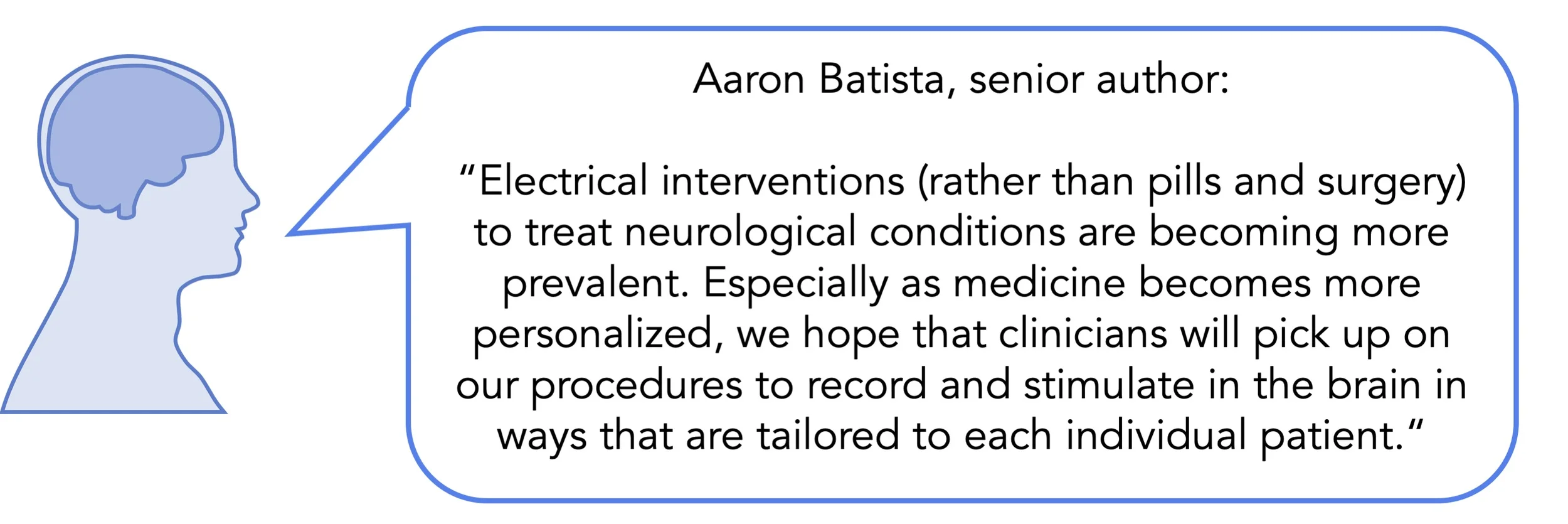
This work shows a causal link between the reorganization in a group of neurons and learning of a new skill. Though the physical connections between neurons were too small to be visible, the brains of these monkeys did develop different functional connections in order to improve on the task. Allowing neural activity to directly control the cursor eliminated many possible intermediary mechanisms. This also shows that fast, simple learning happens through a different mechanism than slow, complex learning.
learning_quote.jpg

Oby et al. New neural activity patterns emerge with long-term learning. PNAS (2019). Access the original scientific publication here.

mRNA Localization and Protein Synthesis in Neurons

Post by Sarah Hill

What's the science?

The proteins expressed in a cell drive its biological function. Neurons express ~12,000 different proteins that facilitate a number of functions, including rapid neurotransmission. Proteins are translated from a template mRNA, (protein synthesis), assuming that this occurs as a constant, steady-state process within the neuronal soma (cell body). However, unlike other round cells, neurons have a complex morphology with dendrites and axons branching out from the cell body forming synapses with other neurons. Proteins are required to enable functions such as neurotransmission at synaptic sites located a great distance from the cell body, on short notice. Previous research has demonstrated that a large fraction of postsynaptic (dendritic) proteins are translated locally within dendrites, offering an alternative mechanism to proteins being shuttled from the cell body to the dendrite where they are expressed. This week in Neuron, Fonkeu and colleagues offer new mechanistic insights on mRNA and protein turnover and propose a mathematical model that reliably incorporates the temporal and spatial dynamics of neuronal protein synthesis.

How did they do it?

To model the complex distribution of mRNA within a neuron, the authors first derived an equation that describes the production of an mRNA transcript in the cell nucleus, its subsequent transport to the soma and dendrites, and eventually, its degradation. They then derived a similar formula for neuronal protein distribution, based on a protein's translation from mRNA in the soma or dendrites, its potential transport throughout the cell, as well as its deterioration, noting that the protein distribution model eventually converges such that mRNA and protein synthesis, transport, and degradation balance out. To validate the model, the mRNA and protein formulas were applied using data for CaMKIIα, a key postsynaptic protein, important for synaptic plasticity. The CaMKIIα distribution predicted by the theoretical model was then compared to the distribution obtained experimentally through in situ hybridization and immunohistochemistry.     

What did they find?

Derivation of protein and mRNA distribution formulas enabled the authors to mathematically differentiate between distributions of proteins generated from somatic mRNA and those generated from dendritic mRNA. The distribution obtained experimentally closely matched that predicted by the model; the model indicated that 60% of CaMKIIα proteins were synthesized in dendrites. The model also successfully described three alternative protein distribution patterns, demonstrating its utility for a wide variety of protein and mRNA targets. Finally, they demonstrated the model's value in exposing how various formula parameters, such as mRNA transport velocity, diffusion coefficient, and degradation rate, affect final protein distribution. A slight decrease in mRNA transport velocity, for example, significantly alters the distribution outcome, while a mild to moderate change in the diffusion coefficient does not.                                     

sarah (1).png

What's the impact?

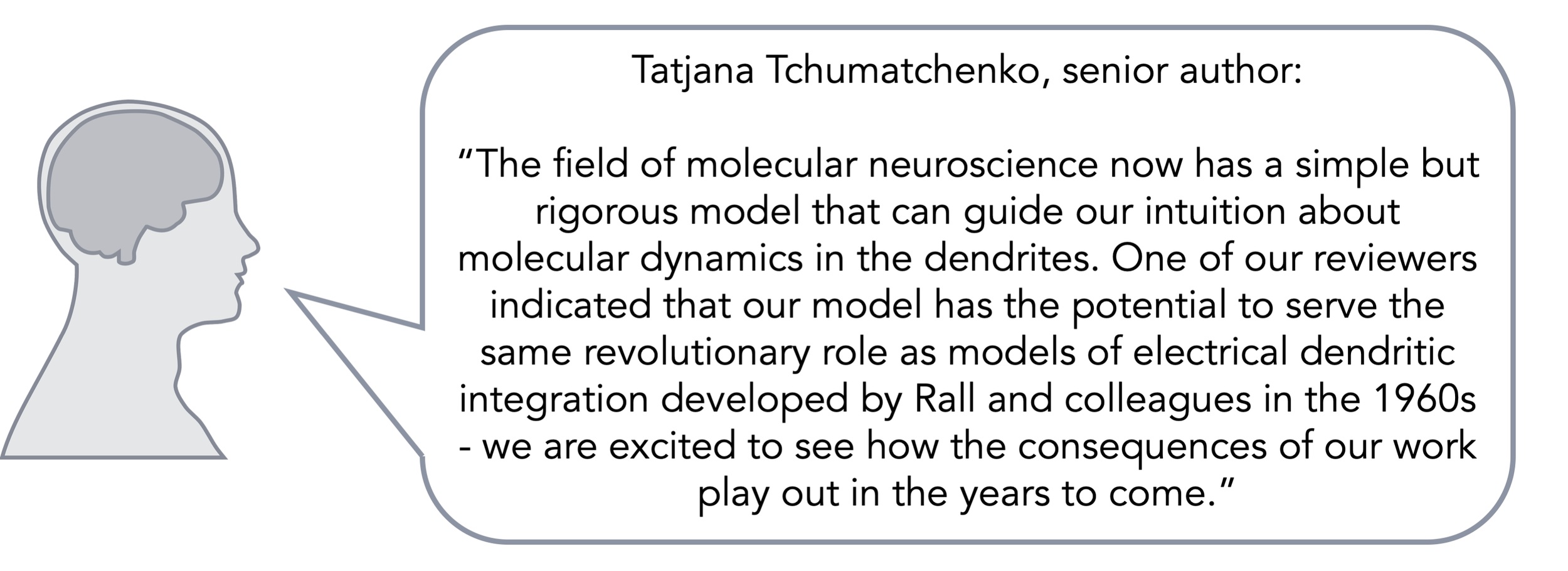
This is the first study to propose a model outlining the role of mRNA localization and dendritic translation of mRNA into protein far from the cell body in synaptic function. Given the high rates of mRNA and protein turnover, as well as the potential for mRNA localization in either somatic or dendritic sites, an overhaul of existing methods for predicting the distribution of proteins is needed to better capture the highly dynamic processes of neuronal transcription and translation. The model proposed in this study offers an improvement by better encompassing the range of biological nuances that regulate neuronal mRNA and protein stores.

dendrites.jpg

Fonkeu et al. How mRNA Localization and Protein Synthesis Sites Influence Dendritic Protein Distribution and Dynamics. Neuron (2019).Access the original scientific publication here.
Integration of New Dentate Granule Cells Requires Lateral Dispersion

Post by Amanda McFarlan

What's the science?

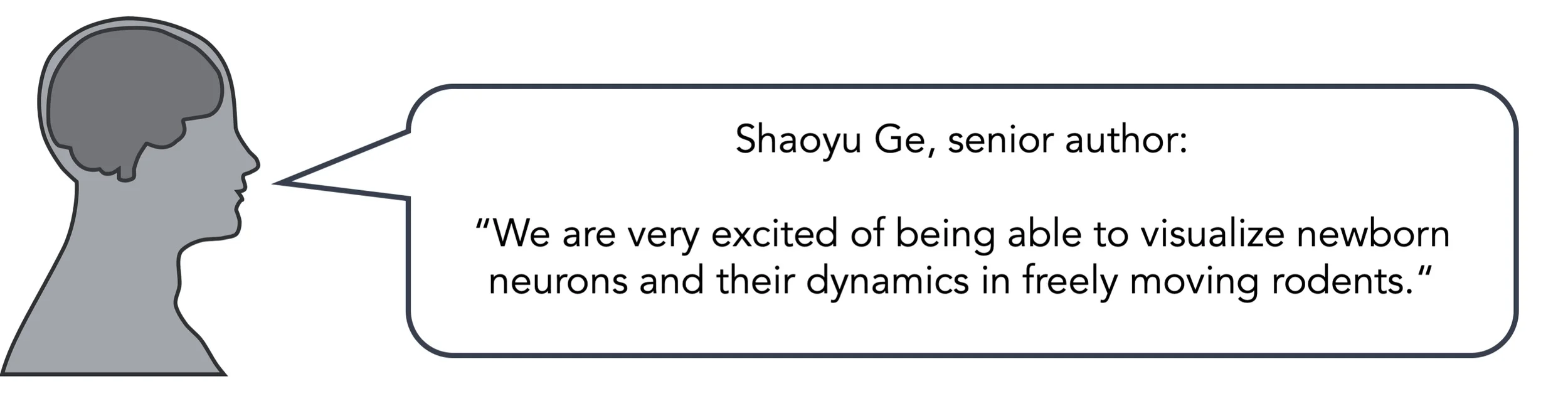
The subgranular zone in the hippocampus regularly generates new dentate granule cells (neural stem cells) in the adult brain. Studies using chemical and transgenic approaches to target these cells have demonstrated that they migrate laterally along the subgranular zone. However, the mechanisms by which these cells migrate and integrate into the existing hippocampal neural circuit remain largely unknown. This week in Nature Communications, Wang and colleagues investigated the developmental stages of newly generated dentate granule cells in the hippocampus using in vivo imaging techniques in awake, behaving mice.

How did they do it?

To characterize the kinetics and critical period of dentate granule cell dispersion, the authors infected newly generated dentate granule cells in adult mice with a virus encoding the green fluorescent protein (GFP) and used immunohistochemistry at days 5, 6, and 7 post-infection to track the movement of these cells relative to the subgranular zone. Then, to assess the dynamics of dentate granule cell dispersion, they performed in vivo imaging of GFP-positive dentate granule cells in freely behaving mice for 2 days. To further investigate this dynamic process, they used a spinning disk confocal microscope to image virally-labelled dentate granule cells in cultured tissue from adult mice every 30 minutes for 3 days. 

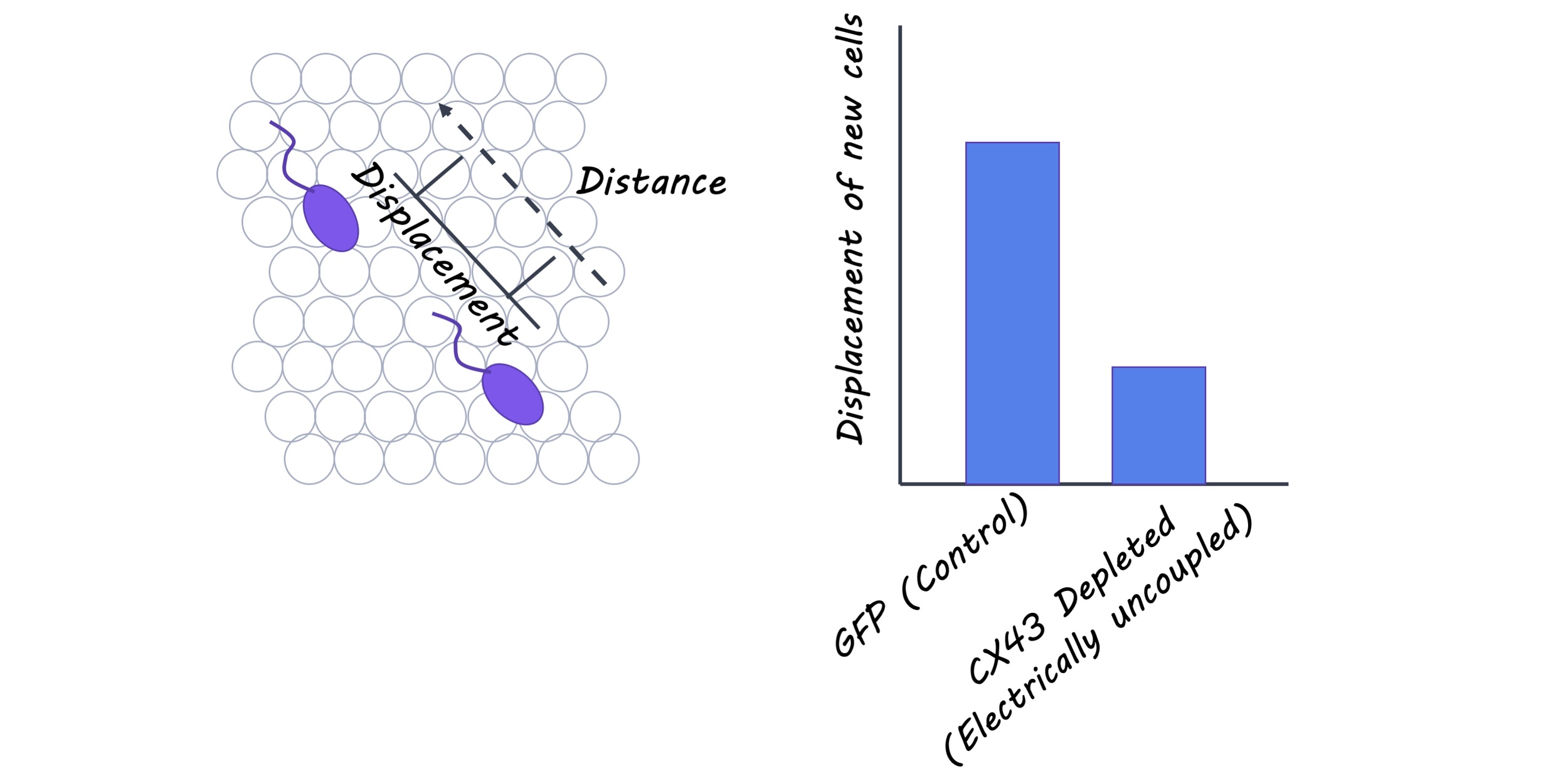
Next, the authors set out to determine whether newly generated dentate granule cells were electrically coupled, by performing whole-cell paired recordings of adjacent GFP-positive dentate granule cells in acute hippocampal slices. They also explored whether these cells were connected via gap junctions by labelling dentate granule cells with GFP in mice deficient for connexin 43 (a gap junction channel protein) and using in vivo imaging techniques to follow the dispersion of these cells. Finally, the authors investigated the importance of lateral dispersion for the integration of dentate granule cells into existing neural networks by expressing either a dominant-negative variant of the connexin 43 gene (disrupts the formation of gap junctions) or GFP (control) in dentate granule cells. They compared changes in dendritic morphology, membrane properties, and evoked and spontaneous synaptic transmission between the connexin 43-deficient and control dentate granule cells.

What did they find?

The authors found that the proportion of GFP-positive dentate granule cells that remained within ±10° relative to the subgranular zone decreased rapidly between days 5 and 7 post-infection, suggesting that dentate granule cells display a lateral dispersion pattern within this time period. In vivo imaging data collected across 2 days revealed that the average distance travelled by a dentate granule cell was 300 µm and the average speed was 5 µm/h, suggesting that the migration of these cells is highly dynamic. The authors also determined that most dentate granule cells moved in one direction, although a small subset of cells moved both forwards and backwards. When imaged in cultured tissue, they found that 35% of GFP-positive dentate granule cells dispersed in a leap-frog manner, jumping over adjacent cells. 

neurogenesis_img.jpg

Next, the authors determined that the frequency of electrically coupled cells decreased from day 5 to day 7 post-infection, suggesting that dentate granule cells become uncoupled following the cessation of lateral dispersion. They also found that bath application of carbenoxolone (a connexin blocker) disrupted the electrical coupling of dentate granule cells, suggesting that this coupling occurs through gap junctions. Additionally, in vivo imaging data revealed that lateral dispersion of dentate granule cells between days 5 and 7 post-infection is disrupted in connexin 43-deficient mice compared to controls, suggesting that this dispersion is dependent on electrical coupling via gap junctions. Finally, the authors showed that introducing connexin 43-deficiency in dentate granule cells between days 5 and 7 post-infection resulted in stunted dendritic growth compared to controls, while introducing connexin 43-deficiency in dentate granule cells after day 7 had no effect on dendritic growth compared to controls. Furthermore, they determined that connexin 43-deficient dentate granule cells had reduced evoked excitatory postsynaptic current amplitudes and a decrease in the frequency of spontaneous excitatory postsynaptic currents, suggesting that lateral dispersion of dentate granule cells is important for the integration of these cells into the neural circuit.

What's the impact?

This is the first study to show the developmental stages of newly generated dentate granule cells in the hippocampus of the adult mouse using in vivo imaging techniques. The authors demonstrated that lateral dispersion of the dentate granule cells early on in requires electrical coupling via gap junctions and is necessary for normal dendritic development and circuit integration of these cells. Altogether, these findings provide insight into the migration and integration of new hippocampal cells in the adult brain.

neurogenesis.jpg

Wang et al. Lateral dispersion is required for circuit integration of newly generated dentate granule cells (2019).Access the original scientific publication here.