
The Impact of Language Experience On Perceiving Speech in Noisy Situations

Post by Anastasia Sares 

What's the science?

Researchers have been trying to crack the code of human speech processing for a long time. Speech perception is often tested in a quiet lab setting, but in everyday life, we experience noisy environments and have to figure things out based on context. In addition, there may be differences in the way we process our native language versus a second language acquired later in life. This week in Brain and Language, Kousaie and colleagues looked at how these factors interacted during speech processing.

How did they do it?

To answer their question, the authors recruited three groups of people who spoke both English and French fluently. There was no difference between the groups in terms of language proficiency; only the age that they had learned their second language varied. The first group were simultaneous bilinguals, who had learned both languages from birth (their “second language” was defined as their less dominant one or the one they used less). The next group had learned at an early age, between 3-5 years old. The last group had learned “late,” between 6-9 years old.

The three groups performed a speech discrimination task, where they listened to sentences and had to repeat the final word. Some sentences were presented in the participant’s first language and some in their second language. Some sentences were “high context,” meaning it was easy to predict the last word based on the rest of the sentence (“Stir your coffee with a spoon”), while others had low context, meaning the last word was less predictable (“Bob could have known about the spoon”). Finally, some sentences were presented in quiet, whereas others were played with a background noise of babble-talk, much like you’d find at a café or a bar, for example.

Participants did the test in an MRI scanner, with the scanner turned off during the presentation of stimuli so that the scanner noise didn’t interfere with the speech perception (a technique called sparse-sampling).

What did they find?

Predictably, their performance was almost perfect when the sentences from either language were presented in quiet. The differences appeared when noise was introduced. While working in their first language, everyone benefited from high-context sentences to help them discriminate speech in noise. However, when working in their second language, the later learners did not benefit as much from high-context sentences. Keep in mind that all participants were highly proficient in both languages, and only differed on the age they learned them.
anastasia (2).png

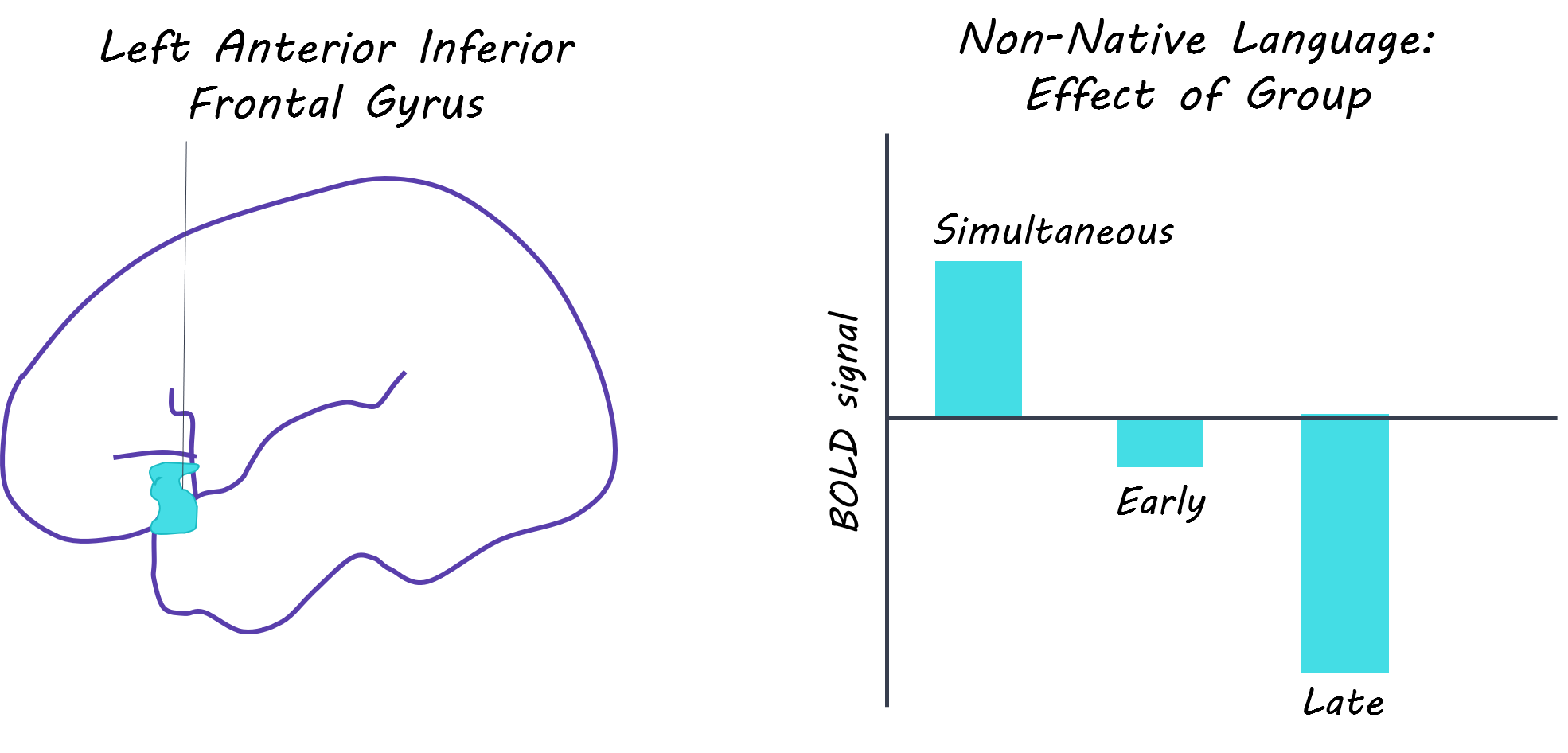
Looking at brain activity, the authors focused on this noisy second language condition. Simultaneous bilinguals showed increased activity in the left inferior frontal gyrus for low-context sentences in noise. This is likely due to the effort of the discrimination, made harder by the lack of context. The later learners, on the other hand, showed the most activity during high-context sentences! The authors suggest that this means their brains "gave up" in the low-context, noisy, second language condition since it was too demanding for them.

What's the impact?

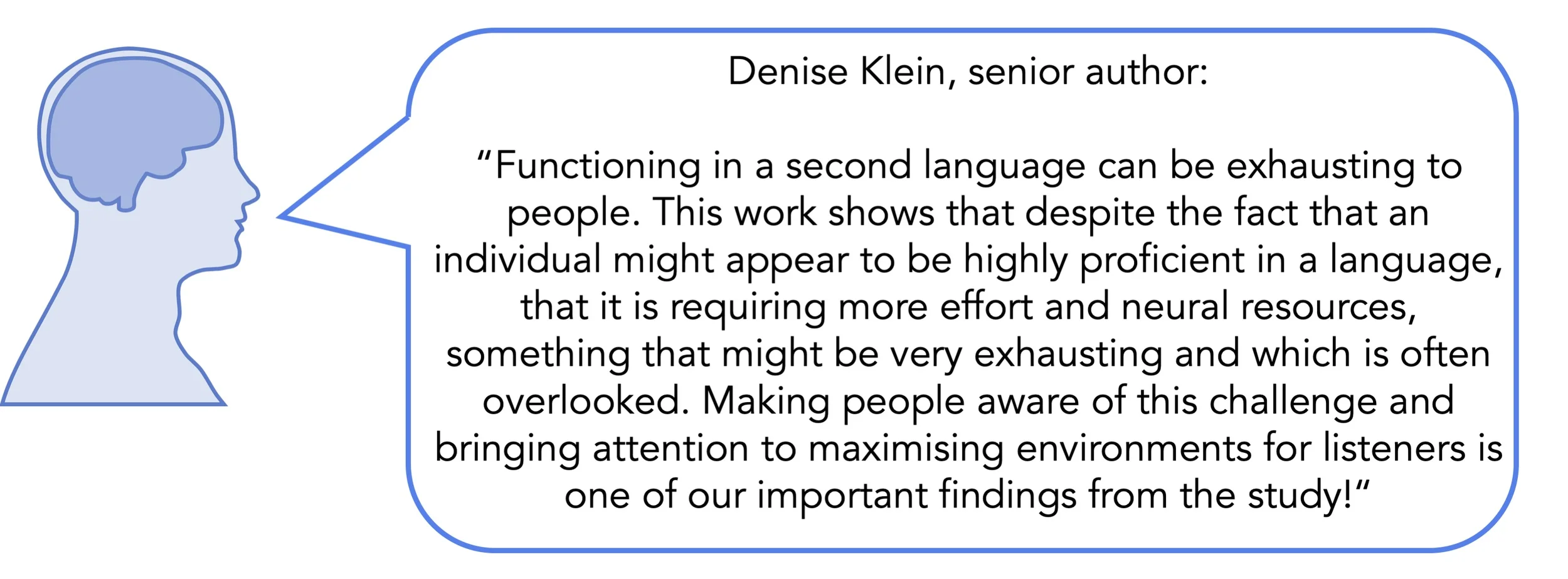
This work is consistent with theories that our neural resources are limited, and that despite appearing perfectly fluent, people who have learned a second language later in life might be using more resources just to keep up in difficult listening situations. Finding a quiet place to talk might help them use their mental energies more effectively!
language.jpg

Kousaie et al. Language learning experience and mastering the challenges of perceiving speech in noise. Brain and Language (2019). Access the original scientific publication here.
Uninterrupted REM Sleep is Critical for Processing Distressing Emotions

Post by Elisa Guma

What's the science?

One function of sleep is thought to be resolving emotional distress via reactivation and reorganization of neuronal circuits that were activated during the emotional experience. Animal studies have shown that reactivation may occur in the transition period from slow-wave sleep to rapid eye movement (REM) sleep, known as the ‘transition to REM’ sleep phase, whereas memory transformation may occur during REM sleep. To date, no human study has investigated how 'transition to REM' sleep and REM sleep interact to influence emotional memory circuits. This week in Current Biology, Wassing and colleagues set out to investigate whether interruption of transition to REM and REM sleep could prevent adaptation of the limbic system circuitry (neuronal circuits involved in emotional regulation) in humans. 

How did they do it?

The authors recruited 29 participants with a wide range of insomnia severity. Participants’ limbic system activity (with a focus on the amygdala) was assessed using functional magnetic resonance imaging while they listened to audio fragments of themselves singing out of tune to get a brain signature of self-conscious emotion (shame and embarrassment). This was performed before, and after sleep in order to assess overnight amygdala adaptation to the emotional stimulus. Brain activity during sleep was recorded using electroencephalography to determine the total duration of REM and 'transition to REM' episodes, as well as the frequency of interruptions of those episodes. This allowed the authors to compare amygdala activity before and after sleep in response to self-conscious emotion, and to correlate its overnight adaptation with the quality of REM and 'transition to REM' episodes. 

In a subset of participants (13) who were able to differentiate odours successfully, the initial distressful exposure (listening to themselves sign out-of-tune) was conditioned to a specific odour, whereas a neutral exposure (listening to someone else sing in-tune) was conditioned to a different odour. This allowed the authors to reactivate the negative memory during sleep by presenting the different olfactory cues. The authors assessed the proportion of time that the ‘transition to REM’ and REM episodes coincided with the presentations of olfactory cues. 

What did they find?

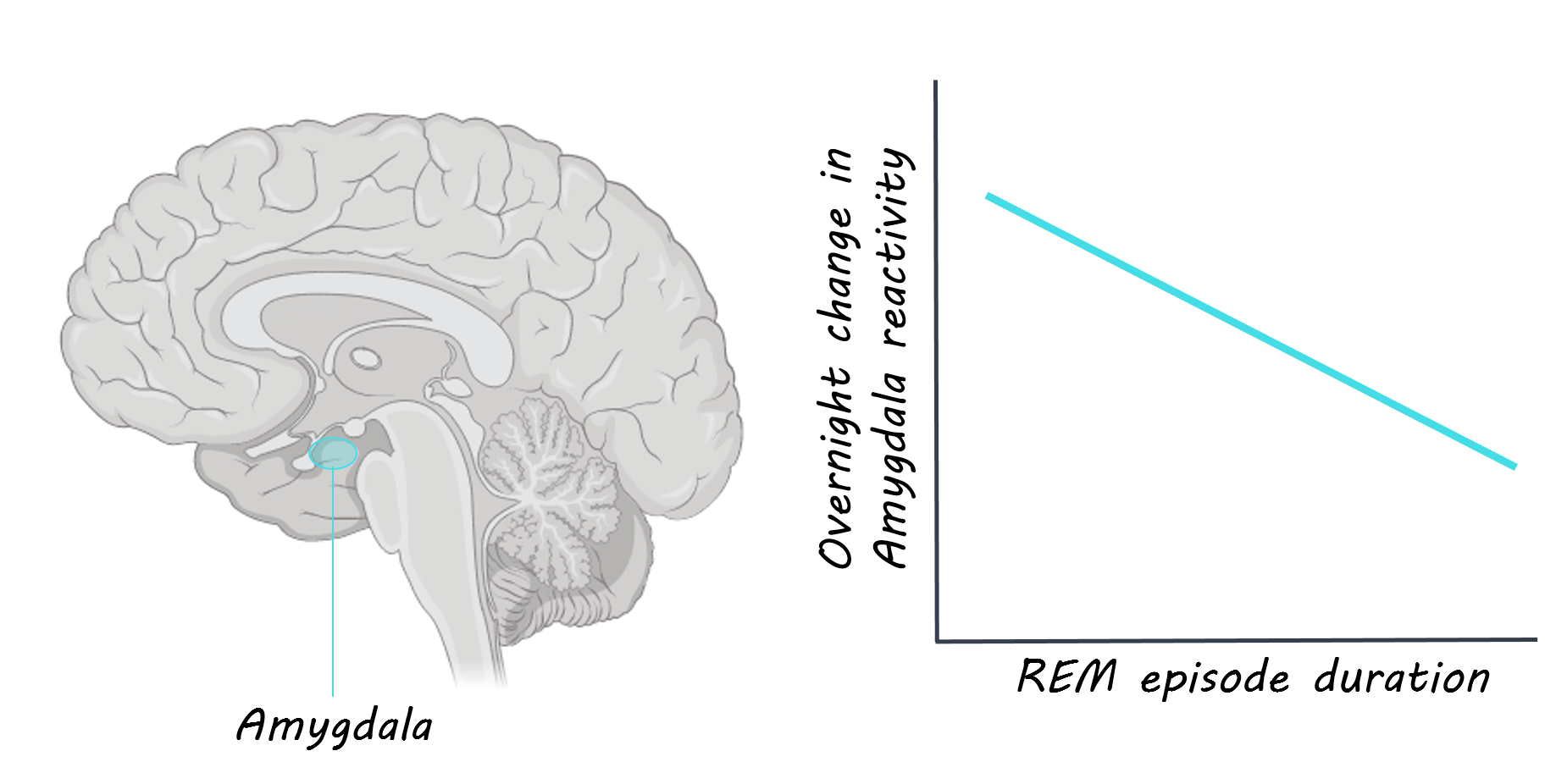
The authors observed a significant activation of the limbic system while participants experienced self-conscious emotion (out-of-tune singing). They found that amygdala activation decreased after a night of sleep and that this decrease was proportional to the duration of REM sleep, suggesting that REM sleep is critical in decreasing our reactivity to negative emotions. The ‘transition to REM’ duration was not associated with amygdala reactivity, however, longer ‘transition to REM’ episodes boosted the effect of REM sleep duration on overnight adaptation, suggesting that the role of ‘transition to REM’ might be more indirect. Interestingly, they also observed that more REM sleep interruptions were associated with less overnight adaptation in amygdala reactivity. 

elisa3.png

In the subset of individuals who experienced memory reactivation with the odour conditioned to their own singing stimulus, the authors observed that if the reactivation occurred during restful REM sleep, this actually enhanced the decrease in amygdala reactivity. However, in those participants that had restless, interrupted, REM sleep, this memory reactivation had adverse effects of amygdala reactivity, leading to a smaller overnight decrease in reactivity. 

What's the impact?

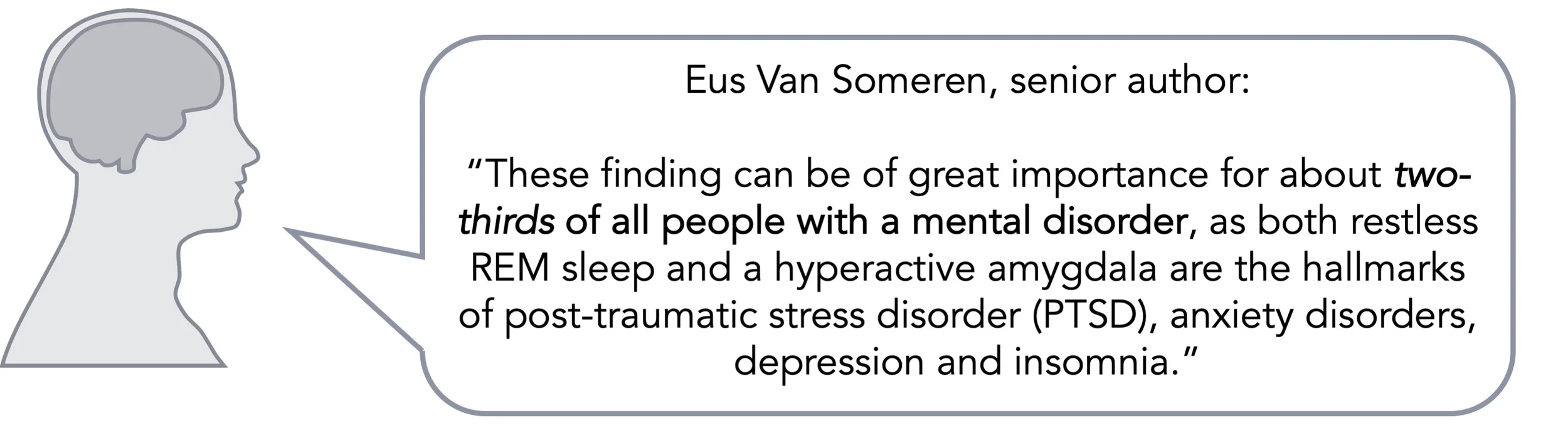
This study showed that sleep, specifically REM and the preceding 'transition to REM' stage, is critical in decreasing the neural activity associated with a distressing emotion. This can only occur if these stages are not interrupted or compromised. These findings provide further understanding of the role of REM sleep in emotional processing. A better understanding of these underlying mechanisms may help individuals whose REM sleep is chronically interrupted, such as those suffering from insomnia, childhood adversity, depression, anxiety or post-traumatic stress disorder. 

VanSomeren_quote_Jul23.jpg

Wassing et al. Restless REM sleep impedes overnight amygdala adaptation. Current Biology (2019). Access the original scientific publication here.
Development of a Viral Vector Library to Target Retinal Cell Types

Post by Lincoln Tracy 

What's the science?

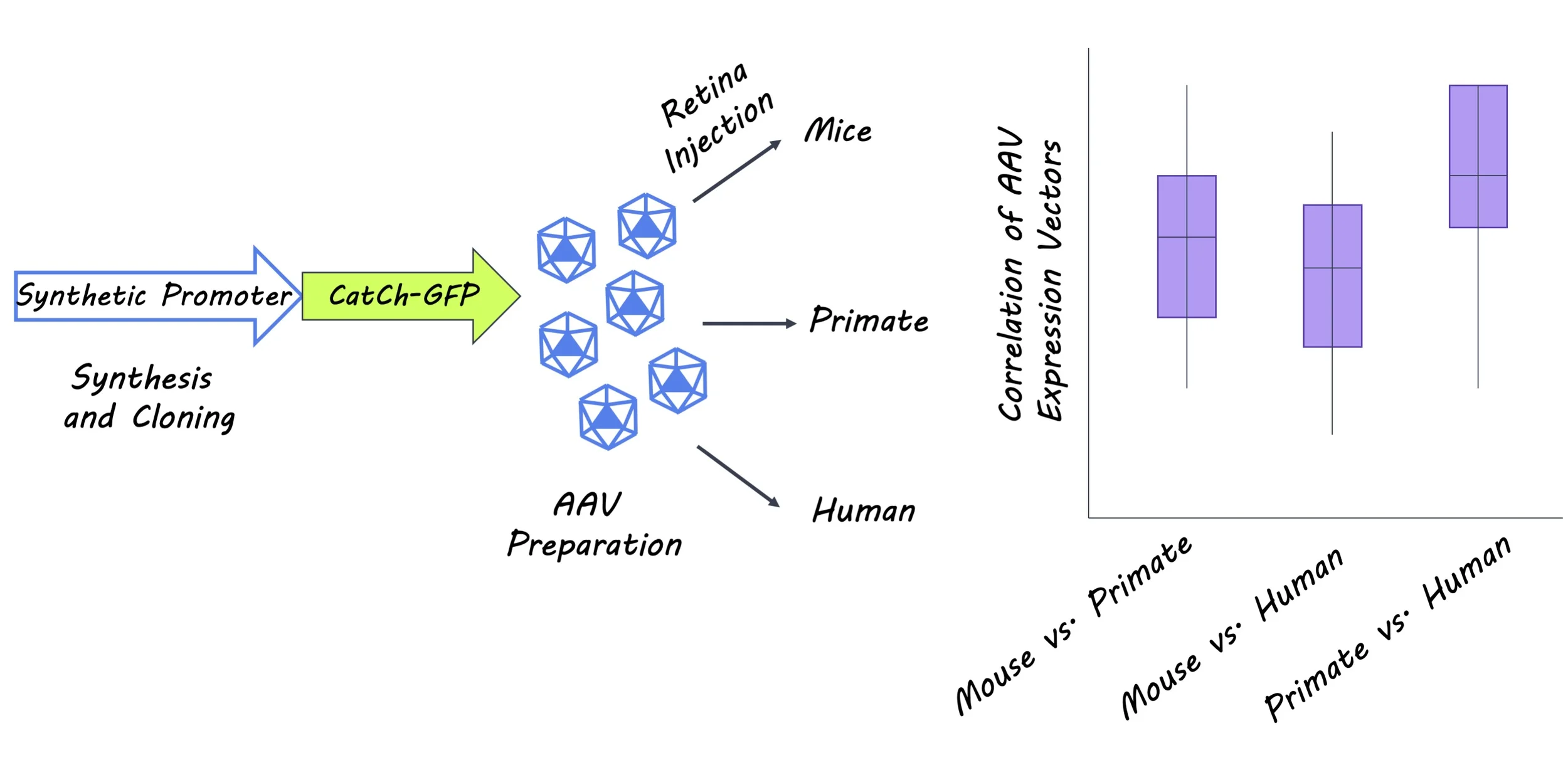
Being able to target genes that are specific to neuronal or glial cell types is critical for the understanding and repairing of brain circuits. Most of the currently available technologies for cell-type targeting requires the use of transgenic animals, which have several limitations. For example, using a transgenic component prevents such therapies being used in humans. These limitations may be overcome using Adeno-associated viruses (AAVs) - viruses that are able to deliver genes to particular cell types. AAVs are commonly used in both basic research and gene therapy as they are safe for use in a variety of species—including non-human primates (NHPs) and humans—and are simple, cheap, and easy to make. This week in Nature Neuroscience, Jüttner and colleagues created a library of 230 AAVs—each containing a different synthetic promoter designed from one of four unique strategies—to allow transgene expression in retinal cells in mice, NHPs, and humans.

How did they do it?

First, the authors created a library of 230 AAV plasmids, each containing a different synthetic DNA sequence ranging between 113 and 2501 base pairs in length. They used four different strategies to construct the 5` sequences (synthetic promoters). The four groups of promoters created by each strategy were named group ProA, ProB, ProC, and ProD. Two-hundred and twenty-six of the AAVs were also designed to drive a channelrhodopsin variant fused to green fluorescent protein (CatCh-GFP) as an optogenetic tool. The four remaining AAVs were designed to express only GFP. Second, they injected the collection of 230 AAVs underneath the retina in the eyes of mice. Four mouse eyes were used for each AAV. Transgene expression of the AAVs throughout the retina was evaluated three to four weeks later using confocal microscopy. Third, they injected a subset of the AAVs into the eyes of the NHP Macaca fascicularis. Like the mice, four viruses with different synthetic promoters were injected into each distinct quadrant of the eye. Transgene-expressing cells were analyzed three months post-injection. Fourth, the same subset of AAVs injected into the NHPs were injected into retinas taken from deceased individuals with no history of eye disease. Immunofluorescence analysis was performed at seven weeks post-injection to identify if and which AAVs had reproducibly resulted in gene expression. Finally, they partitioned retinal cell types into one of eight different groups to quantify the translatability of the AAV targeting across the three different species.

What did they find?

First, the authors found that 113 of the 230 synthetic promoters were active in the mouse retina. Thirty-two promoters resulted in successful targeting, defined as (i) cell-type-specific labelling with 90% specificity or greater, (ii) cell-type-specific labelling with 50% specificity or greater where the only contamination was Müller glia, or (iii) cell class-specific labelling with a 70% or greater specificity. The ProD promoters had the highest targeting success rate in the mouse retina. While several promoters were successful in their targeting, less than 1% of the promoters replicated the expression specificity of their source genes. Several promoters drove CatCh-GFP expression in specific photoreceptors, such as the ProA1 and ProA4 promoters driving CatCh-GFP expression in cone photoreceptors. Second, they identified 94 AAVs that produced either reproducible or no gene expression in the NHP retina three months after injection. Sixty-two AAVs were active, and 23 led to successful targeting. The ProA1 and ProA4 promoters were again found to drive gene expression in cone photoreceptors in the NHP retina. Third, they found that 84 of the 113 AAVs injected into human retinas reproducibly resulted in expression or no expression, 52 of which were active. Nineteen of these AAVs led to successful targeting. Fewer promoters preferentially targeted specific cell types compared to what was observed in mice and NHP’s. Finally, they found that the ability of an AAV to target a cell group in NHPs was a better predictor of targeting the same cell group in humans versus the ability of an AAV to target a specific cell group in mice predicting targeting ability in humans.

Leigh_image.jpg

What's the impact?

These findings are the first report of a broad spectrum of AAVs targeting neuronal or glial cell types, especially in NHPs and humans. The results of this study suggest that the absence of the expression of a specific cell type or class in mice can be used as a useful proxy for the absence of expression in humans (i.e. the AAV vector does not need to be tested in humans). The resources provided by the authors have different levels of potential for basic and translational research in mice, NHPs, and humans. The authors have also created an online database of three-dimensional confocal scans for the AAVs that yielded reproducible labelling, which can be used by other researchers to search for cell types activated by active AAVs. Overall, the resources and approaches described by the authors allow for economic and efficient cell-type targeting across a range of species for basic science and gene therapy. 

Roska_quote_Jul23.jpg

Jüttner et al. Targeting neuronal and glial cell types with synthetic promoter AAVs in mice, non-human primates and humans. Nature Neuroscience (2019). Access the original scientific publication here