
CHRNA2 Under-Expression Is Linked to Cannabis Use Disorder

Post by Shireen Parimoo

What's the science?

With increasing legalization of cannabis, more research is being devoted to the long-term effects of cannabis use on brain health. Cannabis use disorder (CUD) is characterized by symptoms like psychosis and cognitive impairment, and research suggests that there might be a genetic basis to CUD susceptibility. Genome-wide association studies (GWAS) analyze genomes (genetic maps) of a large number of people to identify genetic variants (with known locations in the genome) that are associated with various diseases. Recent GWAS have led to mixed results regarding the heritability of CUD susceptibility, either failing to identify genes associated with CUD or linking different genetic variants with cannabis use. Thus, the genetic contribution to CUD risk is not entirely clear. This week in Nature Neuroscience, Demontis and colleagues conducted a GWAS to identify genetic markers associated with CUD.

How did they do it?

Genetic data of 2387 individuals with a CUD diagnosis and 48,985 individuals without CUD (controls) was obtained from iPSYCH, a database containing DNA data of a large sample of the Danish population. The genetic data included about 9 million genetic variants in the genome of each of the individuals analyzed. In a GWAS the individuals should not be related and should be similar with respect to ethnicity, which the authors carefully controlled before moving forward with the analysis. To determine if any of the variants were associated with CUD, they first performed an association analysis using logistic regression (a statistical technique) in order to see if there were any genetic variants that were overrepresented in individuals with CUD compared to controls.

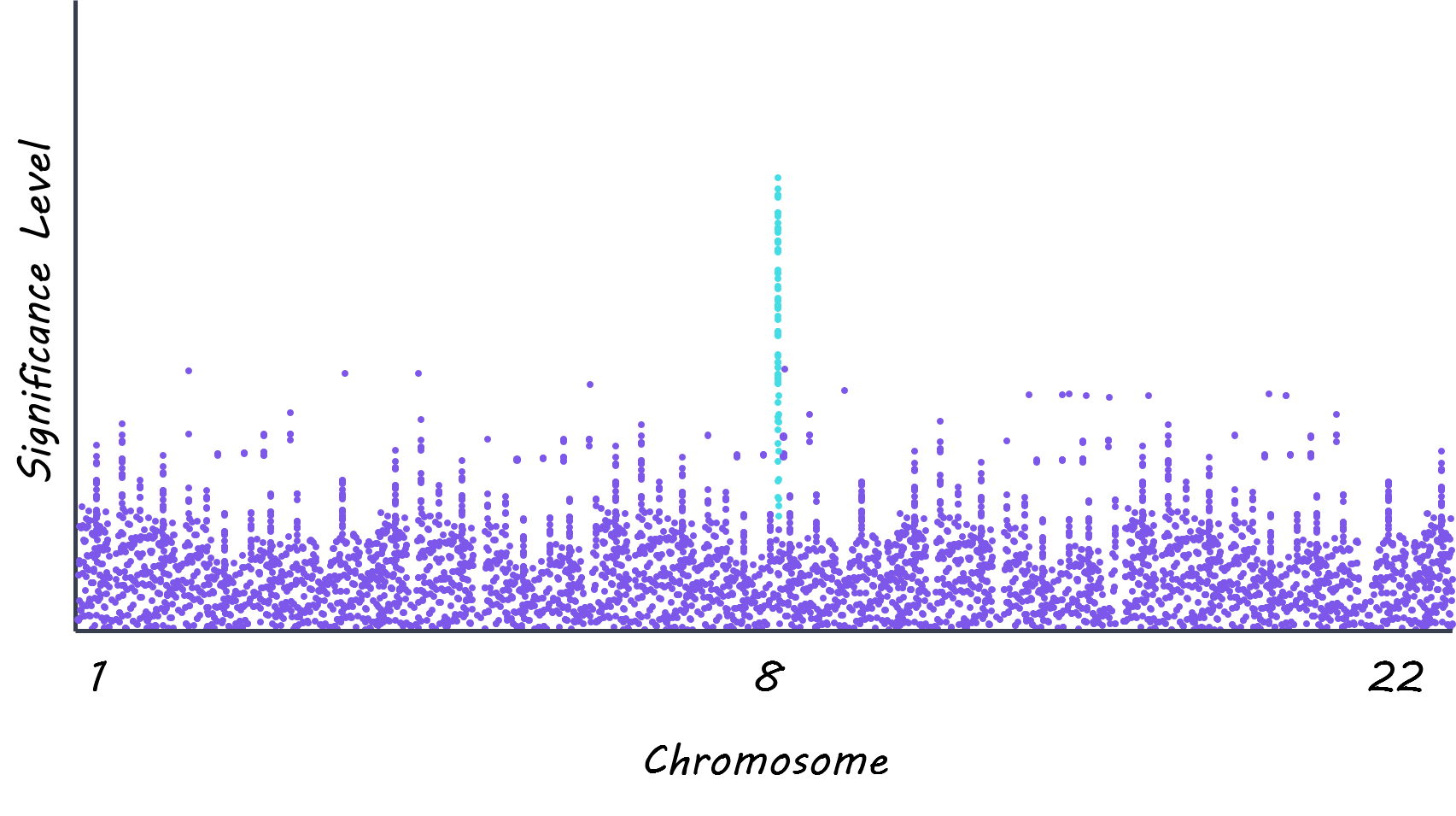
In the GWAS the authors identified one place in the genome linked to increased risk of CUD. To ensure the robustness of the identified genetic risk variant, the authors evaluated the finding in genome data from a separate dataset from Iceland to see if they could replicate the finding. A polygenic risk score analysis was also conducted to determine whether the results from the two GWAS were reliable. In this analysis, all of the genetic markers associated with CUD are used to predict the risk of developing CUD. Thus, they used the risk scores calculated from genetic markers identified from the two GWAS to determine how reliably the markers are associated with CUD. They further tested the association between age at CUD diagnosis and the dosage of the identified genetic markers. Finally, they used transcriptomes containing information about gene expression in various parts of the brain to identify genes that are functionally related to CUD.

What did they find?

The authors identified one place in the genome with genetic variation significantly related to CUD, located on chromosome 8 (a result which was replicated in the independent cohort from Iceland). The polygenic risk score analysis revealed that the identified genetic markers were not related to other psychiatric disorders like schizophrenia and were specific to CUD. The authors also identified the index variant as rs56372821 in both GWAS, which is the genetic marker that is most significantly associated with CUD. This genetic marker had a risk allele and a protective allele. Interestingly, of the individuals diagnosed with CUD, those who had the risk alleles were diagnosed with CUD about one year earlier than those with the protective allele of the gene. Thus, having the protective allele of the index variant identified in these studies might result in delayed development or diagnosis of CUD. In the brain, the index variant was further related to CHRNA2 expression. The CHRNA2 gene is related to the expression of an acetylcholine receptor subunit that has previously been linked to substance dependence and abuse. When the expression of CHRNA2 was compared across individuals with CUD and controls, the authors found a reduction in CHRNA2 expression in the former group in the cerebellum, the cerebellar hemispheres, and the dorsolateral prefrontal cortex. This suggests that CHRNA2 expression may play a functional role in susceptibility to developing CUD.
Shireen.png

What's the impact?

This study identified genetic variants associated with the risk of developing CUD using GWAS, replicating the findings in an independent sample of individuals with CUD and controls. The finding linking the index variant to CHRNA2 expression in the cerebellum is particularly interesting because there is a high concentration of cannabinoid receptors (that cannabis acts on) in the cerebellum. Thus, there might be a potential functional link between CUD and CHRNA2 expression that could be investigated by future studies.

Demontis et al. Genome-wide association study implicates CHRNA2 in cannabis use disorder. Nature Neuroscience (2019).Access the original scientific publication here.


Dendritic Excitability and Synaptic Function Are Impaired with Haploinsufficiency of the Autism-Associated Gene Scn2a

Post by Amanda McFarlan

What's the science?

The Scn2a gene, encoding the protein for the Nav1.2 voltage-gated sodium channel, has been identified as one of the most commonly affected genes in Autism Spectrum Disorder. In the early stages of brain development, the Nav1.2 channel is the only sodium channel isoform that is expressed in the axons of cortical pyramidal neurons and is therefore critical for the initiation and propagation of action potentials. In later stages of development, however, the Nav1.2 channels in the axon and distal initial axon segment are replaced with the Nav1.6 channel (another voltage-gated sodium channel encoded by the Scn8a gene). This switch in ion channel expression in cortical pyramidal cells leaves the Nav1.2 channel restricted to the proximal initial axon segment where it is thought to be important for the backpropagation of action potentials. This week in the Neuron, Spratt and colleagues investigated the consequences of reduced function of the Nav1.2 channel on cortical neuron excitability and plasticity throughout development.

How did they do it?

The authors assessed the role of Scn2a haploinsufficiency (reduced function of Nav1.2 channel) on neuron excitability during development by targeting layer 5b pyramidal neurons in the medial prefrontal cortex for whole-cell recording. To do this, they used acute slices from Scn2a+/- mice (reduced function of Nav1.2 channel) and wildtype mice (normal function of Nav1.2 channel) between postnatal day 4 and 64. Next, the authors investigated the impact of reduced neuronal excitability on cell signaling by altering the localization and density of Nav1.2 and Nav1.6 channels in the soma, axon and dendrites in a computational model of cortical pyramidal cells. Then, they explored the effect of Scn2a haploinsufficiency on dendritic excitability by imaging calcium transients from backpropagating action potentials along the apical dendrite of layer 5 pyramidal neurons in Scn2a+/- mice. They repeated this experiment in wild-type mice while acutely blocking sodium channels with a low, sub-saturating dose of tetrodotoxin, to determine whether changes in dendritic excitability were caused by an acute loss of Nav1.2 rather than a loss of Nav1.2 during development. Next, the authors recorded miniature excitatory postsynaptic currents and miniature inhibitory postsynaptic currents in Scn2a+/- mice and wildtype mice at postnatal days 6 and 27 (important developmental stages for axon and dendritic development, respectively) to assess whether Scn2a haploinsufficiency affects the development of functional synapses. They investigated this further by performing plasticity experiments in Scn2a+/- mice, wild-type mice and wildtype mice treated with a low dose of tetrodotoxin. For these experiments, they targeted layer 5 pyramidal cells for whole-cell recording and induced long-term potentiation by pairing extracellular stimulation of layer 1 dendritic processes with action potentials. Finally, the authors used behavioural tests to assess different behavioural traits, including locomotion, anxiety, repetitive behaviour, sociability, and learning, in both male and female Scn2a+/- mice.

What did they find?

The authors found that the action potential threshold was more depolarized in pyramidal neurons in Scn2a+/- mice compared to wildtype mice during the first postnatal week, but these differences did not persist afterward. They also determined that pyramidal neurons in Scn2a+/- mice had a reduction in action potential velocity compared to wildtype mice that became more prominent as the neurons matured, suggesting that Scn2a haploinsufficiency impairs neuronal excitability throughout development and into adulthood.

Next, the authors revealed that their computational model best fit their real-world observations when Nav1.2 and Nav1.6 channels were equally expressed in the somatodendritic region. They showed that removing half the Nav1.2 channels resulted in a reduction of the action potential velocity (similar to what was observed in Scn2a+/- mice) as well as an attenuation in backpropagating action potentials, suggesting that the mechanisms involved in the backpropagation of action potentials may be impaired by Scn2a haploinsufficiency. In support of this finding, the authors determined that calcium transients in the apical dendrites of pyramidal neurons (indicative of backpropagating action potentials) rapidly decreased in amplitude in a distance-dependent manner from the soma in Scn2a+/- mice and wildtype mice treated with tetrodotoxin but were reliably observed throughout the entire apical dendrite in wildtype mice. These findings suggest that Scn2a haploinsufficiency results in impairments to dendritic excitability that are likely due to an acute loss of Nav1.2 channels in the dendrite rather than a loss of Nav1.2 during development.

Amanda_image_jun25.jpg

Lastly, the authors found that there was a reduction in the frequency, but not amplitude, of miniature excitatory postsynaptic currents at postnatal day 27 (associated with dendritic development) in Scn2a+/- compared to wildtype mice. Further, they determined that long-term potentiation was abolished in Scn2a+/- mice and wildtype mice treated with tetrodotoxin, suggesting that Scn2a haploinsufficiency disrupts the formation of mature, functional synapses and impairs synaptic plasticity. Finally, the authors revealed that Scn2a+/- mice display trends towards impairments in learning and social behaviour that are sex-specific. 

What's the impact?

This is the first study to show that Nav1.2 channels play an important role in controlling dendritic excitability and synaptic plasticity in excitatory pyramidal neurons. They show that haploinsufficiency of Scn2a in mice causes impairments in synapse formation and synaptic plasticity that are likely due to the acute loss of the Nav1.2 channels in the dendrites. Together, these findings provide valuable insight into the functional role of the Scn2a gene and how it may be implicated in Autism Spectrum Disorder.

Bender_quote_June25.jpg

Spratt et al. The Autism-Associated Gene Scn2a Contributes to Dendritic Excitability and Synaptic Function in the Prefrontal Cortex. Neuron (2019). Access the original scientific publication here.
Spontaneous Recovery After Stroke Involves Molecular Changes in the Spinal Cord

Post by Deborah Joye

What's the science?

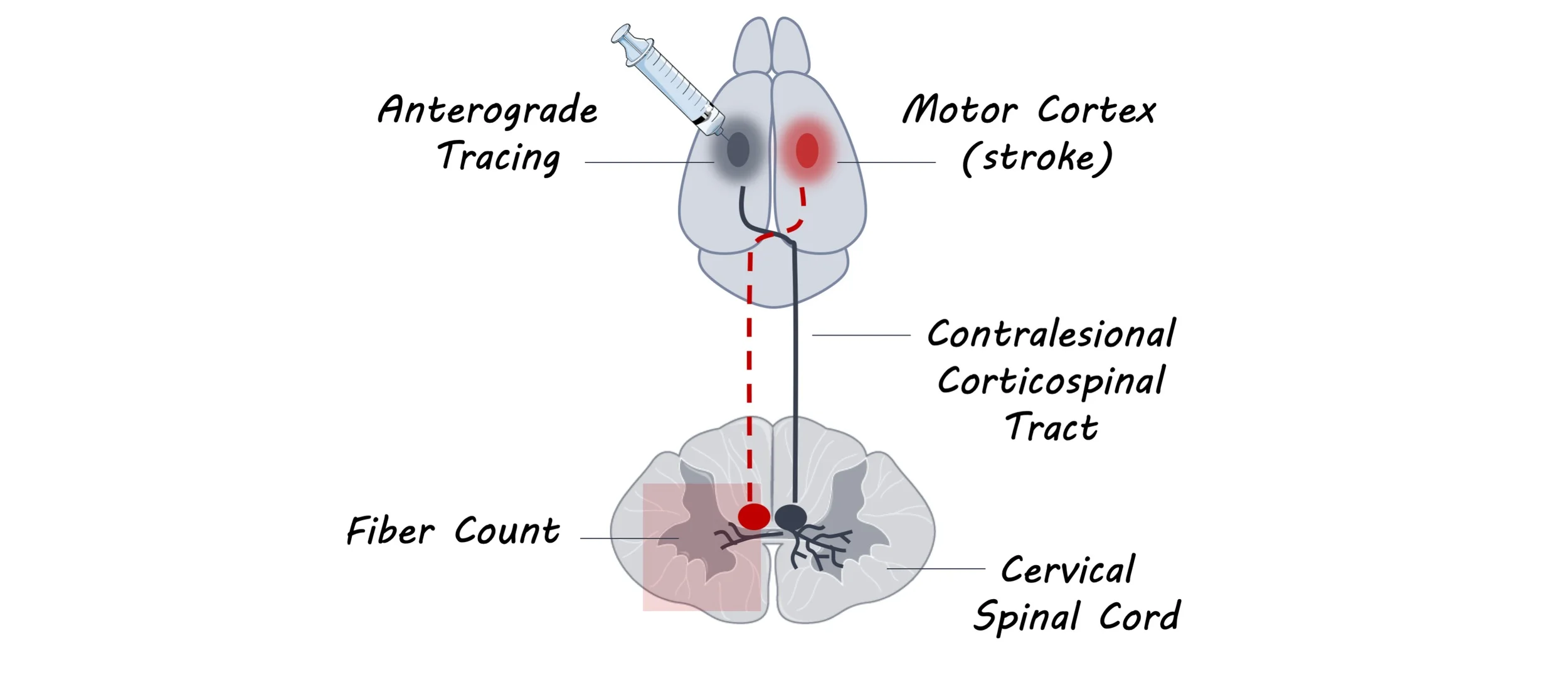
A stroke occurs when brain cells are not able to receive oxygen via blood flow due to a blockage or a burst blood vessel, and begin to die. In the first weeks to months after a stroke, many patients can exhibit functional improvements, though the chance of recovery depends on the size and location of the stroke event. Strokes can also damage cells that make up the corticospinal tract – long axons sent from the motor regions of the brain down to the spinal cord to innervate the muscles of the body. After stroke, the undamaged side of the spinal cord can sprout new axons, which can reinnervate the damaged region leading to some functional recovery. What is happening inside spinal cord cells that might trigger this rewiring after stroke? This week in The Journal of Neuroscience, Kaiser and colleagues use transcriptomic profiling to demonstrate that molecular changes in the stroke-affected spinal cord exhibit two distinct phases: an early inflammatory phase where microglia are activated in the damaged area, and a later growth-promoting phase involving sprouting of new axons and synapse formation.

How did they do it?

The authors induced photothrombotic stroke in mice by injecting them with a light-sensitive dye, then exposing part of the cortex to light, inducing stroke-like damage. Before and after the stroke, the authors tested mice to see how well they used their forelimb (i.e. front paw). To investigate how the undamaged side of the corticospinal tract might reinnervate the damaged spinal cord in space and time, the authors injected an anterograde tracer called Biotinylated dextran amines into the motor cortex in the brain. Injection of the tracer resulted in labelling of forelimb-related cells within the corticospinal tract and allowed for visualization and quantification of axonal sprouting. To identify the transcriptomic profile of these cells, the authors microdissected out the cells from the spinal cord at key time points (4, 7, 14, 28, and 42 days post-stroke) and put them through RNA-sequencing and analyses. The authors also assessed morphology and distribution of activated microglia — a sign of immune response in the brain. Finally, the authors assessed the role of potential growth-related genes by performing an in vitro neurite outgrowth assay where neurons are exposed to different signals and growth of new neurites is quantified.

spinal_cord_image.jpg

What did they find?

Overall, the authors found that cells in the corticospinal tract undergo two different phases after stroke-induced cell death. The first phase occurs 4 to 7 days after the injury and is characterized by increases in inflammatory processes including activated microglia in the damaged region and phagocytic processes to clean up debris. The second phase occurs later, around one month post-injury, and is characterized by upregulation of growth-promoting factors, including neurite sprouting responses and synapse formation. Transcriptomic profiling revealed either upregulation or downregulation of 955 genes, with the most pronounced changes in gene expression seen at the 28-day timepoint. Of the upregulated genes associated with neurite growth, three of them were able to overcome growth inhibition signals typically present in the spinal cord and display increased growth in the neurite outgrowth assay.

What's the impact?

This is the first study to examine transcriptional changes in corticospinal neurons at multiple time points during recovery from stroke-related cell death. In addition to providing important insight into molecular changes that occur in spinal cord cells after stroke injury, the authors also reveal several factors that may serve as a basis for future neuroregenerative treatment options for stroke patients. Since there are currently few therapies for human patients with spinal cord injury, advances in this area have the potential to revolutionize clinical options for these patients.

Kaiser et al., The Spinal Transcriptome after Cortical Stroke: In Search of Molecular Factors Regulating Spontaneous Recovery in the Spinal Cord, Journal of Neuroscience (2019). Access the original scientific publication here.