Can Neurofeedback Help Us Understand How Contextual Cues Improve Memory?

Post by Flora Moujaes

What's the science?

Why do people mentally retrace their steps when they lose their keys? There is evidence that memory recall can be improved by mentally visualising the psychological and physical environment present when the memory was encoded. This technique, called mental context reinstatement, is also commonly used by police when establishing eyewitness memories, as it has been shown to increase the amount of correct information recalled without increasing the number of errors. However, mental context reinstatement is a subtle and dynamic internal process that is very difficult to measure precisely. Neurofeedback may help address this difficulty: fMRI neurofeedback is a method that provides participants with real-time feedback of their own neural responses. Participants can then use this information to learn to modulate their own neural responses. By using neurofeedback to reinforce participants’ use of mental context reinstatement, it may be possible to improve measurement sensitivity. This week in NeuroImage, deBettencourt and colleagues demonstrate for the first time that neurofeedback can be used to show that mental context reinstatement predicts memory performance.

How did they do it?

Researchers explored two hypotheses (1) successful mental context reinstatement enables better retrieval of memories from that context, and worse retrieval of memories unrelated to that context, and (2) neurofeedback is important for obtaining these results as it improves measurement sensitivity.

Hypothesis 1: To explore the first hypothesis, participants were instructed to remember two lists of words. Each of the lists was embedded in a different context by interleaving the words with images from a specific category: faces or scenes. These two categories were chosen as both faces and scenes are known to robustly activate regions of visual cortex in fMRI experiments. The participants were then told to remember the context associated with one of the lists by thinking about the images that had appeared between the words. Finally, the participants were instructed to recall as many words as possible from either the list related to that context, or the list unrelated to the context they had reinstated.

Neurofeedback: To increase the participants’ ability to recall the context, real-time multivariate pattern analysis of fMRI data was used to monitor how well their level of neural activity related to the context they had been instructed to remember. This was then communicated back to participants, creating a positive feedback loop designed to increase participants’ mental context reinstatement. Feedback was communicated visually, as participants began by viewing a blended image that started as 50% face and 50% scene. The more participants’ thought about faces, as evidenced by their real-time neural activity, the more visible the face became in the composite image. Participants were instructed that the scene/face mixture proportion was controlled by their brain activity and would indicate their success at picturing the context.

Hypothesis 2: To explore the second hypothesis, the researchers conducted a second experiment comparing a neurofeedback condition to a non-neurofeedback control condition where instead of getting neurofeedback, participants were simply shown either all of the face images or all of the scene images as a reminder.

What did they find?

Is there a relationship between mental context reinstatement and memory? Higher levels of neural context reinstatement were associated with better recall of words related to that context. High levels of neural context reinstatement were also associated with worse recall of words unrelated to that context, e.g. if the face context was reinstated but participants were then asked to recall words from the scene context. This shows that successful context reinstatement does result in increased memory performance.
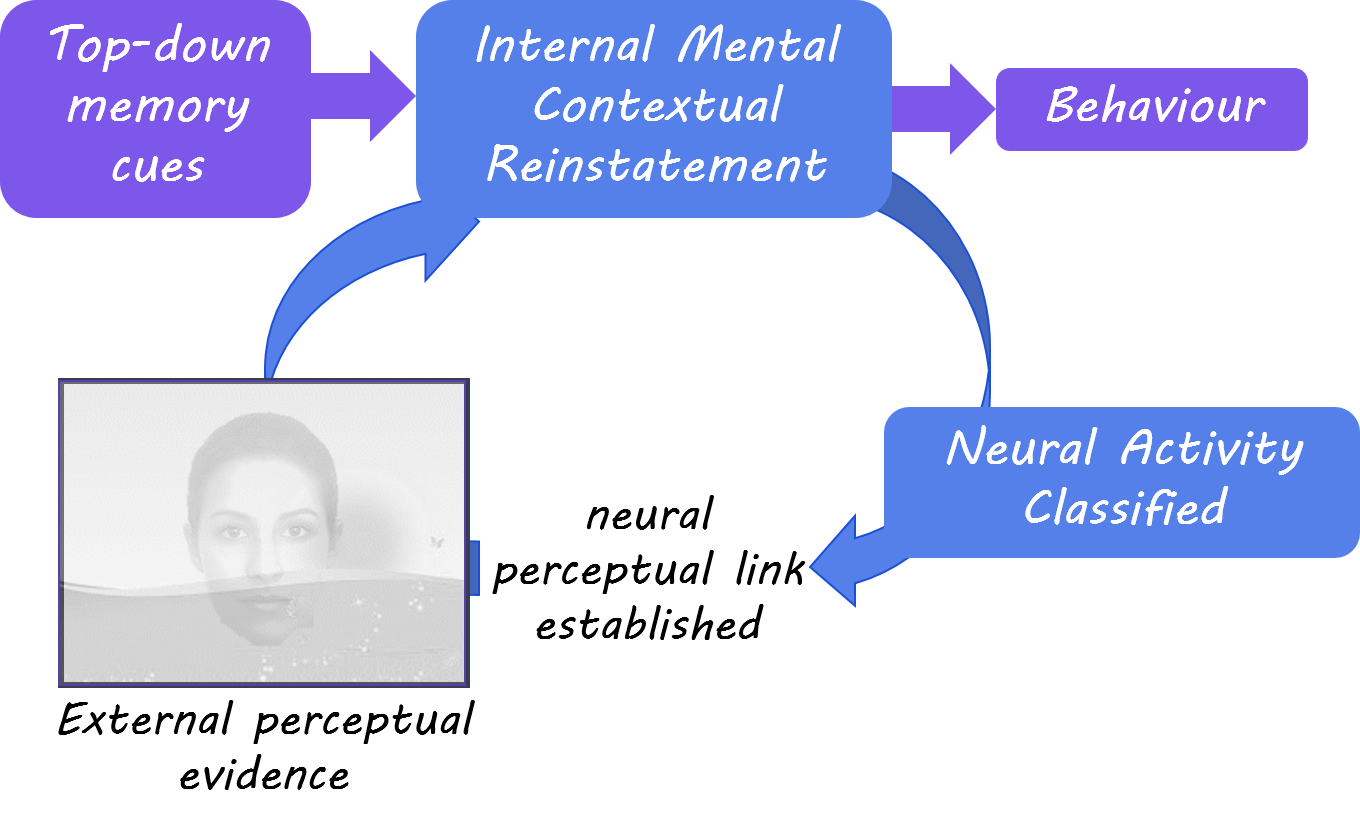
Flora.png

Is neurofeedback necessary for this experiment? When participants looked at images of either faces or scenes during the context reinstatement period, there was no relationship between neural activity and memory performance. However, when participants were encouraged to picture the scene or face images during the context reinstatement period using neurofeedback, their level of neural context reinstatement was associated with memory performance. This indicates that neurofeedback makes it easier to identify a link between context reinstatement and recall performance, as it amplifies context reinstatement, improving measurement sensitivity.

What's the impact?

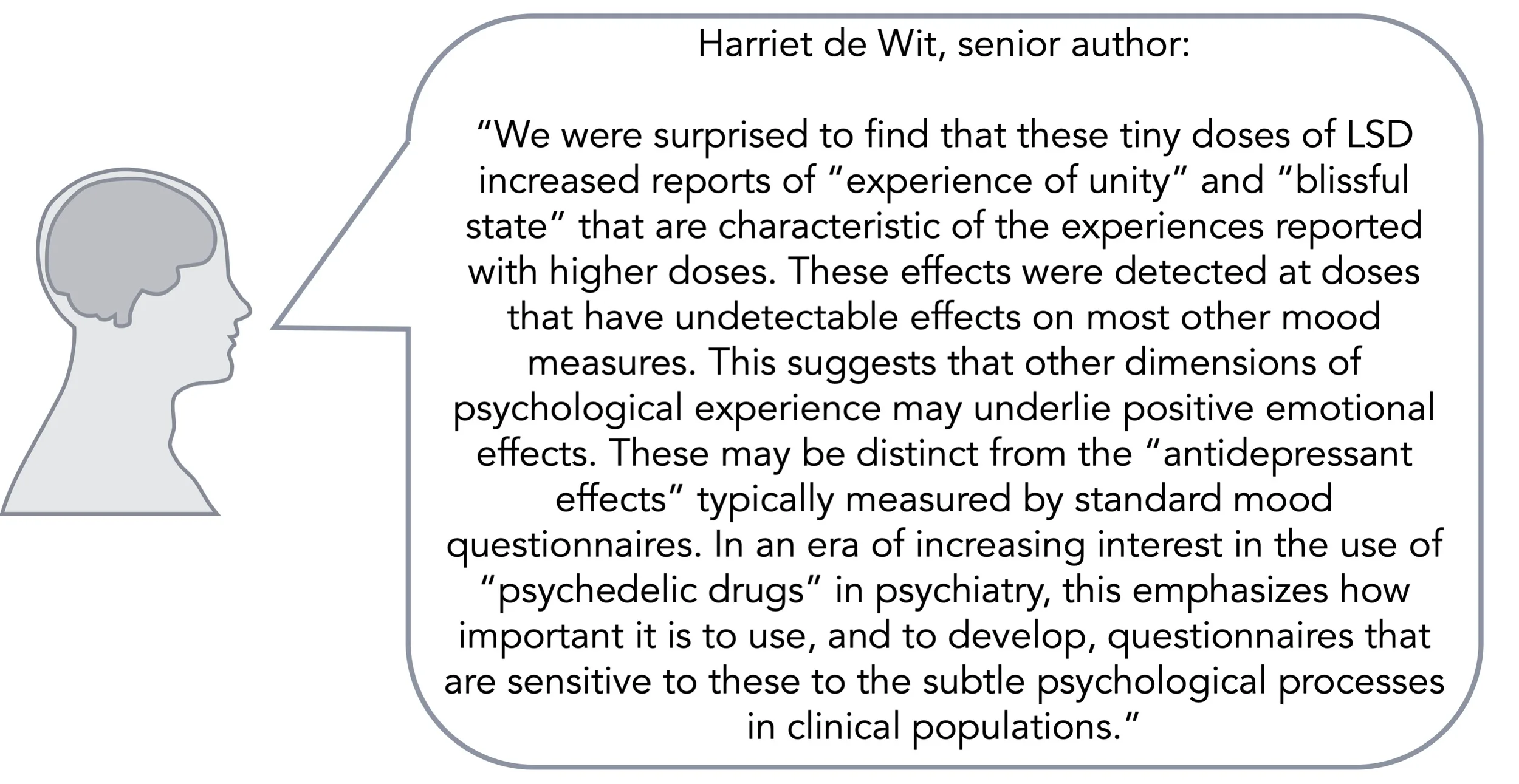
This is the first study to use neurofeedback to demonstrate a clear effect of context reinstatement on memory recall: reinstating the correct context boosts memory performance while reinstating the incorrect context reduces memory performance. This study also suggests that neurofeedback can be a useful tool for characterizing brain-behaviour relationships: neurofeedback is used effectively to boost sensitivity to small fluctuations in context reinstatement by amplifying them and making it easier to identify a relationship between context reinstatement (measured neurally) and behaviour. This study adds to the body of work showing real-time fMRI can reveal insights about cognition, not only through boosting performance, but also by improving measurement sensitivity. It may be especially interesting to go on to develop this technique to provide training for context reinstatement, which could help in treating psychiatric disorders that involve memory impairment, such as addiction and post-traumatic stress disorder.

DeBettencourt_quote.jpg

deBettencourt et al. Neurofeedback helps to reveal a relationship between context reinstatement and memory retrieval. NeuroImage (2019). Access the original scientific publication here.

Axonal Degeneration and Cortical Abnormalities in Multiple Sclerosis

Post by Stephanie Williams

What's the science?

Within the brains of multiple sclerosis (MS) patients, some portions of cortex appear normal, while others show obvious demyelinating lesions. Normal and lesioned cortex from MS brains each show diffusion tensor abnormalities that have yet to be explained mechanistically. This week in Brain, Preziosa and colleagues analyzed normal-appearing cortex and lesioned cortex to understand the substrates of diffusion tensor microstructure tissue abnormalities in MS.

How did they do it?                             

The authors used diffusion tensor imaging to image the brains of 16 deceased individuals from the Netherlands who had longstanding MS (median duration of the disease was 31.4 years) along with 10 healthy age-matched controls. The MR images were used to calculate a diffusion tensor imaging metric called fractional anisotropy (FA), which ranges from 0 to 1, and is a measure of how water molecules are able to move in a preferential axis along the tracts of the brain. A value of zero indicates that diffusion occurs in all directions, while a value close to 1 indicates diffusion occurs along the preferential axis. These values are relevant as they are correlated with MS-related disability, and differentiate between MS phenotypes. Next, the authors dissected, stained and examined slices of brain to count the relative densities of different brain components (eg. myelin, microglia, astrocytes, axons and neurons), and used a statistical analysis (mixed models) to understand how these histological markers were related to the diffusivity findings. To understand how neuronal and non-neuronal cell density and volume contribute to fractional anisotropy differences, the authors quantified the neuronal density and volume of neurons in all cortical layers.

What did they find?

On average, the FA values calculated from diffusion imaging differed between normal-appearing MS cortex, lesioned MS cortex, and non-neurological (control participants) cortex. The authors found 1) a decrease in FA in normal appearing MS cortex compared to non-neurological controls’ cortex and 2) a significant increase in FA values in lesioned MS cortex compared to normal appearing MS cortex, which is consistent with previous reports of FA values in MS patient brains. To understand the cause of the FA changes, the authors analyzed the density of several neural and non-neural components and cells. They did not find any significant association between myelin density and FA. Microglia, astrocyte and neuron density and volume were also not significantly different between non-neurological controls and MS patients, suggesting that they do not contribute to cortical FA differences.

Deb (2).png

The authors found that the FA abnormalities were best explained by reduced densities of axons perpendicular to the cortex in both normal-appearing MS cortex and lesioned MS cortex, and reduced axons parallel to the cortex in lesioned cortex only. Usually, perpendicular axons contribute to a higher FA value, which explains why the reduction in perpendicular axons within normal-appearing cortex showed lower FA values. The reduction of parallel cortical axon density only in MS lesioned cortex could explain the increased FA values on lesioned cortex. The authors suggest that despite the loss of perpendicular axonal density in lesioned cortex, the concurrent reduction of parallel axon density could increase the coherence of the tissue containing the lesions, and could therefore increase FA.

What's the impact?

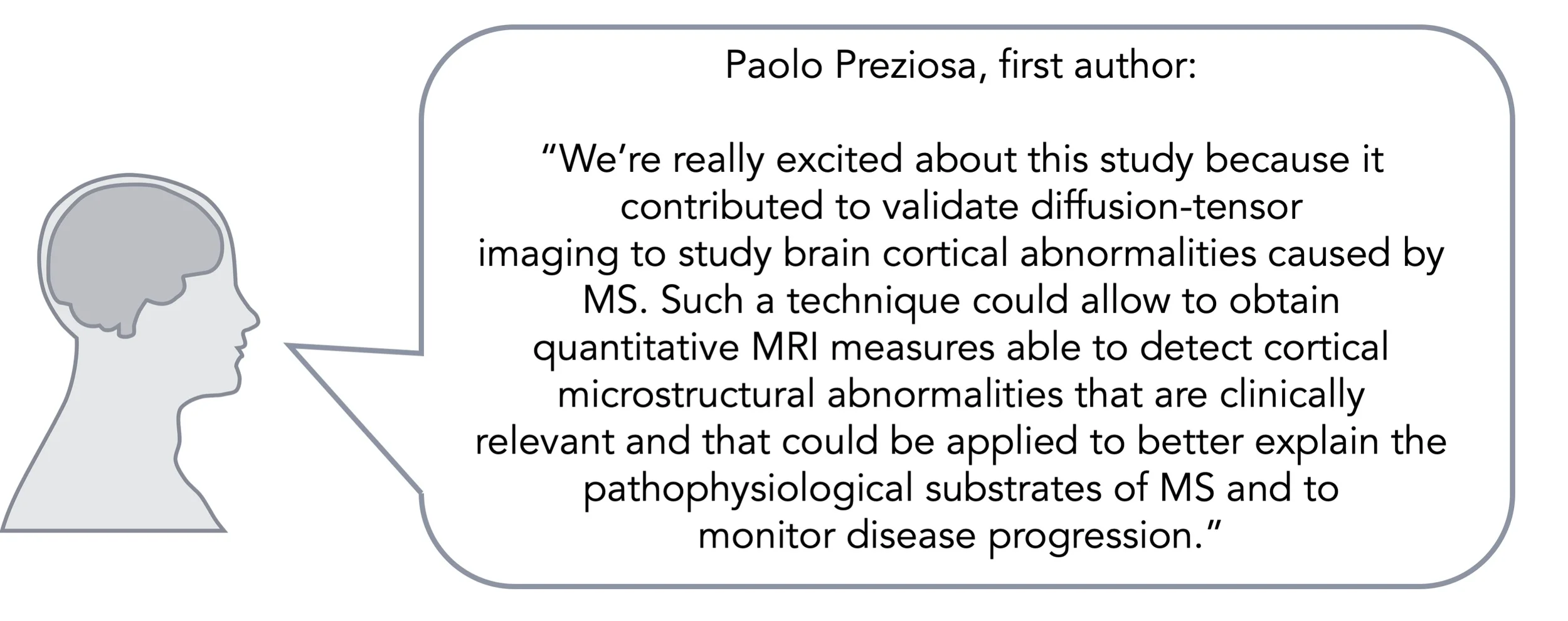
The authors collected evidence that advances our understanding of the pathological substrates of the diffusion tensor MRI-derived abnormalities in MS cortex. They suggest that the reduced parallel axon density could explain the increase in FA observed in lesioned portions of MS brains.

Preziosa_quote.jpg

Preziosa et al. Axonal degeneration as substrate of fractional anisotropy abnormalities in multiple sclerosis cortex. Brain (2019). Access the original scientific publication here.
Testing the Effects of LSD Microdoses on Mood and Cognitive Functioning

Post by Lincoln Tracy

What's the science?

Lysergic acid diethylamide (LSD) is a hallucinogenic drug commonly used for recreational purposes. The psychoactive effects of LSD are primarily thought to arise through its ability to bind to serotonin receptors, like many other antidepressants. Since the 1950’s, there have been more than a thousand studies investigating the use of LSD as a potential treatment for depression. However, many of these studies used LSD in combination with psychotherapy and did not have appropriate control groups—meaning that it was not possible to isolate the effects of the drugs from the psychotherapy. In recent years there has been a huge spike in public interest in using ‘microdoses’ (between five and 20 micrograms) of LSD to improve mood and cognitive function. LSD microdoses have great therapeutic potential, as the higher doses used in previous studies are impractical for long-term administration due to perceptual distortions and impaired inhibitory control. This week in Biological Psychiatry, Bershad and colleagues examined the mood-altering, psychological, and behavioral effects of three different microdoses of LSD in young, healthy adults in a double-blind and placebo-controlled fashion.

How did they do it?

The authors recruited 20 healthy volunteers (including 12 women) as part of their study to test the effects of LSD microdoses on human behavior. Each volunteer took part in four testing sessions, each separated by at least seven days. In each testing session, the volunteers took one of four different doses of LSD—either zero micrograms (the placebo control condition), 6.5 micrograms, 13 micrograms, or 26 micrograms. Volunteers completed questionnaires about the perceived drug effects, their mood and their state of consciousness. They also had their heart rate and blood pressure recorded before they took LSD, and again at 30 and 90 minutes post drug administration. In each session volunteers also completed several behavioral and cognitive tasks: a dual N-back task (a measure of working memory), the Digit Symbol Substitution Task (a measure of cognitive functioning), “Cyberball” (a measure of simulated social exclusion), the Emotional Images Task, and a Remote Associations Task (measuring creativity).

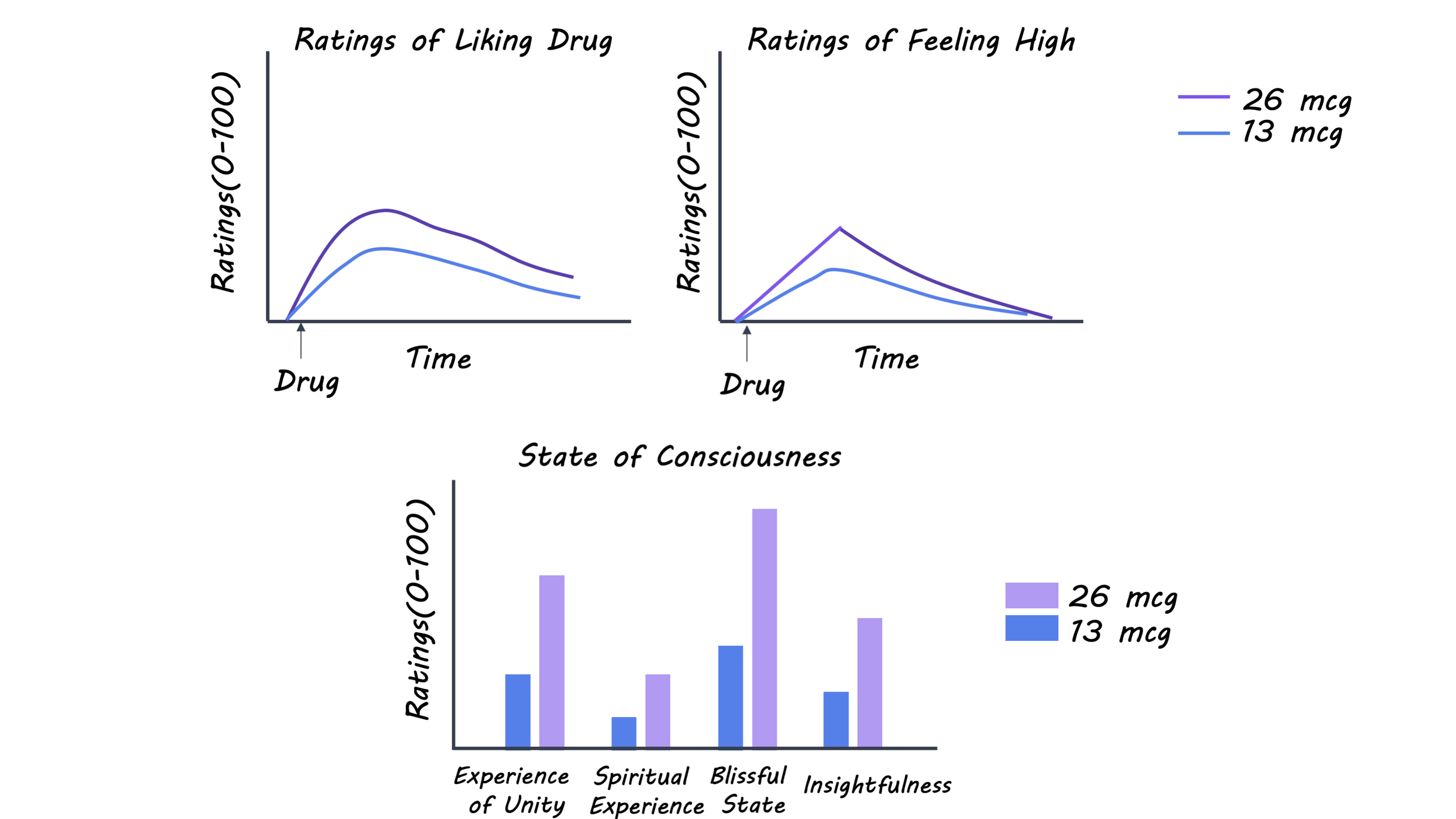
BiolPsych_Image_June11.png

What did they find?

Volunteers reported that the 13- and 26-microgram doses of LSD significantly increased the feeling of having taken a drug, with the 26-microgram dose also increasing the sensation of feeling high and liking the drug. This higher dose also resulted in higher ratings of disliking the drug, and increased feelings of vigor and anxiety. LSD also showed subtle dose-dependent effects on altering states of consciousness including ‘increased experience of unity' and ’increased blissful state.’ The two higher microdoses of LSD also increased systolic blood pressure, with the 26-microgram dose increasing diastolic blood pressure. Increasing the dose of LSD reduced the positivity ratings of positive pictures during the Emotional Images Task. None of the LSD microdoses had effects on heart rate or body temperature. LSD also had no effect on the dual N-back task, the Digit Symbol Substitution Task, Cyberball, or the Remote Associations Task performance.

What's the impact?

This study observed that small doses of LSD resulted in moderate increases on drug effect rating scales yet had very subtle effects on behavior and cognitive function. A 13-microgram dose (microdose) of LSD appears to be the optimal dose for repeat dosing studies.The findings from this study—the first to test multiple microdoses of LSD in a within-subjects, placebo-controlled manner—will help to guide research into repeat microdosing in clinical populations. Further research in clinical populations involving single and repeat dosing is required and may enhance our understanding of the neural and behavioral processes underlying depressed mood.     

BiolPsych_June11_Quote.jpg

Bershad et al. Acute subjective and behavioral effects of microdoses of LSD in healthy human volunteers. Biological Psychiatry (2019). Access the original scientific publication here.