
Intrinsic Insular-Frontal Networks Predict Future Nicotine Dependence Severity

Post by Stephanie Williams

What's the science?

Some individuals are more susceptible to developing a dependence to nicotine than others. Identifying biomarkers that distinguish individuals at risk for developing addictions could inform treatment plans and preventative measures. This week in the Journal of Neuroscience, Hsu & Keeley and colleagues characterized a potential biomarker for risk of nicotine addiction.

How did they do it?

The authors administered nicotine to 10 rats for two weeks and used neuroimaging (functional magnetic resonance imaging; fMRI) to look for biomarkers that distinguished rats that became dependent on nicotine from rats that did not. To characterize dependence on nicotine, the authors looked for a cluster of common behaviors characteristic of nicotine withdrawal, including teeth chattering, gasping, body shakes, yawns, and escape attempts. They checked for the behavioral symptoms before administering nicotine, at one day and again at two weeks after stopping the administration of nicotine. Rats were observed for 50 minutes, and assigned a score depending on the number of behaviors they exhibited.

To assess whether brain activity could predict nicotine dependence and withdrawal, the authors analyzed the relationship between functional connectivity between different brain regions on day 1 (the “drug naïve” brain) and dependence behavioral scores. To measure functional connectivity the authors calculated correlations between the signal fluctuations in different brain regions while the rats were lightly anesthetized in the MRI scanner. Analysis resulted in a matrix defining the strength of the correlation between each brain region with every other brain region (“functional connectivity”). The authors then used a graph theory framework (modularity analysis) to define 5 brain modules (groups of brain regions that are similarly connected) as well as several sub-modules. After identifying modules in the brain, they assessed the strength of connections within modules and between modules, as well as the relationship between connectivity strength and drug dependence and reversal.

What did they find?

The authors found that functional connectivity between modules (inter-module connectivity) measured before rats were exposed to nicotine could predict the severity of nicotine dependence. Connectivity between a specific module, the insular-frontal module and the 4 other modules before nicotine exposure predicted dependence severity and abstinence-induced reversal. Specifically, stronger connections between the insular-frontal module and other modules was correlated with greater dependence severity. Weaker connections between the insular-frontal module and other modules was correlated with enhanced dependence reversal after abstinence from nicotine. Intra-module connectivity, in contrast, did not predict dependence severity.
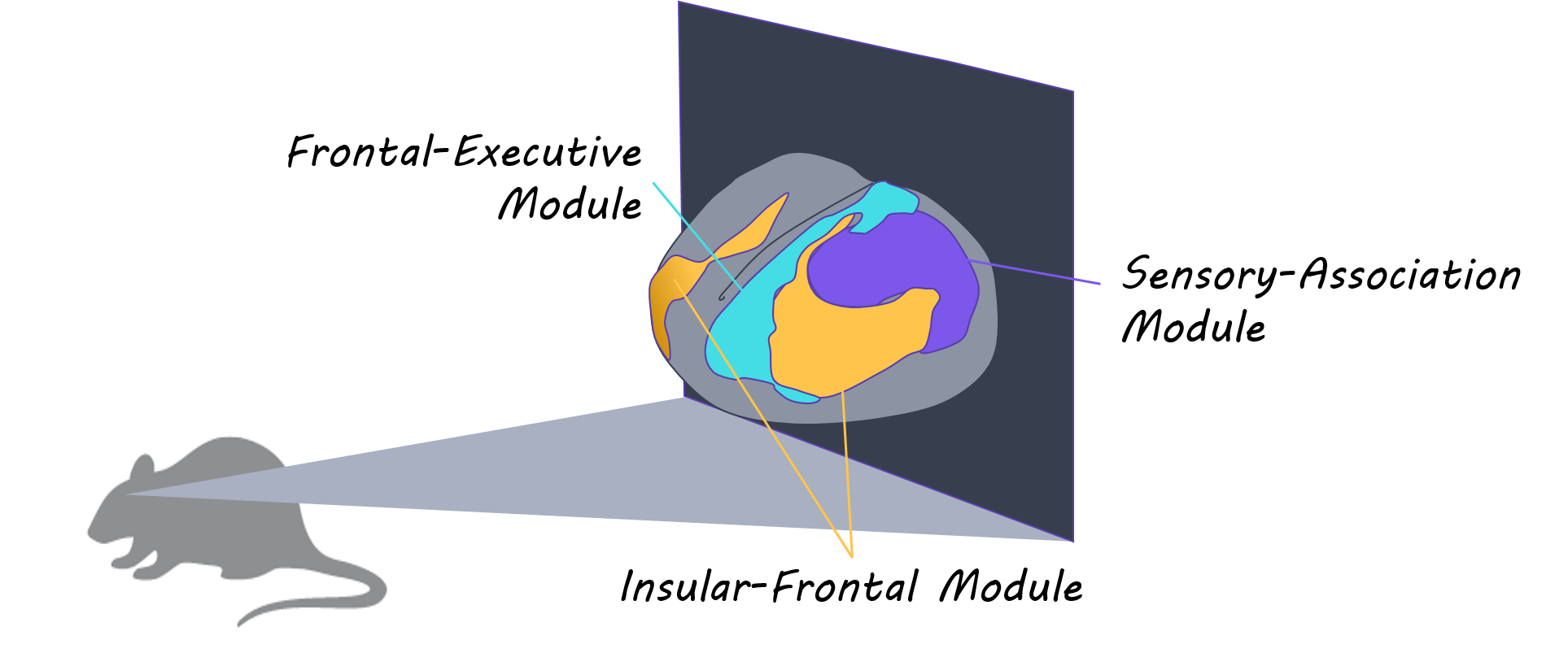
stephanie_functional_connectivity.png

The authors further subdivided the insular-frontal module into three sub-modules and found that (1) the inter-module connectivity of all three submodules predicted dependence on nicotine and (2) the inter-module connectivity of two of the three submodules --the insula and frontal-motor submodules--predicted dependence reversal after two weeks of nicotine abstinence. These results suggest that intrinsic insular-frontal circuits could be used as biomarkers of nicotine dependence risk.

What's the impact?

This is the first study to identify patterns of connectivity that can predict future risk of nicotine dependence. The authors identified an insular-frontal cortical biomarker of nicotine dependence risk. The biomarker has the potential to identify individuals at risk for developing dependence, as well as individuals likely to recover after a period of abstinence.
Keeley_quote_April23.jpg

Hsu, L-M. Keeley, R.J., et al. Intrinsic Insular-Frontal Networks Predict Future Nicotine Dependence Severity. Journal of Neuroscience (2019). Access the original scientific publication here.
Chronic Sleep Disruption Increases Activity of Cholinergic Neurons in the Habenula

Post by Sarah Hill

What's the science?

In recent years, sleep has been increasingly recognized as an important regulator of a myriad of biological processes, including memory performance, food valuation, and resting cerebral blood flow (see previous BrainPosts). As it turns out, emotional health may also be regulated by sleep, though the molecular, cellular, and circuit mechanisms responsible have been difficult to pin down. This week in Molecular Psychiatry, Ge and colleagues show that the baseline firing rate of cholinergic neurons (ChNs) within the medial habenula complex (a brain region involved in signalling reward prediction and errors in reward prediction), is increased after chronic sleep disruption.

How did they do it?

To model chronic sleep disruption in mice, the authors carried out a protocol of sleep fragmentation, a procedure designed to specifically disrupt REM sleep in rodents. SF animals were housed in custom-made treadmill boxes for 5 days: while the floor of the animal's cage consisted of a layer of steel mesh, timed rotating of a treadmill belt caused a cylindrical object underneath the mesh layer to roll back-and-forth along the length of the cage, preventing the mouse from sleeping uninterrupted. In a control group of mice, no treadmill was present. Sleeping behavior was monitored for a portion of the animals by surgically implanting EEG/EMG electrodes and decoding neural activity into 3 broad categories: wakefulness, REM sleep, and NREM sleep. Following sacrifice of the animals, electrophysiology was used to record activity of cholinergic neurons (ChNs) in brain slices containing the medial habenula complex; various ion channel- and neurotransmitter receptor-modifying reagents were added to the bath solution to test the resulting effects on ChN activity. Finally, immunohistochemical and in situ hybridization techniques were employed to label cholinergic neurons and TASK-3, a potassium channel important for modulating neuronal activity.            

What did they find?

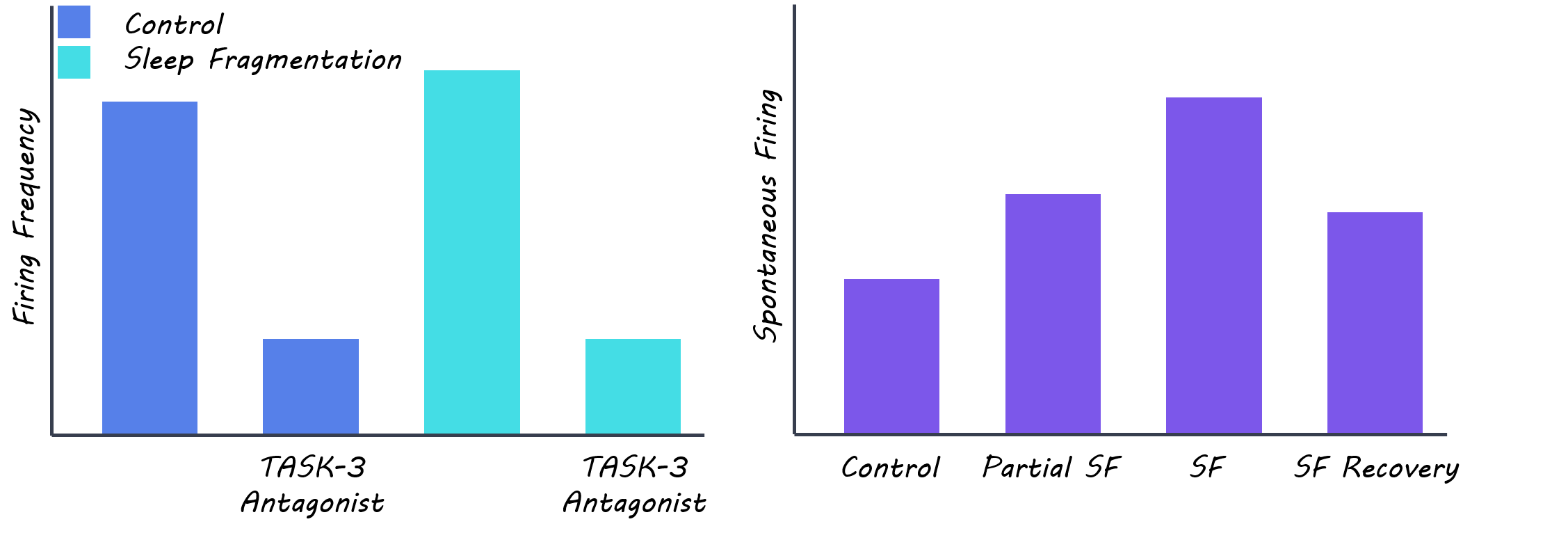
EEG/EMG recordings showed that animals who experienced sleep fragmentation exhibited significant decreases in average duration of REM sleep episodes during the 5-day protocol, compared to control mice. Electrophysiological recording showed augmented baseline firing rate of ChNs in the medial habenula complex of REM sleep-disrupted animals. This is significant because the activity of medial habenula ChNs has been previously linked to a number of affect-related behaviors, including stress and drug-relapse. Application of various neurotransmitter-modifying reagents failed to produce any changes in baseline ChN activity in both the SF and control groups, indicating that sleep-induced alterations in ChN activity are not mediated by synaptic transmission. However, group differences in baseline ChN activity were observed upon application of a TASK-3 antagonist. First, while depolarization of the resting membrane potential was seen in the control group following addition of the antagonist, no changes in resting membrane potential were recorded in mice who experienced sleep fragmentation. Second, application of the TASK-3 antagonist led to an increase in firing rate in the control group, but not the fragmented sleep  group. Finally, the increase in firing rate observed in the control group was accompanied by a significant increase in firing regularity (measured as the coefficient of variation of firing interval), which was also not observed in the fragmented sleep group. Taken together, these findings suggest that TASK-3 potassium channels are compromised following sleep fragmentation, leading to alterations in baseline ChN activity in the medial habenula.     

sarah_sleep.png

What's the impact?

This is the first study to investigate the effects of sleep disruption on medial habenula ChN activity. Though additional studies are needed to determine exactly how TASK-3 potassium channels are targeted by sleep fragmentation, these findings are strongly indicative of a direct mechanism linking sleep and emotion regulation.  

Ge et al. Chronic sleep fragmentation enhances habenula cholinergic neural activity. Molecular Psychiatry (2019). Access the original scientific publication here.
Do Rats Have Emotional Mirror Neurons?

Post by Flora Moujaes

What's the science?

Why do we wince when we see someone else in pain? Neuroimaging studies have shown that one of the brain regions active in humans experiencing pain, the anterior cingulate cortex (ACC), is also active when they see another in pain. Activity in this area of the brain is also stronger in more empathic individuals and reduced in psychopaths. It has been hypothesized that increased ACC activity in response to both experienced and observed pain may be caused by ‘mirror neurons’, a type of neuron first discovered in monkeys that activates both when a monkey observes someone else picking up an object and when they themselves pick up an object: these neurons mirror the action of another. Thus, mirror neurons may play a key role in empathy and explain why we wince when seeing another’s pain.

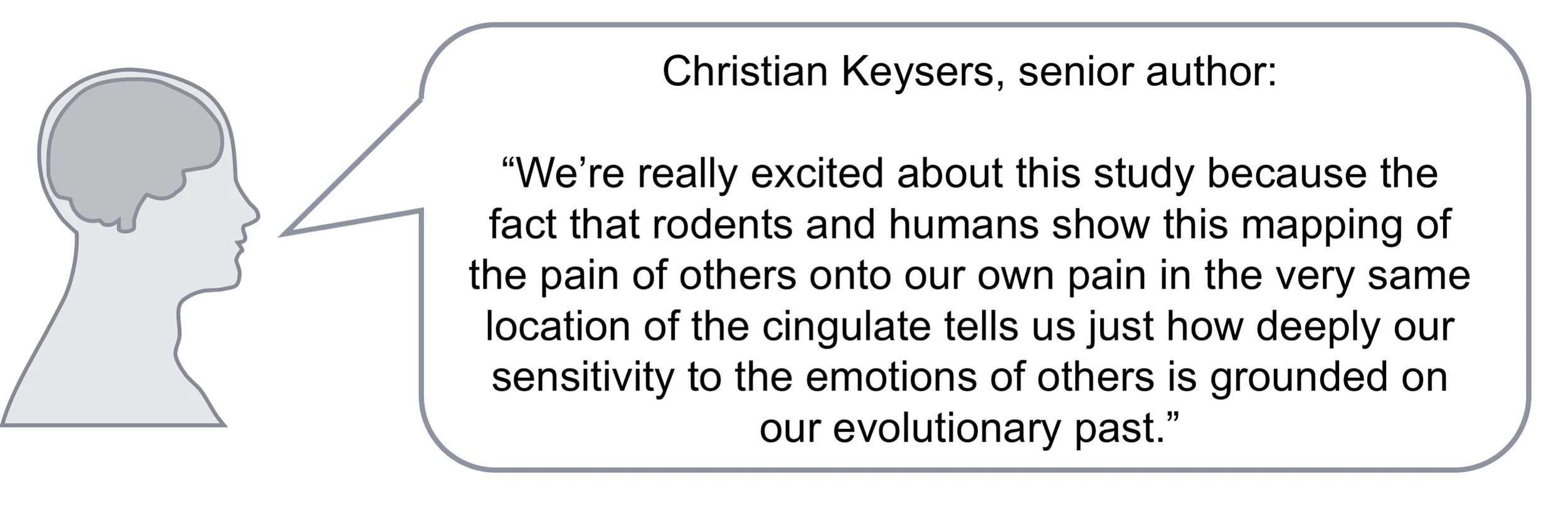
We still don’t know what the exact function of mirror neurons is and whether mirror neurons even exist in humans, as it is not possible to record the activity of individual brain cells in humans. This week in Current Biology, Carrillo and colleagues show for the first time that the rat ACC contains mirror neurons that respond both when a rat experiences pain and witnesses another rat in pain.

How did they do it?

Researchers examined four main questions: (1) does the ACC contain mirror neurons (neurons that show overlap between observed and experienced pain) (2) are the mirror neurons in the ACC specific to pain (i.e. they don’t code for other emotions such as fear) (3) do these mirror neurons use the same code (or firing pattern) to signal both experienced and observed pain, and (4) is the ACC necessary for experiencing another’s pain?

To address these questions 17 rats participated in three experimental conditions. In the first, they observed other rats experiencing painful electric shocks. In the second, they experienced pain themselves (triggered by a heat laser). In both the first and the second condition the intensity of the pain was varied. In the third condition the rats experienced fear using a conditioned stimulus, as they were subjected to a tone that had previously been paired with an electric shock. The researchers used various cell recording methods to examine neurons in the ACC, an area implicated in pain empathy in humans. Finally, to see whether the ACC is necessary for experiencing another’s pain, they injected a drug that deactivated the ACC into 6 rats, as well as injecting saline into 8 control rats. They then repeated the experiment to see whether deactivating the ACC changed the rats’ freezing response to observing pain or to experiencing fear first-hand. The freezing response is used as a measure of fear, as when rats are scared their natural reaction is to freeze to avoid being detected by predators.

What did they find?

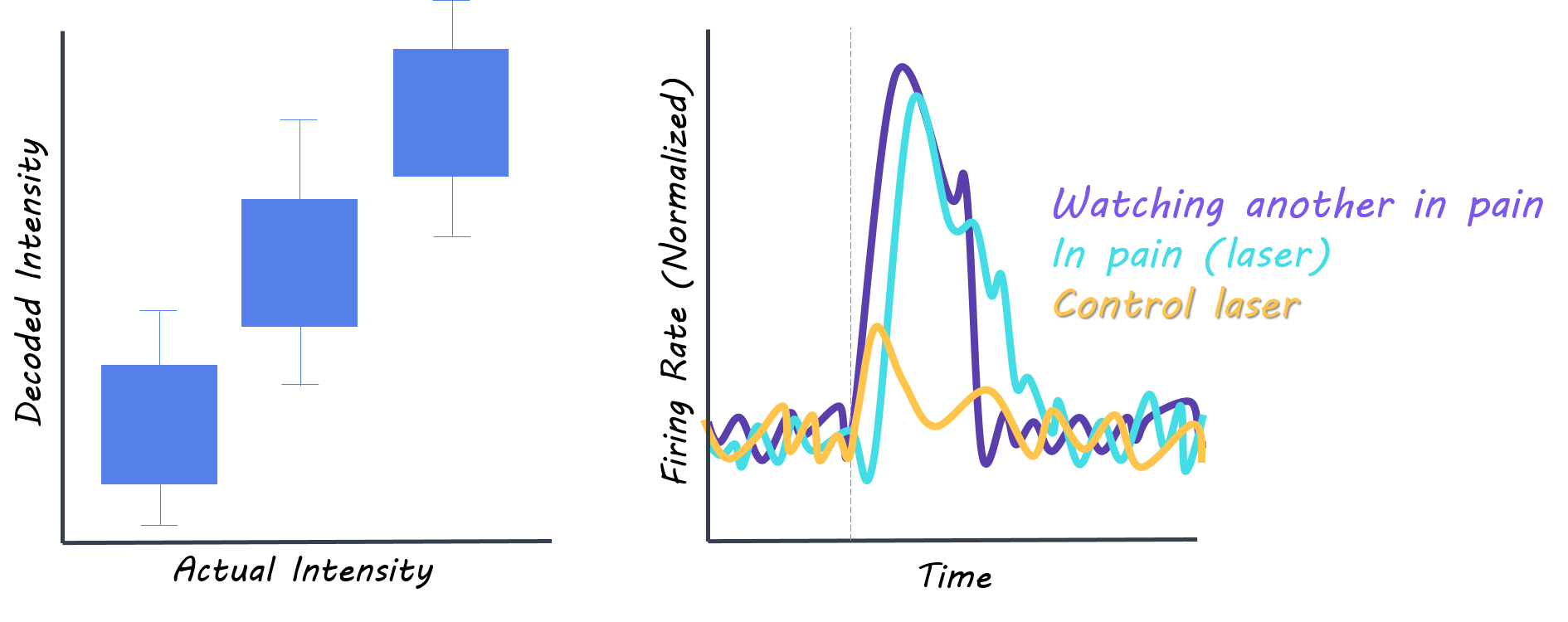
Researchers found that the rat ACC does contain mirror neurons: they found a number of neurons in the rat ACC that showed overlapping activity between observed and experienced pain. They showed evidence that a large number of the neurons that showed overlap were not also activated by fear. This indicates that the ACC contains mirror neurons that may be somewhat specific to pain and not encode for salient emotions such as fear. A decoding scheme trained using the spike count to decode the intensity of another rat’s experience was able to decode the intensity of the rat’s own pain experience. This shows that mirror neurons use the same code (or firing pattern) to signal both observed and experienced pain. The researchers also found a small population of neurons that responded to observed pain and the experience of fear, but not the experience of pain. This suggests a more complex understanding of mirror neurons in the ACC, as it seems the ACC may map the distress of another animal onto a mosaic of pain- and fear-sensitive channels in the observer. Finally, they found that deactivating the ACC did decrease the freezing response of rats to observing pain but not to experiencing fear first-hand. This indicates that the ACC is necessary for experiencing another’s pain.

flora (1).png

What's the impact?

This is the first study to show that mirror neurons, which were originally shown to mirror physical actions, are also involved in how mammals process another’s pain. This is also the first study to show that after deactivating the ACC rats show reduced distress when witnessing another in pain. This indicates that mirror neurons may also play an important role in  empathy. Many disorders such as psychopathy, are characterized by a lack of empathy, and therefore understanding the neural basis of empathy could have huge implications for understanding such disorders. More research is needed to confirm whether the mirror neurons in the ACC are selective for pain, as while they were not shown to respond to fear, they could still code for numerous other non-painful but equally salient emotional stimuli.

Keysers_quote_April16.jpg

Carrillo et al. Emotional Mirror Neurons in the Rat’s Anterior Cingulate Cortex. Current Biology (2019). Access the original scientific publication here.