
Deep Brain Stimulation of the Internal Capsule Improves Prefrontal Cortex Function

Post by Leigh Christopher

What's the science?

Gold standard treatments for mood and anxiety disorders are often ineffective. Deep brain stimulation (DBS), where electrical current is applied to brain circuits, effectively relieves symptoms in some cases, however, the results are inconsistent. One theory is that this inconsistency is due to the lack of a biomarker to indicate the ‘effective dose’ of electrical stimulation. The ventral internal capsule is affected in both depression and obsessive-compulsive disorder (OCD) and has shown promise as a target for DBS therapy. This region is involved in cognitive control – it regulates theta oscillations in the prefrontal cortex that could act as a biomarker of DBS efficacy. Recently in Nature Communications, Widge and colleagues use DBS to stimulate the ventral internal capsule to assess whether its stimulation alters brain oscillations in the prefrontal cortex and improves cognitive control in patients with depression and OCD.

How did they do it?

Fourteen patients — 12 with major depressive disorder and 2 with OCD participated in the study — these patients previously had a DBS electrode implanted in the ventral internal capsule/ventral striatum. Patients performed the Multi-Source Interference Task – a cognitive control task that includes emotional distractors. During this task, participants had to identify which of a set of three numbers was different than its neighbours, using a key press. In the conflict trail, the target number is out of position (e.g. a number two is not in the second key position). An emotionally distracting image was displayed during certain trials. The participants then played the Effort Expenditure for Rewards task, in which they had to press a button to fill a bar on the screen - they had to choose quickly between easy and hard options in an attempt to receive as high a payoff as possible. The authors used EEG to record the patients’ brain oscillatory activity throughout these tasks while their DBS was turned either on or off. They analyzed response times and how they were affected by cognitive conflict (interference), emotional distraction and DBS treatment using a linear mixed effects model. They used sliding multivariate regression to assess whether theta activity (as recorded by EEG) was associated with cognitive control.

What did they find?

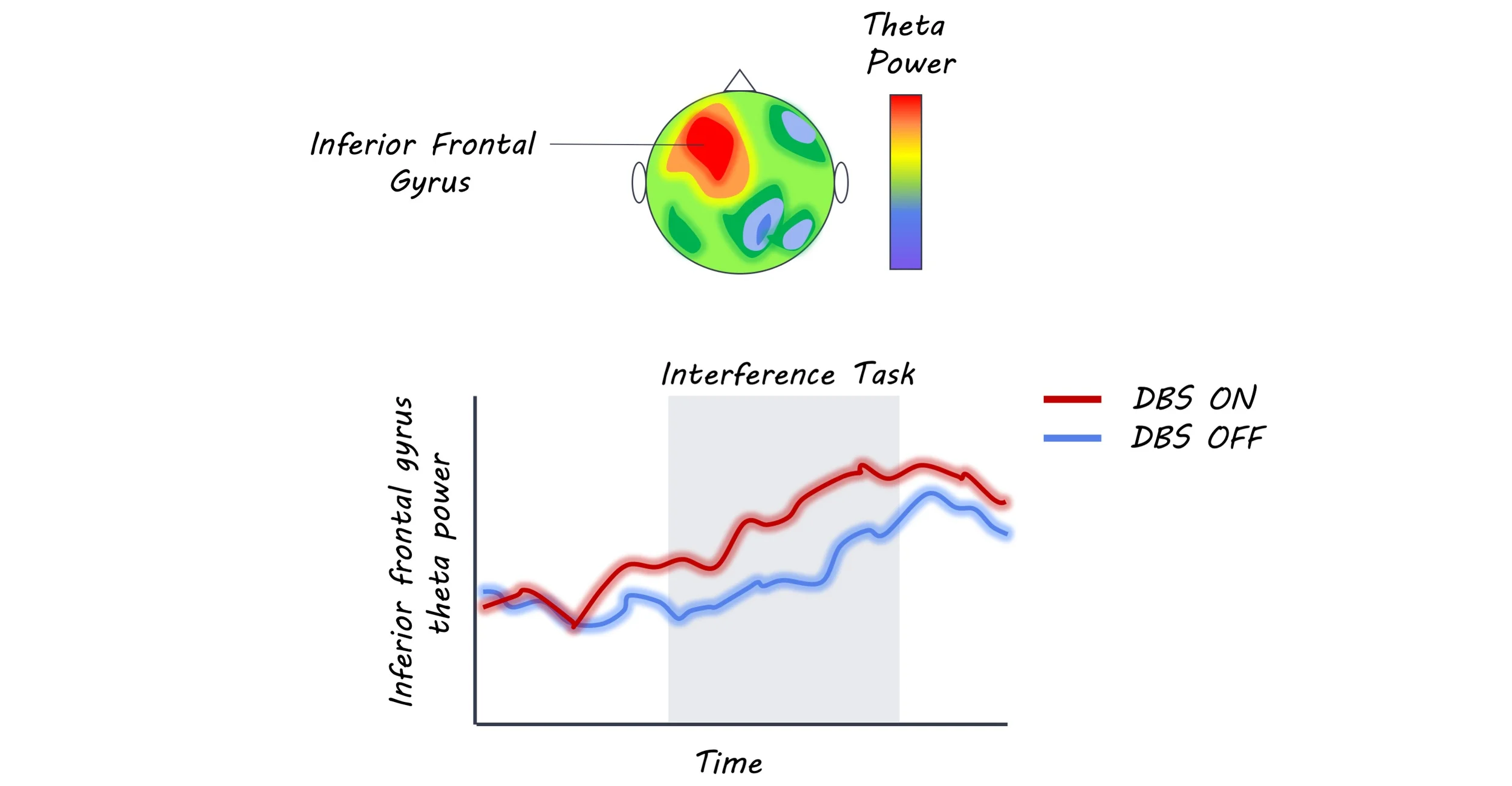
DBS enhanced cognitive control for both interference and control trials of the Multi-Source Interference task – reaction times were 34 seconds faster on average compared to DBS being turned off. The power of theta oscillations (non-phase-locked, or task-evoked) was higher throughout the prefrontal cortex while participants exercised cognitive control during the decision-making portion of the task. DBS stimulation increased this effect for almost the entire decision-making period. In the Effort Expenditure for Rewards task, the response times were slower while DBS was on, suggesting that the DBS effects were specific to the cognitive control tested in the Multi-Source interference task. Button presses were not different when DBS was on vs. off in this task, suggesting that DBS does not impact movement speed. Change in the theta power in the inferior frontal gyrus during the interference task while DBS was on was associated with a reduction in depressive symptoms. The inferior frontal gyrus showed the most drastic change in theta power of any prefrontal region. These changes were specific to the theta frequency, with no other frequency band showing changes during the task.
Leigh_april9_img.jpg

What's the impact?

This work supports the theory that DBS exerts its therapeutic effects by regulating brain activity in the cortex. Thes study demonstrates that DBS improves cognitive control and that this is related to an increase in theta oscillatory power in the prefrontal cortex. These findings have important clinical implications – clinicians could use change in theta power as a biomarker to assess whether the proper stimulations parameters have been applied during DBS, improving efficacy of the treatment. Further, this study suggests that augmenting cognitive control in general may be an effective treatment strategy for psychiatric illness.

Widge et al. Title. Nature Communications (2019). Deep brain stimulation of the internal capsule enhances human cognitive control and prefrontal cortex function. Access the original scientific publication here.
How Exercise Protects Neurons from Aging and Alzheimer’s

Post by Anastasia Sares

What's the science?

A number of studies are showing that physical activity and brain health go hand in hand, especially where aging and Alzheimer’s are concerned. But how exactly does exercising our body affect our brain cells? This week in Neurobiology of Aging, Berchtold and colleagues identified a few key cellular functions influenced by aging that might be recoverable through physical activity.

How did they do it?

The authors examined human brains post-mortem. The participants were part of a large project and health data about them was already being recorded (like hours of weekly exercise, age, or cognitive status). When a person in the study passed away, the authors obtained a small sample of brain tissue from the hippocampus: an important structure involved in memory formation. They broke open the cells from each sample and used microarray technology to find out what genes were being expressed. A microarray chip has thousands of small wells that bind to specific molecules, so by looking at where molecules were binding to the chip, it was possible to see which genes were activated. or expressed.

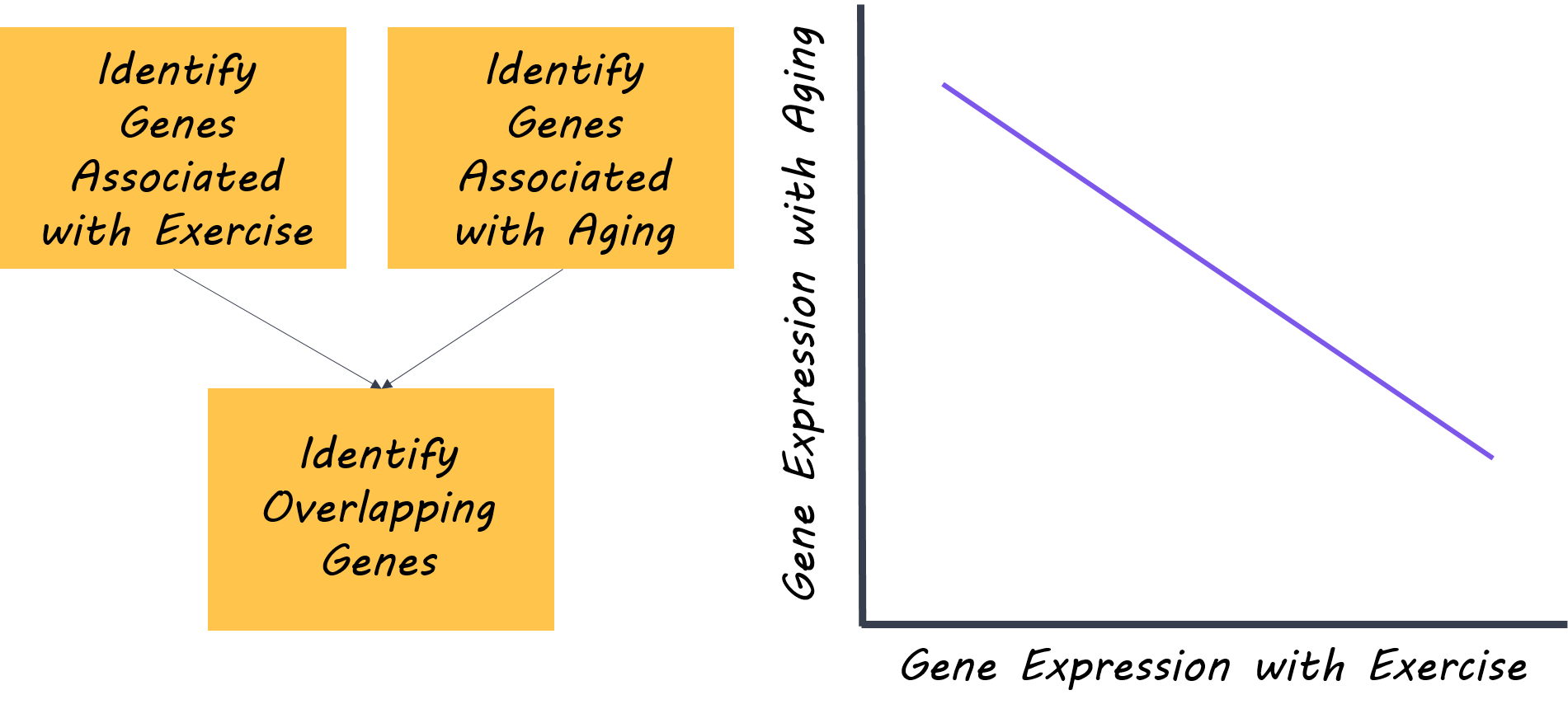
Two completely independent sets of data: one data set had two groups differing on amount of exercise (high- vs low-exercise), and the second data set had three groups, one with young adults (20-59 years), one with normal aging adults (69-99 years), and one with Alzheimer’s disease (AD; 73-99 years). In the first data set, the authors looked for differences in gene expression that were significantly affected by exercise. In the second set, they looked for differences in expression affected either by age (comparing younger vs. older participants), or cognitive status (older normal aging vs Alzheimer’s). Finally, the authors combined the results and found genes that were affected by both exercise and aging: they called these “anti-aging/AD genes.”

What did they find?

Of the overlapping genes, about 95% of the genes were affected in opposite ways by aging and exercise—70% of these genes showed declining expression with aging and increased expression with exercise. This suggests that exercise counteracts many of the effects of aging and Alzheimer’s. A large number of the genes were related to mitochondria: the structures inside a cell responsible for producing energy. Another group of genes were involved in communication between neurons at the synapse, where one neuron releases chemical messengers to be received by another. Other genes involved neuron infrastructure and plasticity.

anastasia.png

What's the impact?

Energy production declines with age, even on the level of the cell. Exercise can keep neurons youthful, and it seems to do this by repairing gene expression, specifically for mitochondrial and synaptic functions. The authors’ use of independent datasets to verify their findings is an important research method that made their results more reliable.

Berchtold et al. Hippocampal gene expression patterns linked to late-life physical activity oppose age and AD-related transcriptional decline. Neurobiology of Aging (2019). Access the original scientific publication here.
Homeostatic Mechanisms Balance Synaptic Growth and Function

Post by Shireen Parimoo

What's the science?

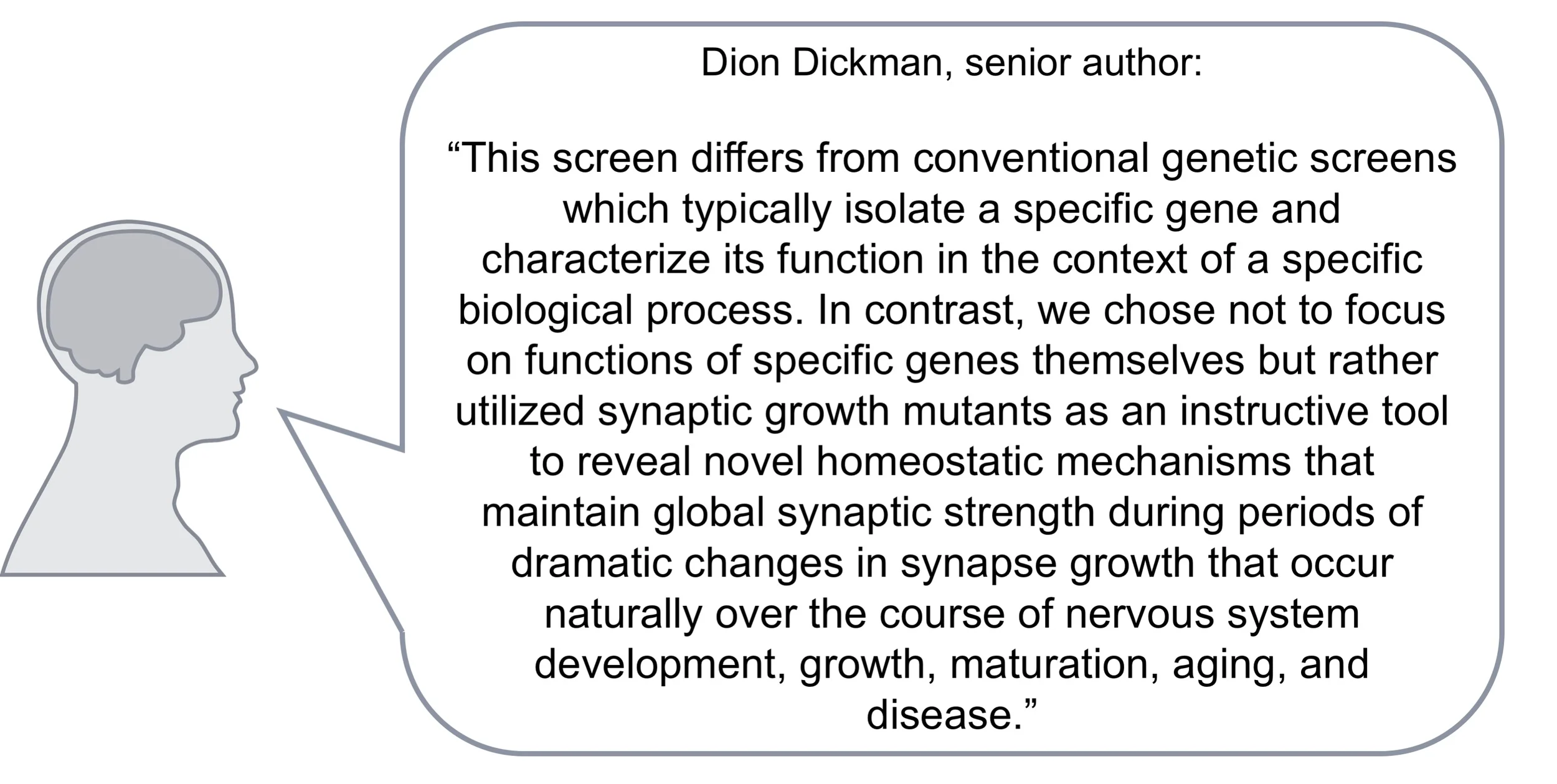
Over the course of development, neural synapses (junctions where neurons communicate with their targets) grow, shrink, change in numbers, and undergo structural changes, but synaptic function or strength remains stable. Even in the presence of genetic mutations, synaptic strength often remains stable and within a narrow physiological range. It is currently not clear how synapses maintain consistent levels of activity despite the structural variability introduced during development or by mutations. This week in The Journal of Neuroscience, Goel and colleagues investigated the structural and functional neural mechanisms that help stabilize synaptic strength in mutant Drosophila (fruit flies) with disrupted synaptic growth.

How did they do it?

Aberrant synaptic growth and structure is associated with a variety of neural diseases. The authors first identified 300 genetic mutations linked to neural diseases and obtained Drosophila stocks that carried those mutations (mutant lines). They characterized the neuromuscular junction – a type of synapse connecting motor neurons and muscles in each of these 300 mutants. In particular, they measured synaptic growth based on a) the number of synaptic boutons (axon terminals) and b) synaptic strength by electrophysiologically recording the amplitude of excitatory post-synaptic potentials (EPSPs) evoked by stimulation. Mutant lines were selected if they had drastically altered synaptic growth but normal synaptic strength. To determine how synapses with enhanced or reduced growth maintain their strength, the authors investigated the relationship between structural and functional properties of synapses in mutant lines. Structural properties included parameters like the size of boutons and the number and area of active zones (synaptic regions where neurotransmitters are released) at a synapse. Postsynaptic parameters included the amount of postsynaptic neurotransmitter receptors. Functional properties included the quantal content of presynaptic neurons (i.e. the number of synaptic vesicles released upon stimulation) and the amplitude of the spontaneous EPSP events that occur in the absence of any stimulation. The authors systematically examined these properties in mutant lines with reduced and increased synaptic growth and compared them to wild-type Drosophila.  

What did they find?

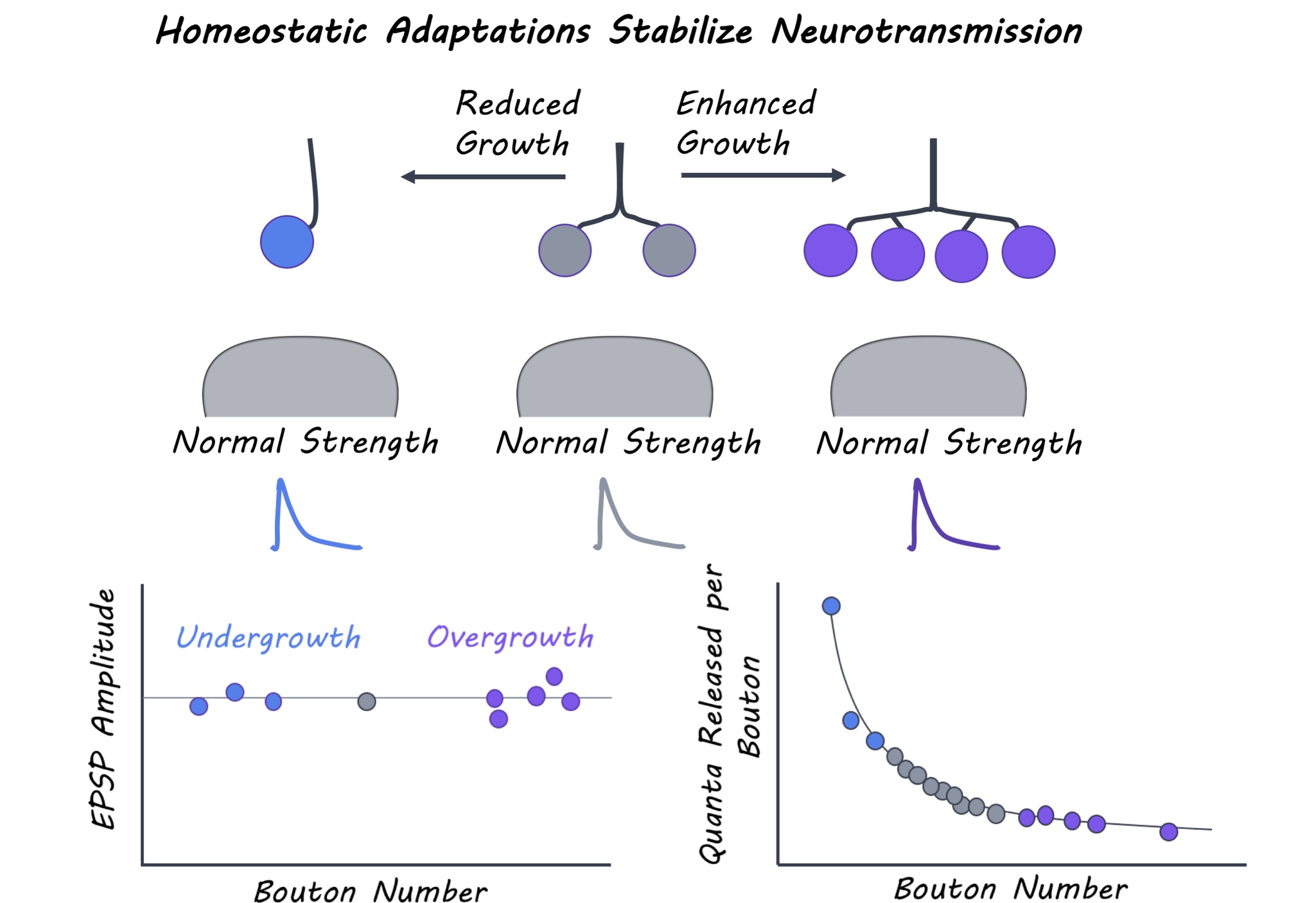
The authors systematically probed synaptic growth and function in the 300 mutant lines and identified 12 with over-grown (too many boutons) or under-grown (fewer boutons) neuromuscular junctions, and 40 with reduced synaptic strength (EPSP amplitude) compared to wild-type Drosophila lines. For the mutant lines that had reduced EPSP amplitude, no change in synaptic growth was observed, indicating that defects in synaptic function occurred independent of altered growth. Conversely, normal synaptic strength was observed in the 12 mutants with dramatic changes in synaptic growth. The authors thus proposed a “homeostatic model” for maintenance of synaptic function, whereby neurotransmitter release at each bouton is reduced at synapses with more boutons but greater at synapses with fewer boutons. These mutants interestingly employed three main strategies to maintain normal synaptic output. When bouton numbers were massively reduced, either bouton size was enlarged to accommodate more neurotransmitter release and maintain normal synaptic strength or spontaneous EPSP amplitude and receptor levels were enhanced to increase postsynaptic sensitivity and compensate for reduced neurotransmitter release. In contrast, synaptic overgrowth mutants exhibited an increase in the total number of neurotransmitter release sites but each of these individual sites were smaller, leading to an adjustment in presynaptic release per bouton. Thus, homeostatic mechanisms stabilize overall synaptic strength while permitting substantial flexibility in synaptic growth.

JNSCI_image_april2.jpg

What's the impact?

This study is the first to illustrate the adaptive pre- and postsynaptic mechanisms that help maintain synaptic strength despite large differences in synaptic growth. These findings enhance our understanding of how neural function remains stable while the underlying synaptic structure is constantly changing during development, maturation, aging, and even disease.

neuron_quote.jpg

Goel et al. A screen for synaptic growth mutants reveals mechanisms that stabilize synaptic strength. The Journal of Neuroscience (2019). Access the original scientific publication here.