Hippocampal Hyperactivity in Cognitively Normal Adults is Associated with Increased Tau

Post by Stephanie Williams

What's the science?

Hyperactive neurons have been shown to contribute to the accumulation and spread of proteins (tau and amyloid-beta) known to aggregate in the brain in Alzheimer’s disease (AD). Hyperactivity in the hippocampus in particular is correlated with amyloid accumulation and has been found in asymptomatic individuals at risk for developing AD. Recently, contradictory evidence has arisen from previous studies investigating the link between tau accumulation and hippocampal activity. As a result, the relationship between hyperactivity in the hippocampus and the proteins that aggregate in AD remains unclear. This week in the Journal of Neuroscience, Huijbers and colleagues investigated the link between memory-related brain activity in older adults and tau and amyloid accumulation.

How did they do it?

The authors used neuroimaging to measure neural activity and protein accumulation related to AD in a large sample of cognitively normal, older adults. Specifically, they measured 1) brain activity using functional magnetic resonance imaging (fMRI), 2) levels of amyloid-beta using positron emission tomography (PET) and 3) tau protein accumulation using PET. The authors measured tau accumulation in specific brain regions known to be vulnerable to molecular changes in AD — the entorhinal cortex and inferior temporal cortex. During the fMRI session, participants were instructed to remember faces they saw on a screen. Participants saw a series of unfamiliar faces (the encoding period), which they needed to remember. After a brief delay period, another set of faces appeared on the screen; these faces were either new, famous faces or previously presented faces. Participants reported whether they recognized the face by pressing a button. The authors recorded the participants’ response time and used their responses to track which of the faces had been successfully encoded.

The authors assessed the correlation between the three brain measures (fMRI activity, levels of tau, and levels of neocortical amyloid) and different behavioral measurements (eg. hit-rate, false alarm rate, response times) from the facial recognition task. They assessed which brain areas were engaged in successful encoding of the faces. To characterize the amount of amyloid in the neocortex, the authors first compared thirty subjects with the highest amount of amyloid and thirty subjects with the lowest amount of amyloid, to determine regional differences. Tau PET data was analyzed in a similar manner— comparisons of brain regions between a group of thirty adults with the highest amount of tau and thirty adults with the lowest amount of tau were performed to create maps of the pattern of tau accumulation. The authors then assessed the relationship between the three sets of data (fMRI, amyloid PET, tau PET) to investigate whether hippocampal activity was associated with protein accumulation. They fit linear models to the data to confirm the relationship between tau and encoding success.

What did they find?

The authors confirmed the results of a recent study that had suggested a link between tau accumulation and increased hippocampal activity. Using the fMRI data, the authors identified brain areas (visual cortex, fusiform gyrus, parahippocampus and hippocampus) that were engaged during successful encoding while performing the face recognition task, as well as areas that were engaged during unsuccessful encoding (posteriomedial cortex, anterior cingulate cortex, angular gyrus, lateral temporal cortex). They found that increased activity was not associated with better encoding success. Using the PET data, the authors identified several areas where the amount of amyloid was different between the high (overall amyloid) and low (overall amyloid) groups (anterior cingulate cortex, angular gyrus, lateral temporal regions). Similarly, they found that there was a significant difference in the amount of tau in the high and low groups in the temporal lobe, which was consistent with previous findings.
tau_image.png

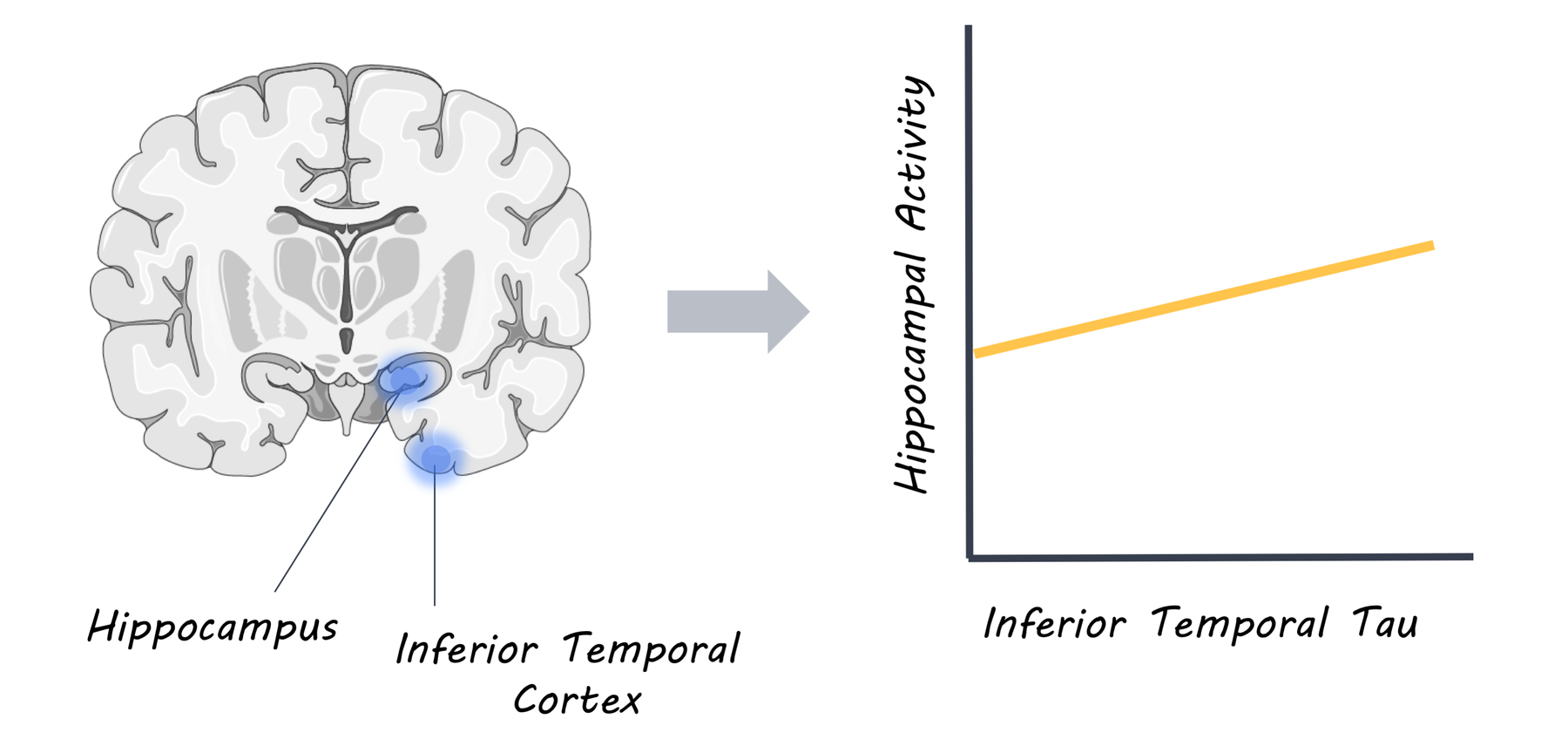
The authors observed that increased hippocampal activity was related to tau accumulation in the inferior temporal cortex, but not with amyloid levels in the neocortex, or tau accumulation in entorhinal cortex. This was an important finding, as tau is found in the entorhinal cortex during advanced aging, while tau spreads to the inferior temporal cortex in AD. This suggests that hippocampal hyperactivity is related to the spread of tau pathology from the entorhinal cortex to the neocortex, prior to clinical symptoms of AD. The authors confirmed the relationship between tau and hippocampal activity by fitting a general linear model to characterize the relationship between fMRI activity and tau accumulation. They found that tau and amyloid accumulation had opposite effects on hippocampal activity.  

What's the impact?

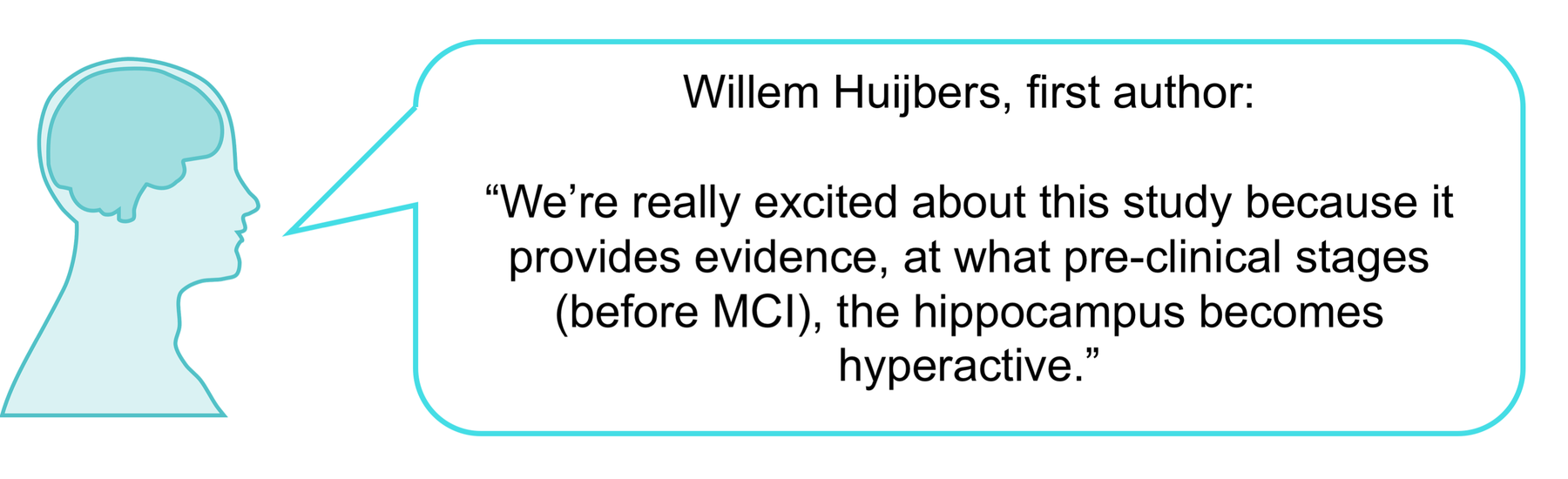
Using a large sample size, the authors confirmed hippocampal hyperactivity begins in preclinical stages and suggest it is associated with tau accumulation. They showed a novel, opposing relationship between amyloid and tau relative to hippocampal activity during a task. This study highlights an important unanswered question in AD research — whether increased hippocampal activity is reflective of abnormal processing or plays a compensatory role. These findings work to resolve the seemingly contradictory evidence from previous studies in which some normal adults were found to have normal hippocampal activity while adults in other studies were found to have hippocampal hyperactivity.
tau_quote.png

Huijbers et al. Tau accumulation in clinically normal older adults is associated with hippocampal hyperactivity. The Journal of Neuroscience (2018). Access the original scientific publication here.

The Role of Oligodendrocytes in Remyelination

Post by Kayla Simanek

What's the science?

Oligodendrocytes are cells that produce myelin sheath, a fatty substance that insulates nerve fibers to ensure electrical signals are transmitted appropriately between neurons. Diseases like multiple sclerosis (MS) are characterized by demyelination (i.e. the loss of myelin sheath) causing nerve fiber breakdown. Remyelination is an innate repair function of the nervous system, effectively restoring function to previously demyelinated nerve fibers. In MS, natural remyelination becomes more deficient over time and ultimately results in disease progression. It was thought that myelin was repaired only by newly made oligodendrocytes, but recent evidence suggests that mature oligodendrocytes may participate in remyelination too. Understanding remyelination is critical for the therapeutic treatment of MS, because recruitment of all remyelinating cell types may be necessary to slow or reverse disease progression. This week in PNAS, Duncan and colleagues show that mature oligodendrocytes participate in remyelination within the central nervous system.

How did they do it?

The authors studied demyelinated models in both cats and Rhesus monkeys. Cats were fed an irradiated diet for 5-6 months and developed impaired coordination and weakness of the hind legs as a result of demyelination. The cats were then returned to a normal diet for recovery. The spinal cords of the cats were then collected either 2-3 months or 2 years after being returned to a normal diet. Spinal cord samples were analyzed using several microscopy techniques (light microscopy, transmission electron microscopy and scanning electron microscopy) to 1) characterize the structure of oligodendrocytes within the tissue and 2) determine the extent of demyelination and remyelination. The authors also studied archived material from Rhesus monkeys who had been fed a diet lacking vitamin B12 for three years. The spinal cords of monkeys were removed and examined via microscopy for oligodendrocyte structure and extent of remyelination.

What did they find?

The authors observed extensive demyelination within the ventral (front) and lateral (side) regions of the spinal cord of cats. Oligodendrocytes within these regions had extensions to both thick, mature myelin sheaths and thin, newly formed myelin. This indicates that these adult oligodendrocytes had not only survived the irradiated diet and maintained their preexisting myelin but were also starting to remyelinate nearby affected nerve fibers. The dorsal (back) region of the cats’ spinal cords had the most severe demyelination and primarily thin myelin sheath, and this region tended to lack surviving adult oligodendrocytes. A similar pattern was observed in spinal cords of Rhesus monkeys: Adult oligodendrocytes at the periphery of severe demyelination lesions were observed to have extensions to both pre-existing myelin sheaths and newly forming myelin on bare nerve fibers. Ultimately, this data suggests that mature oligodendrocytes do participate in central nervous system remyelination.

oligodendrocyte (1).png

What's the impact?

This study found that mature oligodendrocytes actively remyelinate nerve fibers within the central nervous system. This is important for therapeutic treatment of demyelinating diseases like MS, because effective remyelination is important for the reversal of disease progression. The authors postulate that the severity of the demyelination might determine which cell type is involved in repair; new oligodendrocytes may be required for repair in regions of severe demyelination whereas adult oligodendrocytes were shown to remyelinate in more mildly affected areas.

myelin_quote.png

Duncan et al. The adult oligodendrocyte can participate in remyelination. PNAS (2018). Access the original scientific publication here

Integrating Evidence for Decision-Making Over Prolonged Timescales

Post by Stephanie Williams

What's the science?

The human decision-making process includes weighing relevant information and uses these weights to select a choice. Currently, there are several models of decision-making that explain how this happens in terms of an "evidence integration" computation. Although informative, these models have primarily focused on decisions lasting on the order of seconds. It is still unclear whether decisions over longer periods of time can be modelled in the same way, or whether fundamental memory limitations would prevent humans from using integration over longer durations. This week in Current Biology, Waskom and colleagues designed a new task that probed evidence integration over longer periods of time..

How did they do it?

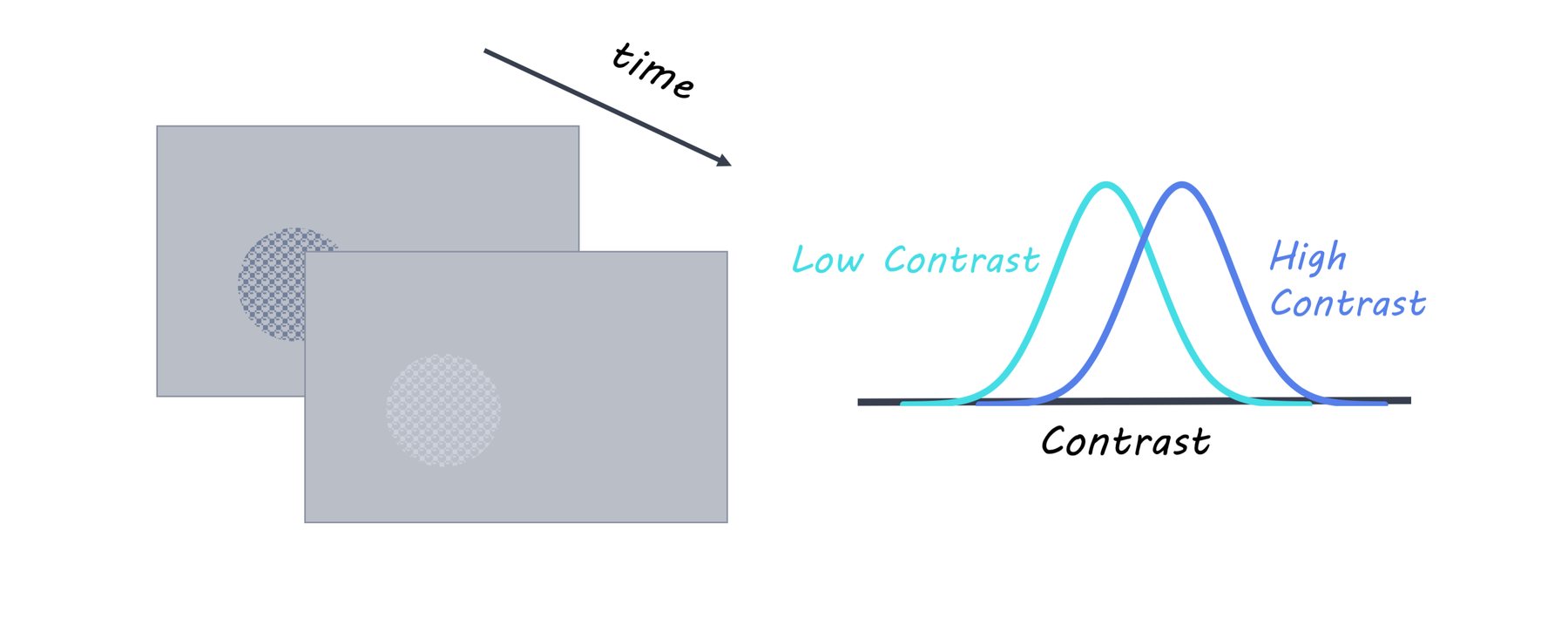
Five participants saw a series of patterns on a computer screen. The patterns were shown at varying levels of contrast against a grey screen, such that some patterns barely contrasted against the grey background, while others stood out. The set of 1-5 patterns, presented sequentially, was randomly sampled from either a) a low contrast distribution or b) a high contrast distribution (see figure). Participants had to decide whether, overall, the series of patterns came from the high contrast distribution or the low contrast distribution. There were either shorter (1-4s) or longer (2-8s) unpredictable gaps between the patterns they saw in each series. When making their decision, participants were instructed to think about the average contrast of the patterns they saw. The authors manipulated several parts of the task— the strength of the contrast of the pattern, the number of patterns (1-5), and the length of the gap between each pattern. To perform well at the task, participants should have used all of the patterns presented to them in the series to make a decision.  

The authors evaluated each participant’s behavior by looking at how the three aspects of the experiment they manipulated influenced the subject's choices. They investigated each of these aspects in both individual subjects and in the aggregated group. They then fit four different computational models and compared the predictions of the models with their data to infer characteristics of the decision-making process over longer timescales.

decisions_image.png

What did they find?

The behavioral data showed that participants were able to accurately integrate evidence over periods of time on the order of tens of seconds (ranging from 2.2s to 34s). Participants were sensitive to the strength of the contrast in the patterns they saw, and performed better when they saw a greater number of contrast patterns before having to make a decision. Importantly, participants performed with similar accuracy in both task conditions (long vs. short gaps between stimuli), suggesting that evidence integration is a flexible process that can extend across long timescales. Of the four models the authors examined, a linear integration model best fit the data, suggesting subjects summed the evidence from each pattern they encountered to make their decision. Directly modelling two proposed sources of information loss, ‘memory noise’ and ‘memory leak’ (when information presented earlier is forgotten), showed that neither were present in any appreciable magnitude. The subjects’ data were not perfectly explained by the linear integration model, however. Subjects tended to slightly overvalue stimuli that appeared first in each trial, suggesting that they sometimes struggled to change their mind after forming an initial impression.

What's the impact?

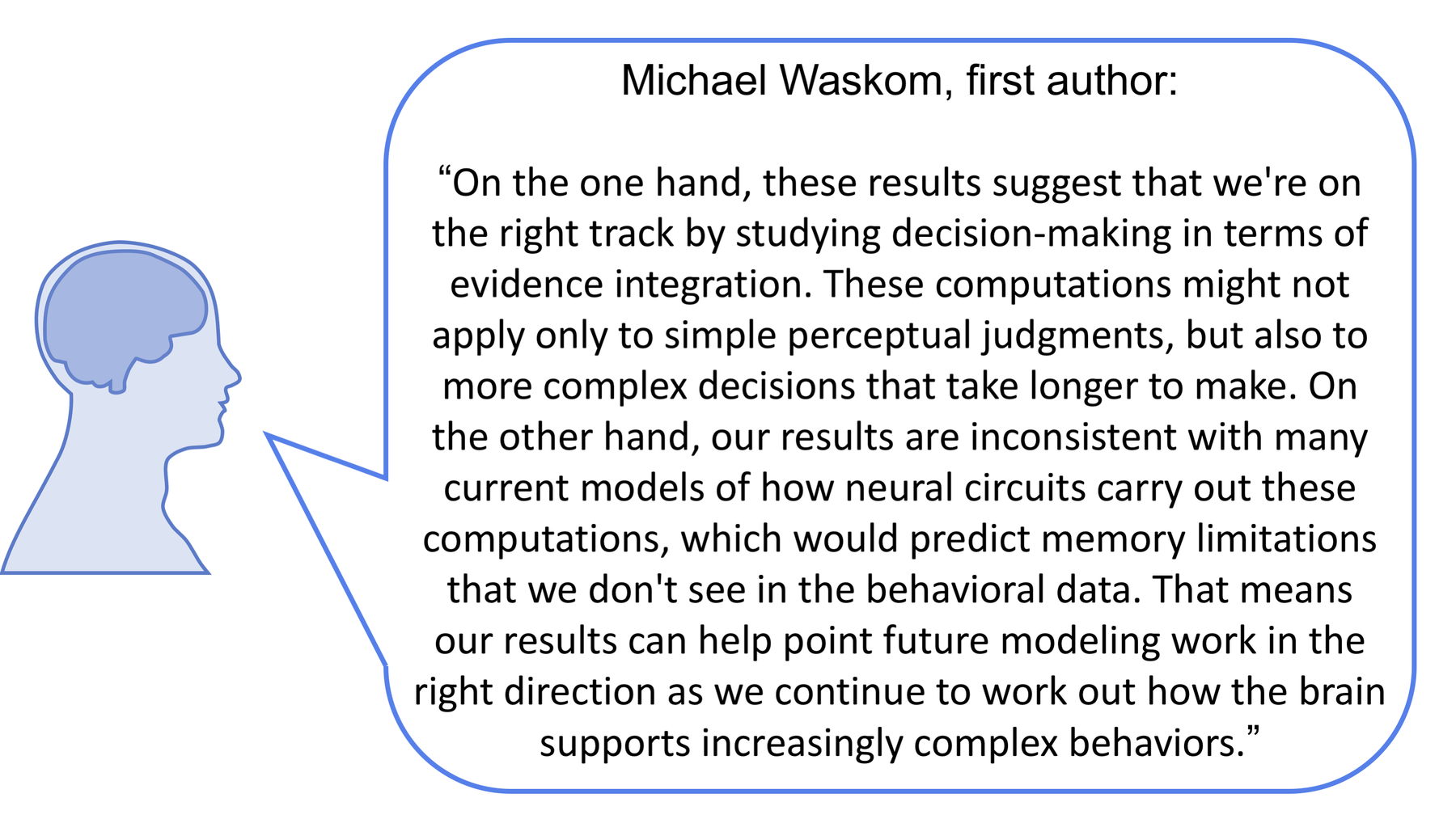
The authors’ findings advance our knowledge about how we combine evidence at timescales corresponding to many real-world decisions. The study shows that people are able to integrate data with minimal information loss over relatively long durations. The findings also pose important questions about the biological mechanisms behind evidence integration during natural decision-making, and suggest current network models may need to be amended.

decisions_quote.png

Waskom et al., Decision Making through Integration of Sensory Evidence at Prolonged Timescales. Current Biology (2018). Access the original scientific publication here.