
Oxytocin Affects Social Sharing and Brain Activity in Women

What's the science?

Social interaction and relationships are rewarding; however, attachment anxiety can reduce rewarding effects of social interaction. Oxytocin is a neuropeptide released from the hypothalamus, known to facilitate social bonding and reduce anxiety. It is unknown how oxytocin may affect the experience of social interaction and anxiety differently in men and women. Furthermore, it isn’t known how brain activity may be altered in the presence of oxytocin in men and women. This week in NeuroImage, Ma and colleagues test the sex-differential effects of oxytocin on social sharing and associated brain activity.

How did they do it?

128 pairs of same-sex friends were randomized into two groups and given a placebo (as a control) or a dose of intranasal oxytocin (as a treatment; group allocation was blinded). Before the experiment participants filled in a) a friendship scale to ensure a high quality of friendship and b) questionnaires that controlled for mood and personality differences between the test groups. Attachment style was assessed using the Adult Attachment Scale. After administration of the placebo or oxytocin, the friends participated in a social sharing experiment where they shared emotional experiences with either their good friend or a stranger (same sex). The pairs performed the same task, and one person was in the MRI scanner (task-based functional MRI scan) while the other person was in an experimental room close by.

They were instructed that they would view an image either alone, with their friend or with a stranger. Then participants were shown images of people, landscapes or animals that were either neutral, positive or negative. After each picture they were asked to rate how positive or negative the image made them feel and how strong their feeling was. They were also asked to report on thoughts related to sharing with their friends after the sharing experiment. The fMRI data was acquired to measure effects on brain activity and functional connectivity and differences between men and women.

What did they find?

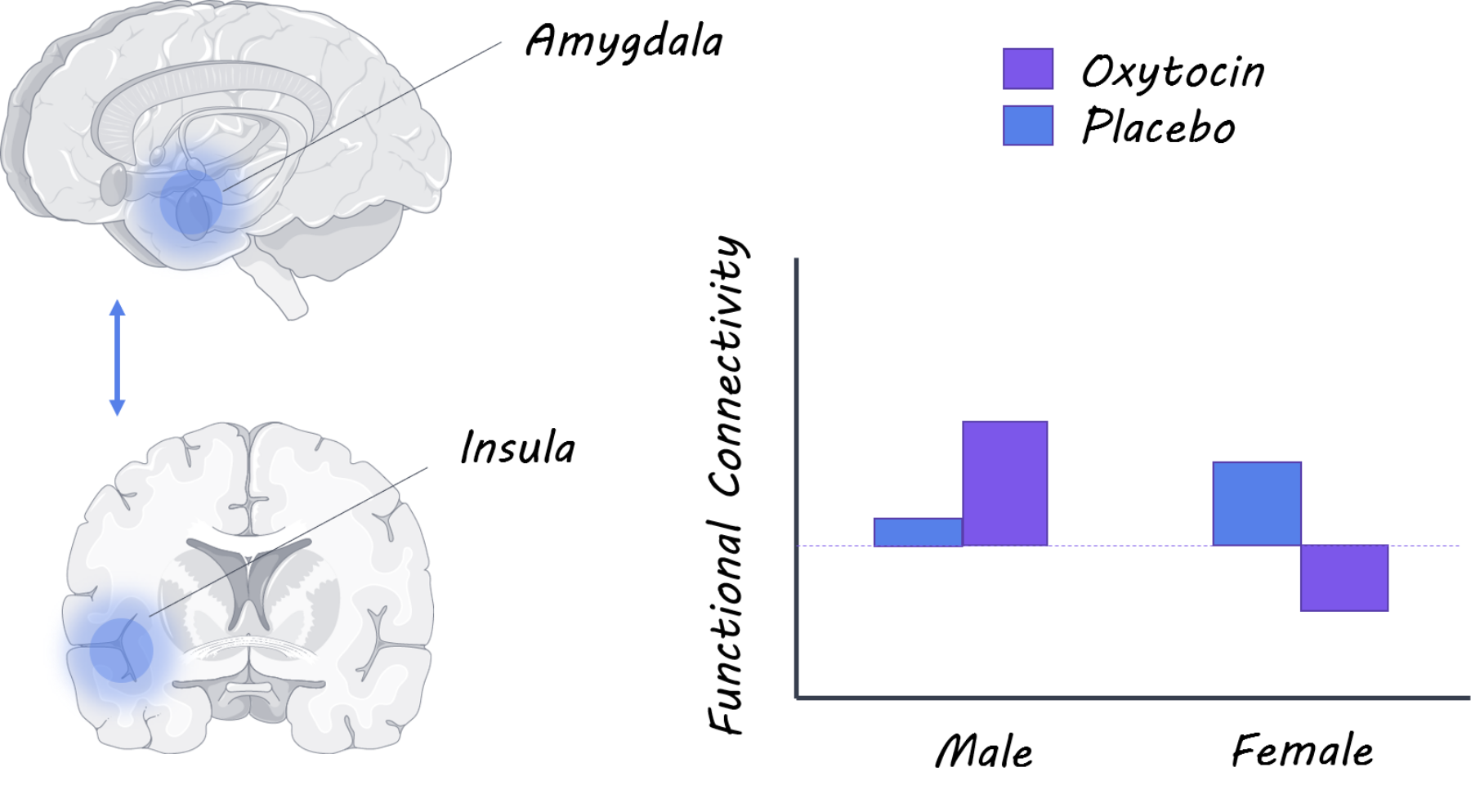
Oxytocin increased the positive experience of sharing, particularly for positive emotional content, in female but not male participants. Effects were most pronounced when sharing with female friends but not with strangers. For males, there was no effect of oxytocin on sharing between friends, however, it did increase positive emotion in the stranger > alone condition (i.e. viewing an image with a stranger vs. viewing it alone). Oxytocin generally increased thoughts of sharing with friends when undergoing the sharing with a friend condition. On the neural level the effects of oxytocin in females were accompanied by reduced activity in the amygdala and insula as well as decreased interplay between them, whereas the opposite pattern was observed in males. Moreover, oxytocin reduced the strength of the correlation between attachment anxiety and amygdala activity in females during social sharing with a friend, indicating that the effects of oxytocin may vary with attachment style.
oxytocin1800.png

What's the impact?

This is the first study to demonstrate effects of oxytocin on social sharing and which effects differ between men and women. We now know that oxytocin increases the positive experience of sharing with a friend in females but not in males and that brain activity during sharing is differentially affected in females vs. males. Furthermore, the effects of oxytocin on brain activity may differ depending on attachment anxiety. Future research should consider sex-differences when studying the behavioral and brain effects of oxytocin on anxiety, stress and social attachment. For the proposed therapeutic administration of oxytocin in disorders such as autism, sex-differences in responses may need particularly to be taken into account.

oxytocinquote1800.png

Ma et al., Sex- and context-dependent effects of oxytocin on social sharing. NeuroImage (2018). Access the original scientific publication here.

Treatment Response Is Associated with Altered Inflammation Pathways in Depression

What's the science?

Major depressive disorder (MDD) has previously been associated with various markers of inflammation in the body. For example, some studies have shown that cytokines (proteins secreted by the immune system that can be either pro- or anti-inflammatory) are elevated in the blood and cerebral spinal fluid of individuals with the disorder. Elevated levels of anti-inflammatory cytokines in MDD have also been found; the body may increase production of these cytokines to reduce inflammation. However, a reliable biomarker for MDD or associated inflammation has not been established. This may be due in part to the fact that most studies have focused on MDD patients who were not treatment naïve, therefore, a clear link between MDD, inflammation, and treatment could not be established. This week in Neuron, Syed and colleagues studied inflammation in individuals with MDD who were treatment-naïve.

How did they do it?

171 treatment-naïve patients diagnosed with MDD and 64 healthy individuals (as part of the PReDICT cohort) were included in the study. The patients and healthy controls were not matched on certain demographic criteria (age, sex, body max index and ethnicity), so some analyses included only a subset of matched patients and controls (62 patients and 62 healthy control participants referred to as ‘matched sub-groups’). However, results from the 62 patients were not statistically different from the results from the entire group of 171 patients in most analyses, so the larger group of patients was used (‘total sample’). 29 cytokines, chemokines, or growth factor measures (all inflammatory/immune markers) were collected from blood samples. Patients were randomized to receive 12 weeks of duloxetine or escitalopram treatment (antidepressants) or 16 sessions of cognitive behavioural therapy treatment. The authors examined the effects of time (pre- or post-treatment), group, and treatment response on inflammatory markers.

What did they find?

When the authors compared cytokine levels between healthy controls and the total sample of patients, they found that 6/7 pro-inflammatory cytokine levels and 5/7 anti-inflammatory cytokine levels were elevated in patients with MDD compared to healthy controls (2/7 were diminished). The results indicate abnormal inflammatory regulation in treatment-naïve patients with MDD. Some chemokine and growth factor levels were also elevated, however, some were not elevated when the smaller matched subgroups were compared, indicating the differences in these levels may be due to demographic factors. Inflammasomes (multiprotein complexes that can trigger inflammatory cascades/cytokines upstream) were also elevated in patients with MDD, further suggesting that inflammatory responses are altered in patients with MDD. The authors also applied plasma to peripheral blood mononuclear cells from healthy individuals and found that CD69+CD19+ cells, were reduced, suggesting a reduction in activated B cells (immune cells). The authors next tested whether cytokine levels changed in treatment responders versus non-responders (pooled across treatments). Several pro-inflammatory cytokine levels were reduced following treatment in responders (versus non-responders, in which levels tended to rise). Anti-inflammatory cytokine levels tended to rise over time regardless of treatment response. Memory T cells (immune cells) were also lower in responders versus non-responders, suggesting lower immune memory in responders.

kasey1800.png

What's the impact?

This is the first comprehensive study of inflammatory markers in treatment-naïve patients with MDD. The results suggest inflammatory dysregulation is common in MDD, and differs by response to treatment. The results have important implication for understanding the effect of MDD on inflammation and the role of treatment in altering the immune response in MDD.

kaseyquote1800.png


Syed et al., Defective Inflammatory Pathways in Never-Treated Depressed Patients Are Associated with Poor Treatment Response. Neuron (2018). Access the original scientific publication here.
The Liquid Phase of a Protein Is Involved in Synaptic Vesicle Clustering

What's the science?

Synaptic vesicles carry neurotransmitters and thus are critical for neuron-to-neuron communication. Synaptic vesicles cluster together at the presynaptic membrane and yet are able to move within the neuron terminal prior to release. Why might this be? One protein called synapsin is among the most abundant proteins in presynaptic neuron terminals. It binds to synaptic vesicles and therefore might be involved in their release. Furthermore, recent research suggests that some proteins and molecules within the cytoplasm of cells (including neurons) may be able to organize themselves even in the absence of a membrane, via phase separation (e.g. like how oil and water separate). This week in Science, Milovanovic and colleagues test whether synapsin demonstrates properties of phase separation and whether it is involved in cluster forming or release of synaptic vesicles.

How did they do it?

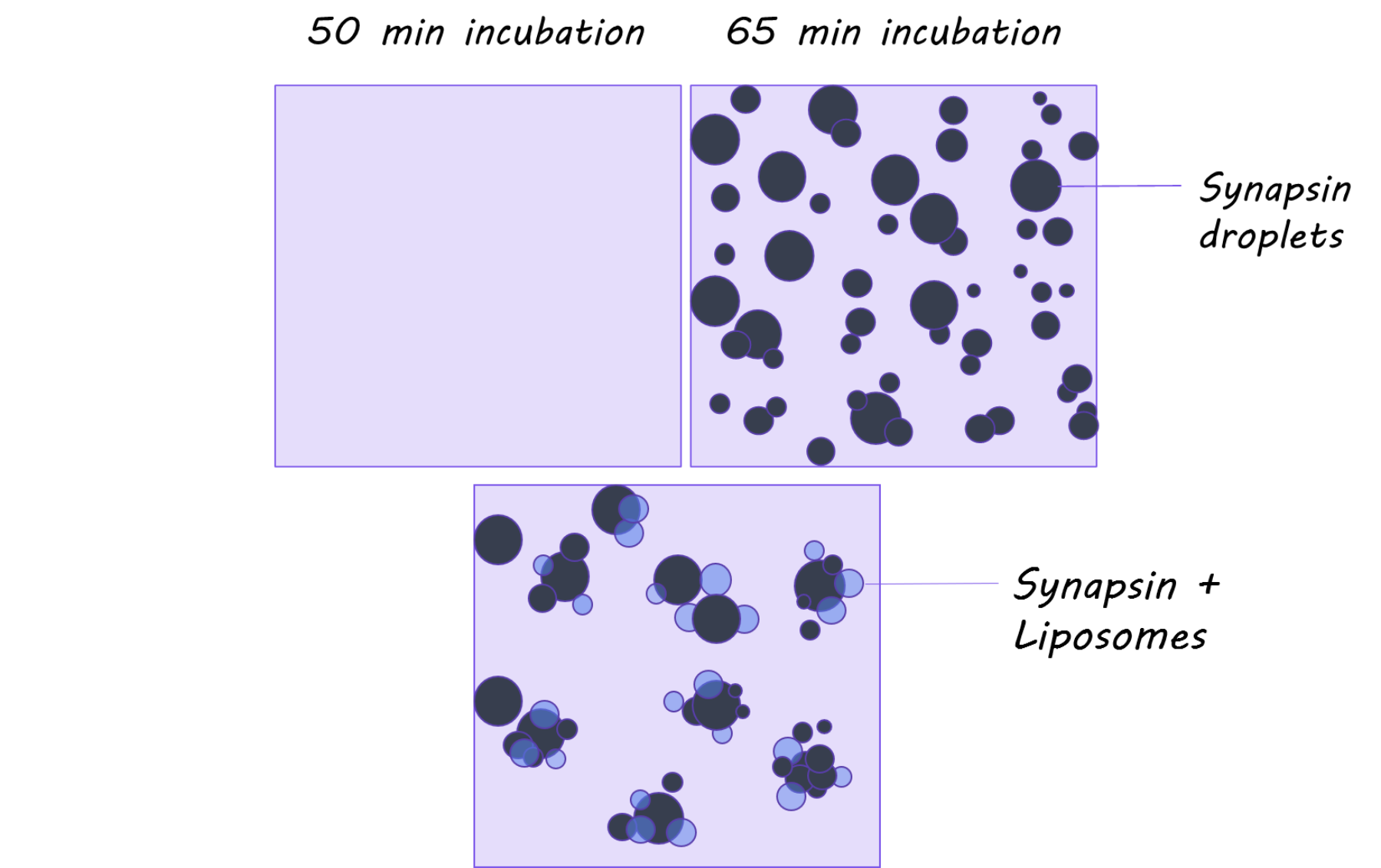
The authors tagged synapsin with green fluorescent protein and incubated synapsin molecules with a salt containing liquid buffer (resembling typical physiological conditions) to test whether synapsin phase-separates (i.e. into two liquid phases). They also tested whether synapsin can recruit (into it’s phase, ie. liquid) other proteins within the presynaptic terminal. They then performed experiments to mimic the synaptic environment more closely (which is filled with many different molecules and organelles) by adding polyethelene glycol to the buffer as a crowding reagent. They tested how synapsin might interact with vesicles and be involved in their cluster forming by incubating small lipid vesicles with synapsin. Using green fluorescent protein tagging, fluorescence microscopy, and electron microscopy, they tested whether synapsin could recruit the lipid vesicles into its phase. They further tested whether calcium dependent phosphorylation of synapsin (which is known to occur in the synapse during neuron activity) resulted in a disassembly of the synapsin/lipid vesicle phase as this would indicate the involvement of synapsin in the vesicle dispersion that occurs in stimulated synapses.

What did they find?

Synapsin was confirmed to phase-separate under physiological conditions (i.e. similar to those occurring in neurons in the human brain) as was evident by droplets of synapsin forming within the liquid buffer solution. They found that many other proteins located in the presynaptic terminal with synaptic vesicles also underwent phase separation when incubated with synapsin. Therefore, they tested how these interacted with synapsin. Two proteins known to bind synapsin, intersectin and GRB2, were found to form droplets with synapsin in the liquid buffer. After adding a crowding reagent to mimic the environment of a synapse, droplets of synapsin (either alone or with its binding partners intersectin or GRB2) formed even more efficiently. After incubating synapsin with lipid vesicles, they found that the synapsin droplets sequestered lipid vesicles which resulted in the formation of droplets containing lipid vesicles. As a control experiment, they tested whether other liquid mediums containing proteins that phase separate (but do not bind lipid vesicles) could also sequester lipid vesicles, and found that they did not. Thus, synapsin specifically allows the clustering of lipid vesicles. Upon calcium dependent phosphorylation of synapsin, droplets of synapsin alone or synapsin + lipid vesicles dispersed, supporting the hypothesis that synapsin is important for vesicle sequestering and for their dispersion during stimulation.

What's the impact?

This is the first study to show that phase-separation of a protein, synapsin, within the presynaptic terminal plays an important role in vesicle clustering. More generally, it is the first demonstration that phase-separation of a protein can organize vesicles within a cell. We now know that synapsin, and importantly it’s liquid phase, is involved in sequestering and dispersing vesicles in the presynaptic terminal. Future studies should examine how molecules within neurons may organize themselves based on phase separation.

leighquote1800.png

Milavanovic et al., A liquid phase of synapsin and lipid vesicles. Science (2018). Access the original scientific publication here.