
The Nature vs. Nurture of Song Learning

What's the Science?

Learning is affected by individual genetic differences and previous experience. The way that genetics and experience interact to affect learning is not fully understood. This week in PNASMets and colleagues set out to determine whether song learning by birds is influenced by genetics and whether quality of instruction has any impact on this genetic influence.

Birds singing different song tempos

How did they do it?

To test whether genetics has an impact on learning, they performed an experiment where birds (finches) from different genetic backgrounds learned a song tempo after receiving computer instruction. To see whether the quality of instruction changes the influence of genetics on learning, a second set of birds received enriched instruction (tutoring by other birds).

What did they find?

They found that the birds with different genetic backgrounds and the same level of experience produced songs with a range of different tempos. This shows that genetics alone has a strong impact on learning song tempo. When they factored in the quality of instruction, they found that the genetic influence on learning became weaker, meaning that experience also has a strong impact on learning and can even override the impact of genetics. 

What's the Impact?

This is one of the first studies to test the contribution of genetics and experience on learning. Importantly, this study highlights that the influence of genetics on learning can depend a lot on our experience. Rather than ‘Nature vs. Nurture’, learning seems to be all about the interaction between the two.
 

Read the original journal article here.
 

D. G. Mets, M. S. Brainard, Genetic variation interacts with experience to determine interindividual differences in learned song. Proc. Natl. Acad. Sci. 115, 421–426 (2017).

A Brain Stimulation to Remember

What's the science?

Brain abnormalities in Alzheimer’s disease are often found in a region of the brain known as the precuneus. This week in NeuroimageKoch and colleagues report that stimulating the precuneus in early Alzheimer’s patients improved memory and changed the way this region was connected to other brain regions.

How did they do it?

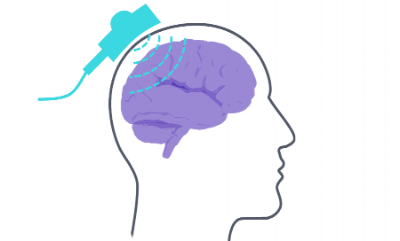
They stimulated neurons in Alzheimer’s patients by inducing an electrical field using pulses from a magnetic coil (called repetitive transcranial magnetic stimulation or rTMS). Before and after rTMS, they administered a memory test and measured how patients’ brains responded to magnetic pulses using electroencephalography (EEG).

Transcranial magnetic stimulation (TMS)

What did they find?

Patients who received stimulation showed improvement on a memory test. The patients’ brains also changed. When a magnetic pulse was applied, EEG recordings showed increased power of brain waves in the precuneus. They also found increased brain activity in the precuneus as well as in a frontal region of the brain: the medial prefrontal cortex. Brain circuity is known to be damaged in Alzheimer's, so changes in how these two brain regions function together may be helping to improve memory.

What's the impact?

Brain stimulation has been used to successfully improve symptoms in some disorders such as depression, obsessive compulsive disorders, and schizophrenia, but its potential to improve brain function in Alzheimer’s has only been recognized recently. Brain stimulation could be used in the future as a non-pharmacological intervention for Alzheimer’s patients with memory impairment.

Read the original journal article here.

G. Koch et al., Transcranial magnetic stimulation of the precuneus enhances memory and neural activity in prodromal Alzheimer’s disease. Neuroimage. 169, 302–311 (2018).