Cognitive Network Processing in Chronic Pain

Post by Natalia Ladyka-Wojcik

The takeaway

The claustrum, a subcortical nucleus of the brain, may play an important role in both acute and chronic pain, such as the pain experienced by patients with migraines. This region is activated by painful stimulation and shows abnormal patterns of functional activity among migraine patients. 

What's the science?

Patients who suffer from chronic pain often report difficulties in cognitive processing, likely as a result of competing demands in the brain. Previous research suggests that pain contributes to cognitive load, or how much information can be processed at any given time, such that it increases activity across different cortical networks in a dysfunctional manner. One subcortical nucleus in particular called the claustrum, may be key to understanding cortical network disruptions related to chronic pain, as this region has been shown to respond to acute pain and shares vast structural and functional connections with the rest of the brain. In a sense, the claustrum may be a “hub” for different functional brain networks whose function is disrupted by chronic pain, such as in patients with migraines. This week in Current Biology, Stewart and colleagues aimed to further characterize the role of the claustrum in response to pain, by investigating how it modulates patterns of brain connectivity during cognitive task performance. 

How did they do it?

The authors conducted a series of analyses on functional magnetic resonance imaging (fMRI) data from both patients with migraines and healthy participants. First, the authors looked at the functional activity of the claustrum while healthy participants were exposed to heat stimulation on their forearm, to determine whether it scaled with pain experienced by participants in response to the stimulation compared to other neighboring brain regions. Next, they examined how claustrum responded to auditory cues that would predict the onset of painful heat stimulation in another set of healthy participants. This approach allowed the authors to determine if claustrum is responsive to pain-predictive cues, not just the pain itself. After examining the claustrum in the context of healthy participants, the authors shifted focus to a group of migraine patients, using a cognitive task to probe whether patients would show greater cortical network activity compared to healthy participants. This cognitive task called the multi-source interference task, required participants to identify a unique number in an array. Finally, they used a series of complex statistical approaches, including Partial Least Squares and Dynamic Causal Modeling, to model differences in patterns of functional brain connectivity related to cognitive performances among healthy controls and migraine patients. 

What did they find?

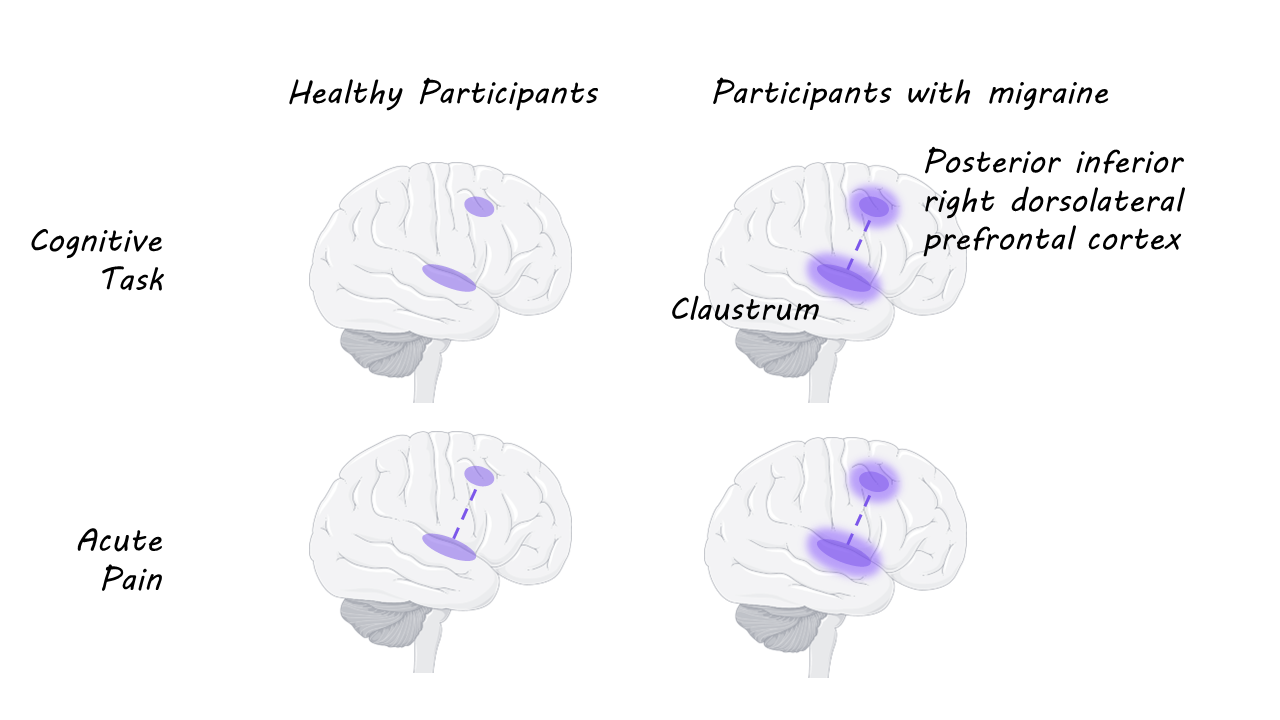
The authors found that in healthy adult participants the claustrum, especially in the left hemisphere, is responsive to the experience of heat pain and to cues associated with the onset of heat pain. Subsequently, when the authors compared patterns of activity in brain networks supporting cognitive performance between healthy participants and migraine patients, they found dysfunctional increases in activity among migraine patients. Importantly, these large-scale brain networks, such as the Fronto-Parietal Network, have been shown to have strong functional connections with the claustrum. Among patients with migraines, the authors found that right claustrum activity was significantly greater than that in healthy controls during pain stimulation and cognitive task performance. Finally, they also reported strengthened underlying projections in migraine patients from the right claustrum to a dorsolateral prefrontal cortex region associated with processing pain, even when the migraine patients were pain-free, consistent with a pattern of pathological engagement of the claustrum with chronic pain. These projections were confirmed structurally using diffusion-weighted imaging, a neuroimaging approach that allows researchers to map the movement of water molecules in brain tissue.    
What's the impact?

This study found that the claustrum, a subcortical nucleus involved in modulating different cognitive networks of the brain, is activated by acute pain in healthy individuals and is dysfunctional in patients with chronic pain. Altogether, the results of this study overwhelmingly implicate the claustrum in the relationship between cognitive impairment and chronic pain. Understanding chronic pain and finding ways to treat it is important, as an estimated 3.1 billion people globally suffer from chronic headache disorders like migraines, as well as countless more who experience other forms of chronic pain. 
Early Life Adversity Has a Long-Term Impact on Reward Learning

Post by Lani Cupo

The takeaway

Reduced maternal interaction during infant nursing, a marker of early-life adversity, is associated with altered neural responses during a reward learning task in brain regions important for psychiatric health in adulthood.  

What's the science?

Early-life adversity (ELA) events during childhood such as abuse and neglect have been shown to affect reward learning and decision making in adolescence, however, the long-term impact in adulthood of ELA before birth and in infancy (e.g. maternal smoking or stressful life events) is not fully understood. This week in Biological Psychiatry, Sacu and colleagues examined the impact of ELA on the neural processes underlying reward learning in adults with functional magnetic resonance imaging (fMRI).

How did they do it?

The authors used data from an ongoing birth cohort study following 384 participants from birth through adulthood. They included 156 participants who had high-quality fMRI collected during a passive avoidance task. In this task, one of four colored shapes was displayed on the screen. Participants had to decide whether or not to respond to that shape. Responding could result in one of the four following outcomes: winning $1, winning $5, losing $1, or losing $5. Each shape was most likely to result in one of the outcomes. If participants did not respond, they did not receive any feedback. As participants learn which shapes are beneficial, they can choose to respond less to the harmful ones.

The authors then used a series of models to extract information from the participants’ behavior about the expected value (EV) of responding (trials where they responded, expecting to receive a reward) and prediction error (PE; where they received an outcome that deviated from their expectations). A dimensionality reduction technique (principal component analysis) was used to identify factors that represent correlated adversity measures. 

The authors used a t-test to identify brain regions involved in EV and PE signaling in the task. Finally, they used regressions to test the association between ELA factors and activity in 8 brain regions of interest and statistically corrected for multiple comparisons.

What did they find?

The authors identified three factors associated with increased ELA. The first mostly consisted of psychosocial adversities (e.g. family adversity and childhood trauma) and prenatal maternal smoking. The second was mostly informed by perinatal adversity (e.g. complications during birth). The third was mostly maternal sensitivities (e.g. maternal stimulation during nursing).

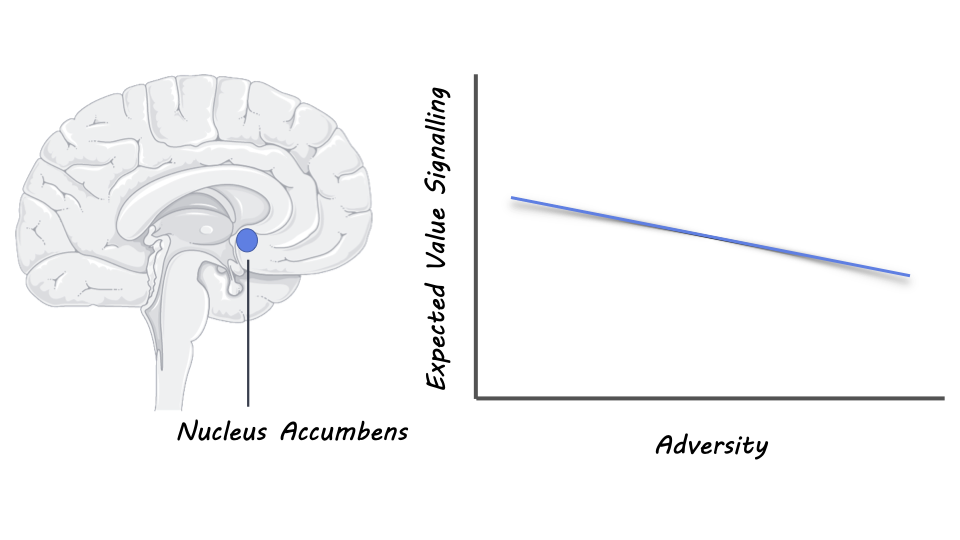
Then, the authors identified that the striatum and medial prefrontal cortex were involved in EV and PE signaling, consistent with previous research. The first and second adversity factors were not significantly associated with neural changes, however, the authors did find lower activity in the nucleus accumbens during EV trials in participants with lower maternal stimulation. Meanwhile, participants with higher maternal stimulation showed increased activity in the striatum and anterior cingulate cortex. Together these results suggest that reduced maternal stimulation alters activity during reward learning. 

What's the impact?

The results of this study suggest even in adulthood, early life adversity associated with psychosocial factors and maternal stimulation in infancy impact neural processes during reward learning. This study suggests interventions targeting the reward system in development may help counteract the effects of ELA. 

 Access the original scientific publication here.

Fluctuations in Heart Rate Influence Brain Activity

Post by Meagan Marks

The takeaway

Heart Rate Variability (HRV), a component of cardiac rhythm, directly affects brain activity important for neural communication.

What's the science?

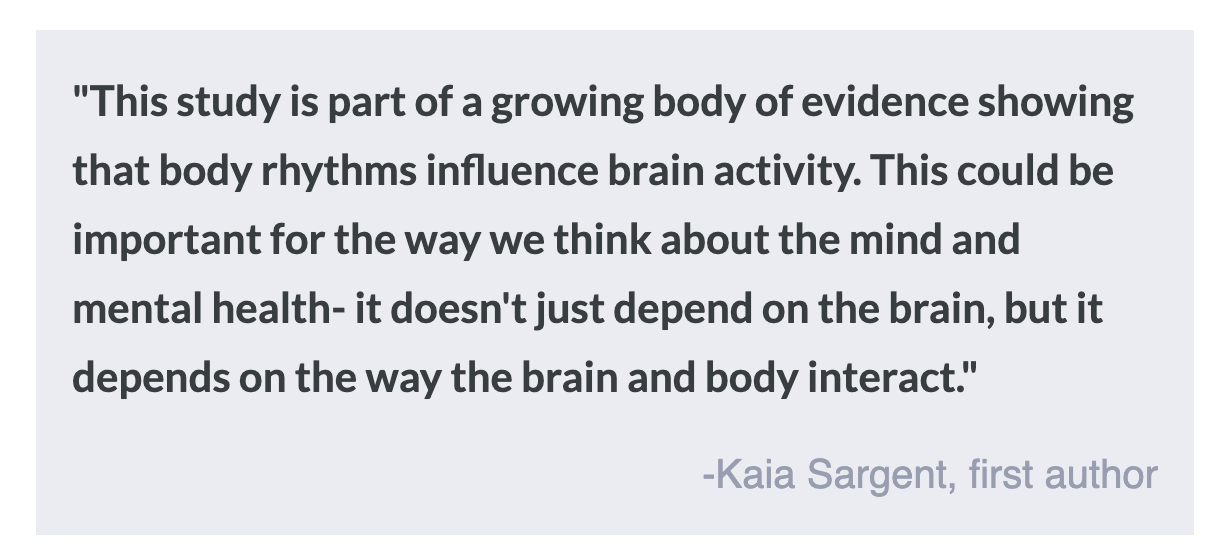
In neuroscience, it is typically understood that the brain controls the body. But emerging evidence suggests that involuntary functions like heartbeat can influence the brain. Recent research has found that heart rate variability (HRV), the fluctuation in time intervals between adjacent heartbeats, is connected to neural activity. Those with higher HRV – or a heart more adaptable to the environment – are shown to have improved emotional regulation, cognitive function, and well-being. This relationship is especially prominent with high-frequency HRV (HF-HRV, which reflects the variation in heart rate associated with breathing). However, how neural activity and HF-HRV directly affect each other remains unknown. This week in Psychological Science, Sargent and colleagues explored the causal relationship between HF-HRV and neural activity by comparing oscillations from the heart and brain.

How did they do it?

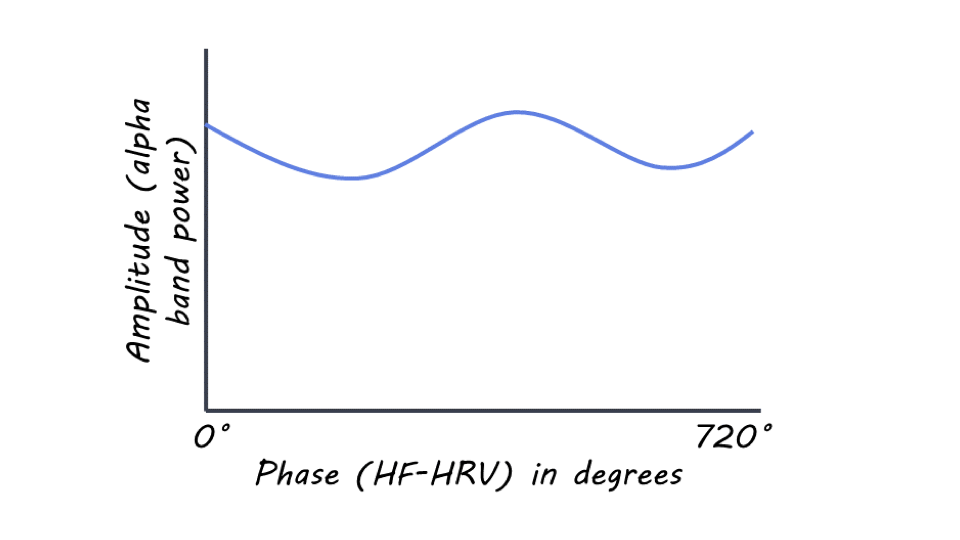
The authors recruited 37 healthy adult participants and asked them to stare at a white cross on a black screen for 5 minutes. During the task, cardiac rhythm was recorded via electrocardiogram (EKG) and brain rhythm via electroencephalogram (EEG). The HF-HRV oscillations were then extracted from EKG recordings and temporally aligned to match EEG data (brain waves), which had been filtered into oscillations occurring at each frequency band (alpha, beta, gamma, delta, theta). The authors then analyzed the oscillations to look for evidence of phase-amplitude coupling, where it was predicted that the phase series (cycles) of HF-HRV oscillations would be coupled with, or associated with, the magnitude of change in brain waves (amplitude). Once phase-amplitude coupling was established, the authors calculated to what extent HF-HRV oscillations successfully predicted brain oscillations and vice versa to establish the direction of the causal relationship (heart-to-brain or brain-to-heart influence). 

What did they find?

Upon analysis, the authors found a strong relationship between HF-HRV and neural activity via phase-amplitude coupling, where the phase series of HF-HRV oscillations modulated the amplitude of the brain waves. It was found that a majority of participants also showed a significant heart-to-brain effect, where HF-HRV oscillations significantly predicted and regulated brain waves. This suggests that cardiac rhythm can influence neural activity. In addition, for all brain wave frequency bands except gamma, the heart-to-brain effect was significantly stronger than the brain-to-heart effect. This was true for EEG signals coming from all areas of the brain, suggesting that the heart was influencing neural communication and activity between multiple regions and multiple brain wave rhythms.

What's the impact?

This study is the first to show that fluctuations in heart rate can modulate neural activity. The findings suggest that improvements in cardiac rhythm may enhance connectivity and communication between neurons in the brain, in turn boosting cognitive functions like emotional regulation, executive functioning, and stress management. Cardiac variables such as HRV could also be a potential therapeutic target for mental health disorders, where methods like HRV biofeedback could help improve well-being.