
Neuroscience-Backed Strategies to Help You Learn More Effectively

Post by Rachel Sharp

What is learning?

Whether we are in school, with our friends, or pursuing hobbies, we are always learning. But what exactly is learning? And why is it that we can pick up our favorite musician's new song after just a few listens, yet struggle to recall the contents of the Bill of Rights? Biologically, learning is the process by which neurons form and strengthen connections between each other. Every thought and decision we make requires communication between neurons across the brain. Picture groups of neurons working together, firing in unison to produce a thought, idea, or reaction. As these neurons fire together, their connections strengthen, making it more likely they'll fire together in the future. Forming new neural connections, strengthening existing ones, and pruning away unnecessary ones are the building blocks of learning, and understanding how to engage these processes can help us become more effective learners.

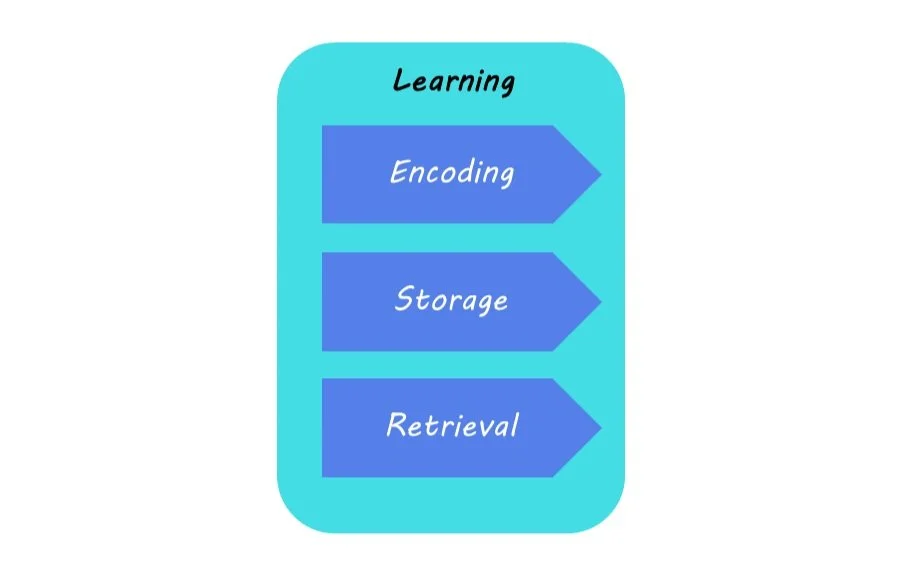
Learning occurs in three stages: encoding, storage, and retrieval. Let's explore what happens during each stage, both biologically and practically, and identify strategies to make these processes faster, more accurate, and longer lasting.

Effective encoding, storage and retrieval

Encoding refers to the initial process of encountering and interpreting new information. Our brains are constantly bombarded with information, so when it comes to learning, encoding is highly selective. Most of this filtering happens automatically based on the perceived importance of the information. Here are some strategies to enhance encoding:

1)    Direct Attention: Directing attention to relevant information and minimizing distractions helps strengthen encoding. This might involve highlighting key points or using different colors for important information.

2)    Attach Meaning: Attaching meaning to new information, especially by connecting it to what we already know, helps with encoding. Providing examples or relating topics to personal experiences makes it easier for the brain to process and retain information.

3)     Multiple Modalities: Absorbing information visually, verbally, and actionably recruits multiple different parts of the brain during the encoding process. Effectively, this creates multiple pathways by which the information can be retrieved later.

Storage involves the processing and maintenance of encoded information in the hippocampus. As you learn, neural connections will be formed, rearranged, and lost. So how information is stored, and how strongly it’s stored and maintained, will impact whether learned information persists over time. Varied repetition is key to improving storage, as it strengthens neural connections associated with the information. When you encounter information again and again, the associated neural connections will activate and become stronger. By diversifying repetition through different modalities, contexts, or examples, we ensure robust storage and easier retrieval.

Retrieval is the process of accessing and recalling stored information. It strengthens existing connections and is crucial for long-term memory retention. Now, let's explore some neuroscience-backed learning strategies that enhance encoding, storage, and retrieval.
What are some examples of neuroscience-backed learning strategies?

1.     Orchestrated Immersion: This involves fully immersing learners in their own learning experience. Activities like brainstorming sessions, relating new information to personal experiences, and engaging with thought-provoking questions enhance focused attention and the perceived value of the information, thus improving encoding.

2.     Relaxed Alertness: Creating a fun yet challenging learning environment can aid memory retention. Teaching through songs, dances, or competitive activities triggers positive emotions, diversifies neural connections, and promotes recall.

3.  Active Processing: Encouraging independent learning through group discussions and seeking out additional information strengthens knowledge retention. Engaging in contextual discussions with diverse perspectives deepens understanding and enhances memory consolidation.

Understanding how our brains learn can significantly improve our learning outcomes. By employing effective encoding, storage, and retrieval strategies rooted in neuroscience, we can improve our ability to acquire and retain information. From directed attention, meaningful engagement, and varied repetition, to immersive learning experiences and active processing, incorporating these strategies into our learning routines can make the journey of acquiring knowledge more efficient and enjoyable.

References +

Abdullah, Z., Istiqomah, T., & Sari, R. (2022). NEUROSCIENCE-BASED BIOLOGY SCIENCE LEARNING STRATEGIES AT THE ELEMENTARY SCHOOL LEVEL. Proceeding International Conference on Islam and Education (ICONIE), 2(1), Article 1.

BrainWare. (2020, October 10). Neuroscience of Learning Brain-Based Learning Strategies. Cognitive Literacy Solutions. https://mybrainware.com/blog/brain-based-learning-strategies/

Colvin, R. (2016). Optimising, generalising and integrating educational practice using neuroscience. Npj Science of Learning, 1(1), Article 1. https://doi.org/10.1038/npjscilearn.2016.12

Jamaludin, A., Henik, A., & Hale, J. B. (2019). Educational neuroscience: Bridging theory and practice. Learning: Research and Practice, 5(2), 93–98. https://doi.org/10.1080/23735082.2019.1685027

Memory (Encoding, Storage, Retrieval). (n.d.). Noba. Retrieved February 25, 2024, from https://nobaproject.com/modules/memory-encoding-storage-retrieval
A Neural Prosthetic to Improve Memory

Post by Trisha Vaidyanathan

The takeaway

A neural prosthetic in the hippocampus has the potential to improve memory. In Alzheimer’s disease patients, using a personalized prosthetic to stimulate neurons in specific patterns improved memory performance in some individuals.        

What's the science?

The ability to selectively preserve important or urgent memories can have major therapeutic benefits for patients who suffer from memory loss in diseases like Alzheimer’s Disease. Neural prosthetics that can stimulate the hippocampus, the brain area most associated with memory, have exciting potential. However, existing approaches have relied on stimulation to try to boost general memory function and the underlying biological mechanism is unclear. This week in Frontiers in Computational Neuroscience, Roeder, a research fellow in the department of translational neuroscience at Wake Forest University School of Medicine, and colleagues at Wake Forest and the University of Southern California tested the effectiveness of a new neural prosthetic approach to improving memory.

How did they do it?

Fourteen adult subjects underwent surgery for hippocampus implants that allowed for continuous recording and stimulation of single-neuron activity. After surgery, all subjects performed a “Delayed Match to Sample Task” in which they were shown a “sample image”, followed by a 3-5 second delay, and then asked to identify the sample image amongst a choice of four images. The sample images fell under one of 5 categories: animal, building, plant, tool, or vehicle.

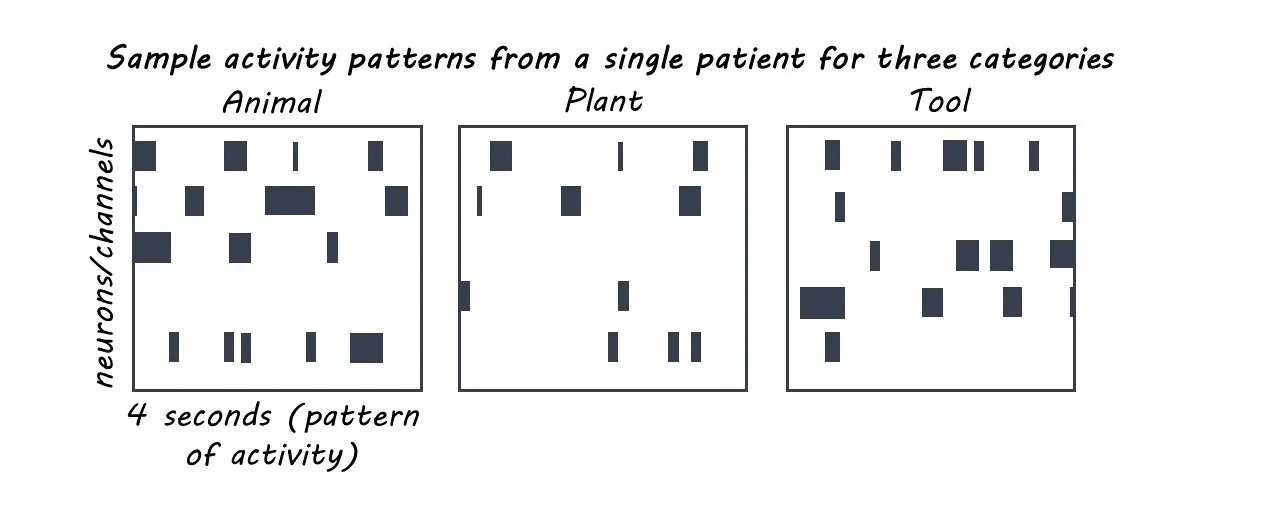
Next, the authors used the neural recordings obtained during the Delayed Match to Sample Task to identify the spatiotemporal pattern of neuronal activity elicited by each category of sample image. For each individual patient, a computer model was used to calculate a stimulation pattern for each image category that was derived from their neural response to all images within that category. The result was five fixed patterns of stimulation, uniquely designed for each patient, corresponding to each of the five image categories (animal, building, plant, tool, vehicle).

Finally, the subjects repeated the Delayed Match to Sample Task but during the sample image presentation, they were exposed to either (1) no stimulation, (2) “match stimulation”, in which the implanted prosthetic stimulated neurons in the pattern intended to match the category of the sample image, (3) “non-match stimulation” in which the stimulation corresponded to a category that did not match the sample image, or (4) random stimulation. After 15-20 minutes, the effect of stimulation on memory was tested by administering a Delayed Recognition Task to the subjects, in which they were asked to rank the familiarity of a collection of images that included the previous sample image. A correct trial was one in which the sample image was ranked as greater than a 2 out of 5 in familiarity, and the ranking was equal to or higher than the other image options.

What did they find?

When performance was examined for each image category for “match stimulation,” instances of increased performance occurred about twice as frequently as instances of decreased performance. Further, enhanced memory performance was primarily observed when the patient received bilateral stimulation, rather than unilateral stimulation, and had pre-existing memory impairments. This suggests that bilateral stimulation in select patients with pre-existing impairments might have the most therapeutic potential.

In trials where subjects received a “non-match stimulation,” the authors observed more instances of decreased performance relative to trials with no stimulation or match stimulation. This supported the authors’ prediction that “non-match stimulation” would interfere with natural memory processes. Overall, however, the result on memory was variable across patients and image categories and suggested that the stimulation patterns created by the computer model may not have been as specific to the image category as intended.

What's the impact?

This study provides exciting evidence to support the use of neural prosthetics in the hippocampus for enhancing memory and identifies several areas for further development. Therapeutic approaches like these may have dramatic impacts on patients who suffer from memory loss, such as those with Alzheimer’s disease.

What Impact Does Prenatal Cannabis Exposure Have on Neurodevelopment?

Post by Lani Cupo 

Patterns of cannabis use during pregnancy

Cannabis is increasingly viewed as safe and natural, especially as it is increasingly legalized for recreational use in countries around the world and in the U.S. (Barbosa-Leiker 2022). This could, in part, explain why use during pregnancy is on the rise. Between 2009 and 2016, rates of cannabis use were assessed in 318,085 pregnant people with both self-report and urine toxicology, finding an increase from cannabis use in ~4% of pregnancies in 2009 to ~7% in 2016 (Young-Wolff, 2017). The authors also found estimates made via self-report were lower than those using toxicology, suggesting stigma against cannabis use during pregnancy may reduce the accuracy of reporting.

There are many reasons why pregnant people may use cannabis. Firstly, some may use cannabis recreationally before conception and continue use until they realize that they are pregnant. Second, some pregnant people may have a substance use disorder and may have difficulty quitting cannabis, especially if they use several substances and are already quitting a “harder” drug, like opioids (Meinhofer, 2022). Finally, some pregnant people self-medicate with cannabis to reduce the symptoms of morning sickness, or mood symptoms, such as anxiety (Westfall. 2006). In this final case, some pregnant people use cannabis because they think it is a safer alternative to prescribed pharmaceuticals, such as selective serotonin reuptake inhibitors (Chang, 2019). Overall, it is most common for pregnant people to use cannabis during the first trimester of pregnancy, with rates falling in the second trimester, and reducing further in the third (Einarson, 2013).

One gap in the literature, however, is how much and what kinds of cannabis pregnant people are using. In most studies, the amount of cannabis use is estimated as frequency (e.g., once per week, more than once per week, or not at all). Additionally, there are several major cannabinoids in cannabis, including the main psychoactive component, delta-9-tetrahydrocannabinol (THC), and the main non-psychoactive component, cannabidiol (CBD). Cannabis can also be consumed through a variety of methods, and while smoking or vaping cannabis is still the most common, pregnant people may decide to consume it more frequently orally to avoid the negative impact of smoking on their babies (Spindle, 2019). Without knowing what preparations of cannabis pregnant people are using, it is difficult to understand how much cannabis the developing fetuses are exposed to. For example, a pregnant person who smokes a lot of high-THC cannabis once a week will have a baby with a very different exposure profile than if a pregnant person consumes high-CBD edibles every other day.

What does human research say?

Because of the rising rates of cannabis use during pregnancy, understanding the impact on babies and children is essential, especially regarding their neurodevelopment. Unlike other drugs such as nicotine, alcohol, or opioids, prenatal cannabis exposure has not been associated with increased rates of miscarriage or child death. Nor has an association been found with physical malformations or birth defects (Orsolini, 2017; Fergusson, 2002). There is, however, some evidence for preterm birth following prenatal cannabis exposure, which is linked with developmental challenges in babies and children (Duko, 2022). One of the most robust findings following prenatal cannabis exposure is low birth weight in babies when compared to others at the same gestational age (Gray, 2010).

Several studies have examined behavior in infants, children, and teenagers following prenatal exposure to cannabis. There is some evidence for an increased risk of neurodevelopmental disorders, such as Autism Spectrum Disorders, at 18 months, and increased symptoms of psychosis in children (Corsi, 2020; Fine, 2019), however, these studies are far from conclusive. There is also evidence to suggest poorer educational and occupational achievements in children and young adults respectively following prenatal cannabis exposure (Goldschmidt, 2004; Goldschmidt, 2016). Finally, mood disorders have also been implicated, with children showing evidence of anxiety and increased cortisol levels (Rompala, 2021).

There are several challenges to assessing the impact of prenatal cannabis exposure in humans. Pregnant people who use cannabis often use other drugs, such as nicotine, as well, making it difficult to estimate the effects of the two drugs independently. Along with other drugs, other factors may be difficult to control for, such as socioeconomic status, or maternal age. Additionally, there is still a stigma surrounding cannabis use during pregnancy, so, when surveyed, some people do not report, or under-report their cannabis use. Next, as mentioned before, cannabis can be prepared and administered through a variety of methods making it difficult for both pregnant people and researchers to estimate dosage. Finally, to study the effects of prenatal cannabis exposure in teenagers or young adults, either cannabis use during pregnancy must be estimated long into the past, or studies must be conducted over decades, as they wait for participants to age. To address these limitations efficiently, animal models are used to investigate the impact of prenatal cannabis exposure.

What does animal research say?

Many of the results from human studies have been replicated in nonhuman animals. There is evidence of both low birth weight, as well as early onset of labor in rodent models (Wang, 2008; Benevenuto, 2017; Roeder, 2024). Anxiety-like behavior was also observed in newborn and adolescent rats (Trezza, 2008). Psychotic symptoms cannot be measured in nonhuman animals, however, some have examined sensorimotor gating (the process of filtering out unimportant sensory information), impairments that are associated with psychotic disorders in humans. There is minimal evidence of impairments to sensorimotor gating in rodent models, with one study finding effects only in males and another study finding no differences (Lallai, 2022; Bortolato, 2006). In contrast, impairments have been identified in short-term memory, perhaps associated with the worsened performance in school observed in human children (Lallai, 2022; Drazanova, 2019).

Nonhuman animal studies also provide a means to assess effects on a cellular level. One study using post-mortem assessments found reduced CB1 receptors (the main cannabinoid receptor in the brain) and miswired neurons following prenatal cannabis exposure (Tortoriello, 2014). Similar findings were observed in a mouse model with genetically increased native cannabinoids in the brain, suggesting networks of neuronal connections in the brain may be changed in their connectivity following prenatal cannabis exposure (Alpar, 2014).

While nonhuman animals do allow for experimental control of cannabis exposure, there are still limits to these models. Again, cannabis can be administered either by injection, orally, or through vaporization, with differences in cannabis metabolism associated with each route. Furthermore, many of these studies examine a single time point, which prevents an understanding of how cannabis may affect development over time. Finally, some of these studies still only consider male animals, making it impossible to understand the impact on females. This is especially important because there is ample evidence of a sex-dependent effect (Tirado-Muñoz, 2020).

What does the future hold?

Our understanding of cannabis use during pregnancy and its impact has increased greatly over the past two decades, nevertheless, it is still difficult for clinicians to advise patients regarding its potential harms. Laboratory researchers seek to design studies that best model cannabis use in humans. To do so, they would benefit from more precise information on how and how much cannabis pregnant people use. In turn, clinicians and researchers with human subjects could benefit from experiments in nonhuman animals that examine rodents across the lifespan, identifying key time points for study in humans. In time these parallel research streams may clarify the potential harms of prenatal cannabis use.

References +

Alpár, A., Tortoriello, G., Calvigioni, D., Niphakis, M. J., Milenkovic, I., Bakker, J., Cameron, G. A., Hanics, J., Morris, C. V., Fuzik, J., Kovacs, G. G., Cravatt, B. F., Parnavelas, J. G., Andrews, W. D., Hurd, Y. L., Keimpema, E., & Harkany, T. (2014). Endocannabinoids modulate cortical development by configuring Slit2/Robo1 signalling. Nature Communications, 5, 4421.

Benevenuto, S. G., Domenico, M. D., Martins, M. A. G., Costa, N. S., de Souza, A. R. L., Costa, J. L., Tavares, M. F. M., Dolhnikoff, M., & Veras, M. M. (2017). Recreational use of marijuana during pregnancy and negative gestational and fetal outcomes: An experimental study in mice. Toxicology, 376, 94–101.

Barbosa-Leiker, C., Brooks, O., Smith, C. L., Burduli, E., & Gartstein, M. A. (2022). Healthcare professionals’ and budtenders' perceptions of perinatal cannabis use. The American Journal of Drug and Alcohol Abuse, 48(2), 186–194.

Bortolato, M., Frau, R., Orrù, M., Casti, A., Aru, G. N., Fà, M., Manunta, M., Usai, A., Mereu, G., & Gessa, G. L. (2006). Prenatal exposure to a cannabinoid receptor agonist does not affect sensorimotor gating in rats. European Journal of Pharmacology, 531(1-3), 166–170.

Chang, J. C., Tarr, J. A., Holland, C. L., De Genna, N. M., Richardson, G. A., Rodriguez, K. L., Sheeder, J., Kraemer, K. L., Day, N. L., Rubio, D., Jarlenski, M., & Arnold, R. M. (2019). Beliefs and attitudes regarding prenatal marijuana use: Perspectives of pregnant women who report use. Drug and Alcohol Dependence, 196, 14–20.

Corsi, D. J., Donelle, J., Sucha, E., Hawken, S., Hsu, H., El-Chaâr, D., Bisnaire, L., Fell, D., Wen, S. W., & Walker, M. (2020). Maternal cannabis use in pregnancy and child neurodevelopmental outcomes. Nature Medicine, 26(10), 1536–1540.

Drazanova, E., Ruda-Kucerova, J., Kratka, L., Stark, T., Kuchar, M., Maryska, M., Drago, F., Starcuk, Z., Jr, & Micale, V. (2019). Different effects of prenatal MAM vs. perinatal THC exposure on regional cerebral blood perfusion detected by Arterial Spin Labelling MRI in rats. Scientific Reports, 9(1), 6062.

Duko, B., Dachew, B. A., Pereira, G., & Alati, R. (2022). The effect of prenatal cannabis exposure on offspring preterm birth: a cumulative meta-analysis. Addiction . https://doi.org/10.1111/add.16072

Einarson, T. R., Piwko, C., & Koren, G. (2013). Prevalence of nausea and vomiting of pregnancy in the USA: a meta analysis. Journal of Population Therapeutics and Clinical Pharmacology = Journal de La Therapeutique Des Populations et de La Pharamcologie Clinique, 20(2), e163–e170.

Fergusson, D. M., Horwood, L. J., Northstone, K., & ALSPAC Study Team. Avon Longitudinal Study of Pregnancy and Childhood. (2002). Maternal use of cannabis and pregnancy outcome. BJOG: An International Journal of Obstetrics and Gynaecology, 109(1), 21–27.

Fine, J. D., Moreau, A. L., Karcher, N. R., Agrawal, A., Rogers, C. E., Barch, D. M., & Bogdan, R. (2019). Association of Prenatal Cannabis Exposure With Psychosis Proneness Among Children in the Adolescent Brain Cognitive Development (ABCD) Study. JAMA Psychiatry , 76(7), 762–764.

Goldschmidt, L., Richardson, G. A., Cornelius, M. D., & Day, N. L. (2004). Prenatal marijuana and alcohol exposure and academic achievement at age 10. Neurotoxicology and Teratology, 26(4), 521–532.

Goldschmidt, L., Richardson, G. A., Larkby, C., & Day, N. L. (2016). Early marijuana initiation: The link between prenatal marijuana exposure, early childhood behavior, and negative adult roles. Neurotoxicology and Teratology, 58, 40–45.

Gray, T. R., Eiden, R. D., Leonard, K. E., Connors, G. J., Shisler, S., & Huestis, M. A. (2010). Identifying prenatal cannabis exposure and effects of concurrent tobacco exposure on neonatal growth. Clinical Chemistry, 56(9), 1442–1450.

Lallai, V., Manca, L., Sherafat, Y., & Fowler, C. D. (2022). Effects of Prenatal Nicotine, THC, or Co-Exposure on Cognitive Behaviors in Adolescent Male and Female Rats. Nicotine & Tobacco Research: Official Journal of the Society for Research on Nicotine and Tobacco, 24(8), 1150–1160.

Meinhofer, A., Hinde, J. M., Keyes, K. M., & Lugo-Candelas, C. (2022). Association of Comorbid Behavioral and Medical Conditions With Cannabis Use Disorder in Pregnancy. JAMA Psychiatry , 79(1), 50–58.

Orsolini, L., Papanti, D., Corkery, J., De Luca, M. A., Cadoni, C., Di Chiara, G., & Schifano, F. (2017). Is there a Teratogenicity Risk Associated with Cannabis and Synthetic Cannabimimetics’ ('Spice') Intake? CNS & Neurological Disorders Drug Targets, 16(5), 585–591.

Roeder, N. M., Penman, S. L., Richardson, B. J., Wang, J., Freeman-Striegel, L., Khan, A., Pareek, O., Weiss, M., Mohr, P., Eiden, R. D., Chakraborty, S., & Thanos, P. K. (2024). Vaporized Δ-9THC in utero results in reduced birthweight, increased locomotion, and altered wake-cycle activity dependent on dose, sex, and diet in the offspring. Life Sciences, 122447.

Rompala, G., Nomura, Y., & Hurd, Y. L. (2021). Maternal cannabis use is associated with suppression of immune gene networks in placenta and increased anxiety phenotypes in offspring. Proceedings of the National Academy of Sciences of the United States of America, 118(47). https://doi.org/10.1073/pnas.2106115118

Spindle, T. R., Bonn-Miller, M. O., & Vandrey, R. (2019). Changing landscape of cannabis: novel products, formulations, and methods of administration. Current Opinion in Psychology, 30, 98–102.

Tirado-Muñoz, J., Lopez-Rodriguez, A. B., Fonseca, F., Farré, M., Torrens, M., & Viveros, M.-P. (2020). Effects of cannabis exposure in the prenatal and adolescent periods: Preclinical and clinical studies in both sexes. Frontiers in Neuroendocrinology, 57, 100841.

Tortoriello, G., Morris, C. V., Alpar, A., Fuzik, J., Shirran, S. L., Calvigioni, D., Keimpema, E., Botting, C. H., Reinecke, K., Herdegen, T., Courtney, M., Hurd, Y. L., & Harkany, T. (2014). Miswiring the brain: Δ9-tetrahydrocannabinol disrupts cortical development by inducing an SCG10/stathmin-2 degradation pathway. The EMBO Journal, 33(7), 668–685.

Trezza, V., Campolongo, P., Cassano, T., Macheda, T., Dipasquale, P., Carratù, M. R., Gaetani, S., & Cuomo, V. (2008). Effects of perinatal exposure to delta-9-tetrahydrocannabinol on the emotional reactivity of the offspring: a longitudinal behavioral study in Wistar rats. Psychopharmacology, 198(4), 529–537.

Wang, H., Xie, H., & Dey, S. K. (2008). Loss of cannabinoid receptor CB1 induces preterm birth. PloS One, 3(10), e3320.

Westfall, R. E., Janssen, P. A., Lucas, P., & Capler, R. (2006). Survey of medicinal cannabis use among childbearing women: patterns of its use in pregnancy and retroactive self-assessment of its efficacy against “morning sickness.” Complementary Therapies in Clinical Practice, 12(1), 27–33.

Young-Wolff, K. C., Tucker, L.-Y., Alexeeff, S., Armstrong, M. A., Conway, A., Weisner, C., & Goler, N. (2017). Trends in Self-reported and Biochemically Tested Marijuana Use Among Pregnant Females in California From 2009-2016. JAMA: The Journal of the American Medical Association, 318(24), 2490–2491.