A Key Micronutrient Identified in Breast Milk Promotes Synaptic Growth

Post by Lani Cupo

The takeaway

Myo-inositol (MYO) is a micronutrient identified in human milk from around the world which helps establish synaptic connections between neurons early in life.

What's the science?

Diet can have a big impact on brain development early in life and preservation later in life, however, it is unclear what micronutrients are important in contributing to connectivity between neurons. This week in PNAS, Paquette and colleagues analyzed samples of human breast milk from around the world to identify a micronutrient MYO that is present during periods when neuronal connections are formed. They then validate the ability of MYO to promote synapse formation in cultured neurons and mouse models.

How did they do it?

First, the authors collected samples of breast milk from women from Mexico City (N = 10), Shanghai (N = 10), and Cincinnati (N = 10) at 5 time points throughout the first year postpartum. Focusing on inositol, a sugar that is elevated in human milk compared to cow’s milk, the authors quantified the amount of MYO, a form of inositol not bound in other molecules, across time. Second, using human induced pluripotent stem cells the authors cultivated human glutamatergic neurons to examine the impact of MYO on synaptic sites.

Next, the authors cultivated hippocampus neurons from rats in vitro (in a Petri dish) and exposed them to differing dosages of MYO to examine the impact on the synapses between neurons. Then, the authors conducted an analysis in mice by supplementing them with MYO from birth to 35 days old and examining synaptic sites in the visual cortex. Finally, they examined the impact of MYO in mature tissue - aging neurons from the mouse hippocampus - before exposing them to the sugar.

What did they find?

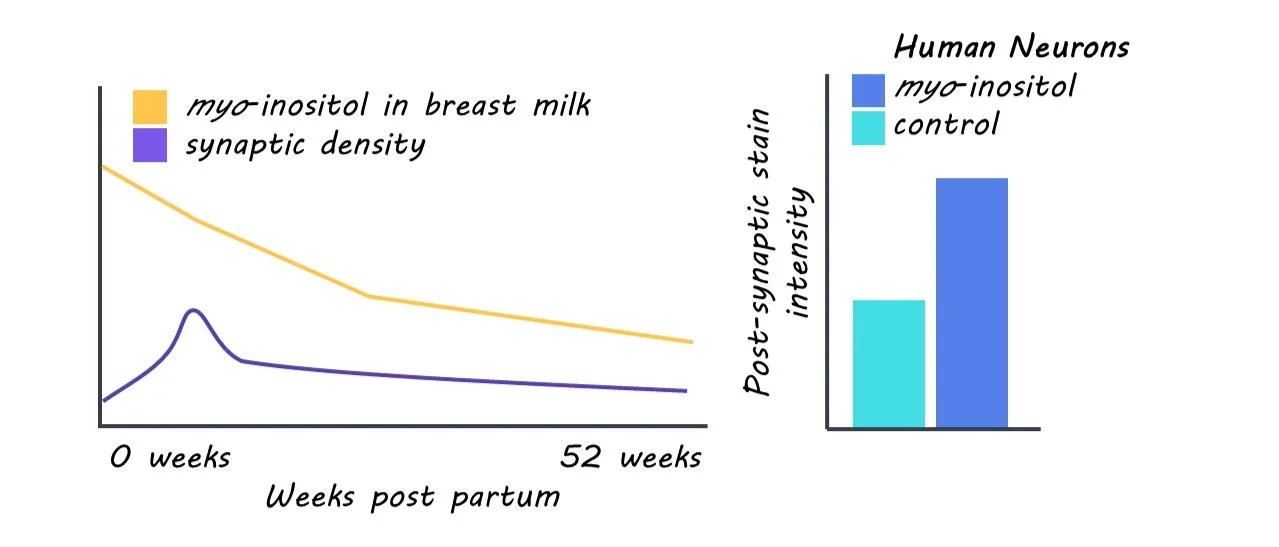
First, the authors found that MYO levels are highest in the first weeks of lactation, a time period associated with dramatic increases in synaptic density in babies. Second, introducing MYO to cultured neurons increased post-synaptic staining intensity, an indicator of increased sites for synaptic connections.

Next, the authors found that MYO increased synapse formation in a dose-dependent manner with higher dosages leading to an increased impact. These results provided further evidence of MYO’s role in promoting synapse formation for both excitatory and inhibitory neurons. Then, the authors found enlarged synaptic sites in the visual cortex of mice exposed to supplements of MYO after giving birth. This further emphasizes the role of MYO across species and brain regions. Finally, the authors found evidence of increased synapses in mature tissue as well, suggesting a potential preservative effect of MYO in adults.
What's the impact?

The authors highlight the importance of the micronutrient MYO in synapse formation and neuronal connectivity, both in development and mature tissue. Their results provide avenues to improve pediatric nutrition products, and may, in time, promote synapse protection in aging.
Access the original scientific publication here

How Do Pesticides Affect the Brain?

Post by Anastasia Sares

The takeaway

Pesticides kill unwanted weeds, pests, and fungi, often with molecules affecting the nervous system, but their mechanisms of activation can cause havoc in “non-target” species, including the humans that use them. Over the years, some pesticides have been banned for their toxic effects and new ones have been developed. Now we’re moving from recognizing acute poisoning situations to being able to assess long-term detriments, especially to cognitive function in humans.

How has pesticide use evolved?

Humans have used pesticides for a long time to increase crop yields or kill unwanted guests in their homes and bodies. We’ve tried everything from chrysanthemums to nicotine to arsenic to DDT. However, we walk a fine line with pesticide use: on the one hand, it can increase food security and decrease disease (for example, killing malaria-carrying mosquitoes), both of which preserve human life. On the other hand, the effects of pesticides may decrease biodiversity and have toxic effects on the human body.

When developing a pesticide, it would be ideal to come up with a chemical that disrupts only the pest’s biological processes and is otherwise “harmless.” Unfortunately, as we are all a part of the same tree of life and share many biological processes with other organisms, it is hard to find chemicals that match this ideal. Pesticides like DDT have been introduced and commercialized, only to be later banned (at least in some countries) when toxic effects were observed. But some pesticides act in more subtle ways or require accumulated doses, and the link to age-related diseases like Parkinson’s and Alzheimer’s has only emerged after longer periods of observation. Scientists have been hard at work trying to understand the more subtle mechanisms of pesticide neurotoxicity.

Oxidative stress is a common factor

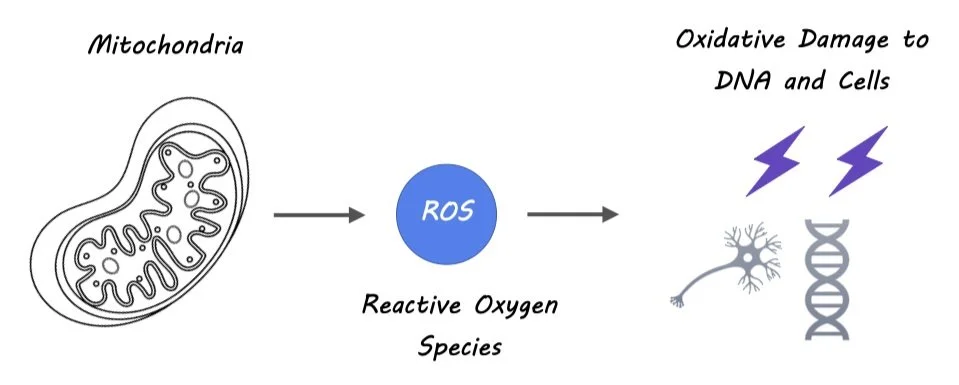
Though different pesticides have different primary mechanisms for killing their target pest, many of them also cause oxidative stress in cells. Oxidative stress is a process that disrupts the normal functioning of mitochondria, the energy generators of the cell.

Normally, mitochondria convert molecules derived from our food and oxygen from our lungs into water and carbon dioxide through a series of controlled chemical reactions. The energy generated from these reactions is used to “charge up” molecules called ATP (adenosine triphosphate), and these ATP molecules travel throughout the cell and act as little batteries to provide energy for other chemical reactions that need it. Sometimes the electron transport chain fails and instead of producing carbon dioxide and water, it produces a rogue molecule with a negatively charged oxygen called a reactive oxygen species, or ROS. These ROS can leave the mitochondria and do damage to other parts of the cell, like membranes, proteins, or even DNA, which can lead to cell death (see this video at 5:15).

In a healthy cell, the activity of ROS is kept to a minimum, but pesticides can make the production of ROS more likely, causing the cell to lag in energy production and accumulate damage to DNA and proteins. This is the state of oxidative stress, and neurons are particularly sensitive to it.

What are some other mechanisms of neurotoxicity?

Pesticides can cause a myriad of other effects besides oxidative stress, including the accumulation of dementia-related proteins such as amyloid beta and tau, toxic buildups of signaling molecules like acetylcholine or glutamate, inflammation and immune cell activation, DNA damage and suppression (methylation), altered neuron structure and growth, and abnormal activation of growth factors, to name a few.

Some mechanisms of neurotoxicity are quite complex, and have only recently been brought to light: for example, glyphosate (a weed-killer) interrupts a biological process not present in human cells, which made it seem safe to use. However, it turns out that glyphosate can affect our gut bacteria which produce tryptophan, a precursor for the neurotransmitter serotonin. This change in the serotonin production chain can lead to anxious or depressive symptoms. Researchers will continue looking for complex reactions like these to better estimate the true effects of pesticide use. In addition, new research may need to focus on the synergistic effects of multiple pesticides instead of looking at one pesticide at a time.

What's the impact?

Regulation of pesticides is absolutely necessary to maintain the right balance between pest/disease control and human health, and continued research on the effects of pesticides is needed to inform those regulatory decisions.

References +

  1. Aloizou, A.-M., Siokas, V., Vogiatzi, C., Peristeri, E., Docea, A. O., Petrakis, D., Provatas, A., Folia, V., Chalkia, C., Vinceti, M., Wilks, M., Izotov, B. N., Tsatsakis, A., Bogdanos, D. P., & Dardiotis, E. (2020). Pesticides, cognitive functions and dementia: A review. Toxicology Letters, 326, 31–51. https://doi.org/10.1016/j.toxlet.2020.03.005
  2. Costa, L., G. (2008). Neurotoxicity of pesticides: A brief review. Frontiers in Bioscience, 13(13), 1240. https://doi.org/10.2741/2758
  3. Richardson, J. R., Fitsanakis, V., Westerink, R. H. S., & Kanthasamy, A. G. (2019). Neurotoxicity of pesticides. Acta Neuropathologica, 138(3), 343–362. https://doi.org/10.1007/s00401-019-02033-9
  4. Franco, R., Li, S., Rodriguez-Rocha, H., Burns, M., & Panayiotidis, M. I. (2010). Molecular mechanisms of pesticide-induced neurotoxicity: Relevance to Parkinson’s disease. Chemico-Biological Interactions, 188(2), 289–300. https://doi.org/10.1016/j.cbi.2010.06.003
  5. Rueda-Ruzafa, L., Cruz, F., Roman, P., & Cardona, D. (2019). Gut microbiota and neurological effects of glyphosate. NeuroToxicology, 75, 1–8. https://doi.org/10.1016/j.neuro.2019.08.006


Closed-Loop Brain Stimulation Reduces Fear Responses

Post by Laura Maile

The takeaway

Patients with post-traumatic stress disorder (PTSD) have difficulty extinguishing fear responses, which leads to debilitating symptoms. Stimulating the brain’s reward circuitry while brain regions essential in memory consolidation are active can reduce fear.  

What's the science?

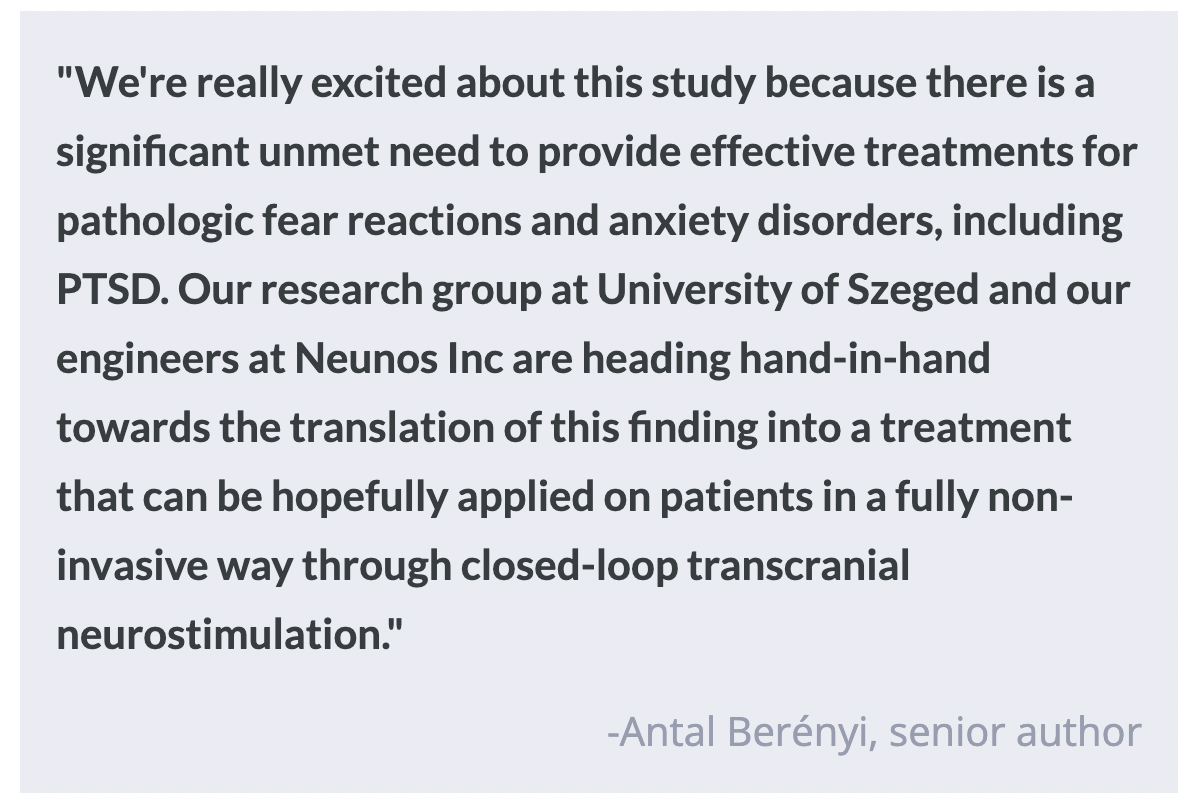
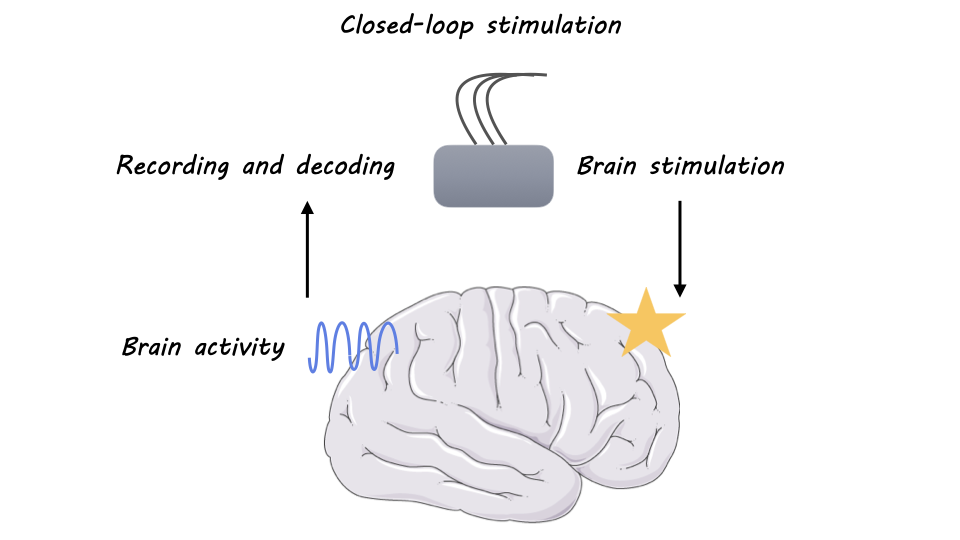
In PTSD, the brain’s ability to extinguish learned fear responses after removing a threat is diminished. Prior research indicates that the hippocampus and the mesolimbic reward network are important for memory formation and consolidation of fear memories. Closed-loop stimulation, or the automatic stimulation of a brain region when a device detects activity in a specific system, has been shown to enhance memory consolidation when used to activate the reward system. Though the involvement of regions such as the hippocampus, amygdala, and reward centers is known to be important in the maladaptive fear responses present in PTSD, the disease remains resistant to treatment. This week in Nature, Sierra and colleagues used hippocampal activity to initiate closed-loop stimulation of reward circuitry during extinction learning to augment the removal of fear memories. 

How did they do it?

The authors utilized fear conditioning to model PTSD in rats, using an auditory tone as the conditioned stimulus paired with foot shocks as the unconditioned stimulus. During extinction learning, animals were placed in a new context and repeatedly presented with the conditioned stimulus without the foot shocks.  Animals typically extinguish their fear response after repeated exposure to the conditioned stimulus without the associated foot shock and are considered to be in fear remission once they reduce their freezing to <20% of their initial freezing behavior. The authors used closed-loop stimulation of the medial forebrain bundle (MFB), a white matter tract central to the reward network, in response to hippocampal sharp-wave ripples to activate reward circuits during recall of extinction memories. Some rats received this closed-loop stimulation for one hour following the extinction protocol, while others received open-loop (continuous) stimulation or no stimulation. Persistence of fear reduction was tested by exposing animals to the conditioned stimulus again either 24 hours or 25 days following extinction. The authors then tested whether hippocampal sharp-wave ripples are necessary for fear extinction by silencing them with electrical stimulation of the ventral hippocampus following extinction procedures. Finally, they explored the involvement of Rac1, a protein involved in synapse formation, and dopamine D2 receptors in the basolateral amygdala by infusing a Rac1 inhibitor or a dopamine D2 receptor antagonist following each extinction session preceding the closed-loop stimulation. This allowed them to compare the freezing behavior of animals receiving different treatments during the extinction procedure.  

What did they find?

Compared to rats that received open-loop stimulation or no stimulation, rats in the closed-loop stimulation group showed reduced freezing during extinction learning, requiring fewer extinction sessions to achieve fear remission. This means that MFB stimulation in response to hippocampal sharp-wave ripples can help extinguish fear memories faster than controls and that this reduction in fear behavior persists over time. Silencing hippocampal sharp-wave ripples resulted in impaired extinction and increased freezing upon reexposure to the conditioned stimulus. This indicates that the hippocampal sharp-wave ripple activity is required to extinguish fear behavior. Finally, infusing either a Rac1 inhibitor or a dopamine 2 receptor antagonist into the BLA disrupted the closed-loop stimulation-induced improvement in fear extinction. This result suggests Rac1 signaling and dopamine D2 receptor activity in the BLA are involved in fear extinction mediated by neuromodulation of reward circuitry.  

What's the impact?

This study found that closed-loop stimulation of MFB reward circuitry in response to hippocampal sharp-wave ripple activity following fear extinction improved the animals’ extinction of fear over time. This means that enhancing the activity of reward circuitry by using biomarkers of memory consolidation as a cue can help animals displaying features of PTSD recover from cued fear conditioning. Deep brain stimulation, which has been successfully implemented in humans with a variety of neuropsychiatric conditions, could be a candidate for improved treatment of PTSD if utilized using the closed-loop design implemented in this study.