A New Year of Remote Work: Supporting Employee Wellbeing During COVID-19 and Beyond
Post by Leanna Kalinowski
A change in how we work
The COVID-19 pandemic has led to rapid and drastic changes in society, and that includes the workplace. In addition to public health measures like social distancing and face mask requirements, many organizations adopted remote work practices to further mitigate virus spread. In mid-2020, the percentage of employees working from home rapidly increased from less than 10% to upwards of 50%, with the majority of employees transitioning to working from home for the first time. As the pandemic response now begins to soften, employers are beginning to re-establish and define how we work. Reflecting on remote work strategies and their impact on employee productivity and wellbeing is crucial for establishing long-term changes that support employees, particularly as employers consider permanent remote or hybrid working models.
The risk of burnout
Until recently, employee wellbeing has largely been understudied and not widely incorporated into metrics for describing employee success. Traditionally, employers tend to focus on productivity and performance when evaluating the success of an employee, without considering the impact of wellbeing on productivity. In 2019, the World Health Organization updated its definition of burnout to refer to it as a “syndrome conceptualized as resulting from chronic workplace stress that has not been successfully managed”. Burnout is characterized by three symptoms: feelings of energy depletion, increased mental distance from one’s job, and reduced professional efficacy. Generally, employee burnout is associated with decreases in productivity, making it an important issue for employers to tackle. Many employees working from home have faced challenges leading to burnout, like dealing with home-schooling, caring for sick family members, or a change to their work-life boundaries. As employers begin to redefine how we work, understanding employee wellbeing and burnout has become integral in understanding the effectiveness of remote work.
What’s the impact on productivity and wellbeing?
There is mixed evidence on the impact of remote work on productivity and wellbeing, with both positive and negative effects reported depending on organizational (i.e., company, number of days per week working from home, teamwork) and personal (i.e., prior remote work experience, having children at home) factors. Not surprisingly, employees with prior remote work experience had an easier time adjusting to the COVID-19 workplace changes compared to employees who never worked from home before. This is suspected to be due to two factors: 1) these employees previously learned how to balance the demands of their family with the demands of their workplace, and 2) these employees had more efficient work from home setups.
Changing the way that we communicate is also incredibly important for remote work success. Remote workers must be able to effectively communicate with each other and their clients through means other than face-to-face, such as through email, phone, text messaging, instant messaging, and video conferencing. Communication gaps have been largely cited as a reason for productivity declines associated with remote work, with current research focusing on better understanding the relationships between communication and remote work outcomes.
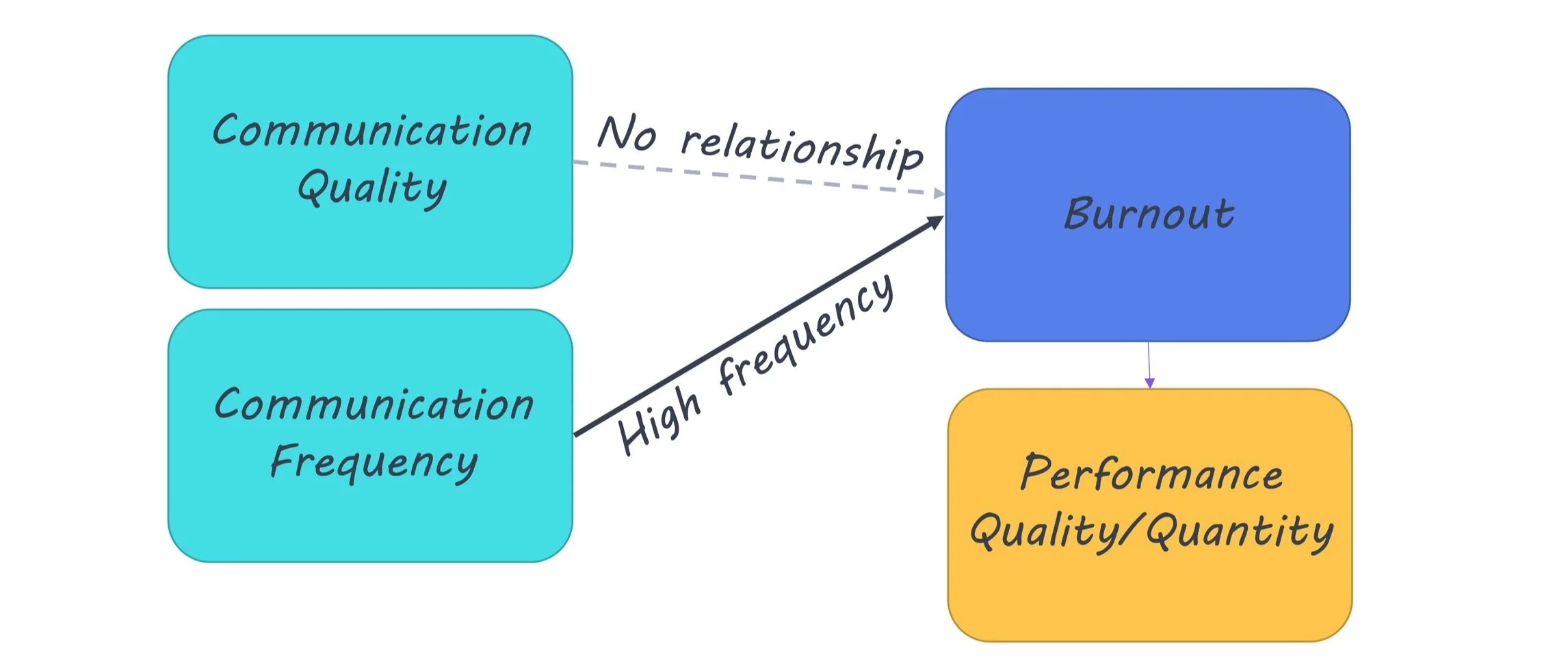
One study tested the relationship between three communication variables: communication quality, communication frequency, and supervisor-set communication expectations, along with two indicators of remote worker success: performance and wellbeing/burnout. They found that while the frequency and quality of communication are both associated with increased productivity, only frequent communication led to burnout. These results suggest that, rather than focusing on communication frequency, employers should focus on improving the quality of communication and setting expectations with their employees early on. In the future, it will also be important to test the effectiveness of different communication strategies in different contexts - for example when to send an email versus video call - and use this information to help drive communication expectation setting.
What can employers do in the future?
Despite the mixed impacts of remote work on productivity and employee wellbeing, employers should not dismiss remote work as a permanent work arrangement. While initial decreases in productivity may be alarming, it will be worth it for employers to collect data on what is driving these differences in productivity amongst their employees to optimize working conditions. Employers can assist their employees in building adequate work from home setups, providing flexibility in the initial stages of remote work, and setting communication expectations from the beginning. Further, future research should look at what factors help to improve the quality of employee communication, to avoid burnout or a lack of sense of belonging amongst employees. Regardless of the initial growing pains of working from home, a high percentage of employees have expressed interest in continued remote work following the pandemic, and therefore finding ways to meet the needs of these employees will be critical to ensuring long-term employee wellbeing and productivity.
References +
Donati et al. Not all remote workers are similar: Technology acceptance, remote work beliefs, and wellbeing of remote workers during the second wave of the COVID-19 pandemic. International Journal of Environmental Research and Public Health. (2021). Access the original scientific publication here.
Kitagawa et al. Working from home and productivity under the COVID-19 pandemic: Using survey data of four manufacturing firms. PLOS one. (2021). Access the original scientific publication here.
Salgado de Snyder et al. Occupational stress and mental health among healthcare workers serving socially vulnerable populations during the COVID-19 pandemic. Frontiers in Public Health. (2021). Access the original scientific publication here.
Shockley et al. Remote worker communication during COVID-19: The role of quantity, quality, and supervisor expectation-setting. Journal of Applied Psychology. (2021). Access the original scientific publication here.