
Robust Circadian Rhythms Associated with Fewer Relapses in Bipolar Disorder

Post by Elisa Guma

The takeaway

Individuals with bipolar disorder often experience relapses (depressive or manic episodes) despite engaging in maintenance therapy. Robust circadian rhythm activity may be associated with fewer of these relapses, particularly for depressive episodes. 

What's the science?

Circadian rhythm disruption is often observed in individuals with bipolar disorder and may be linked to mood. These disruptions may be linked to depressive or manic episode relapses, which about 1/3 of patients experience within 1 year of initial onset, despite maintenance therapy. Objectively measured circadian rhythm activity has not been measured in individuals with bipolar disorder. This week in Translational Psychiatry, Esaki and colleagues prospectively studied the relationship between circadian rhythm activity and mood episodes in individuals with bipolar disorder.

How did they do it?

Outpatients with bipolar disorder (n=218; 19 excluded) underwent a baseline clinical and behavioural assessment in which depressive and manic behaviours were recorded. For the following 7 consecutive days participants wore an accelerometer on the wrist of their non-dominant hand for 24h/day (apart from bathing), which recorded their activity levels. Additionally, they were asked to record their bedtimes and rising times in a sleep diary. Following the baseline assessment, participants were followed up to 12 months for mood episode relapses.

To analyze the activity data acquired from the accelerometer, the authors identified the amplitude and onset of the least active continuous 5-hour period, as well as the amplitude and onset of the most active continuous 10-hour period. They then investigated differences in these measures between individuals who experienced mood episode relapses, either depressive or manic. 

What did they find?

Of the participants, 46% experienced mood episodes during the 12-month follow-up period, of which 39% were depressive episodes, and 19% were manic, hypomanic, or mixed. The authors observed a significant association between mood and circadian rhythm activity. More specifically, higher activity levels, particularly during the 10 most active hours, were associated with a decrease in mood episode relapse, particularly for depressive episodes. Thus, higher physical activity during waking hours may be associated with better outcomes for individuals with bipolar disorder. In contrast, if the onset of this 10-hour active period occurred later in the day, there was an increased likelihood of mood episodes, both for depressive and manic/hypomanic episodes. However, the association between late onset of the active period and manic episodes was not significant following covariation for several factors including age, gender, residual mood symptoms, mood episodes within the year prior to the baseline assessment, total sleep time, sleep efficiency, and daylight availability. This suggests that the increased likelihood of relapse may be associated with higher activity levels that are not aligned with normative sleep-wake cycles.

What's the impact?

This study found that robust circadian rhythm activity, characterized by higher physical activity during waking, may be associated with a decrease in mood relapses, particularly for depressive episodes, in individuals with bipolar disorder. Later timing of circadian activity rhythm was associated with an increase in relapse for depressive episodes. Further research is needed to understand the influence of medication on these associations, as well as the directionality of these relationships, i.e., do disruptions in circadian rhythm activity result in mood relapse, or can these changes be used as potential biomarkers to identify when a relapse may occur?

Esaki et al. Association between circadian activity rhythms and mood episode relapse in bipolar disorder: a 12-month prospective cohort study. Translational Psychiatry (2021). Access the original scientific publication here.
How Does a Rare APOE3 Variant Decrease Alzheimer’s Disease Risk?

Post by D. Chloe Chung

The takeaway

The protective APOE3-Jacksonville (APOE3-Jac) genetic variant can substantially lower the risk of Alzheimer’s disease (AD) by reducing protein aggregation and promoting lipid binding and transport.

What's the science?

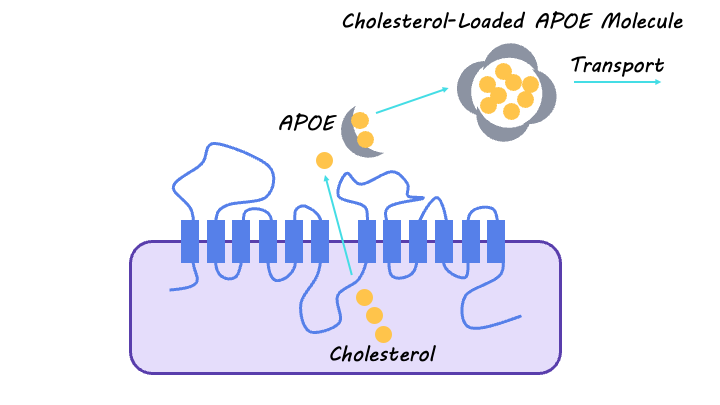
Apolipoprotein E (APOE) is a lipid-binding protein that transports lipids and mediates fat metabolism. To date, the APOE4 variant is the biggest risk factor for late-onset Alzheimer’s disease (AD), while the APOE3 is the most common variant among populations. A few years ago, the rare variant termed APOE3-Jacksonville (APOE3-Jac) was found to be largely protective against AD, but it was unclear how it can reduce the risk of developing AD. This week in Science Translational Medicine, Liu and colleagues showed that this protective variant aggregates much less while promoting more lipid-binding.

How did they do it?

The authors surveyed three additional cohorts of brain tissues from healthy controls and dementia patients (with AD or Lewy body dementia) to confirm the association between the APOE3-Jac variant and protection against AD. From some of these brain tissues, the authors isolated APOE and amyloid-beta protein, one of the proteins that characteristically aggregates in AD brains, and examined changes in the degree of protein aggregation between people with or without the APOE3-Jac variant. They also used APOE proteins produced by the human cell line and tested whether the APOE3-Jac variant possesses different self-aggregation properties. To investigate whether this variant can have changes in its functional role (e.g., lipid-transporting capacity), the authors cultured astrocytes (the major cell type that produces APOE) isolated from the APOE-knockout mice and treated them with purified human APOE3 or APOE3-Jac proteins. Additionally, the authors injected virus expressing either APOE3 or APOE-Jac into the AD mouse model displaying the amyloid pathology to test how APOE-Jac can impact amyloid aggregation and associated pathological features.

What did they find?

From the additional sequencing of brain tissue, the authors found five no-disease cases with the APOE3-Jac variant but none in the dementia cases, confirming that the variant was strongly associated with the reduced risk of AD. Interestingly, both APOE and amyloid-beta proteins were found to be less aggregated in the brain tissues of the APOE3-Jac carrier compared to those without this variant. Purified APOE proteins also showed that APOE3-Jac forms much fewer oligomers than the normal APOE3, further suggesting that APOE3-Jac has a dramatically reduced tendency to self-aggregate. Additionally, experiments using cultured mouse astrocytes showed that APOE3-Jac was much more efficient in mediating lipid transport than the normal APOE3. The viral expression of APOE3-Jac in the AD mice significantly reduced the amount of amyloid-beta plaques, dying neuronal processes, and neuroinflammatory markers, demonstrating the protective role of the APOE3-Jac variant against AD.

What's the impact?

This study is the first to investigate the mechanisms of APOE3-Jac protection against AD. Also, the APOE3-Jac variant is the first mutation within the gene region critical for APOE’s self-oligomerization and lipid metabolism. It will be interesting to further investigate how this variant can impact pathological changes in the microtubue-associated protein tau, another key disease feature in AD. Findings from this study highlight the therapeutic potential of targeting APOE self-aggregation and APOE-mediated lipid metabolism in AD patients.

Liu et al. APOE3-Jacksonville (V236E) variant reduces self-aggregation and risk of dementia. Science Translational Medicine (2021). Access the original scientific publication here.

“Visual Snow” and its Possible Origins

Post by Anastasia Sares

The takeaway

Visual snow syndrome is a condition where people continually see “static” or “snow” interfering with their vision, which may be accompanied by other visual problems. Visual neurons fire randomly all the time, but for people with visual snow, it seems that the brain is amplifying this random firing, bringing it to conscious awareness.

What's the science?

Visual snow is a newly-described condition that is currently estimated to affect around 2% of the population, and there are a few hypotheses as to why it occurs. One is that the neurons in the visual system could be producing an excessive amount of noise – random fluctuations that have nothing to do with the outside world – that are then interpreted as light signals. The second, slightly more nuanced theory is that the total amount of noise in visual neurons is the same for people with visual snow and people without it, but that the gain, or amplification of this noise is especially high for people with visual snow (think of someone turning up the volume on a bad-quality radio station). This week in Brain, Brooks and colleagues pitted these two possible causes of visual snow against each other and found a victor.

How did they do it?

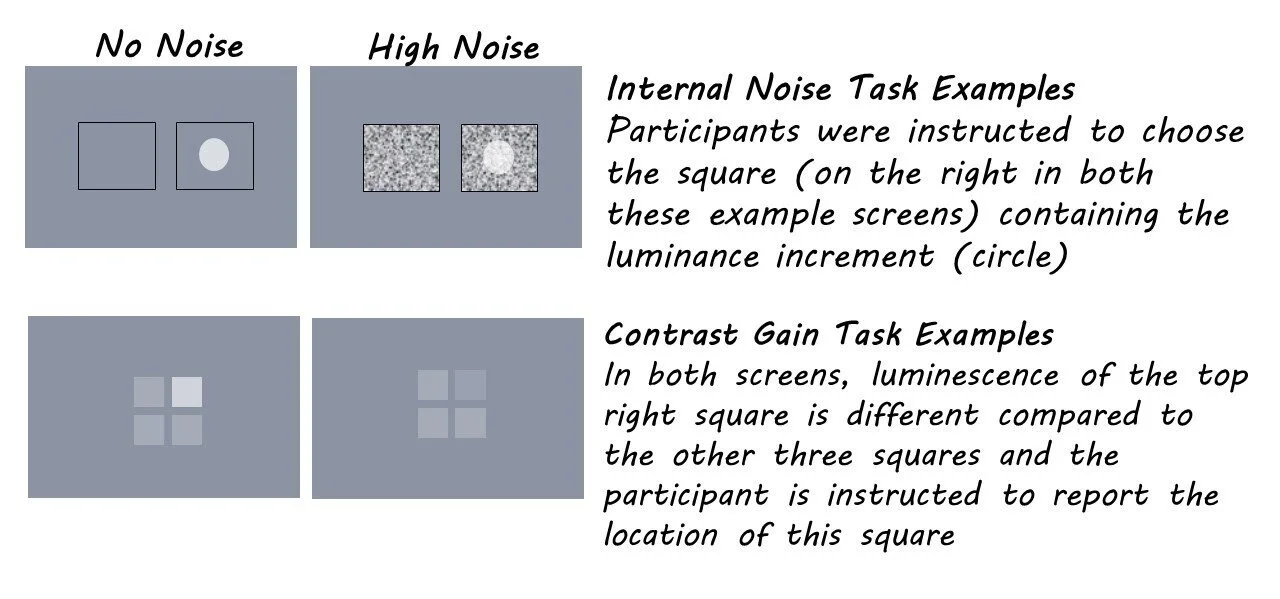
The authors recruited people with and without visual snow to participate in some tasks. They also recruited people in both groups with and without migraines, because these people can also have visual snow as a symptom, though it may have a different cause. One task was designed to measure the total amount of noise (random activity) in the visual system. Participants were shown two squares and had to decide which one contained a lighter-colored circle inside it. The images were made increasingly “noisier” by adding a bunch of lighter and darker pixels (the authors called this “external noise” as opposed to the “internal noise” generated by the visual system itself). By doing the experiment three times with the same stimuli, they could get an idea of a person’s consistency in their responses, which should be related to the amount of internal noise in the visual system (low internal noise allows people to make more consistent responses).

The second task was designed to measure the gain of the visual system. Participants were shown four squares and asked which one’s brightness had been different from the others. The higher the contrast between the squares and the background, the more contrast is needed to identify the odd one out—this is called contrast gain, and the researchers suspected it would be especially strong in people with visual snow.

What did they find?

When comparing the different groups of participants, the authors found no difference in the total amount of noise in the visual system. On the other hand, contrast gain was increased only in people with visual snow, regardless of migraine status. Variations in the contrast gain experiment showed that the difference was specific to neurons in the parvocellular pathway—a pathway with slower-response neurons responsible for high-resolution color vision.

What's the impact?

By comparing different clinical groups (with/without migraine and with/without visual snow), the authors showed that abnormal contrast gain is specific to visual snow. Of course, these tasks are indirect measures of what’s actually going on in the brain; other studies are needed to examine the actual neural activity involved. The better we understand this syndrome, the more likely we will be to find a treatment.

Brooks et al. Visual contrast perception in visual snow syndrome reveals abnormal neural gain but not neural noise. Brain (2021). Access the original scientific publication here