Long-Term Mental Health Impact of a COVID-19 Outbreak

Post by Ifrah Khanyaree

What's the science?

The COVID-19 pandemic has caused immense psychological distress worldwide and has been associated with an increased risk for mental illness. This week in Molecular Psychiatry, Benjamin and colleagues evaluated the long-term mental health and behavioural effects of the pandemic in a large cohort of Israeli adults.

How did they do it?

The authors collected responses from 4933 participants using a two-part online survey. The initial questionnaire covered demographic data, participants’ medical history, and COVID-19 related physiological symptoms. The second part asked for the effects of COVID-19 on participants' psychological and emotional well-being using clinically validated questionnaires. The questionnaire was to be answered once a day in a 6 week period after the end of the first outbreak and for the beginning of the second wave.

What did they find?

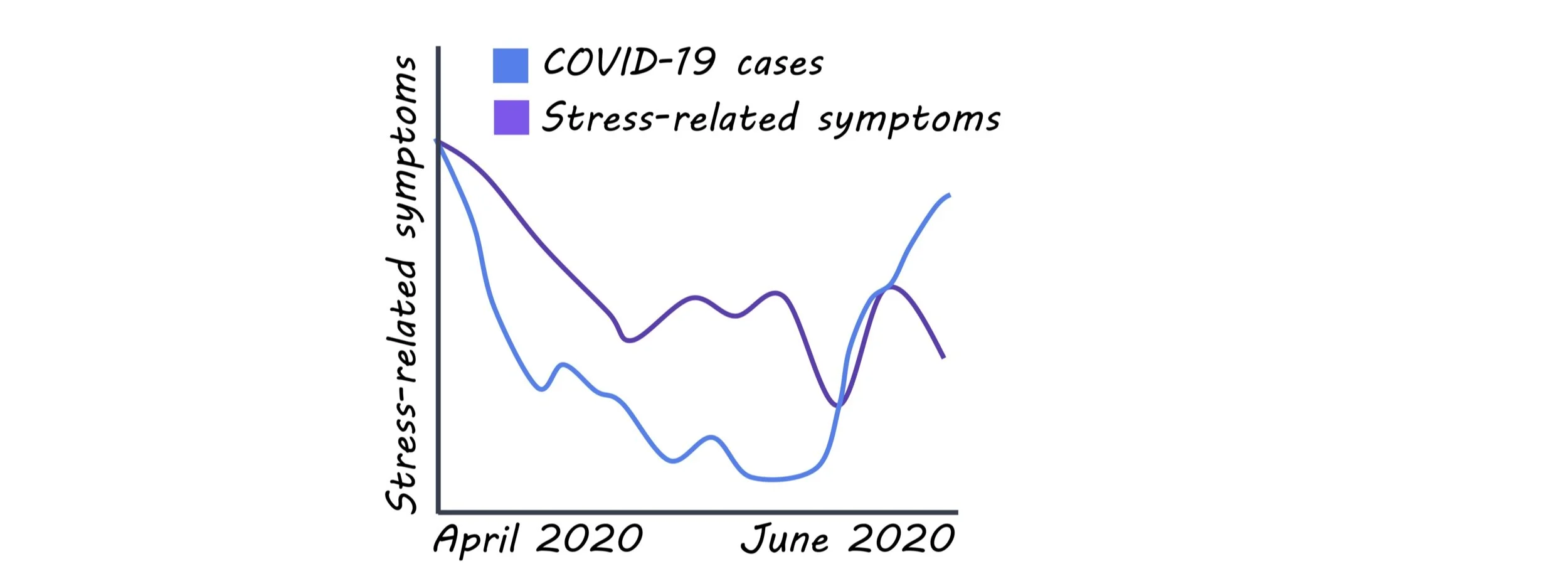
First, the authors focused on finding out the underlying causes of psychological distress among the population. They discovered that most people were more concerned with the situation in their country and people close to them contacting the virus in comparison to their own personal health or financial situation. Second, they looked into demographic differences and found that women reported higher general distress and stress-related physiological symptoms. Age-wise, younger participants reported significantly higher general emotional distress. The authors also looked into how socioeconomic (SE) status affected mental health in the pandemic and found that those of a lower SE status reported lower levels of national and global concern. Individuals who were unemployed reported significantly higher scores for personal emotional distress. Lastly, a positive correlation was seen between increasing COVID cases and participants’ scores on all the distress levels measured.                              

ifrah.png

What's the impact?

This study is the first to show mental health and behavioural effects on an adult population from the first peak of a COVID-19 outbreak to the start of another. The authors found that the highest mental health burden was associated with being young, unemployed and female. These results provide further evidence of the long-term unequal strain the pandemic has had on parts of our society. The study builds an important foundation for doing further work into investigating how our environment shapes our emotional well-being and how the mental health effects of the pandemic will unfold over time.    

Benjamin et al. Stress-related emotional and behavioural impact following the first COVID-19 outbreak peak. Molecular Psychiatry (2021). Access the original scientific publication here.

The Role of Neural Oscillations in Episodic Memory Formation

Post by Elisa Guma

What's the science?

Episodic memory is a category of long-term memory that involves the recollection of specific events, situations, and experiences, typically anchored to a specific time and space. Two distinct cognitive processes, with two distinct types of neural activity, are associated with this type of memory. First one must process a vast amount of sensory information about an event; next, these representations must be bound together to form a unique memory trace. It has been hypothesized that brain activity from the neocortex (in the alpha/beta oscillations) supports the prior (processing sensory information), while activity in the hippocampus (theta/gamma oscillations) supports the latter (mnemonic binding). This week in NeuroImage, Griffiths and colleagues set out to test this hypothesis by recording brain activity during an episodic memory task in healthy young adults.

How did they do it?

Seventeen participants performed a visual association memory task while fluctuations in brain activity were recorded using magnetoencephalography (MEG). During the encoding phase, participants were presented with a line drawing of an object (ex: a giraffe), a pattern (ex: blue background with orange dots), and a scene (ex: a train). Following a short interval, participants were given a short interval to create a mental image fusing all three stimuli (i.e., mnemonic binding) to help them recall this for a later memory test (ex: a blue and orange giraffe on a train). After associating 48 triads, and performing a distractor task, participants performed the retrieval task. Here, participants were presented either a line drawing or a scene and asked to recall the mental image they had made during encoding and asked to identify the pattern associated with the line drawing. Further, participants had to rate how confident they were in their choice (‘guess’, ‘unsure’, ‘certain’). For each trial, memory performance was coded as either ‘complete’ (remembered both the scene and pattern), ‘partial’ (remembered only one of the associations), or ‘forgotten’ (remembered neither scene or pattern).

The MEG data, which provides excellent temporal specificity compared to other brain imaging modalities, was preprocessed and corrected for potential motion (e.g. head movement) artifacts. Brain oscillations occurring at different wavelengths (alpha, beta, gamma, theta) were extracted from the neocortex and the hippocampus in order to test whether brain activity was associated with the following aspects of the task: (1) number of items recalled, (2) whether the scene was recalled, (3) whether the pattern was recalled, (4) the change in head position. Most importantly, the authors investigated whether alpha/beta power decreased with stimuli presentation and whether theta/gamma coupling (i.e. do the peaks and troughs of these two power spectra align) increased during mnemonic binding. The authors estimated the relationship between power (i.e. alpha, beta, gamma, theta) and the number of items recalled by participants (tested for significance using cluster-based permutation testing).

What did they find?

On average, participants correctly recalled both the associated pattern and associated scene on 38.3% of trials, recalled only one associated stimulus on 34.4% of trials, and failed to recall an associated stimulus on 27.3% of trials.

Next, the authors found that decreased alpha/beta power was associated with better memory performance noted by an increased number of items recalled. In the brain, this was localized to the bilateral occipital regions. Furthermore, no such relationship was observed with the mnemonic binding phase of the task, or with gamma/theta power, which indicates that this relationship is specific to the neocortex alpha/beta power, and sensory integration. The authors also found that hippocampal theta/gamma phase-amplitude coupling was indeed related to mnemonic binding; the number of items recalled scaled with the degree of coupling of theta/gamma power. This relationship was not observed for the sequence perception phase of the task, nor for other brain regions. 

elisa.png

What's the impact?

These data presented here suggest that memory-related decreases in neocortical alpha/beta power and memory-related increases in hippocampal theta/gamma phase-amplitude coupling arise at distinct stages of memory formation, with the former supporting information representation and the latter supporting mnemonic binding. This does not suggest that these two processes can occur completely independently, as mnemonic binding cannot occur without relevant perceived information. However, it does provide a deeper understanding of how two distinct cognitive processes are associated with distinct neural phenomena to create an episodic memory. Future work may investigate the integrity of these neural processes in the brains of individuals suffering from memory dysfunction

Griffiths BJ et al. Disentangling neocortical alpha/beta and hippocampal/theta/gamma oscillations in human episodic memory function. Neuroimage (2021). Access the original scientific publication here.

Breath, Mindfulness and Mental State

Post by Elisa Guma

Our first breath

Our first breath at birth marks one of the most profound changes in our physiology. We transition from having fluid-filled lungs in the womb to suddenly filling them with oxygen. Hormonal changes occurring during labor stimulate the removal of fluid from the lungs. Once the baby enters the world, the sensation of air on the skin as well as rising carbon dioxide levels signal to the brain that it's time to initiate breathing. As the baby’s lungs begin to fill with air, increased oxygen in their system stimulates the closure of blood vessels in the heart called the ductus arteriosus, which are important in the womb for diverting blood away from the lungs. After birth, breath continues to influence our physiology throughout our lifespan.

Neural control of respiration

The neural control of involuntary breathing occurs mainly in the brainstem. This is necessary for sustaining life when voluntary respiration is not possible, such as during sleep. The medulla oblongata sends signals to respiratory muscles to induce breathing, with one portion signaling expiratory movements (exhaling), and another stimulating inspiratory movements (inhaling). This structure is also responsible for coughing, sneezing, swallowing, and vomiting reflexes. The pons, situated just below the medulla, is responsible for controlling the rate of involuntary respiration. In contrast, voluntary respiration occurs under conscious control and is important for higher functions such as voice control. This type of breathing is controlled by the motor cortex, which sends signals via the spinal cord to activate the diaphragm and accessory muscles of respiration. This can be overridden by various limbic structures of the brain, such as the hypothalamus. For example, in periods of perceived danger or intense emotional stress, signals from the hypothalamus cause an increase in respiratory rate in order to facilitate the fight or flight response.

Breath and mindfulness

The practice of ‘pranayama’ is a core component of many ancient practices such as yoga, meditation, and tai chi. This involves focusing one’s attention on the breath in order to reach a more calm and meditative state. The practitioner aims to slow the rate of breathing and often synchronizes breath with steady movement, increasing the link between the internal body and external world. This type of breathing increases oxygen uptake and activates the parasympathetic nervous system (‘rest and digest’) to allow us to enter a more relaxed state. Additionally, it activates brain regions beyond the brainstem involved in emotion, attention, and body awareness.

In addition to focused breathing, many of the contemplative traditions discussed above focus on mindfulness. Mindfulness is defined as the basic human ability to be fully present, aware of where one is in space and what one is doing, without interpretation or judgement. Breathing techniques are often employed in order to achieve this state, so it may be difficult to disentangle the benefits of intentional breathing from those of mindfulness.

Possible health benefits

In recent decades there has been increased scientific interest in these mind-body practices and the proposed benefits on physical and mental health. When attention is drawn to the breath, breathing is slowed, and as one elongates their exhale, decreased heart rate, blood pressure, and even inflammation have been observed. Improvement in symptoms of depression, as well as reduced anxiety, stress, and chronic pain have also been reported. Further, mindfulness practice has been shown to improve emotional regulation and reduce stress. Some of these effects may be mediated by activation of fronto-limbic brain networks involved in attention control, emotion regulation, and self-awareness during mindfulness meditation. However, many of the underlying mechanisms of these benefits are still unclear.

The link between breath and mental state

The link between involuntary breathing mechanisms and our ability to use breath to regulate our mental state from aroused or frantic to calm and contemplative are slowly becoming clearer.  Recently, a small cluster of neurons in the brainstem, referred to as “respiratory pacemaker”, linking respiration to relaxation, attention, excitement, and anxiety has been identified. Within this cluster of neurons, termed the pre-Bötzinger complex, there are more than 60 different neuronal subtypes responsible for different aspects of breathing.

Leveraging genetic knockout technology in rodent models, the roles of many of these neuronal subpopulations have been identified. The most exciting discovery pertained to two specific subpopulations (identified by the presence of Gdh9 and Dbx1 genes) that, when eliminated from the brain, produced mice that were exceptionally calm in experimentally induced stressful situations, producing fewer fast or sniffing breaths and more slow breaths. However, researchers realized that rather than regulating breathing, these neurons were relaying information back to the locus coeruleus, a brain region that projects to almost every part of the brain, driving arousal and alertness, as well as anxiety and distress. This seminal study demonstrates that information about stress states is normally relayed from breathing centers to the rest of the brain and provides evidence for the relationship between breath and mental states. Importantly, this region identified in the mouse also exists in the human brain.

Another possible pathway for the connection between breath and mental state could be the vagus nerve. This cranial nerve can slow down heart rate through its direct projections to the heart and may also suppress inflammation by exerting control on the sleep and anti-inflammatory pathways in the body. This interesting pathway has received some attention recently but remains largely unexplored.  

What’s next?

Interestingly, ancient practitioners were well aware of the connection between breath and mental states, despite not understanding the underlying physiology. Over the last few decades, our scientific understanding of these mechanisms has significantly improved. However, future work is needed to better understand how the central and peripheral nervous systems modulate the changes in our physiology and mental states associated with breath and mindfulness. In turn, understanding how to leverage this practice to help individuals suffering from mental health crises will be beneficial, as it is free, non-invasive and easy to disseminate.

References

Tang YY et al., The neuroscience of mindfulness meditation. Nature Reviews. 2015. Access to the publication can be found here.

Zaccaro A et al., How Breath-Control Can Change Your Life: A Systematic Review on Psycho-Physiological Correlates of Slow Breathing. Frontiers in Neuroscience. 2018. Access to the publication can be found here

Shi Y et al., A brainstem peptide system activated at birth protects postnatal breathing. Nature. 2021. Access to the publication can be found here

Gerritsen RJS & Band GPH. Breath of Life: The Respiratory Vagal Stimulation Model of Contemplative Activity. Frontiers in Human Neuroscience. Access to the publication can be found here.