The Time-Limited Role of the Hippocampus in Memory Retrieval

Post by Elisa Guma

What's the science?

Episodic memory involves the retrieval of spatially and temporally specific events or situations. The hippocampus and its connections to the neocortex are thought to support memory recall, however, there is much debate over whether its role is time-limited. This week in PNAS, Gilmore and colleagues sought to test the two main hypotheses associated with autobiographical recall using in vivo human functional magnetic resonance imaging (fMRI) experiments: (1) the standard model of consolidation which asserts that a process of consolidation migrates from the hippocampus to the neocortex, which suggests that retrieval of more distant memories no longer requires the hippocampus, or (2) the multiple trace and trace transformation hypotheses, which state that each retrieval of an event is accompanied by another memory trace being formed and stored more broadly across the hippocampus, and that it is always required for vividly recalling memories.

How did they do it?

To assess the neural activity underlying memory retrieval, the authors acquired fMRI data — which measures brain activity — while participants described memories aloud, cued by photographs, for ~2 minutes from three different recall periods. These included earlier on the day of scanning, a period of 6-18 months prior, and a period of 5-10 years prior. 

The authors synced the spoken audio to functional time series data to analyze the relationship between recalled details and neural activity. Further, by using an overt recall design, the authors were able to pinpoint specific neural activity associated with event details, providing better estimates of retrieval-related activity, which would be lost in covert recall procedures (not spoken aloud). The authors analyzed whether hippocampal activity, across the anterior-posterior axis, was differentially associated with the three recall periods, and compared those to non-autobiographical control recordings. Finally, connectivity to other brain regions was investigated during the different recall events. The authors also used advanced data processing techniques (denoising) and evaluated the quality of their data after collection to ensure the fMRI data was not affected by motion due to the participants’ active speech.

What did they find?

First, the authors characterized the contents of the memories to ensure there were no biases based on differing amounts of detail between the three recall periods. They also investigated the effects of head motion in the scanner but found no difference between speech relative to non-speech periods.   

Next, they found that the posterior hippocampus showed greater activity for more recent (today and 6-18 months) than remote memories (5-10 years) and that only activity for the most recent conditions differed from the non-autobiographical control trials. This confirmed the temporally graded retrieval-related activity, consistent with the first standard model of consolidation hypothesis. Further, the authors observed differences in connectivity between the hippocampus and various neocortical regions (thought to support mental construction of scenes), depending on the recency of recall events. They observed greater connectivity strength for more recent recall than more remote recall, in the right hippocampus, with the same trend in the left, suggesting that both hippocampal activity and hippocampal-cortical interaction are temporally graded.
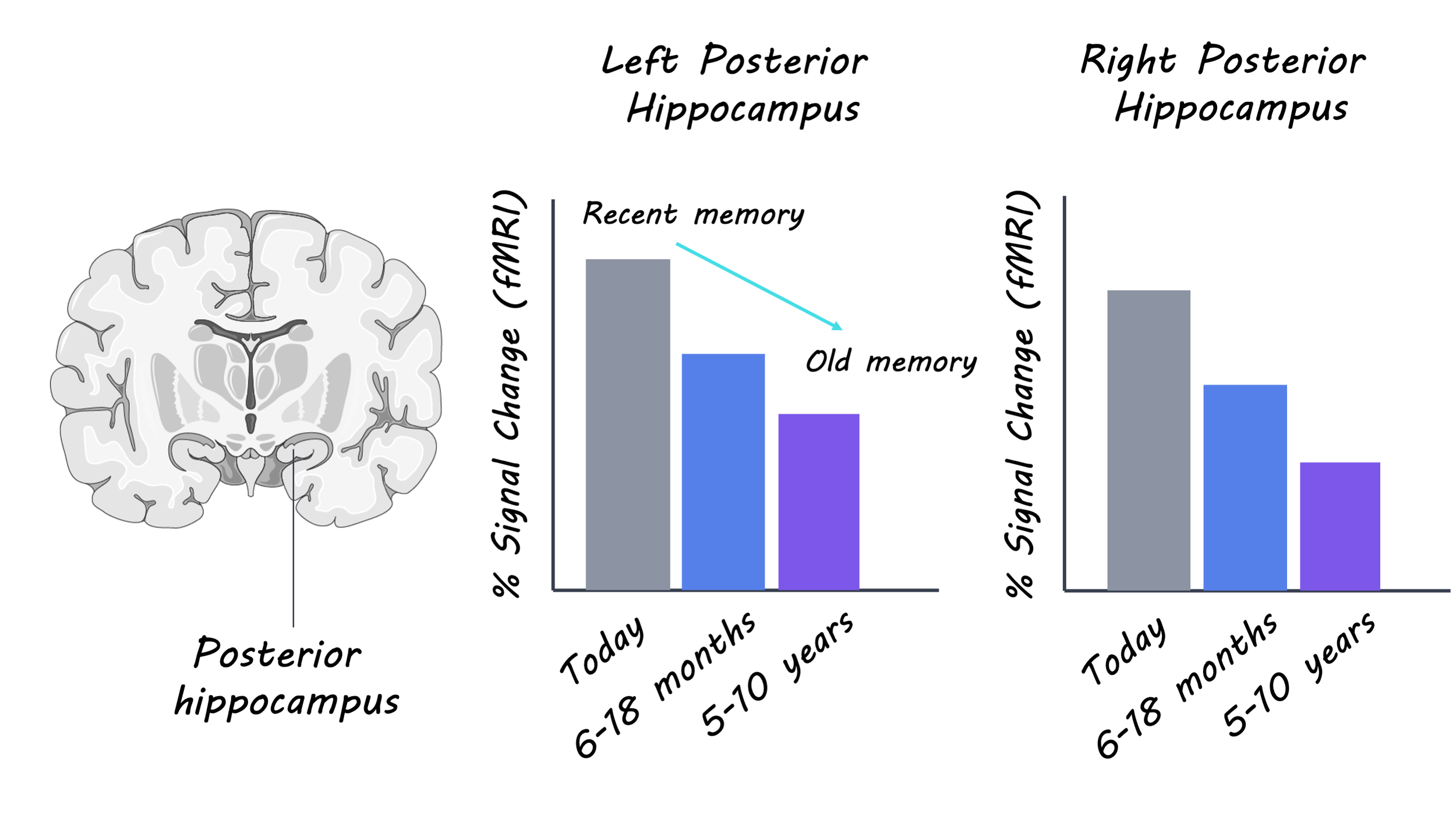
PNAS_Elisa_March23.png

What's the impact?

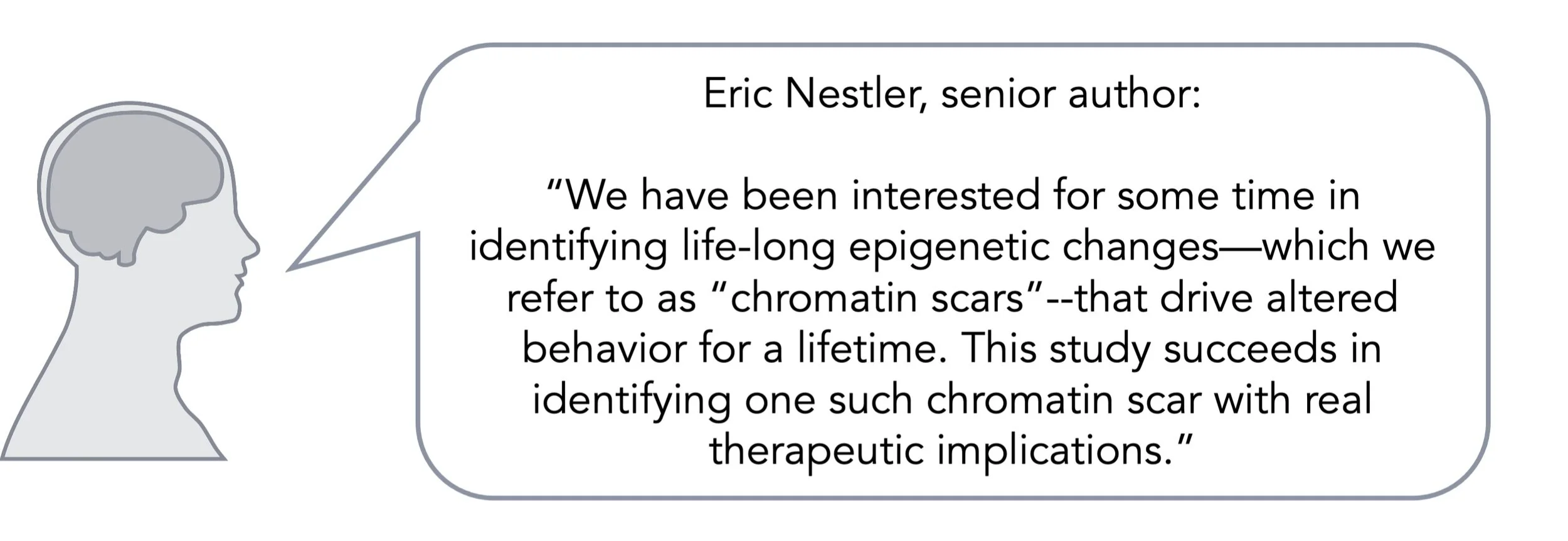
The findings presented here show that both hippocampal activity and hippocampal-cortical interaction during autobiographical recall decrease as the events become more remote. This lends support for the standard model of consolidation hypothesis and provides further insight into the neural mechanisms underlying memory recall.  
Gilmore_March23.jpg

Gilmore, AW et al., Evidence supporting a time-limited hippocampal role in retrieving autobiographical memories. PNAS (2021). The original scientific publication here.
The Brain Representational Dynamics of Perceived Voice Emotions

Post by Anna Cranston

What's the science?

There are two main theories on the way humans perceive emotional stimuli. The first theory is that we perceive emotions as discrete categories (e.g. an angry or happy voice), and the other theory suggests that we perceive emotions along several continuous dimensions (e.g. an intense and negative voice (angry) or an intense and positive voice (happy). However, which of these theories provides the truest picture of perception of emotional and vocal stimuli is yet to be fully understood. This week in Nature Human Behaviour, Giordano and colleagues investigate the exact mechanistic underpinnings of our perception of human vocal emotion.

How did they do it?

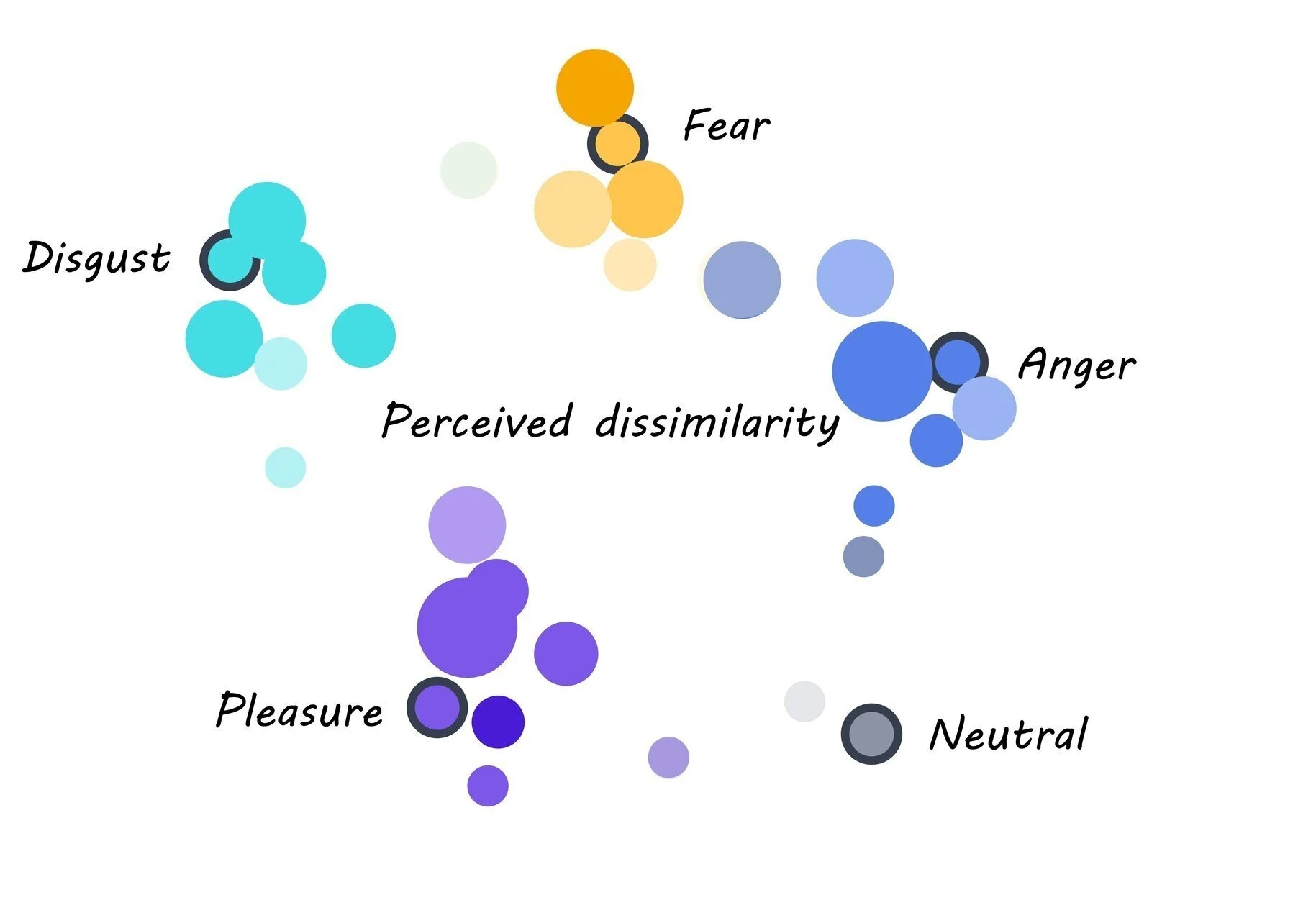
The authors recruited ten healthy adult participants with normal hearing. The participants were exposed to synthetic voice samples generated by morphing between recordings of brief affective bursts (from the Montreal Affective Voices database). These affective bursts portrayed either an emotionally neutral intention, expressed anger, disgust, fear, or pleasure. The authors combined pairs of these emotional expressions with different weights, resulting in 39 voice samples that represented a wide range of perceived emotions. Changing or ‘morphing’ these weights resulted in variation in the category of perceived emotion. Participants were asked to rate the dissimilarity between the samples — in other words, their perception of the varying degrees of emotion in the recorded vocalizations. They were also asked to rate their response to each vocalization on arousal (low to high), valence (negative to positive), and emotional intensity for four emotions (anger, disgust, fear and pleasure, low to high). 

fMRI and magnetoencephalography (MEG) neuroimaging data were collected from each participant during each behavioral session. The authors utilized a modulation transfer function (MTF), which is an acoustics-driven computational model of the cortical representation of complex sounds, to model the brain’s response to varying vocal stimuli in participants. The authors then used representation dissimilarity matrices (RDMs) to measure the acoustic specification of perceived emotions at specific time points. Finally, the authors applied a specific type of analysis known as representation similarity analysis (RSA) to assess the spatio-temporal representation of acoustics in the brain of each participant using the fMRI and MEG data in response to each perceived emotion.

What did they find?

The authors first examined the behavioural data (ratings of dissimilarity) using representational dissimilarity matrices, and found that both categories and dimensions influence the perception of voices, however, a categorical approach better accounted for perceived differences in the emotional vocalizations. When the authors used representational dissimilarity matrices to map the cerebral activation or ‘geometry’ for each participant using data obtained via fMRI and MEG recordings, they found that: a) brain activity immediately (~115 milliseconds) after sound onset was best explained by the categories the participant perceived, and b) later (>0.5 seconds after onset) brain activity in different brain regions was best explained by dimensions. Finally, the authors also identified correlations in perception and brain activation in response to acoustics, suggesting that key cerebral regions are activated in response to distinct emotional stimuli.

anna%2B%25281%2529.jpg

What's the impact?

The authors found that through a combined neuroimaging and behavioral assessment, they were able to spatiotemporally map the cerebral activation in the brain in response to vocal emotions as either distinct categories or dimensional states. This study sheds new light on the mechanistic underpinnings of vocal emotions, and our understanding of cerebral dynamics in relation to our perception of vocal stimuli.

Giordano et al. The representational dynamics of perceived voice emotions evolve from categories to dimensions. Nature Human Behaviour (2021). Access the original scientific publication here

Lifelong Epigenetic Changes Induced by Early Life Stress

Post by D. Chloe Chung

What's the science?

Stress early in life (e.g., childhood) can make people more vulnerable to other stressors, and increase the likelihood of developing depression later in life. The nucleus accumbens, a brain region involved in stress-related behaviors that combines inputs from other limbic brain regions, can regulate the impact of stress on our behaviors. Previous animal studies have shown that stress occurring early in life can induce transcriptional changes in the nucleus accumbens and increase the susceptibility to stress later in life as well as depression risk in adulthood. However, the exact mechanisms that sustain these transcriptional changes induced by early life stress were not well understood. This week in Nature Neuroscience, Kronman and colleagues found that early life stress can lead to perpetual changes in a histone modification in a specific type of neuron in the nucleus accumbens.

How did they do it?

To create stress factors early in life, the authors separated the mouse pups from their mom and left them with little bedding materials for several hours per day for 8 days. For this entire period, control mouse pups stayed with their mom with a sufficient amount of bedding. Then, the authors used a proteomics approach to analyze histone modifications within the nucleus accumbens collected from mice at different developmental stages: 21 days (young), 35 days (adolescence), and 70 to 80 days (adulthood) after birth. The authors also analyzed the RNA sequencing dataset from their previous study on early life stress to find enzymes that may be involved in histone modification changes. To further understand the significance of these enzymes on vulnerability to stress later in life, the authors virally overexpressed or knocked down these enzymes in specific cells of the nucleus accumbens and evaluated stress-related behaviors of mice. Some of the stress-related behavioral assessments were (1) interaction with an aggressive mouse, (2) free roaming in an open field, and (3) forced swimming in water. The authors also explored the potential therapeutic value of modulating these enzymes by testing a small molecule drug that can inhibit one of the enzymes. Specifically, twice a day for 10 days, the authors injected this drug into the abdomen of mice that were exposed to early life stress. Along with control mice injected with a placebo (salt water), these mice were compared for their interaction with an aggressive mouse.

What did they find?

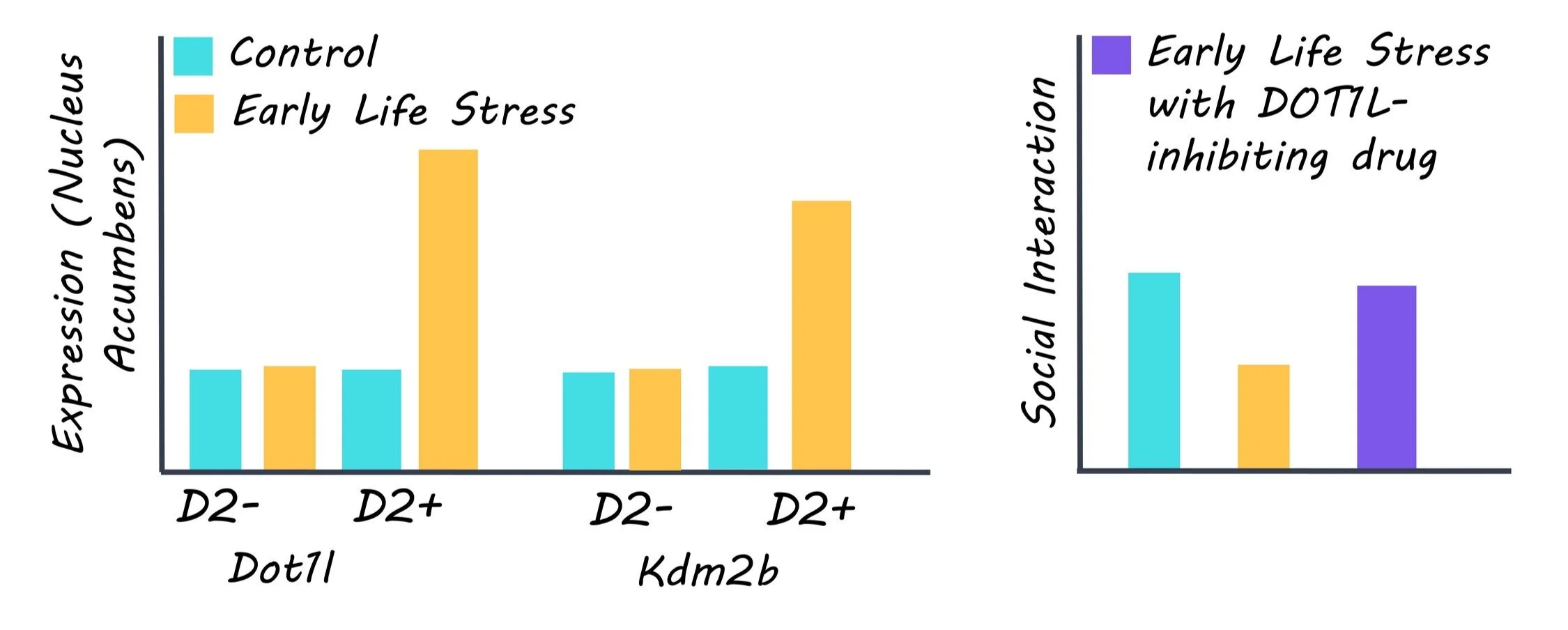
First, the authors found several persistent histone modifications caused by early life stress from their proteomics analysis, such as histone methylation that can suppress or activate gene expression depending on the amino acid being methylated. In particular, they found that dimethylation on the lysine residue 79 of the histone H3 protein (H3K79me2) was significantly altered in adult male mice that experienced early life stress. From RNA sequencing data, the authors identified multiple histone-modifying enzymes whose expression levels were significantly altered upon early life stress: DOT1 that can add methylation to H3K79, and KDM2B that can remove methylation from the site. Interestingly, these epigenetic changes and associated enzymes were enriched in dopamine D2 medium spiny neurons of the nucleus accumbens. The authors virally modulated the level of DOT1 or KDM2B in these D2 neurons of the nucleus accumbens and found that stress-related behaviors can change in both control mice and mice that experienced early life stress. Specifically, mice exposed to early life stress were corrected for their stress behaviors and behaved like normal mice upon knockdown of DOT1 or overexpression of KDM2B in D2 neurons. Conversely, increased DOT1 expression or decreased KDM2B expression in control mice made them display depressive behaviors similar to mice with early life stress.

chloe+%283%29.jpg

The authors further revealed that the consequences of cell type-specific manipulation of DOT1 and KDM2B levels were also reflected in gene regulation patterns in D2 neurons. Taken together, these findings highlight the importance of DOT1L and H3K79me2 in sustaining the impact of early life stress on stress vulnerability later in life. In a preclinical investigation effort, the authors also showed that a DOT1L-inhibiting drug can correct stress-related behaviors in mice exposed to early life stress, hinting at the potential therapeutic value of modulating histone modification.

What’s the impact?

This study found a brain region and cell type-specific epigenetic mechanism by which early life stress can influence susceptibility to other stressors and depression later in life. Notably, this work elucidated both specific histone modifications and responsible enzymes that are involved in persistent epigenetic reprogramming caused by early life stress. Findings from this study suggest that it may be feasible to develop therapeutic strategies to modulate the epigenetic landscape and reverse depression and stress-related responses influenced by early life stress. Additional studies are required to establish this as a possibility. Future research should also investigate other independent or synergistic mechanisms that contribute to the link between early life stress and depression risk.

Nestler_March23.jpg

Kronman et al. Long-term behavioral and cell-type-specific molecular effects of early life stress are mediated by H3K79me2 dynamics in medium spiny neurons. Nature Neuroscience (2021). Access the original scientific publication here.