
Effects of Ketamine on Brain Function During Metacognition

Post by Lani Cupo

What's the science?

Metacognition, or thinking about the process of thought itself, is considered to be essential to the experience of consciousness.  While some studies have used neuroimaging techniques in an attempt to localize brain regions integral to metacognition, little is known about the role of specific neurotransmitter receptors underlying consciousness. Previous metacognition research has indicated the importance of the N-methyl-D-aspartate (NMDA) glutamate receptor, bound by antagonists—such as ketamine—which, at sub-anesthetic doses, can induce a psychotropic state accompanied by euphoria and out-of-body experiences. This week in Neuroscience of Consciousness, Lehmann and colleagues conducted a double-blind, placebo-controlled pharmacological functional magnetic resonance imaging (fMRI) study, in order to investigate the role of the glutamate system in metacognition and its underlying neural activity following exposure to ketamine.

How did they do it?

In the laboratory, metacognition can be measured by asking participants to reflect “trial-by-trial” on their performance on behavioral tasks, such as recall in a memory task. These tests allow researchers to assess, not only performance on the task (referred to as type 1 responses) but also participants’ insight into that performance (referred to as type 2 responses). Fifty-three adult participants (29 females) were included in the study, and 24 of them received sub-anesthetic doses (2 mg/ml) of ketamine (29 received saline) during a task-based fMRI scan. After being placed in the scanner and initiating infusion with ketamine or saline control, two phases of the study were completed. 

In phase 1, participants took part in a memory task, encoding 120 words, 60 of which they also rated on “pleasantness” leading to a deeper encoding. In the retrieval phase of the task, for type 1 responses, participants were presented with 180 words, 60 of which they had never seen before, and were asked to press a button when they recognized the word from before. For type 2 responses, they were asked to rate how confident they were in their type 1 response, either by reporting on a 6-point scale (report condition) or merely placing the cursor on a color-coded digit on the scale (follow condition). This distinction allowed the authors to study the difference between true metacognition and the “follow” control condition. 

In phase 2, participants saw 100 words, half of which they rated on pleasantness for deep encoding and half of which they merely reported the number of syllables. An hour after the scan and ketamine infusion were finished, participants performed the same retrieval task from phase 1, without the influence of current ketamine exposure. Finally, participants filled out a questionnaire designed to assess altered states of consciousness.

What did they find?

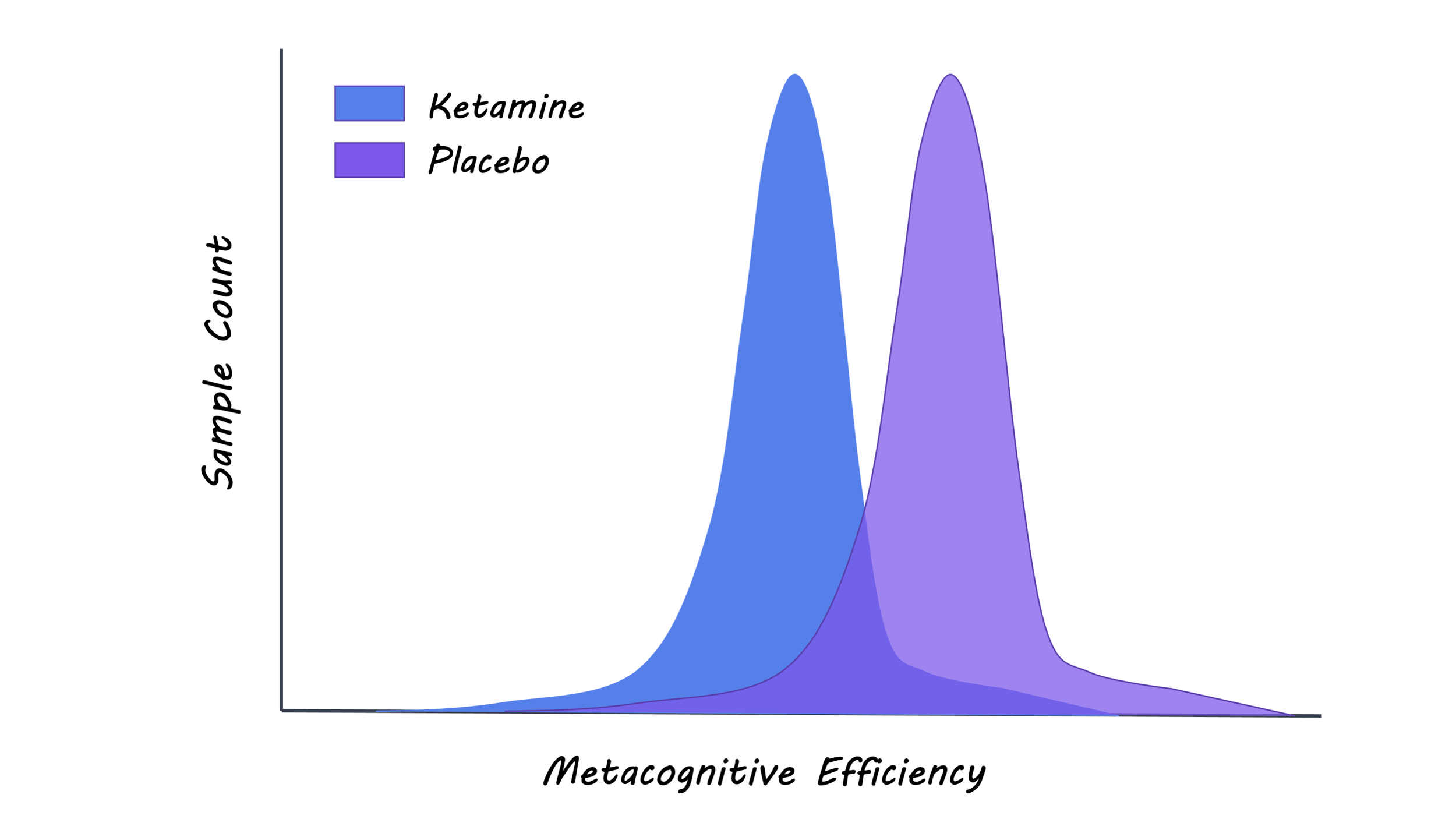
Results from the questionnaire suggested ketamine significantly altered participants’ states of consciousness, but, as expected, did not affect performance on the memory task. In phase 1, participants displayed more metacognitive sensitivity on deeply-encoded words, implying they were better at assessing their performance on the task for these words. However, ketamine reduced participants’ metacognitive sensitivity. This suggests that ketamine significantly alters metacognition, even though it did not impair memory encoding itself. When the authors analyzed the fMRI data, they found that ketamine infusion was associated with a higher blood-oxygen level dependent signal (an indirect measure of brain activity) in five clusters in the parietal and occipital lobes during type 2 ratings. The authors note that these changes were present regardless of how ratings were reported (with both the report and follow conditions) suggesting they are not specific to true metacognitive processes. Behavioral results from phase 2 memory trials were in accordance with phase 1, however, metacognitive sensitivity was not impacted by ketamine in this phase. This finding confirms that ketamine did not impair memory-encoding, and implies that an hour after termination of ketamine exposure, metacognitive self-assessment of performance on the task was no longer impaired.
Meta_March2.png

What's the impact?

This study is the first to investigate the effects of disrupting the glutamatergic system with ketamine on metacognition, showing that the pharmacological intervention may impair introspection. The authors acknowledge these results are too preliminary to attribute solely to the role of NMDA receptors, however, the evidence does suggest ketamine impacts metacognition. The present study provides a foundation for future investigations into the role of the glutamatergic system underlying metacognition and, ultimately, conscious experience.

Lehmann et al. Effects of ketamine on brain function during metacognition of episodic memory. Neuroscience of Consciousness (2021). Access the original scientific publication here.
Early Life Stress Exposure and Amygdala Reactivity Predict Symptom Improvement on Antidepressants

Post by Elisa Guma

What's the science?

Amygdala reactivity and exposure to early life stress have been implicated in the neurobiology of depression. However, not all individuals who experience early life stress develop depression, suggesting that there may be an interaction between the stressor and its effect on emotional brain circuitry (which includes the amygdala). Antidepressant treatment, shown to alter amygdala structure and function, is the standard for depression treatment, however, it only works for a subset of individuals; research suggests that those with high levels of early life stress have weaker outcomes. This week in PNAS, Goldstein-Piekarski and colleagues investigated whether a history of early life stress and amygdala reactivity to emotional faces may be predictive of antidepressant response in humans with depression

How did they do it?

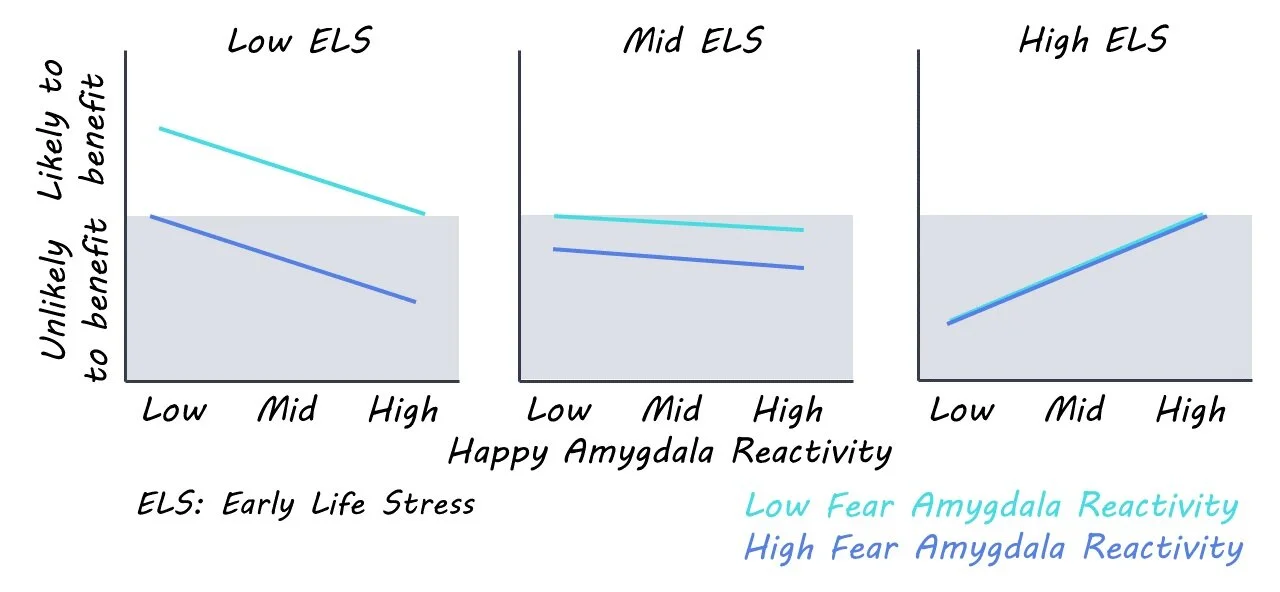
Participants were enrolled in the International Study to Predict Optimized Treatment in Depression, with a confirmed diagnosis of nonpsychotic major depressive disorder. Participants were divided into three groups based on their exposure to early life stress, low (≤1 event), mid- (2–5 events), and high- (≥6 events), and evaluated using a 19-item Early Life Stress Questionnaire. Functional remission was defined as a return of symptoms to a healthy range and calculated based on a combined measure of clinician-rated depression symptom severity, self-reported symptom severity, and observer-rated functional capacity. Amygdala reactivity was measured using functional magnetic resonance imaging, while participants were shown images of happy and fearful faces as well as neutral comparison faces (drawn from a standardized series of facial expressions).

The authors used hierarchical logistic regression models to predict functional remission and used receiver operating characteristic curves to plot the performance of their regression models (this plots true and false positives). Leave-one-out cross validation was used to derive an unbiased threshold to classify remitters and non-remitters, improving the generalizability of their model. A series of successive regression models were used, starting with a simple covariate model as a baseline that included clinical and demographic variables (age, educational level, duration of MDD episode, social/occupational function, depression symptoms). Next, the authors tested the addition of early life stress level (i.e., low, mid, high) and amygdala reactivity to happy faces, followed by early life stress level and amygdala reactivity to fearful faces, and finally, an additive model with both interactions.

What did they find?

First, the authors confirmed that patient groups that achieved functional remission did not differ from those that did not achieve remission in terms of the demographic variables. Next, they found that their baseline model that included only demographic and clinical information showed a trend towards significance in its ability to classify remission. Including the interaction between early life stress and amygdala reactivity to happy faces or fearful faces as predictors in the model significantly improved the accuracy of prediction, however, both of these models had a higher probability of false positives or negatives. Finally, the additive model which included both the interaction term between early life stress and amygdala reactivity to happy faces as well as early life stress and amygdala reactivity to fearful faces further increased the ability to predict functional remission, suggesting good generalizability of this model.

elisa+%282%29.jpg

What's the impact?

The findings presented here suggest that functional remission due to antidepressant treatment may depend on an individual’s history of early life stress and the responsiveness of their amygdala to facial emotion. Further, the authors present a model which predicts, with a high degree of accuracy, those individuals who respond well to antidepressant treatment. This may be of clinical utility as a tool for screening individuals prior to initiating treatments. Finally, the results advance our understanding of how early life stress and amygdala reactivity function synergistically to predict subsequent remission from depression.  


Goldstein-Piekarski, et al. Human amygdala engagement moderated by early life stress exposure is a biobehavioral target for predicting recovery on antidepressants. PNAS (2016). The original scientific publication here.

How Does Physical Overtraining Affect the Brain?

Post by Shireen Parimoo

What is overtraining?

Every athlete, whether elite or recreational, strives to perform at their best. Behind every touchdown, race, or personal best is a dedicated training regimen. For example, marathon runners progressively increase their mileage week after week, with a mix of intense and easy training days. In the final “tapering” week before a race, they reduce the frequency and intensity (i.e. training load) of their running. The idea is to give the body enough time to recover from all the cumulative training in the weeks prior for optimal performance by race day.

Excessive exercise over a long period of time can lead to overtraining syndrome when there isn’t sufficient opportunity for recovery in between bouts of exercise. In addition to rest and recovery, adequate sleep, nutrition, and cross-training are also important for preventing overtraining. Functional overreaching is a common acute response to a high training load. At this stage, athletes tend to be fatigued from their training and feel like they need to exert more effort than usual to perform at their standard level. When the training load is reduced, the negative effects of functional overreaching on performance disappear within a week or so. In fact, athletes commonly experience a boost in their performance afterward, called “supercompensation”, which might explain the importance of tapering the week before a marathon.

What are the symptoms of overtraining?

Overtraining affects anywhere from 5-60% of professional athletes. If proper recovery is not built into a training regimen, then the effects of overreaching can persist and start to have a long-term impact not only on performance, but also on mood, lifestyle, and the brain. Some of the common symptoms include muscle soreness, fatigue, lowered immune response, depressive symptoms, cognitive problems like difficulty concentrating, and sleep issues.

There are three stages of overreaching and overtraining, with each stage becoming progressively worse and longer-lasting:

  1. non-functional overreaching: increased stress, fatigue, and muscle soreness along with poor sleep quality. Most of the time, this can be overcome by reducing training intensity and frequency and ensuring adequate sleep (1-3 weeks).

  2. sympathetic overtraining: further changes in fitness such as increased heart rate and muscular weakness, as well as higher cortisol levels and hormonal changes due to the prolonged stress (1-3 months). This is mostly observed in endurance athletes like long-distance runners.

  3. overtraining syndrome: a prolonged version of overtraining that can seriously alter the brain’s stress response and impact physical and mental health (6-12+ months).

How does regular exercise affect the brain?

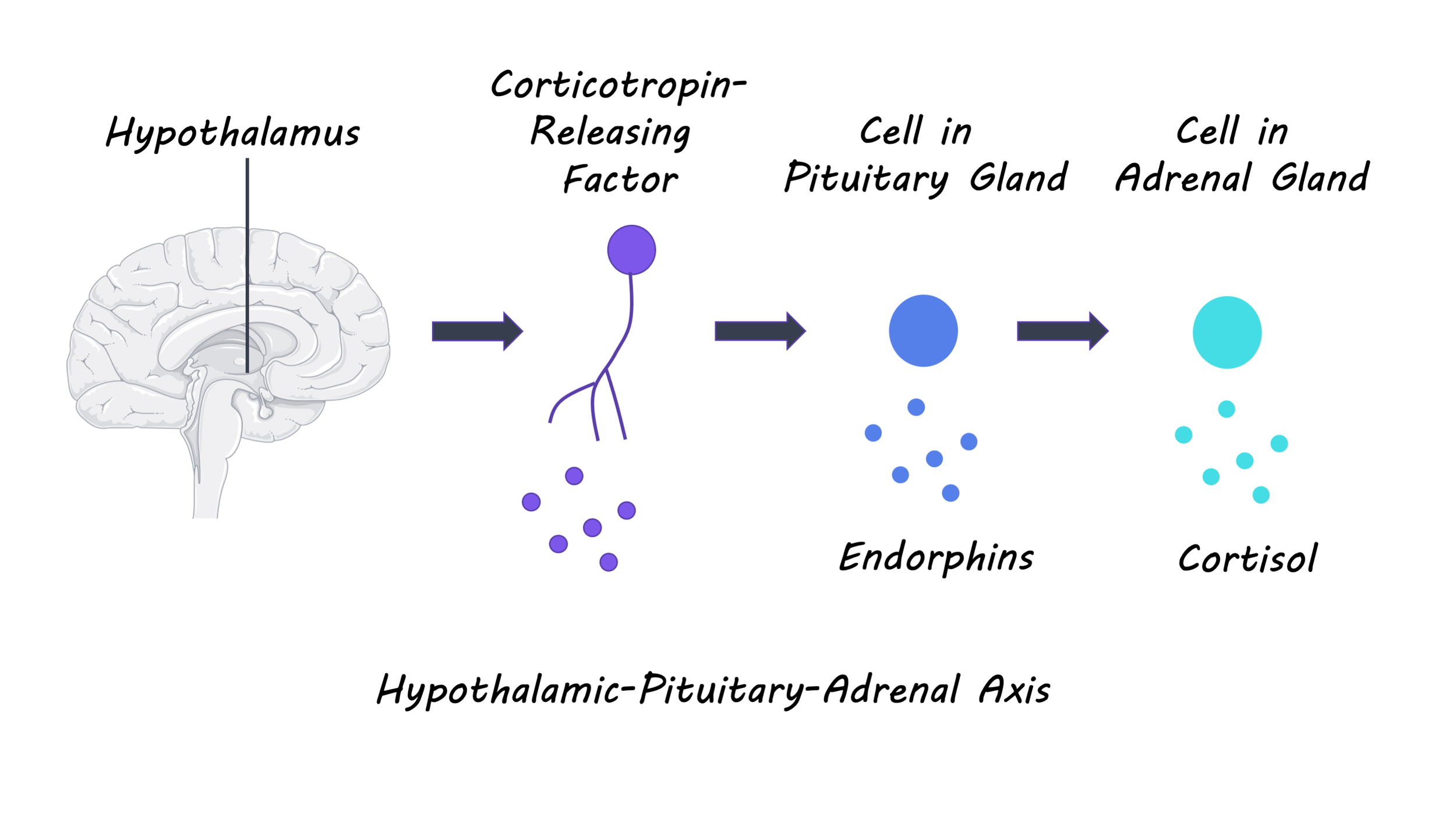
Neurotransmitter and hormonal imbalance contribute to overtraining. One way to think about overtraining is as a prolonged stress response to excessive exercise. Normally, the body’s stress response is regulated by the hypothalamic-pituitary-adrenal (HPA) axis. When a stressful event (i.e. an intense workout) occurs, noradrenaline levels increase and stimulate the hypothalamus in the brain. The hypothalamus releases the corticotropin-releasing factor, which stimulates the pituitary gland and also leads to increased heart rate. The pituitary gland then releases the adrenocorticotropic hormone, which stimulates the adrenal gland to produce the stress hormone cortisol. Cortisol suppresses the body’s immune response and triggers the “fight or flight” response by increasing blood glucose levels and heart rate. After a few hours, the cortisol circulating in the bloodstream inhibits the hypothalamus, terminating the stress response. Regular exercise helps the body adapt to physical stress and leads to decreased cortisol levels in response to future stressors. Importantly, this adaptation happens during the rest and recovery period. Exercise also increases serotonin levels in the brain and improves our sense of well-being. Serotonin is a neurotransmitter that affects mood, appetite, cognition, and sleep, among other important functions. Serotonin also regulates the stress response by acting on the HPA axis.

HPA_Feb23.png

How does overtraining affect the brain?

There is little opportunity for adaptation in between bouts of exercise without recovery periods, and excessive serotonin production might further contribute to HPA axis dysfunction. With overtraining, the body remains in a chronically activated stress response state that, in the long run, can lead to changes in the structure and function of various brain regions. Though research on the effects of overtraining on the brain and cognitive functions is somewhat scarce, there is ample evidence showing that a chronically activated stress response leads to changes in the brain. For example, prefrontal areas that help us with decision-making start to change in size and have different activation patterns in chronically stressed individuals. These individuals also start to rely on automatic rather than more effortful or strategic decision-making processes.

A recent study showed that excessive training affects decision-making processes. Endurance athletes completed an overreaching or normal training phase for three weeks. They were then brought into the lab to perform a reward-based decision-making task while undergoing an fMRI scan. The overreached athletes tended to choose smaller but immediate rewards over bigger rewards in the future, and they showed reduced activity in the prefrontal cortex when making decisions. Even though the authors could not – for ethical reasons – overtrain the athletes, this study provides an exciting avenue for future research on how overtraining affects brain functioning and cognition, which has several practical implications. Not only will it improve our understanding of how overtraining might impact the important day-to-day decisions of athletes, but this knowledge can be used to inform training plans that help ensure athletes get adequate rest and nutrition.

References

Armstrong & VanHeest. The unknown mechanism of the overtraining syndrome. Sports Medicine (2002). Access the original scientific publication here.

Cadegiani. Classical understanding of overtraining syndrome. In Overtraining Syndrome in Athletes (2020). Access the original scientific publication here.

Fulford & Harbuz. Chapter 1.3 – An introduction to the HPA axis. Techniques in the Behavioral and Neural Sciences (2005). Access the original scientific publication here.

Heisler et al. Serotonin activates the hypothalamic-pituitary-adrenal axis via serotonin 2C receptor stimulation. Journal of Neuroscience (2007). Access the original scientific publication here.

Kreher & Schwartz. Overtraining syndrome – A practical guide. Sports Health (2012). Access the original scientific publication here.

Lin & Kuo. Exercise benefits brain function: The monoamine connection. Brain Science (2013). Access the original scientific publication here.

Meeusen et al. Prevention, diagnosis and treatment of the overtraining syndrome: Joint consensus statement of the European College of Sport Science (ECSS) and the American College of Sports Medicine (ACSM). European Journal of Sport Science (2013). Access the original scientific publication here.

Portugal et al. Neuroscience of exercise: From neurobiology mechanisms to mental health. Neuropsychobiology (2013). Access the original scientific publication here

Soares et al. Stress-induced changes in human decision-making are reversible. Translational Psychiatry (2012). Access the original scientific publication here.

Wolff et al. Chronic stress, executive functioning, and real-life self-control: An experience sampling study. Journal of Personality (2020). Access the original scientific publication here.